
Is Keyonte George’s massive extension smart for the Utah Jazz?
Published at
Ben Anderson, KSL.com
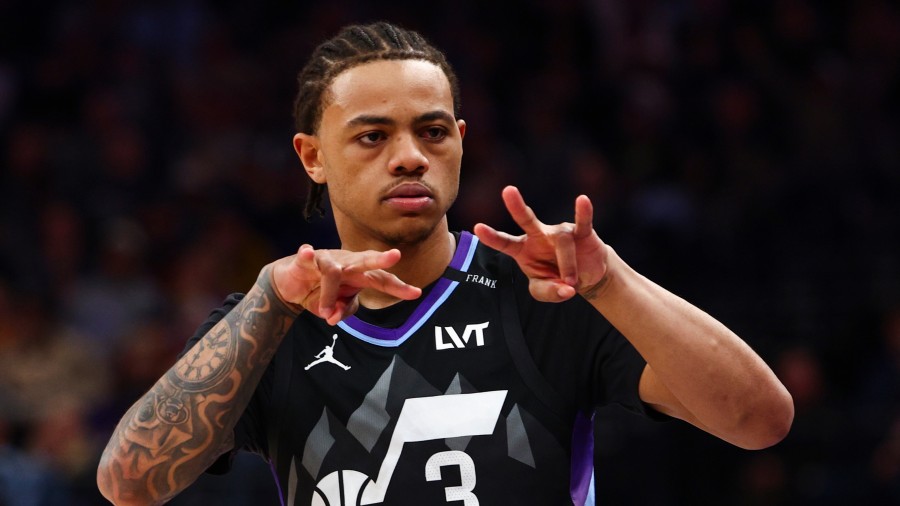
SALT LAKE CITY (KSL.com) – The Utah Jazz have agreed to a five-year, $157.5 million contract extension with fourth-year guard Keyonte George.
George broke out for the Jazz last season, averaging 23.6 points, 6.1 assists, and 3.7 rebounds while shooting 45.6 percent from the field, 37.1 percent from 3-point range, and 89.2 percent from the free-throw line.
The extension is set to kick in over the summer of 2027 and keeps George under contract in Utah through 2032.
The case for Keyonte George
When the extension takes effect, George will be the third-highest-paid player on the Jazz roster, trailing only Jaren Jackson Jr. and Lauri Markkanen, whose contracts will approach $50 million annually.
The deal represents a significant investment from a franchise that has posted a win rate of just 28,5 percent in games George has played over the past three seasons.
Still, there are strong signs this is a smart move by the Jazz.
George ranked among the NBA’s best backcourt scorers last season, finishing 12th behind only Luka Doncic, Shai Gilgeous-Alexander, Anthony Edwards, Tyrese Maxey, Donovan Mitchell, Steph Curry, Devin Booker, Jalen Brunson, Jamal Murray, Cade Cunningham, and James Harden.
The 11 guards ahead of him have all earned at least one All-Star selection over the past two seasons and rank among the league’s most notable players.
While George’s teams have not enjoyed the same level of success on the floor, his archetype as a ball-in-hand scoring guard has translated to winning in the modern NBA.
In addition to being the youngest player on the list, George will carry the lowest average annual salary among those players at $31.5 million, below Harden’s $32.1 million average, despite the Cavaliers guard being 37 years old.
The five-year extension includes no team or player options, eliminating any contractual exit ramps for either side before 2032.
Signs of strong leadership in Utah
Beyond his production on the court, George’s growth as a leader emerged as one of the organization’s most encouraging developments last year.
Although he showed moments of immaturity during his first two NBA seasons, his voice gained credibility inside the locker room last season.
George entered the season in excellent physical condition and displayed a level of emotional consistency he had not previously shown.
The former Baylor star possesses a contagious personality that, when channeled positively, became a rallying cry for the team’s culture, even on a 22-win roster.
George regularly attended the Jazz’s pre-draft workouts, and after representing the franchise at the draft lottery in May, he remained in Chicago to meet with potential draft picks and build relationships with future teammates throughout the combine.
Fine line between underpaid and overpaid
If George continues to develop, his $31.5 million annual salary could look like a bargain compared with many of the league’s top guards.
However, the deal carries risk if his 2025-26 season proves to be an outlier.
During his first two seasons in Utah, George shot just 39 percent from the field and 34 percent from beyond the arc, well below the average efficiency typically associated with a large, long-term contract.
While his most recent season was encouraging, he appeared in only 54 games, the fewest of his career and a relatively small sample size for such a substantial commitment.
If the Texas native regresses to his early-career efficiency levels while continuing to struggle defensively, the contract could become difficult to stomach.
Players like Jordan Poole and Anfernee Simons secured lucrative contracts after flashing significant early-career potential, only to plateau and become overpaid role players on average or below-average teams.
George’s third season surpassed any year either Poole or Simons has put on film, but regression remains a possibility, particularly as expectations rise for what should be a more competitive Jazz roster.
Was this a good deal for the Jazz?
Ultimately, the Jazz needed to begin investing in their young core. After losing Walker Kessler in restricted free agency earlier this summer, securing George before he could reach the market next offseason was a prudent move.
If George continues on the trajectory he has established since last summer, this five-year extension could become one of the NBA’s best value contracts.
If he has already reached his ceiling, or regresses while competing for minutes in a deeper backcourt, the deal could look like an overpay for a player who posted impressive numbers on a losing team.
However, George’s commitment to the organization, both on and off the court, addresses a key concern that often follows young players and should position him for continued growth in the years ahead.
 Get more sports news here