
College Football Playoff expected to be key topic at Big 12 Spring Meetings
Published at
Mitch Harper, KSL.com
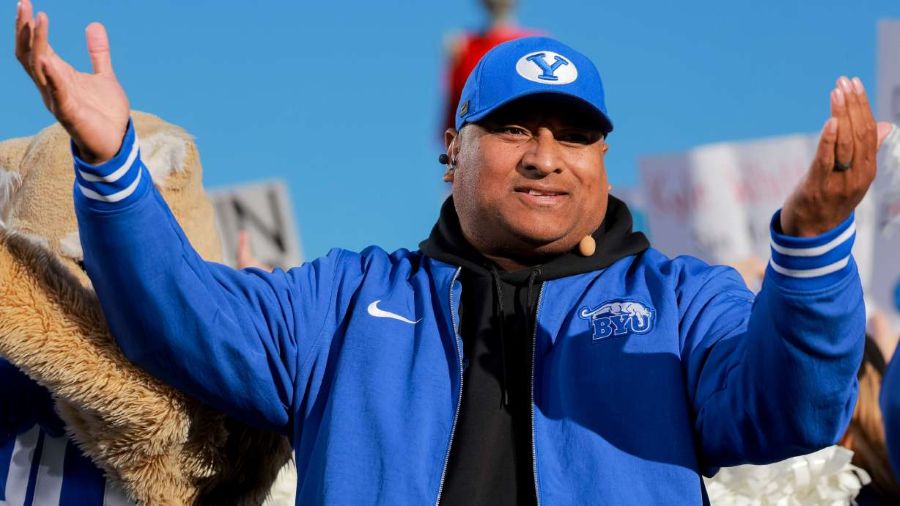
FRISCO, Texas (KSL.com) – We’re in the thick of “talkin’ season” with the arrival of Big 12 Spring Meetings.
For the second consecutive year, the Big 12’s annual spring business meetings, which have always featured school presidents, athletic directors, and Senior Woman Administrators (SWA) from all 16 member schools, will also include football head coaches and men’s and women’s basketball coaches on-site.
This year’s meetings return to the heart of Big 12 country, Texas, after a year away at Walt Disney World in Orlando, Florida.
The Omni PGA Frisco will host this year’s meetings. Some of the meeting rooms are named after golf legends such as Ben Hogan, Byron Nelson, and Lee Trevino, fitting for a place that features a golf course set to host the 2027 PGA Championship.
If college sports had a scorecard like golf right now, it would probably feature a lot of squares instead of the coveted circles indicating a birdie.
Key storylines to follow at the 2026 Big 12 Spring Meetings
All of the issues surrounding the college enterprise aren’t going to be fixed in one week in Frisco. But it can provide a glimpse into what’s next for the league and the big-picture concerns of the people on the front lines navigating these unprecedented, yet wildly popular times in college athletics.
From the in-state schools, there’s only one new face making the rounds at the spring meetings. That’s Utah head football coach Morgan Scalley.
On the flip side, the coach with the most years at his current school is suddenly BYU’s Kalani Sitake. The departures of Mike Gundy at Oklahoma State and Kyle Whittingham from Utah to Michigan catapulted Sitake up the Big 12 coaching tenure ladder.
Big 12 Spring Meetings kicks off this week. Here are some of the key storylines to monitor.
24-team College Football Playoff format
The Big 12 is backing a 24-team College Football Playoff format. That’s a change from the 5+11 model the league endorsed after last year’s spring meetings in Florida.
Commissioner Brett Yormark indicated last October that he’d be interested in a playoff format with equal automatic qualifiers to those of the other Power Four leagues.
Previously, the Big Ten reportedly pitched 24-team playoff formats that would have given the Big Ten and SEC more automatic bids than the Big 12 and ACC. Obviously, that format had no support from the Big 12.
Coming out of the Big Ten’s spring meetings last week in California, Commissioner Tony Pettiti said there was “zero” conversation about a 16-team playoff. They want a 24-team playoff field.
The key to all of this is the details.
Could the 24-team playoff conclude by the second week of January? How many automatic bids, if any at all? What about the revenue to make up for an assumed departure of the conference championship game? Will the criteria for earning an at-large bid in the 24-team field be established so the path is clear for everyone?
Getting a temperature on a possible 24-team playoff format from Big 12 decision-makers this week will be a significant talking point.
Football calendar
Ask any college football coach about big-picture issues in the sport, and a conversation about the calendar will likely come up.
Think about last December for BYU football.
As they were preparing for one of the biggest games in program history at the Big 12 Championship Game, they were dealing with a coaching carousel that saw Penn State make a run at Kalani Sitake.
BYU was able to hold off the Nittany Lions, giving Sitake the “love bomb” he desired from his alma mater. That was on Tuesday night of Big 12 Championship game week.
The next day, it was Signing Day for the early signing period.
Then, 24 hours after that, they were on a plane for Dallas in preparation for a chance to earn an automatic bid to the CFP.
All of those key events, logjammed into one week.
Something has to change with the college football calendar.
The early signing period. Is it still needed? Do coaches want to go back to the traditional signing period in February, or maybe even let recruits sign during their senior year of high school, whenever they are ready to sign on the dotted line?
The schedule for a potential 24-team playoff plays a big role in the calendar. But what about the transfer portal? After a cycle with only one winter portal, do coaches feel that’s the sweet spot, or does it need to move to the spring to better align with academic calendars?
Then there’s the topic of spring practices. Should that morph into offseason team activities (OTAs), as the NFL does?
Many areas of college football’s calendar need to be addressed.
What’s next after the SCORE Act?
The NCAA-backed SCORE Act was removed from the House of Representatives last week.
It was a proposed federal bill that would have granted the NCAA and conferences antitrust protection.
Back in March, Commissioner Brett Yormark said the SCORE Act was “the best path forward” for federal legislation. Now that it didn’t go up for a vote in the House, what’s next?
Senators Ted Cruz and Maria Cantwell have been working on bipartisan college sports reform legislation.
If that doesn’t happen, will each autonomous league need its own self-regulation?
College Sports Commission
Remember last year at this time, when the House v. NCAA settlement went into effect, establishing revenue sharing so schools could pay athletes directly? A $20.5 million cap was established, and a new entity, the College Sports Commission, was created to oversee operations.
After more than one year and five months past the deadline, there still isn’t a unified “University Participant Agreement.”
The lack of a participation agreement prevents the CSC from enforcing any rules.
“It’s frustrating because collectively, the four conferences created the CSC. And the four conference commissioners spent a lot of money creating the CSC,” said Iowa State Athletic Director Jamie Pollard last week when asked how he sees the College Sports Commission holding up currently.
Pollard continued, “So, then to have two of the conferences not want to adhere to it is perplexing to me. Because then it’s like, well, why did we spend the money? If you didn’t want rules, then why did you create this entity? That’s what’s frustrating to me. The same people who say they want rules only want rules if they don’t apply to them.”
With not everyone on board with the participant agreement, schools can move past the $20.5 million cap in their respective athletic departments. But it raises the question: what’s the breaking point on this amount of roster spending?
Private capital deal
The Big 12 locked in a five-year private capital agreement with RedBird Capital. The league is expected to receive a $12.5 million capital infusion from RedBird.
What will they do with the money, and how can the strategic partnership help the league close the financial gap with the Big Ten and SEC?
 Get more sports news here