
Morgan Scalley setting the tone for new era of Utah football
Published at
Steve Bartle, KSL.com
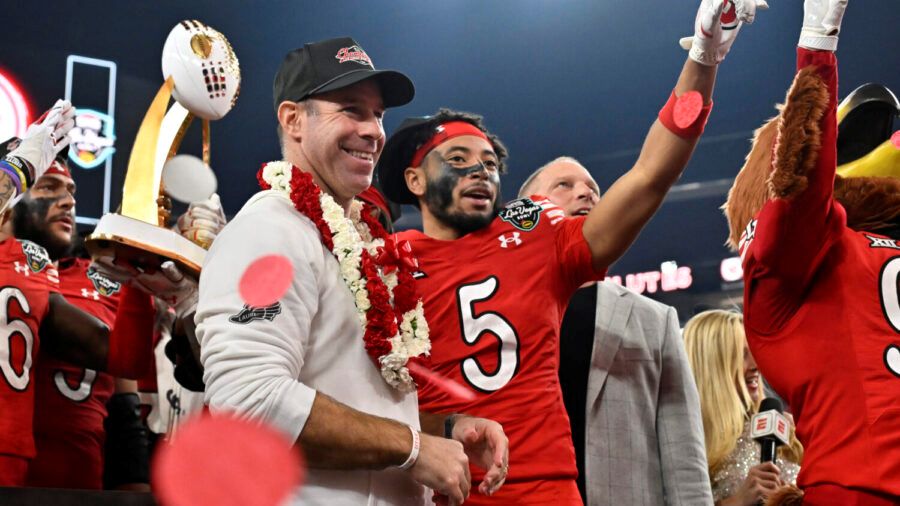
SALT LAKE CITY (KSL.com) — Morgan Scalley’s first offseason as Utah’s head coach has been about transition, but not reinvention.
Appearing on Scotty G. & The Coach on 97.5 The KSL SportsZone, Scalley described the early months of his tenure as hectic at the start, but ultimately smooth once Utah finalized its staff and moved into spring football.
“It was obviously hectic at first when things were going on,” Scalley said. “But ultimately, once we settled down, got the staff in place, it really was a pretty smooth transition.”
For Scalley, spring ball was not just about installing schemes or evaluating personnel. It was about making sure the foundation of the program carried over into a new era.
“Spring ball was so much about making sure that the new staff and the players understood the culture,” Scalley said. “I thought spring ball went very well.”
The Season Starts Up Front
If there was one football point Scalley made clear, it was this: Utah’s 2026 season will be defined in the trenches.
“This season is all about really the development of the offensive line and the defensive line,” Scalley said. “That’s how this season is going to go, bottom line.”
That is not coach-speak. It is the most honest assessment of where Utah sits entering a new era.
The Utes are replacing two first-round NFL Draft picks on the offensive line, which immediately changes the burden on the next group. Utah has talent, but talent alone will not settle the room. The program needs chemistry, technical growth and leadership to emerge quickly enough for the offense to function the way Scalley and offensive coordinator Kevin McGiven want it to.
Scalley specifically praised the work of offensive line coach Jordan Gross, defensive line coaches Inoke Breckterfield and Luther Elliss, and the support Alex Gerke has provided in helping Gross transition into the college game.
On Gerke, Scalley called the move an underrated hire.
“Just that seasoned experience,” Scalley said. “Having Gerke helped him establish the culture he wanted in the offensive line room, but also helped Jordan understand how we do things at the college level — compliance to recruiting.”
That detail matters. Gross brings elite playing experience and a high-level understanding of offensive line play. But college football is no longer just coaching technique. It is roster management, recruiting, compliance, player development and constant adaptation. Gerke’s presence gives that room an added layer of structure as Utah tries to stabilize one of the most important position groups on the roster.
Quarterback Depth Gives Utah Options
Scalley also made clear that Utah feels good about its quarterback room.
The Utes were able to keep both Devon Dampier and Byrd Ficklin in the program, giving them a blend of athleticism, leadership and competitive depth at the most important position on the field.
“As a defensive coordinator, I’m always looking for things that I would struggle with,” Scalley said. “Having two quarterbacks that are athletic, that can throw the ball, run the ball — that’s something definitely that we’re going to utilize.”
That does not necessarily mean Utah is headed for a full two-quarterback system, but it does mean Scalley understands the stress that athletic quarterbacks can put on a defense.
Both players give Utah different ways to win. More importantly, Scalley sees the relationship between them as a strength.
“Both those young men are great leaders, both understand the scheme and they’re hungry,” Scalley said. “Those two are as good friends as they are competitive, and that’s what makes for good depth.”
Then came the line that summed up Utah’s view of the room.
“You can’t win a championship without a quarterback and without depth at quarterback,” Scalley said.
That is especially true in the Big 12, where quarterback play often separates contenders from the middle of the league. Utah does not need uncertainty there. It needs command, durability and enough flexibility to keep defenses uncomfortable.
Explosive, But Still Utah
When Scalley was asked about McGiven’s offense and whether Utah plans to open things up more, his answer was revealing. It framed the offensive evolution without abandoning the program’s identity.
“I want to be explosive no matter where that comes from,” Scalley said. “And if we’re an explosive offense, but we’re not physical, to me, that’s the detriment to the entire team.”
That is the balance Utah is trying to strike.
The Utes want more chunk plays. They want to get the ball to their playmakers. Scalley even said he believes Utah has “one of the best wide receiver groups” the program has had during his time in Salt Lake City. But he also made it clear that explosive offense cannot come at the expense of the toughness that has long defined Utah football.
“You have to be physical, period, end of story,” Scalley said. “A lack of physicality gets exposed at the highest levels.”
That is the operating thesis for Utah’s offense under McGiven.
More motion, more quarterback run-game stress, more RPO elements and more ways to create explosive plays are all on the table. But Scalley is not interested in becoming a finesse team that throws the ball around at the expense of complementary football.
“Ultimately, if you’re not practicing physical football, if you’re just spreading the ball out and throwing it every single down, I don’t think your defense gets tougher or more physical doing that,” Scalley said. “You have to play complementary football, and that’s what Kevin’s offense does.”
That is probably the clearest explanation yet of what Utah wants to become offensively.
The Utes want to modernize. They want to be more explosive. They want to stress defenses horizontally and vertically. But Scalley’s version of modernization still has a Utah backbone: run the ball, block people, protect the defense and make opponents feel the physical cost of playing four quarters.
Trusting Colton Swan With The Defense
One of Scalley’s biggest personal transitions is stepping away from full control of the defense.
Colton Swan will handle defensive play-calling duties, and Scalley said he has tried to give him room to lead.
“I’ve tried to be as hands-off as I can,” Scalley said. “Colton Swan’s been with me long enough to have earned my trust to be able to call a game.”
That does not mean Scalley will disappear from the defensive process. He will still be a sounding board, still offer perspective and still provide input when needed. But the larger point is that Swan needs to know the defense is his to lead.
“He needs to know that he has my full support,” Scalley said. “I’m excited to see what he can do.”
Scalley admitted it has not been easy to stay out of defensive work, which is understandable. He built his reputation on that side of the ball. But his response this spring was telling: he moved toward the offense.
“For me, one of the most important things was to be a voice on the offensive side,” Scalley said. “Those players haven’t heard a lot from me other than yelling and screaming on the defensive side.”
That may end up being one of the most important parts of his head coaching evolution. Scalley is not just overseeing the defense anymore. He is trying to impact the whole building.
“I think that type of collaboration only improves what you do on both sides of the ball,” Scalley said.
A Broader Leadership Message
Asked about his optimism and positivity, Scalley pointed to life experience, reading, education and the role football has played in shaping him. His answer moved beyond football and into the kind of leadership he wants to provide.
“Hard times in life really help you recognize what you actually have in life,” Scalley said. “You can go through hell and really find beauty in it.”
That perspective matters because Scalley is taking over a program in transition. Utah is not broken, but it is changing. New staff dynamics, a changing roster model, NIL, the transfer portal and Big 12 expectations have all made the job different than it was even a few years ago.
Scalley’s point was that everyone is dealing with something, and leadership requires awareness of that.
“Everyone’s going through something,” Scalley said. “Everyone’s got something hard going on in their life. If not, they’ve got a family member.”
In a college football world that can become transactional quickly, Scalley’s answer was a reminder of how he wants the program to feel from the inside.
Sharief Shah Remains Central To The Journey
Scalley also spoke emotionally about his relationship with special teams coordinator and cornerbacks coach Sharief Shah.
The two have been together through some of the program’s best moments, but also through uncertain times. Scalley recalled a period when the staff did not know what would happen after back-to-back 5-7 seasons and changes elsewhere on the staff.
He and Shah sat together in the staff room, unsure of what was next.
“We just looked at each other and said, ‘Let’s just get to work,’” Scalley said. “Just control what we can control.”
Years later, they are still together as Utah enters a new chapter.
“He is my best friend,” Scalley said. “That’s my guy. We’ve been through good times, bad times, and we’ve stuck it out together. He’s family.”
That relationship is not a small detail. For all the change around Utah football, Scalley’s staff still includes people who understand the program’s roots, its standards and its internal language.
The Bottom Line
Morgan Scalley’s message was straightforward: Utah is changing, but it is not abandoning what made it Utah.
The offense needs to become more explosive. The quarterback room gives the Utes options. The wide receiver group has real potential. But the season will still come down to line play, physicality and whether Utah can develop quickly enough up front to compete for a Big 12 title.
This is Scalley’s program now, and the first public themes are already clear. He wants collaboration. He wants toughness. He wants explosive football without softness. And above all else, he wants the new era to look modern without losing the old edge.
 Get more sports news here