



Is an AI data center coming to Pocatello? Weigh in on Thursday
Published at | Updated at
POCATELLO – The public will soon have the chance to weigh in on whether an artificial intelligence data center could be built in Pocatello.
A public hearing is scheduled for 5:30 p.m. on Thursday in the Pocatello Council Chambers at 911 North 7th Avenue. Residents will have a few minutes each to take a stance on whether a conditional-use permit (CUP) should be granted to allow an AI data center to be built in the Portneuf Valley.
The hearing will be held before the Pocatello Hearing Examiner, which is “a citizen advisory group” to the City Council, the agenda says, which “is charged with making decisions for conditional use permit and variance applications.”
Brent McLane, planning and development director, said the hearing examiner will have three options:
- Approve the application as submitted
- Approve the application with conditions
- Deny the application
McLane said that all decisions made by the Hearing Examiner can be appealed to the City Council.
In a written statement, Mayor Mark Dahlquist emphasized that the city had not made a decision on this one way or another. At this point, it’s only facilitating a CUP application process, as mandated by Idaho law.
“The City’s priority is to make sure any proposed development benefits the people of Pocatello. At this point, we are simply facilitating the application process. I look forward to learning more about the project and discovering all the pertinent facts pertaining to the project,” Dahlquist says.
Read the meeting agenda and CUP application here.
A ‘unique’ situation
Although there is no specific AI data center company already lined up, granting a CUP would “secure the entitlements” for a data center to be built in the future, McLane explained.
McLane said that because of how unique the situation is, city staff felt it was best to go through a process that gathered public comment.
“We felt like it was something substantial enough that we needed to have a public-hearing process to give people the opportunity to speak … to what their concerns are and what their feelings are about the project,” McLane said.
People are generally allotted three minutes to speak during a public hearing, and McLane said that they’re not planning on capping the amount of time the meeting will last for at this time.
“Our intent is to just hear the public, and so it might be a long night,” McLane said.
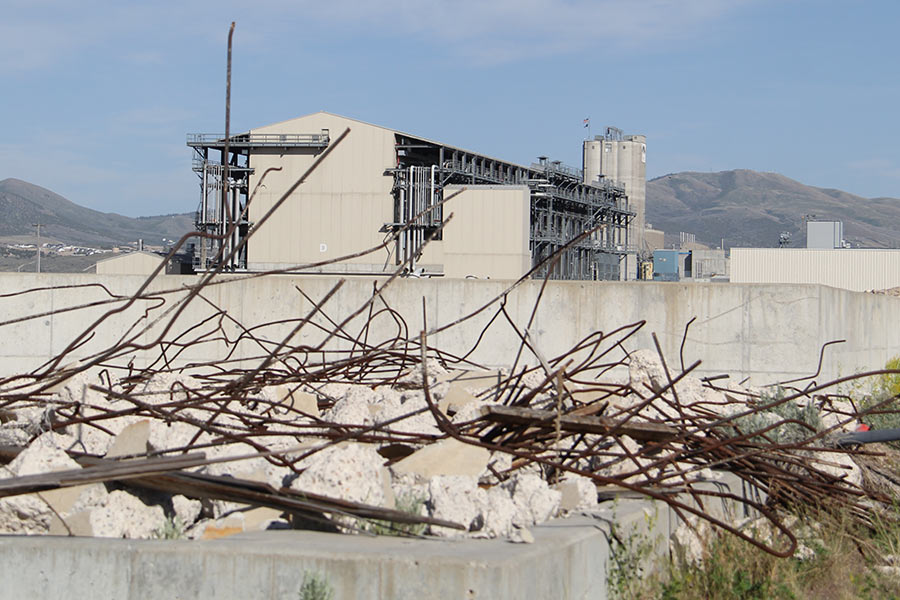
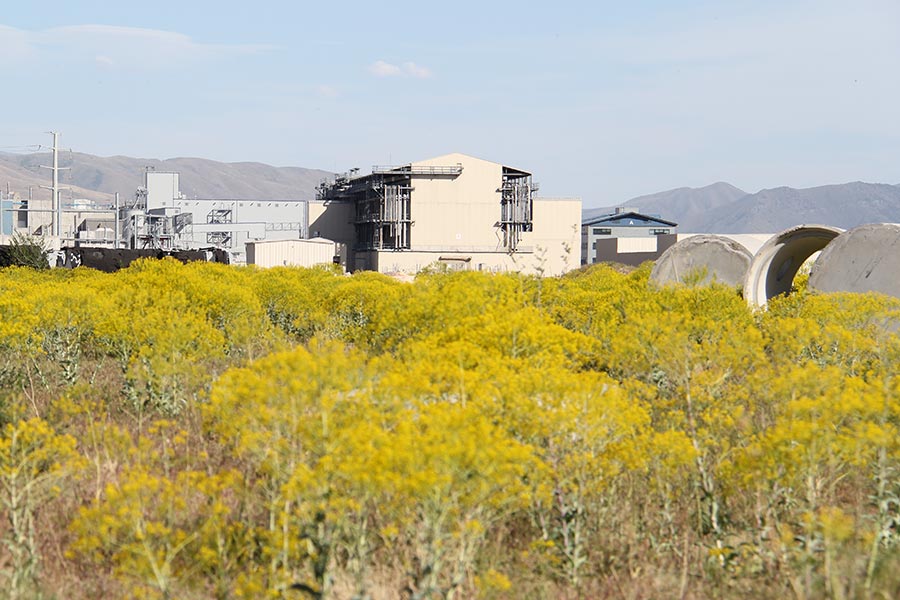
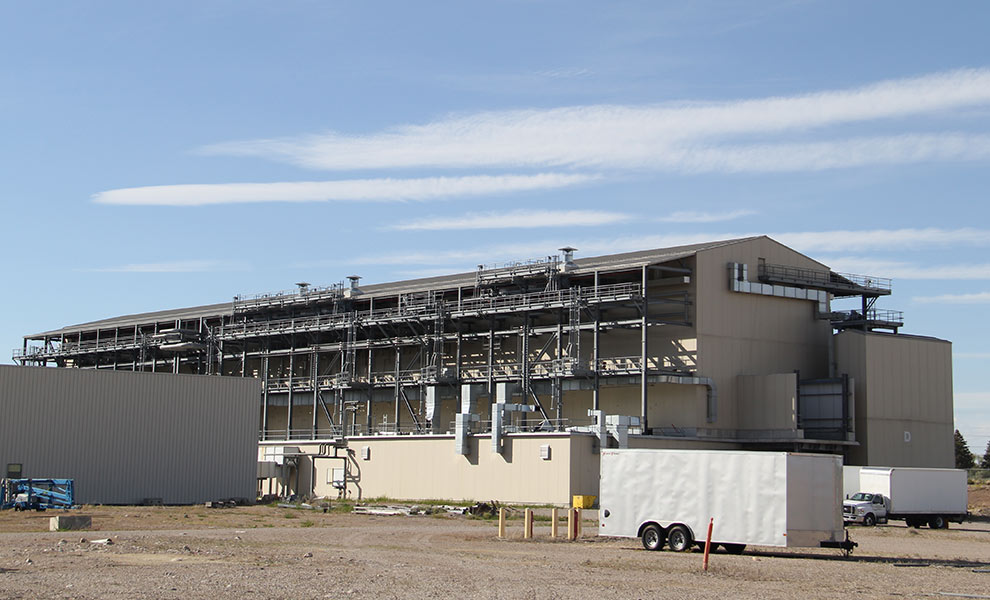
The CUP permit concerns around 59 acres of land at 1800 River Park Way. This site is where a Hawaii-based company called Hoku Materials built a polysilicon plant, with construction starting in 2007. The company filed for bankruptcy in 2013.
RELATED | City officials in Pocatello say they want developer for Hoku Plant
The current owner of the property is Portneuf Capital LLC, but it is not the applicant for the CUP. The applicant is listed as Gus Shultz, of Lex Developments LLC.
What Lex Developments is or where it’s based isn’t immediately clear. The application’s notarized affidavit of legal interest leaves that information blank.
Portneuf Capital did not reply to EastIdahoNews.com’s request for an interview or comment.
Although the site is zoned for industrial use, Pocatello neither allows nor restricts data centers in its city code.
“This is such a unique situation in that, we don’t have a data center as a use that is allowed or not allowed in any zone. It’s just not mentioned. And so we felt like this would be a good way to … get public input on it and help us in making this decision,” McLane said.
Could Pocatello power such a facility?
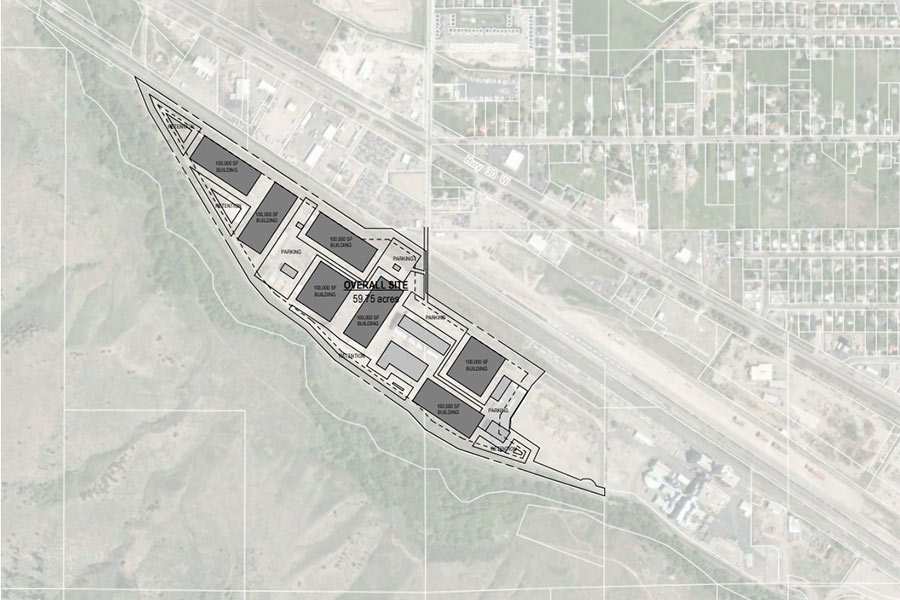
The CUP application is provided in an attached document to the Hearing Examiner’s agenda for the meeting. The application includes a map, which functions as a preliminary design for what a future data center facility may look like.
In the application’s CUP Review Criteria Analysis, the applicant says, “The data center is functionally similar to permitted uses such as warehouse, light industrial, and utility-related facilities in that it operates within an enclosed structure, has limited on-site staffing and generates minimal external impacts.”
Also within the analysis, a staff review section includes information that city staff got from Idaho Power. According to this section, the data center must have a capacity of at least 100 megawatts to be operational.
“Idaho Power has commented that 100 (megawatts) is comparable to the amount of power utilized by the entire city of Pocatello in one year,” the review reads.
With a facility like this “running around the clock,” it would “roughly” double Pocatello’s energy consumption, says Brad Bowlin, communications specialist for Idaho Power, in a written response to questions from EastIdahoNews.com.
Bowlin says that Idaho Power’s all-time peak demand was just under 3,800 megawatts, “so 100 MW would be more than 2.5% of the peak demand on our entire system.”
To make a project of this scale possible, it takes “several years from initial inquiry to project completion,” Bowlin says.
Preliminary conversations have been held between Lex Developments and Idaho Power.
“At this time, no executed agreements are in place to serve the project, and no final service plan has been approved. As with all prospective customers, discussions beyond that are confidential customer information, and Idaho Power is unable to share additional project‑specific details,” Bowlin says.
Bowlin adds that it’s “standard practice for a potential new large customer to request an assessment of their energy needs and any additional infrastructure required to provide that service. The customer pays for these studies, which can take up to six months to complete.”
To make a project like this possible, Lex Developments would need to enter into an energy services agreement, which Bowlin says “ensures existing customers do not pay for either the infrastructure or the energy needed to serve the new large-load customer.”
“Large-load customers pay for 100% of their interconnection costs up front — including all distribution, transmission and substation expenses. They have to provide funds before any materials are purchased or construction is started, so if they don’t end up moving forward with their project, there is no risk to other customers,” Bowlin says.
However, Lex Developments’ presentation, which is also included in the attached document, seems to conflict with the 100 MW estimation that Idaho Power gave city staff. On a slide that goes over economic information on a potential data center, it says, “What a 200 MW AI Data Center Means for Pocatello” — not 100 MW, like what it says in the review criteria analysis.
Questions linger on water, heat and taxes
Water
In the presentation materials included alongside the CUP application, Lex Developments claim that a future data center would have “near-zero ongoing potable water use.”
This is because it would use a closed-loop liquid cooling, rather than evaporative cooling. It compares this system to coolant in a car’s engine.
“The same liquid circulates continuously and is never consumed. Water goes in once at construction; that’s it. The system is sealed and self-contained,” according to the presentation.
But within the review criteria analysis, city staff included a list of questions.
Officials with the City’s Water Pollution Control submitted the following: “How much wastewater will be discharged? A ballpark number in gallons. Will any pretreatment be required? Will there be any chemicals being discharged?”
Lex Developments’ response did not address these questions.
The applicant response simply reads, “The proposed data center can be adequately served by existing public facilities and services, including transportation infrastructure, utilities and emergency services.”
McLane said that Lex Developments may still address these questions during Thursday’s meeting.
And more broadly, he said many of these questions could remain unanswered because a specific data center company has not yet been lined up to come to the property.
“He’s trying to prepare a site that could be marketed to a data center, and so I think that’s part of the vagueness of this application,” McLane said.
Heat
It’s also unclear if a data center would increase the overall temperature in Pocatello once operational. Tim Axford, meteorologist at the National Weather Service’s Pocatello office, said his agency wouldn’t be able to speak to whether this would occur.
“This type of impact — it would be out of our lane to say whether something’s happening or not, or what those types of impacts would be,” Axford said.
Research seems to still be developing on this subject. But a preprint study submitted in March of this year, led by Andrea Marinoni, Ph.D, an associate professor of applied remote sensing with the University of Cambridge’s Earth Observation group, observed an occurrence it dubbed “the data heat island effect.”
Using data from 2004 to 2024 from 11,000 locations, researchers found that land surface temperatures increased by 2 degrees Celsius (3.6 degrees Fahrenheit) on average after an AI data center started operations. This translates to an increase of 3.6 degrees on average in Fahrenheit.
The study has not yet been peer reviewed.
Property taxes
Lex Developments’ presentation also says that in relation to property taxes, “100% stay local.”
The presentation also includes Bannock County’s combined levy rate, which is 1.2% of assessed value, as well as the tax split, which would be 30% to Pocatello-Chubbuck School District 25, 26% to the city of Pocatello, 26% to Bannock County and 13% to roads and ambulance services.
But the presentation does not give an estimate of how much property tax revenue a data center could generate.
McLane said that how much property tax revenue a data center could generate really “all depends on how those buildings are assessed.”
As for whether or not a potential data center could have property tax exemptions applied to it, McLane said it was too early in the process to say.
McLane said whether property tax exemptions would apply would be a decision made by the City Council, and that process would also include a public hearing.
“At this point, there’s no property tax break or anything like that being considered,” McLane said.