


Schiess: Great Blue Heron – Ultimate fishermen
Published at
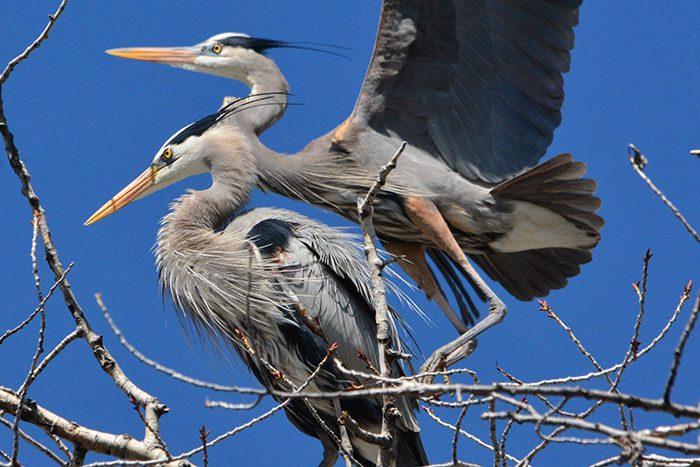
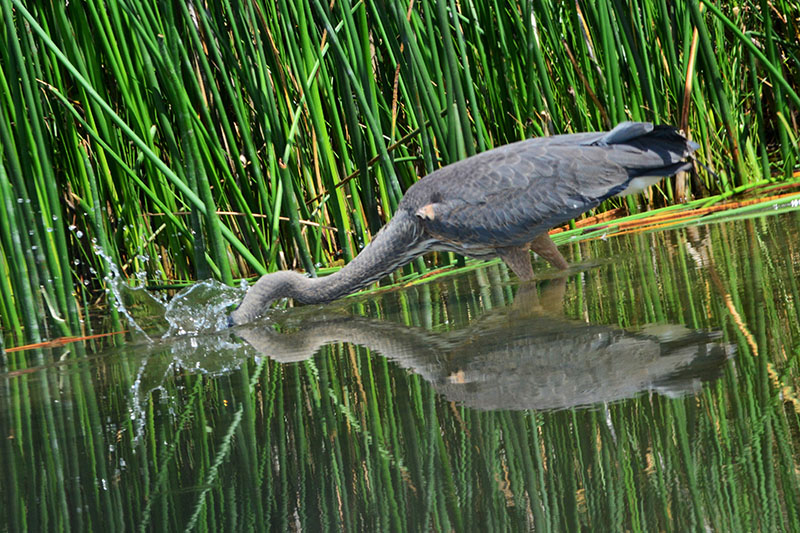
The action was swift and deadly. An eight inch-dagger grasped the small fish in a vice-like grip, then with a flip of its head, the Great Blue heron tossed the squirming fish, caught it and swallowed the snack whole. I wondered what if felt like to have a fish swimming down your throat – but am not about to find out.
I watched as the heron continued working the shallow water on the shores of Market Lake. It continued to collect not only small fish, but anything that swam or flew close enough for the large bluish-gray bird to collect. The next day I watched as two herons worked the shallows of on the South Fork of the Snake River, collecting frogs, dragonflies and even a snake as they hunted the reeds along the shore.

Usually Great Blue herons spear their prey behind the head, quickly flip it in the air and swallow it head first. On area waters, fishermen sometimes catch large fish with a hole behind the head where they have been speared by herons but were too large to be taken by the large wading birds. Herons have been known to choke to death because the prey has been too large for them to swallow it. During the winter, these large birds can be seen hunting rodents in area fields and grasslands, competing with hawks and owls.
Great Blues are the largest herons in North America and inhabit most of the United States and part of Canada and Mexico. During a recent trip to Texas, I watched as one hunted among other herons and egrets.
Many of the herons from Southeastern Idaho migrate south during the winter, but others will remain year around cruising the large rivers and warm spring creeks.
Breeding and nesting usually occurs in small to large colonies, called rookeries, containing up to several hundred of these homely birds. Pairs only bond for the nesting period with new partners chosen each year. Nests are usually constructed high in dead trees by the female from material gathered by the male. An active rookery at Mud Lake was abandoned several years ago when a pair of bald eagles took over one of the nests. The herons did not want to raise food for the hungry eaglets. One of the largest rookeries is located near the South Fork of the Snake River near its confluence with the Henrys Fork.

Once hatched the hatchlings will be fed partly digested fish puree from both parents. When food is plentiful, herons may raise one or two chicks. But when fishing is poor the larger chick will take most of the food and may even push the weaker chick out of the nest trying to guarantee its survival. Once on the ground chicks are doomed as the adults refuse to feed grounded chicks.
Great Blue herons are a highly adaptable species allowing them to thrive through difficult circumstances. Bald eagles are their chief predator and with the eagle population expanding, raids on heron rookeries are increasing. After the eagles attack a rookery, crows and ravens usually finish it off after the adults have abandoned the nests. In recent years almost 50% of heron nests have been destroyed by predatory birds nation-wide.
As you travel along the waterways be observant as they blend in very well. Its flight is a slow, deliberate wing beat with its feet trailing and a tightly curled neck as it looks for a place to rest or feed.

Living the Wildlife is brought to you by Yellowstone Teton Territory. Experience 7,500 square miles of untamed wilderness in Eastern Idaho's Yellowstone Teton Territory. Where majestic peaks meet endless adventure, your perfect outdoor escape is waiting. Start planning at YellowstoneTeton.com.