


Schiess: Turkey Vulture – Headless garbage disposal.
Published at
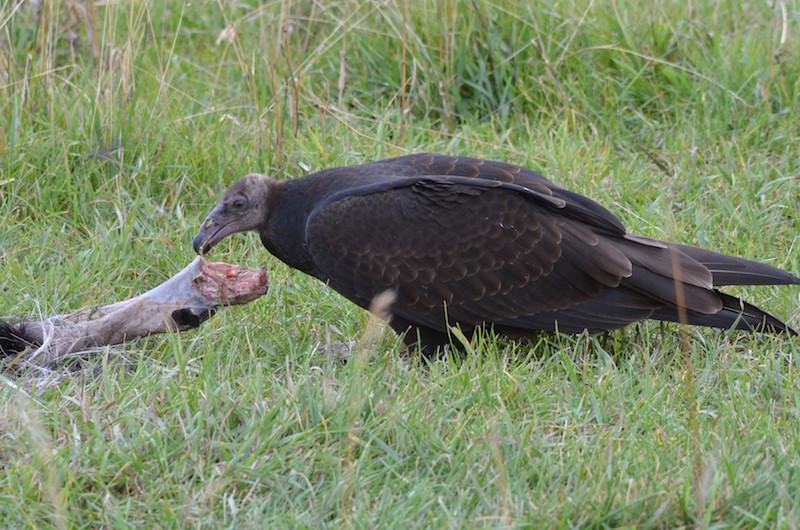
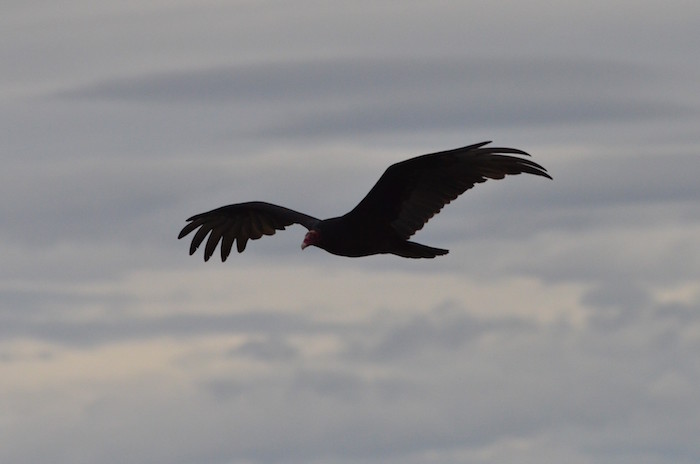
The air was calm as the sun warmed the desert air and a large black bird soared on upturned wings, twitching not a single feather or barbule of the feather. The bird appeared to be headless but a large black tail ruddered the bird in a large revolving circle over the sagebrush, gently increasing its height. It was searching for any offensive odor rising from the ground.

The Turkey Vulture is known as Cathartes aura meaning, “scavenger of the breeze,” which fits it perfectly. It loves to ride afternoon thermals over large areas looking for dead critters to eat. It needs the thermals created by the sun-warmed ground to provide lift for its effortless flight. It is usually not an early morning hunter.
It will scavenge on anything dead. This fall I watched as a family of vultures ate a road-killed skunk, leaving only a smelly skin and the skull. Unlike tween boys who need to be dared to eat foul things, the turkey vulture seeks out and relishes rotting carrion. Baby vultures get the best treatment of all – warm food already partially digested so the tummy doesn’t need to work too hard. They learn early to enjoy the undesirable for most other animals and birds.

They hunt by flying low over the ground once the sun has warmed the ground. With their keen eyesight and smell, they are able to detect the gases produced by the decaying flesh of dead animals. Rarely do they feed on living animals or insects. Rotten is their delicacy.
They appear headless because of the nakedness of their head. Their featherless head plays an important part of their feeding as the bare head allows them to feed inside the cavity of a dead animal without getting a mass of messy, matted feathers.
With their diet of rotten flesh, the TV (turkey vulture) don’t get enough calcium for the development of eggs, so prior to nesting, the females will feed on whole mice and shrews. By digesting the bones from these rodents, enough calcium needed is developed for the egg shells. Another “U.S. Recommended Daily Allowance” needed for them is Vitamin C. The vulture’s liver and kidneys take the scavenged junk and manufacture this necessary supplement.
Rotting flesh pumps ethylmercaptan fumes into the air and the TVs are able to detect these fumes from a great distance. Oil companies when building pipelines will pump these fumes through the line and leaks can be detected when the circling vultures show up. I am sure they are disappointed when they find an empty table.
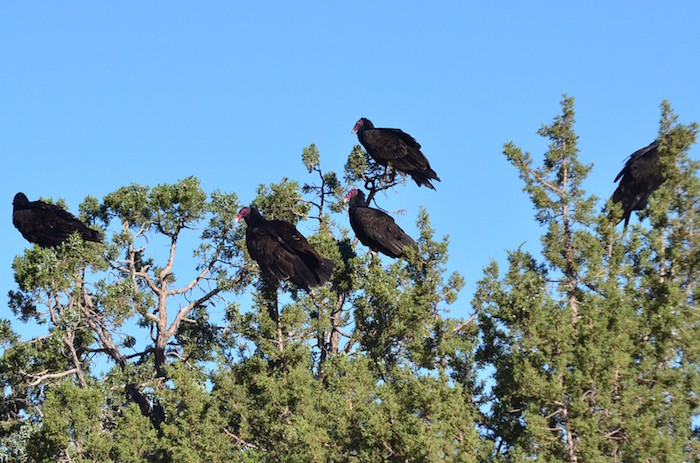
This summer I watched as 23 TVs were drawn to the fumes from a rotting road-killed deer. In the early morning sun, they would spread their wings while roosting on the nearby junipers. This habit warms their body and evaporates any moisture that may make their feathers too heavy to soar.
To an experienced eye, the TV (turkey vulture) is easy to detect from eagles or ravens while flying. Eagles and ravens hold their wings straight out while soaring whereas the TV wings are held in a dihedral, a shallow V.
Non-eaters of living flesh, if you are out in the desert lost and in danger of dying and you see the big black birds circling, don’t worry: they are not after you, but something else is dead that stinketh.

Living the Wildlife is brought to you by Yellowstone Teton Territory. Experience 7,500 square miles of untamed wilderness in Eastern Idaho's Yellowstone Teton Territory. Where majestic peaks meet endless adventure, your perfect outdoor escape is waiting. Start planning at YellowstoneTeton.com.