


Local volunteers build homes for falcons
Published at
The following is a news release from the Henry’s Fork Wildlife Alliance:
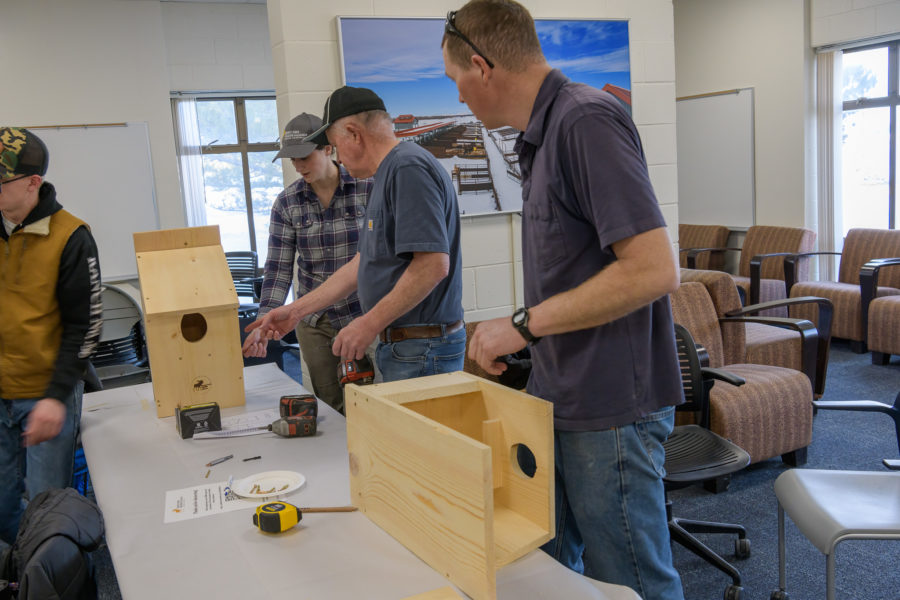
REXBURG — Students and locals gathered at BYU-Idaho’s Livestock Center this month to build nest boxes for America’s smallest falcon, the American kestrel. The project was sponsored by Henry’s Fork Wildlife Alliance. It was the third such event hosted by the non-profit organization.
Volunteer Coordinator Caitlyn Wanner spoke briefly about the value of kestrels to farmers and the best places to put up a nest box.
“Kestrels are good friends to farmers,” Wanner said. “During the summer, they tend to hunt within a mile of their nests so the only reason you might not have a kestrel in your area could be because there aren’t old tree cavities nearby for them to nest in. That’s where the nest boxes come in. Putting up a nest box near farm or pasture land can instantly create breeding habitat for a pair of kestrels.”
Kestrels, also called sparrow hawks, weigh about four ounces. They hunt in open fields and meadows and their diet includes rodents, lizards, small birds, and large insects such as grasshoppers. One research study says, “predators like American kestrels consume numerous crop pests and reduce crop damage” (NSF Research News March 2018).
Shawn Powell, a farmer from Rexburg, attested to the value of having kestrels around his farm: “Every year we get birds in our barn that are noisy and poop on everything. We noticed that any time a couple kestrels move into the barn, all the sparrows and starlings disappear. They just leave. So, we’ve been looking for a while for a way to attract the kestrels more frequently. It’s also really neat to watch them hunt.”
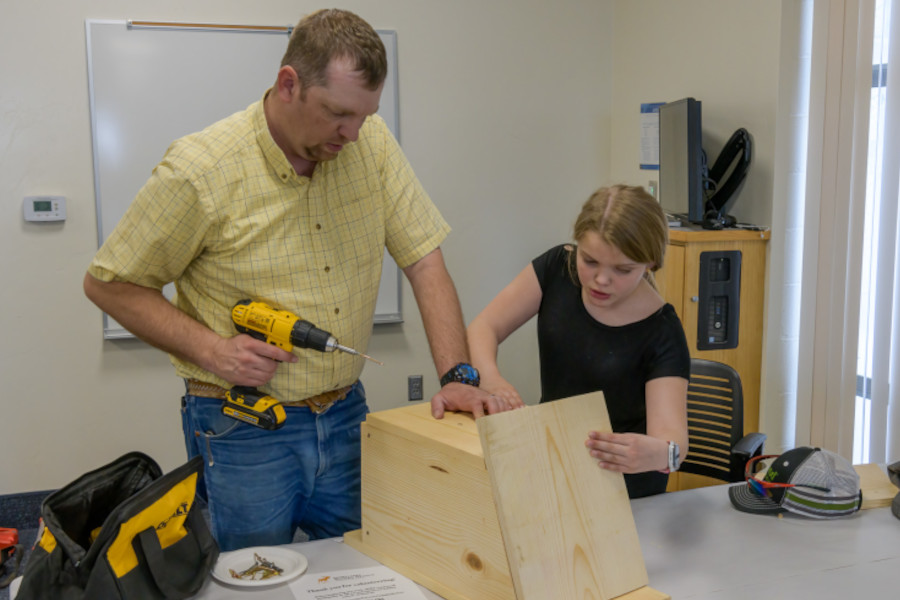
HFWA provided the materials for the boxes. IronHome, LLC in Sugar City and students in Denton Perkin’s shop class at South Fremont High School helped cut the wood before the event. Participants were allowed to keep the first nest box they built for free, and were encouraged to build a second box that HFWA could sell at local farmer’s markets to raise money for conservation projects.
Tracy River, an HFWA board member from Island Park, was at the event. She is proud to see the program moving forward.
“It was encouraging to see the community come together and work to improve the habitat for such an important bird of prey,” Riber said. “Everyone appeared to have so much fun.”
HFWA will help participants monitor and care for their nest boxes. Records of successful nests and chicks will be uploaded to The American Kestrel Partnership, a project by The Peregrine Fund dedicated to monitoring kestrel populations and solving the mystery of their decline across the nation.
So far, these events have provided 15 kestrel boxes to residents in Ashton and Rexburg, with more available for sale. Wanner hopes to hold similar events throughout the year and also in Teton Valley. Community members who aren’t able to attend a box-building event can purchase a nest box from HFWA at the Ashton and Driggs farmer’s markets this summer.