



The beauty and intensity of the hooded mergansers
Published at

One of my favorite waterfowl is the male hooded mergansers because of their beauty and their intensity while pursuing a partner and while gathering something to eat. I recently saw these actions both on top of the water and under the surface.
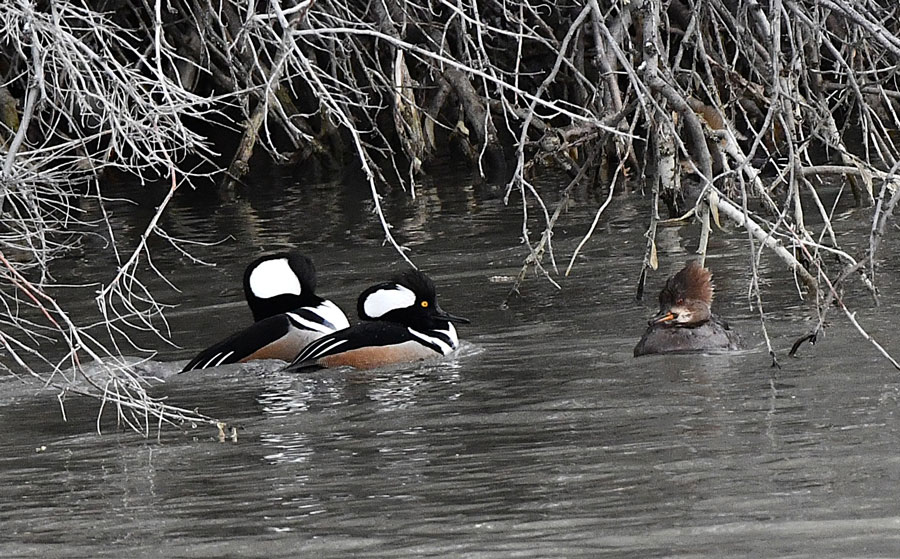
Three hooded mergansers, two males and a female, were swimming near some willows on Warm Slough west of Rexburg when all heck broke loose. One of the males decided that the other one was too close to the female, grabbing the interloper by the neck and pulled him under the water. After about a minute under the water, both males popped up and resumed their battle on the surface.
The aggressor made several more attempts to grab the throat with his serrated bill but was unsuccessful until the loser flew off leaving the pair alone. It was one of the most vicious battles that I have witnessed between two birds. They were serious while the hen stayed out of reach from them and waited for the victor before the two of them also flew away.
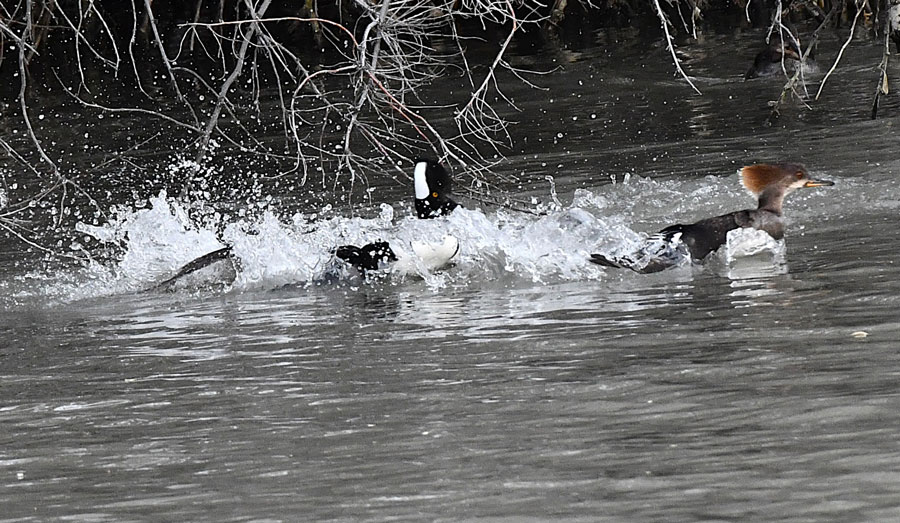
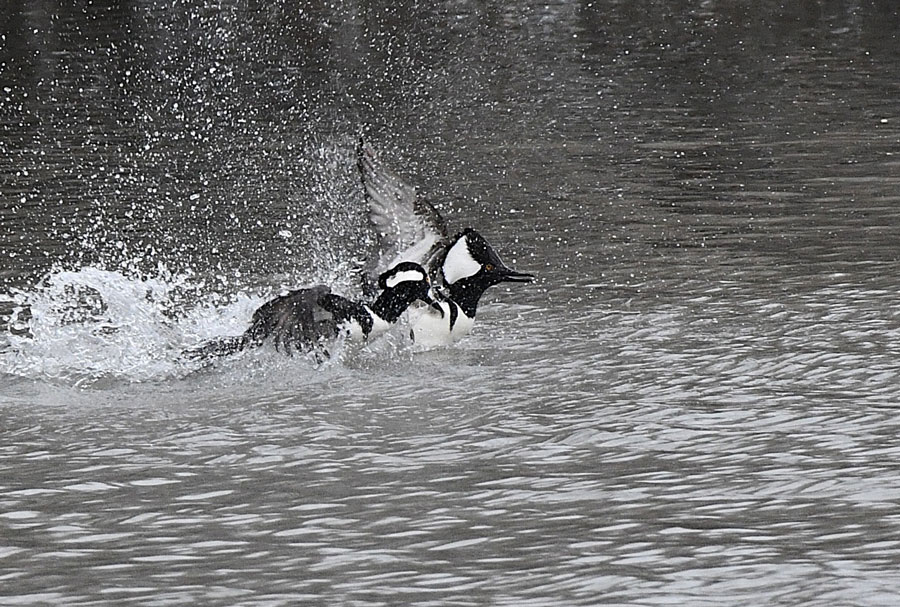
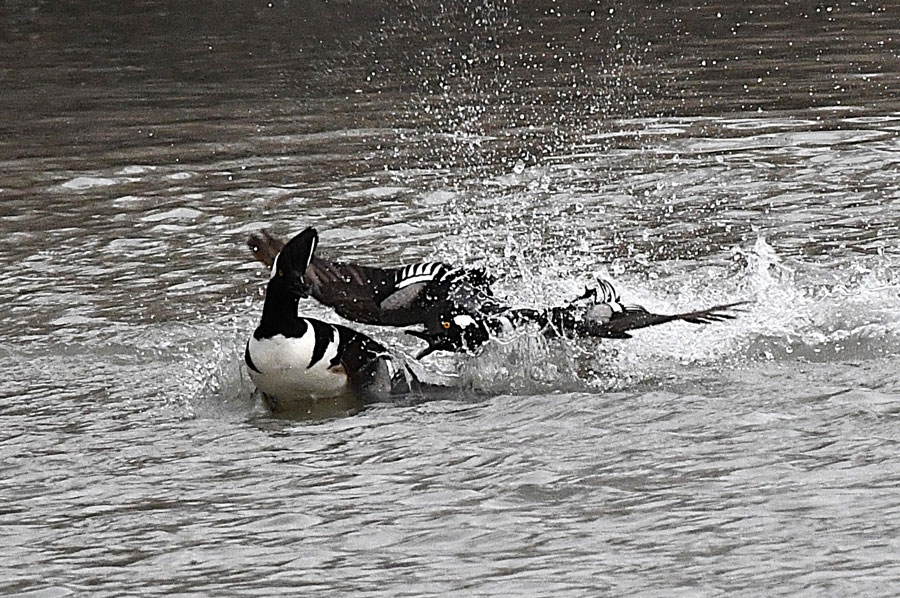
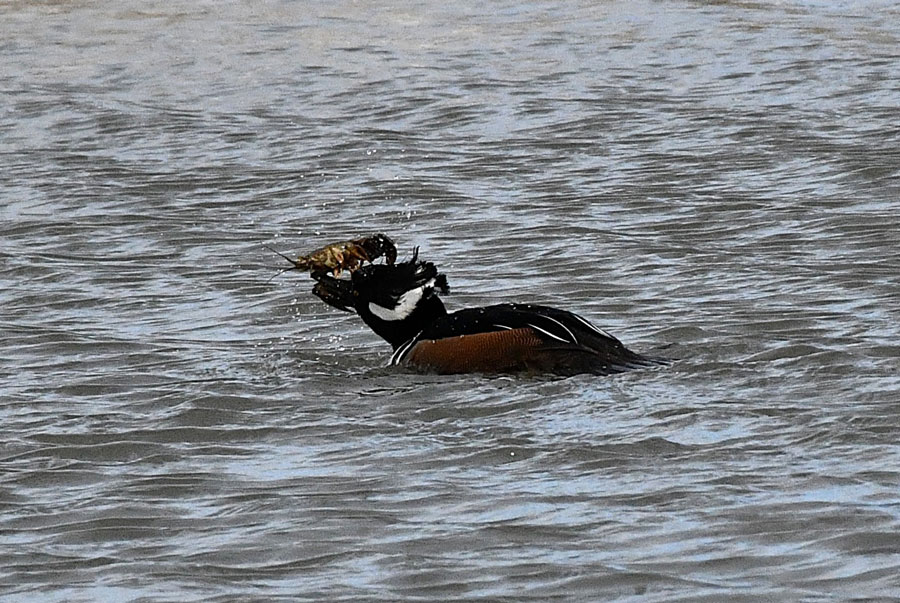
I decided to head to a deeper pool where I had been watching a few hoodies displaying and harvesting their favorite food – crayfish. There were two males in the pool doing some showing-off and diving for food. Finally, one surfaced with a huge crayfish – his food preparation was almost as violent as the previous battle.
First, he grabbed a claw and beat the crayfish on the water until the claw was removed which was followed by removing the other claw. He then grabbed the crayfish on the neck with his strong bill to dispatch the large crustacean then removing its legs before swallowing the whole body.
I have seen hoodies eat smaller crayfish without removing their claws and legs, but this one was too large. It took several attempts before it got breakfast down the hatch.
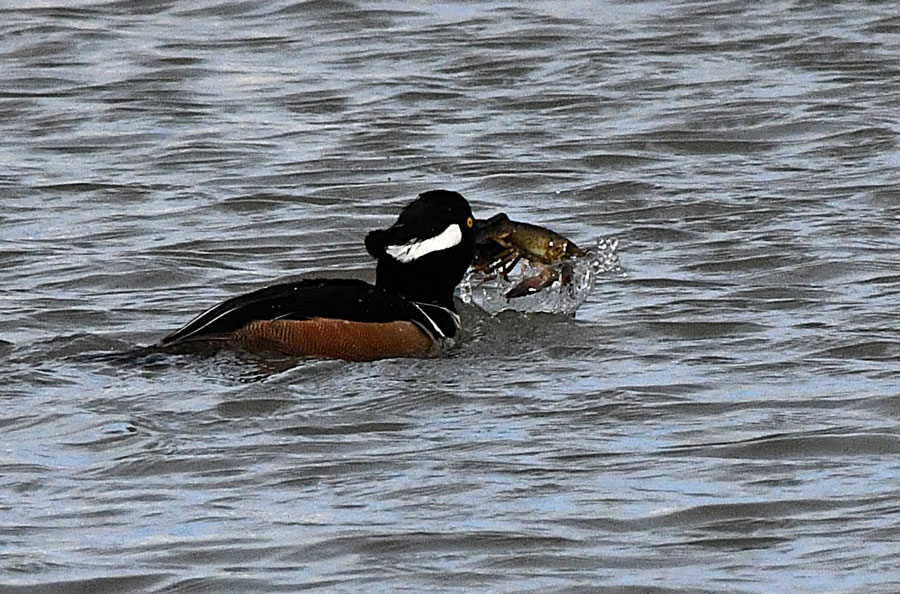
Hooded mergansers are built to capture and eat crunchy food. They have a very strong and thick-walled gizzard filled with stones to grind up the shells from the crayfish. They also have special eyes that can change their refractive properties to better see under water to help them capture prey. A nictating membrane, a transparent third eyelid, covers their eyes while underwater to protect the eye but still allows them to see.
Their serrated bill not only helps them in battles, but it allows them to capture and hold slippery fish when they want soft food.
Hooded mergansers are also cavity nesters like wood ducks so old cottonwood and aspen trees near water is necessary for nesting. The female tries to find a suitable nest from 10 to 50 feet above the ground where she can lay from six to 12 eggs. She does not start incubating the eggs until her clutch is full as she wants all the eggs to hatch the same day. This is called, “synchronous hatching.”
Once the eggs are hatched, the female gets on the ground below the nest, checks for any predators, then starts calling to the ducklings that jump out of the nest one-by-one down to her. Her significant other disappeared when she started sitting on the eggs and has no interest in helping her raise the babies. He is off with the other boys.
The key to the duckling’s survival is to get to water, so mom leads the way to the nearest water where they can get food. There she will do her best to raise the little balls of fur until they can take care of themselves.
The hooded merganser population is increasing, especially in the Midwest where people are building and maintaining nest boxes for them. If you have suitable property for them to nest in, you may consider putting out nest boxes built for both hoodies and qood ducks. It might surprise you what find in them. I recently found a saw-whet owl nesting in one.
After this weather settles down a bit, we will see more shorebirds and songbirds moving through our area; enjoy them!!!

Living the Wildlife is brought to you by Yellowstone Teton Territory. Experience 7,500 square miles of untamed wilderness in Eastern Idaho's Yellowstone Teton Territory. Where majestic peaks meet endless adventure, your perfect outdoor escape is waiting. Start planning at YellowstoneTeton.com.