



Montana Fish and Wildlife Commission approves increased wolf quota for hunting and trapping season
Published at | Updated at
Micah Drew, Daily Montanan
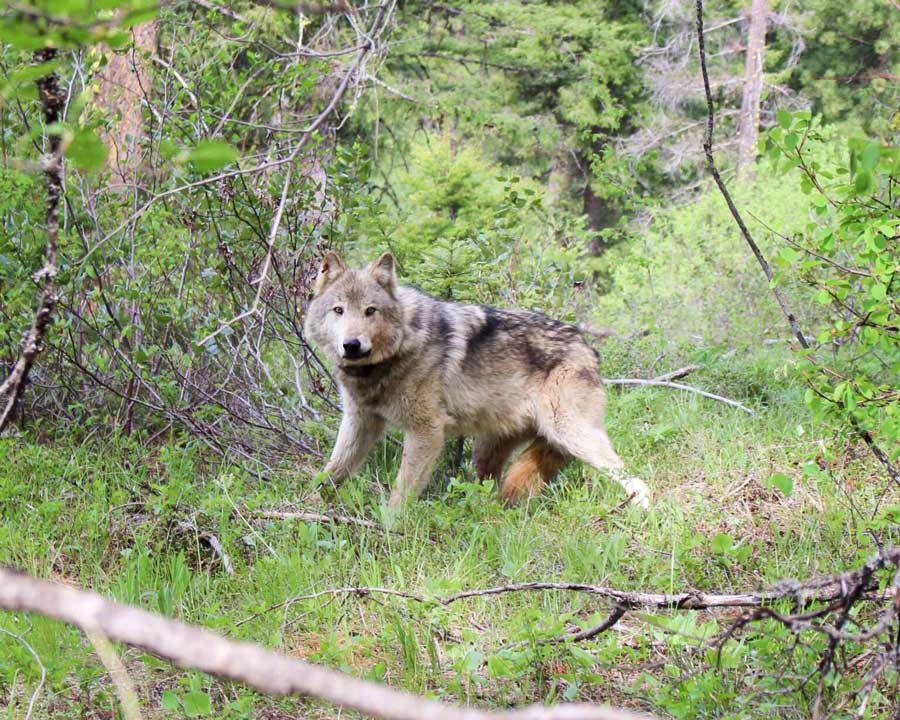
HELENA, Montana (Daily Montanan) — After more than six hours of public comment and debate, the Montana Fish and Wildlife Commission at its Aug. 21 meeting adopted new wolf hunting and trapping regulations that significantly increase the number of wolves hunters and trappers can kill statewide.
Under the new hunting and trapping regulations, a 452-animal quota now exists for much of the state, with a few carveouts of more stringent regional quotas. That statewide quota is higher than harvest numbers for the last few seasons — hunters and trappers killed 297 wolves last season, while the most killed in a season was 326 during 2020.
The move follows a contentious legislative session this spring that saw several debates about Republican lawmakers’ intent to decrease the state’s population of roughly 1,100 wolves, though ultimately legislators fell short of more aggressive proposals for the state.
“I support the management plan that you had today before you as amended, because it is a step in the right direction,” said Rep. Paul Fielder, R-Thompason Falls. “But you’re not done yet.”
The commission debated several amendments to the formal package of hunting and fishing regulations recommended by Montana Fish, Wildlife and Parks, and unanimously approved the following:
- A statewide quota of 452 wolves,
- A three-wolf quota for two wolf management units north of Yellowstone National Park,
- A 60-wolf quote for Region 3, covering Southwestern Montana,
- Hunters and trappers will be able to take 15 wolves on a single hunting or trapping license — 30 in total — as long as five are hunted and five are trapped in Regions 1 or 2, and
- The use of infrared scopes, and thermal imagery scopes on private land.
Fielder and other Republican legislators, including Reps. Jedidiah Hinkle, chairman of the Fish and Game Committee, and Shannon Maness, said that going back to the 2021 session, it has been the intent of the legislature to reduce the wolf population down to around 450 animals, enough to support 15 breeding pairs. In the years since that law was passed, the statewide population has barely dropped.
“We are not getting desired results,” Maness said, adding that the Legislature would continue the debate in 2027 if that status quo continued.
But opponents to the new hunting regulations, which included some legislators and conservation groups that opposed wolf hunting bills during the legislature, argued during the meeting that the commission was going too far in establishing its new quotas and using politics, instead of science, as a basis.
“The department is bringing us, quite frankly, a proposal that looks a lot like those bills that were voted down in the legislative session. I will say, it’s frustrating,” said Karrie Kahle, conservation director for the Park County Environmental Council. “Quota doesn’t work, and it’s not going to work. We have regions. We have commissioners from regions who should be working within their regions to figure out what those quotas should be, and talking with their stakeholders and constituents and looking at the science.”
The environmental council and other opponents including Gallatin Wildlife Association, Wild Livelihoods Business Coalition, also argued for the commission to consider the economic impacts wolves have in the areas near Yellowstone National Park.
According to a 2022 study by the University of Montana’s Institute for Tourism and Recreation Research, “wolf centric ecotourism” the Yellowstone region brings in more than $82.7 million to local economies.
Representing the Wild Livelihoods Business Coalition as a guide, business owner and biologist Cara McGary said that continuing to limit the number of wolves that can be killed outside of Yellowstone is a vital part of the regulations. The commission had proposed keeping a three-wolf quota in two hunting districts just north of the park.
“This is crucial for protecting the product that attracts many visitors to my area, enables us to have really great jobs, while enabling a few locals in my area who want to hunt and trap wolves to also do that,” McGary said. “Montana is big and diverse. There seems to be a lot of frustration around a lack of definition of what a sustainable wolf population is. I really hope the department works on defining that.”
Some opponents also brought up issues with the model the state uses to estimate wolf populations. That model, known as iPOM, was criticized in a recent federal court ruling for potentially giving inaccurate data. The ruling in the lawsuit now requires the federal government to reconsider whether gray wolves should be given protections under the Endangered Species Act again.
In addition to the legislators who spoke in favor of reducing wolf populations, representatives from several organizations including the Foundation of Wildlife Management, the Montana Stockgrowers Association and the Montana Trappers Association favored the more aggressive harvest regulations, as populations have remained relatively steady ever since hunting and trapping were legalized in the state.
According to Montana Fish, Wildlife and Parks data, the population of wolves peaked in 2011 and has declined slightly in the last decade due to hunting, trapping and management actions.