



Four candidates seek two contested seats on Driggs City Council
Published at | Updated at
EDITOR’S NOTE: EastIdahoNews.com will publish the responses to candidate questionnaires every day through the municipal election on Nov. 4. Read them all here.
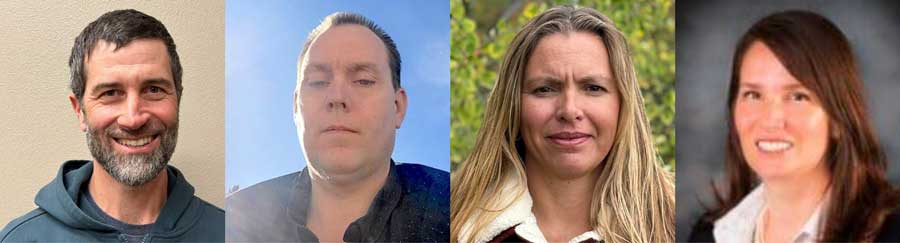
DRIGGS — Four candidates are running for two contested council seats on the Driggs City Council: Jason Popilsky (the incumbent), Sarah Johnston, Terri Ackerman and Robert Boyles. The top two vote-getters will win the race.
Each candidate was sent the same list of eight questions, with a word limit of 250 words per answer. Responses were only edited for minor punctuation, grammar, and length.
Candidate Jason Popilsky did not respond to the questionnaire.
Learn more about candidates Johnston, Ackerman and Boyles in their responses below.
Elections are on Tuesday, Nov. 4.
QUESTIONS
Tell us about yourself — include information about your family, career, education, volunteer work, and any prior experience in public office.
Terri Ackerman: I have been an attorney for 32 years. I am a member of the Idaho, Wyoming, and Pennsylvania bars. I have a wide range of legal experience, including matters related to aviation law and various regulatory compliance issues. I grew up in Western Pennsylvania, and made my way to law school at Villanova. I lived in Philadelphia for many years before moving to Idaho 15 or so years ago. I love Idaho, and I love living in Driggs. I work remotely for a law firm based on the east coast, and I homeschool my kids.
Robert Boyles: I am a proud, long-term resident of Driggs with deep roots in this community. My professional background has been focused on public service and safety. Most notably, I served as a Code Enforcement Officer for the City of Driggs. This role provided me with firsthand experience of our city’s ordinances, the challenges faced by residents and businesses, and the inner workings of our local government. This direct experience has provided me with a practical understanding of city policy and has fueled my desire to serve our community on a deeper level.
Sarah Johnston: My name is Sarah Johnston. I have lived and worked in Driggs for over a decade, giving me a clear perspective on our community’s needs and opportunities. I have also been a licensed civil engineer in the State of Idaho since 2013.
I studied engineering at the University of Wyoming in Laramie, graduating at the top of my class in 2007. Since then, I’ve worked as an engineer in both Jackson and Teton Valley while raising our son, now in middle school, with my husband.
In addition to my professional work, I believe in serving our community through public involvement. I served on the Teton County Planning & Zoning Commission from 2015 to 2020, the Teton County Road Committee in 2014, and the Teton County Development Impact Fee Advisory Committee from 2013 to 2017.
I’ve also volunteered in several non-engineering capacities, from community events to local initiatives, reflecting my belief that contributing at every level — whether technical or hands-on — is essential to a strong town.
What is your proudest accomplishment?
Ackerman: Homeschooling my kids!
Boyles: My proudest accomplishment is my consistent and active participation in our local government from a citizen’s perspective. By regularly attending City Council meetings, I have remained informed about key issues and actively contributed to the public discourse, offering input that has helped shape city policy. I believe that being an engaged and constructive voice for the community, even before seeking office, is a vital civic duty and has prepared me to be an effective representative for the people of Driggs.
Johnston: My proudest external accomplishment is helping bring a community organization to life. When I supported my husband in founding the Teton Rock Gym, I helped create not just a climbing facility, but a gathering place — a space where families, kids, and neighbors could feel connected and supported. Seeing an idea become a real resource for our community showed me what’s possible when people collaborate with passion and persistence.
My proudest internal accomplishment is staying true to my values — especially in moments when it would have been easier to stay silent. I’ve learned that meaningful change doesn’t start with titles or authority; it starts with everyday people speaking up, not for recognition, but because it’s the right thing to do.
Why are you seeking political office within your community? Briefly explain your political platform.
Ackerman: I am hoping that as an attorney, I might be able to be of service with regard to addressing regulatory compliance issues associated with our wastewater treatment plant, and our airport. I am hoping that I might also be of service to our law enforcement.
Boyles: I am running for City Council out of a commitment to ensuring Driggs remains a vibrant, functional, and affordable community for everyone. My platform is built on two common-sense principles:
- Modernizing City Code: My experience in code enforcement revealed opportunities to clarify, simplify, and update our city ordinances to be more responsive to the needs of residents and small businesses.
- Upholding Fiscal Responsibility: I am dedicated to ensuring every taxpayer dollar is spent wisely and transparently. My goal is to maintain and improve essential city services while safeguarding the long-term financial health of our city.
I am eager to collaborate with fellow council members to achieve these goals through practical, well-reasoned solutions.
Johnston: I’m running for city council because I believe governance works best when it is practical, transparent, and accountable to the people it serves. I care deeply about Driggs as a long-time resident, a parent raising a child in this community, and as an engineer.
I want to help ensure that our town grows in a way that is thoughtful, financially responsible, and reflective of our community’s priorities while protecting our town’s character.
My platform is focused on three practical priorities:
- Improving our streets and transportation flow to reduce current congestion and prevent future bottlenecks as Driggs grows.
- Upgrading our wastewater treatment system to correct past deficiencies and support the evolving needs of our community.
- Planning and building a community recreation center in collaboration with various nonprofits and private donors to create a shared space where residents of all ages can gather, stay active, and build community.
Beyond these core goals, I’m committed to making sure residents are genuinely listened to in city decision-making. I’m not running for a title — I’m running to deliver results for our community. With my technical background and collaborative approach, I’m ready to help move Driggs forward in a thoughtful and positive way.
What are the greatest challenges facing people in your community? What is your plan to meet and overcome those challenges?
Ackerman: I think the regulatory compliance issues that we currently face are our greatest challenges. I am hoping that I can be of assistance by digging in to help work with the attorneys who are helping us with these matters.
Boyles: The most significant challenge facing our community is the housing affordability crisis. It affects our families, local businesses, and the very fabric of our town. I plan to tackle this with a multi-pronged approach:
- Increase Housing Diversity: We must actively encourage and streamline the process for building a wider range of housing options, including apartments, townhomes, and other multi-family dwellings. This will increase supply and provide more attainable choices for our workforce and families.
- Foster a Stronger Local Economy: We need to focus on creating an environment that supports local businesses and attracts well-paying jobs. A thriving job market is essential so that residents can afford to live, rent, and buy homes right here in their own community.
By addressing both the supply of housing and the economic health of our residents, we can make meaningful progress toward overcoming this critical challenge.
Johnston: One of the biggest challenges facing Driggs is how to adapt to growth while preserving the qualities that make this a great place to live. As more people move to the valley, we face increasing pressure on our infrastructure, roads, public services, and our sense of connection. If we don’t plan carefully now, we risk trading livability for congestion and higher costs.
To address this, we need proactive — not reactive — planning. My focus is on three core solutions:
Creating public spaces that bring people together, such as a community recreation center. A stronger community doesn’t happen by accident — it’s built through shared places and shared experiences.
Improving street design and traffic flow before congestion becomes unmanageable. Smart transportation planning now will save residents time, fuel, and frustration in the future.
Upgrading essential services like wastewater treatment, so our growth doesn’t compromise our health or environment. Strong utilities are the backbone of responsible development.
How will you best represent the views of your constituents – even those with differing political views? How will you communicate directly with constituents?
Ackerman: I am open and interested in what everyone thinks and feels is important. We can all learn from each other!
Boyles: My commitment is to represent the entire community, which means actively listening to all perspectives, not just the loudest voices. Accurate representation requires making balanced decisions based on the well-being of Driggs as a whole.
To ensure open communication, I will:
- Be Accessible: I am committed to being available to residents. I will maintain an active and professional social media presence for updates and will always be open to scheduling one-on-one meetings.
- Listen Respectfully: My philosophy is simple: everyone deserves to be heard. While we may not always agree on every issue, I promise to listen respectfully to your concerns and consider your perspective in my decision-making process.
Johnston: I believe that effective leadership starts with listening. Every resident, regardless of background or perspective, deserves to have their voice heard and their concerns considered in city decisions. I will represent all constituents by actively seeking input, asking questions, and weighing decisions based on facts, shared values, and the long-term needs of our community — not personal or political preferences.
Communication is key. I welcome direct conversations — in person, by phone, or online — because solutions are strongest when shaped by the people who live here. My approach is simple: be transparent, accessible, and make sure every resident is heard and respected, even when opinions differ.
What parts of the city budget could use more funding? Where are places in the budget where cuts could be made?
Ackerman: One of my favorite things about Driggs is our outstanding 4H program. Every year, I am amazed at what our 4H programs offer our children, and I would love to find ways to increase support for this program. I am always in favor of providing more funding to our schools. I am not sure at this time where cuts could be made, and feel that that subject requires very careful consideration.
Boyles: My top priority for additional funding would be Public Works. Investing in our core infrastructure—such as road maintenance, water systems, and snow removal—is crucial for maintaining public safety and ensuring the daily functioning of our city. These services form the foundation of our community and have a direct impact on every resident.
Regarding cuts, my approach is one of careful analysis, not broad strokes. Before considering any reductions, I would advocate for a thorough review of all departmental spending to identify potential inefficiencies. The city budget is lean, and our primary goal should be to maximize the value of every dollar we spend, rather than making cuts that could compromise essential services.
Johnston: I believe the city budget should reflect our community’s priorities while maintaining financial responsibility. Areas that could benefit from increased investment include infrastructure and public services that directly impact residents’ quality of life. The health, safety, and well-being of residents is essential, and strategic investing now can prevent much larger costs in the future.
At the same time, I would look for efficiencies and careful management in administrative and discretionary spending. By working proactively to avoid regulatory fines and reduce litigation — and by prioritizing projects with the greatest community impact — we can ensure taxpayer dollars are used wisely. I see my role as helping balance fiscal responsibility with the need to fund projects that make a real, lasting difference in the community.
Regarding the airport, what is your vision for the Driggs-Reed Memorial Airport? What role should it play in the community, and what is its impact on the local economy?
Ackerman: I think that we need to carefully manage airport operations, and work towards reducing airport-related noise levels for residents. We need to optimize airport uses that benefit us as a community.
Boyles: My vision for the Driggs-Reed Memorial Airport is for it to be a vital economic asset that operates in harmony with the community. It serves as a critical gateway for tourism, supports local businesses, and provides a significant revenue source that helps fund essential city services, thereby easing the tax burden on residents.
Balancing the airport’s economic benefits with the quality of life for nearby residents is paramount. The key to resolving issues like noise is fostering a proactive and transparent relationship between the city, the airport board, and the public. By improving communication and offering educational initiatives about the airport’s operations and direct financial benefits, we can build greater community understanding and work collaboratively to find solutions.
Johnston: The airport is an important asset for our community, providing connectivity for residents and visitors. My vision is for the airport to support safe, efficient, and responsible operations that benefit both the local economy and the quality of life in Driggs. The airport plays a key role in attracting tourism, supporting local businesses, and providing emergency services, all of which contribute to economic vitality. At the same time, it must be managed thoughtfully to balance growth with noise and traffic impacts.
I support planning and policies that enhance the airport’s economic contribution while minimizing negative effects on the surrounding community.
Another apparent economic driver is the Grand Targhee Resort expansion. What impact will that development have on Driggs? How can the city capitalize – or mitigate – issues related to the presumed growth? For instance, what’s your strategy for parking in Driggs, and how might it benefit or harm the city?
Ackerman: I have not yet fully formed my opinions on this issue; but, am concerned about it, to be frank. I think we need to very carefully address all of the potential issues we will be facing regarding this expansion. Parking is one issue; but, I am also very concerned that we may be facing an increase in crime in the future. I feel that we need to plan to support our law enforcement officers, and explore ways to educate and prepare the community for this, and to discourage and reduce crime.
Boyles: I support the expansion of Grand Targhee Resort and see it as a significant opportunity for our community. As a resort town, our economic health is closely tied to tourism. This expansion will bring more visitors, create valuable jobs both at the resort and within our city, and increase revenue for our local businesses.
To capitalize on this growth while mitigating potential issues, the city must take a proactive approach. Our strategy should focus on:
- Infrastructure Planning: We must ensure our infrastructure can support the growth. This includes developing a comprehensive parking strategy for the downtown core that serves businesses and visitors without burdening residential neighborhoods.
- Promoting Local Investment: We should encourage the development of hotels and other visitor amenities to position Driggs as a destination where tourists stay, shop, and dine, rather than just a pass-through town.
By planning thoughtfully, we can leverage this expansion to enhance our city’s amenities, strengthen our economy, and solidify Driggs as a premier destination, benefiting all residents.
Johnston: The expansion of Grand Targhee Resort will likely bring more visitors, economic activity, and opportunities for local businesses — which is a positive for Driggs. At the same time, increased tourism and development can put pressure on streets, parking, and public services if not managed proactively.
To capitalize on this growth while mitigating negative impacts, the city should focus on smart planning and infrastructure improvements. This includes expanding and improving streets and traffic flow, creating safe and accessible parking solutions, and investing in public amenities that serve both residents and visitors. By planning ahead, we can ensure the benefits of growth — new jobs, increased revenue, and vibrant downtown activity — outweigh the challenges, and that Driggs remains a welcoming and livable community for residents.