



Spotted wing drosophila found in Franklin County
Published at
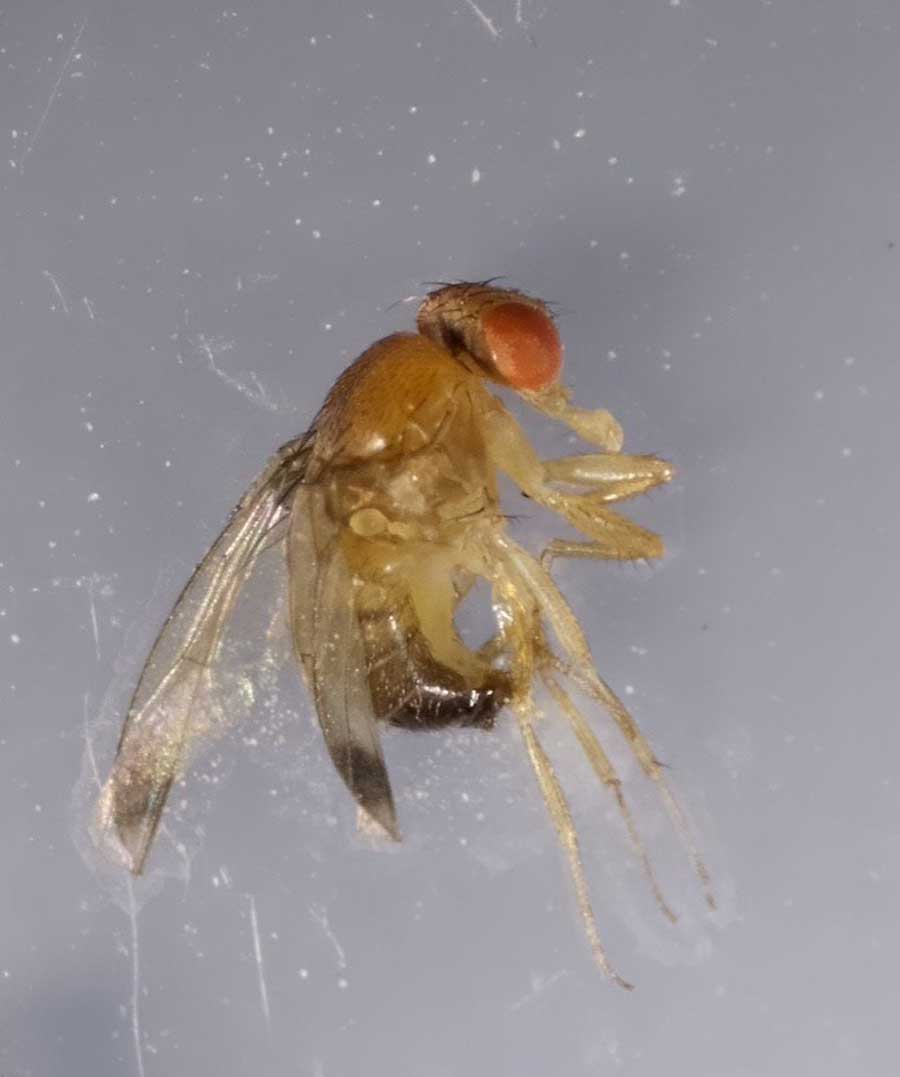
One of the best parts of working with University of Idaho Extension is the constant learning opportunity. Recently, I had a learning experience that hit close to home—literally.
What is spotted wing drosophila?
Spotted wing drosophila (SWD) (drosophila suzukii) is a small vinegar fly. Males of the species have distinctive spots on their wings. Unlike most fruit flies that target overripe or damaged fruit, SWD can pierce the skin of healthy, ripening fruit and lay eggs inside. It affects a wide range of berries and soft fruits and is listed as an invasive insect pest by the Idaho State Department of Agriculture.
SWD has been documented in northwestern Idaho and northern Utah, but until recently, it hadn’t been on my radar here in eastern Idaho.
A backyard discovery
After a recent discussion raised the possibility of SWD in our area, I decided to investigate. Taking advantage of the beautiful fall weather, I placed monitoring traps at two locations in Franklin County. To my surprise — and dismay — I caught spotted wing drosophila.
One of the trap sites was my own backyard, which made me realize I’ve probably been eating fruit with SWD larvae and eggs. I love fresh berries, and this discovery was a bit unsettling. Maybe ignorance really is bliss.
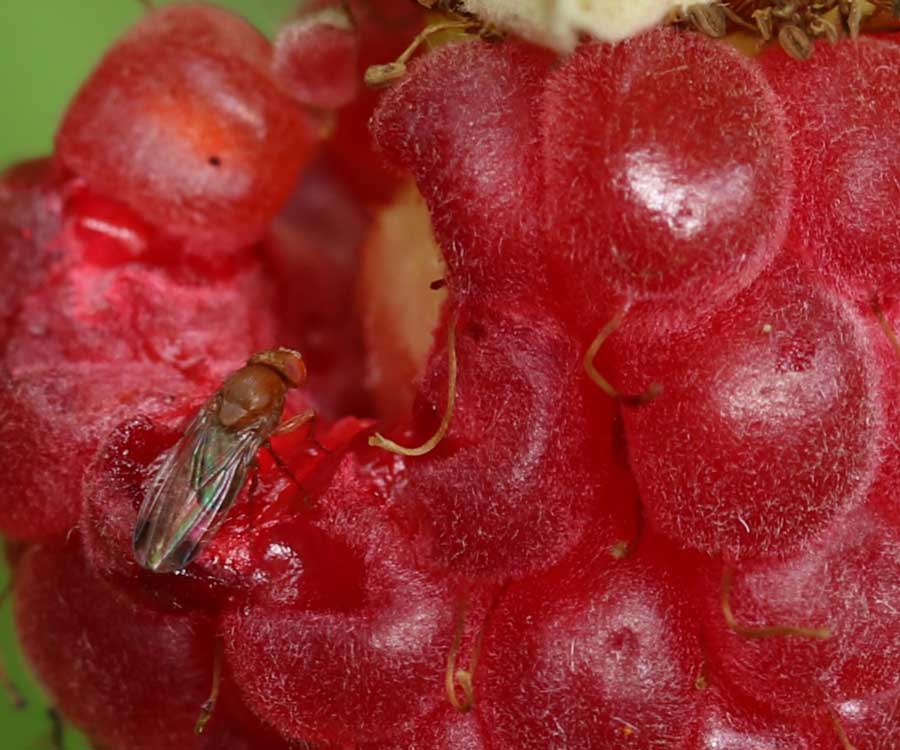
Is it safe to eat?
Yes! Despite the “ick factor,” fruit that may contain SWD eggs or larvae poses no known risk to human health. It’s safe to eat.
The real damage is to the fruit itself. Adult females injure fruit during egg-laying, and the larvae feed and tunnel through the flesh. Within days, the fruit becomes soft, wrinkled, and spotted. As larvae grow, they create breathing holes in the skin, which can lead to premature ripening and increased risk of mold or bacterial spoilage.
What can we do about it?
The first step in managing SWD is monitoring. While we’re a bit behind this year, next season we can start earlier and use the data to guide our decisions.
For now, the best action is sanitation:
- Remove fallen and infested fruit after harvest.
- Dispose of infested fruit in a strong, sealable plastic bag and place it in the trash.
- Solarize fruit by placing it under clear plastic in direct sunlight.
- Avoid composting or burying fruit, as these methods do not effectively kill SWD.