



New program helps fund trail network plan in Chubbuck and Pocatello
Published at | Updated at
POCATELLO – Pocatellans have the chance to put their money towards the future of the area’s trail system through an upcoming funding initiative.
Portneuf Health Trust aims to establish its Legacy Partner Program. It will match up to $1 million in donations towards the maintenance of 18 miles of trails in the Portneuf Greenway trail network. It will also match donations towards new trail development.
Portneuf Health Trust CEO Shawn Menchaca hopes to see trails become a viable method of transportation and recreation for more of the population.
“We’re really trying to encourage and figure out how to create a functional plan that allows people to use trails as a way to transport themselves to grocery stores, to church, to friend’s houses (and) to work,” Menchaca said.
Depending on where they live and work, the two newest greenway trails — the Idaho Central Credit Union Connecting Communities Trail and the Portneuf Health Trust Outback Trail — allow people to do just that.
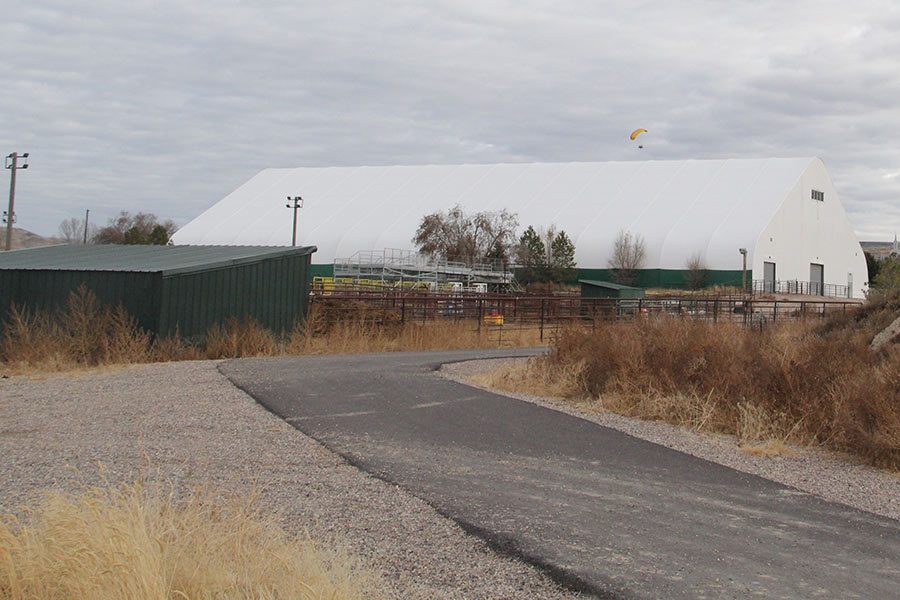
The Connecting Communities Trail begins at the Bannock County Event Center and ends at Pocatello Creek Road.
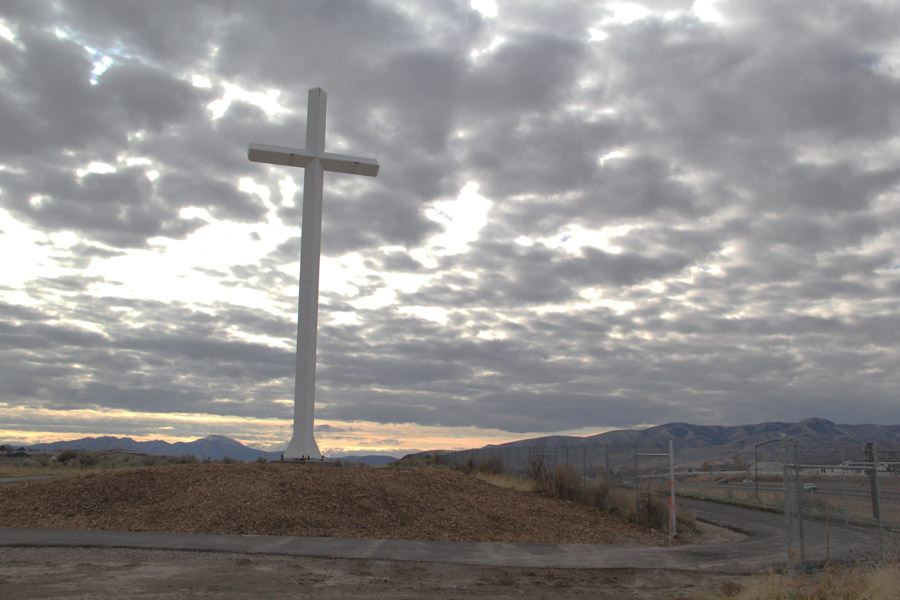
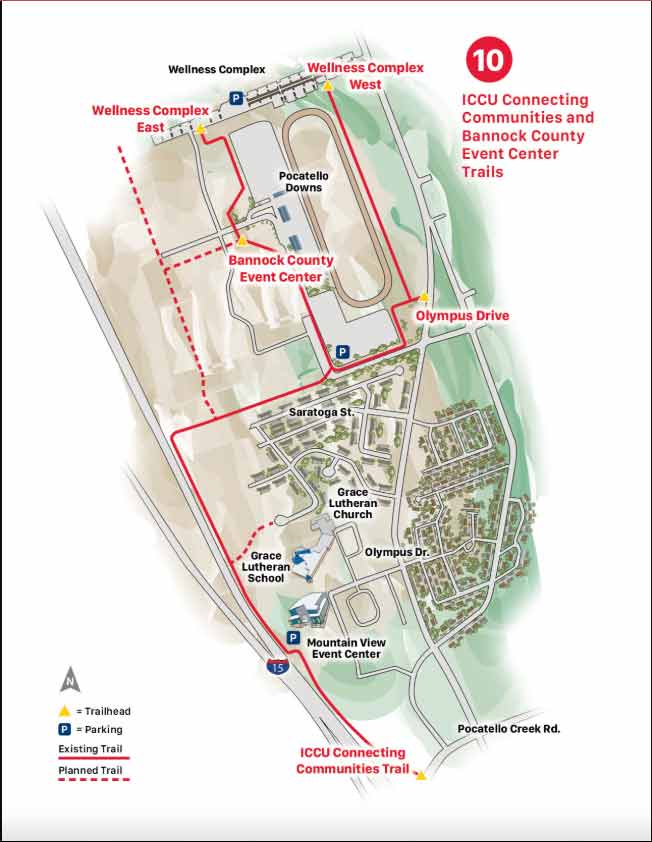
The Outback Trail starts on the other side of Pocatello Creek Road and continues south under Monte Vista Drive.
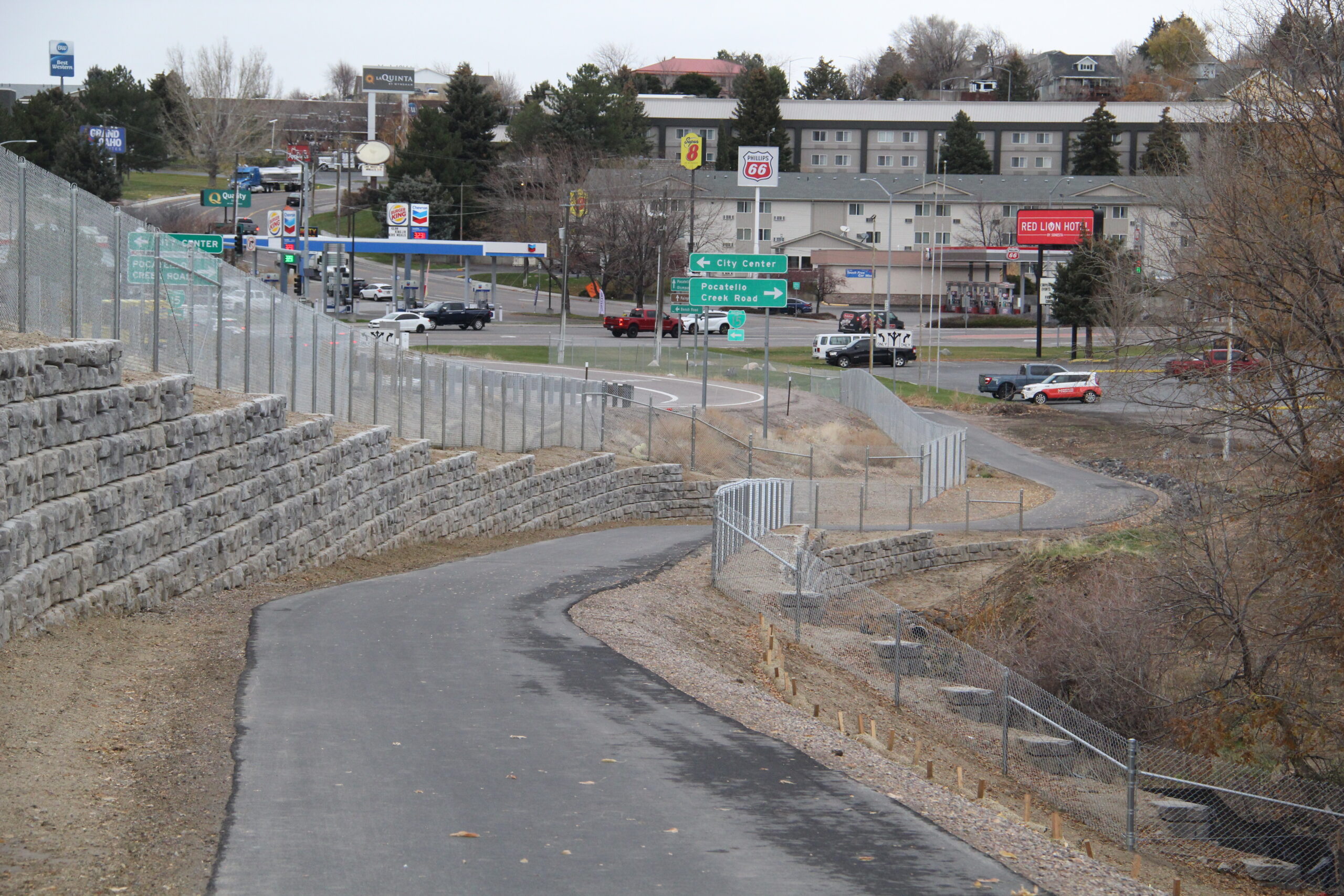
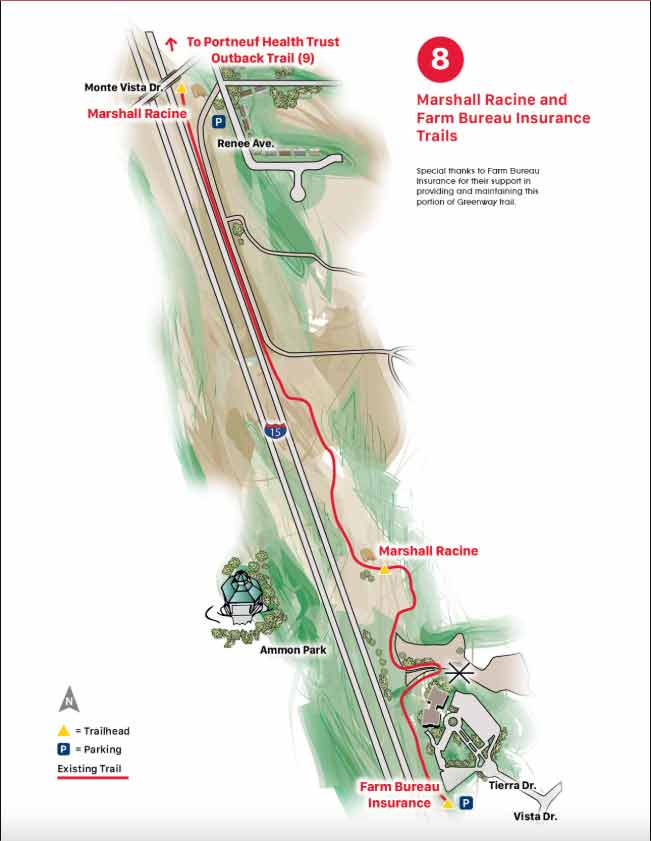
The existing Marshall Racine Trail continues alongside Interstate 15 until it reaches Farm Bureau Insurance on Tierra Vista Drive.
These three trails cover a little over two and a half miles.
Portneuf Greenway Foundation President Dan Harelson told EastIdahoNews.com the separation from traffic is important for people to feel comfortable using the path.
“The two big barriers to people walking and biking (is about) the safety,” Harelson said. “And then they want something close to their home.”
While more specific details on the Legacy Partner Program have yet to be finalized, these organizations have decided to move forward with it because their organizational goals align.
Menchaca says the health trust’s goal is to increase the health of the community through more than just medical care. It aims to make everyday physical activity accessible to more of the population.
“If you get out and you are physically active, you move more than 30 minutes a day, you’re going to live a longer, healthier, better life,” Menchaca said.
The health trust identified commonalities between the healthiest communities in the world, called “Blue Zones,” and found that they are “places where you can walk, bike and run naturally in your community,” Menchaca said.
“And you do that through either really good trails or really well-defined … sidewalks that are very wide, that are well separated from traffic,” Menchaca said.
Harelson agrees, saying that making these trails easily accessible makes people more likely to use them.
“If you give people easy opportunities to be more active, they will be more active,” Harelson said.
While very few people in Pocatello and Chubbuck commute to work by bicycle, Harelson says the trail system also increases people’s quality of life through recreational opportunities. He sees it as one of the area’s strengths.
“I think Pocatello has a potential to become a real recreational draw,” says Harelson.
The foundation has an additional 27 miles of trails planned for the future.
To view the 2050 Metropolitan Transportation Plan, click here. To view the PROST Plan, click here.
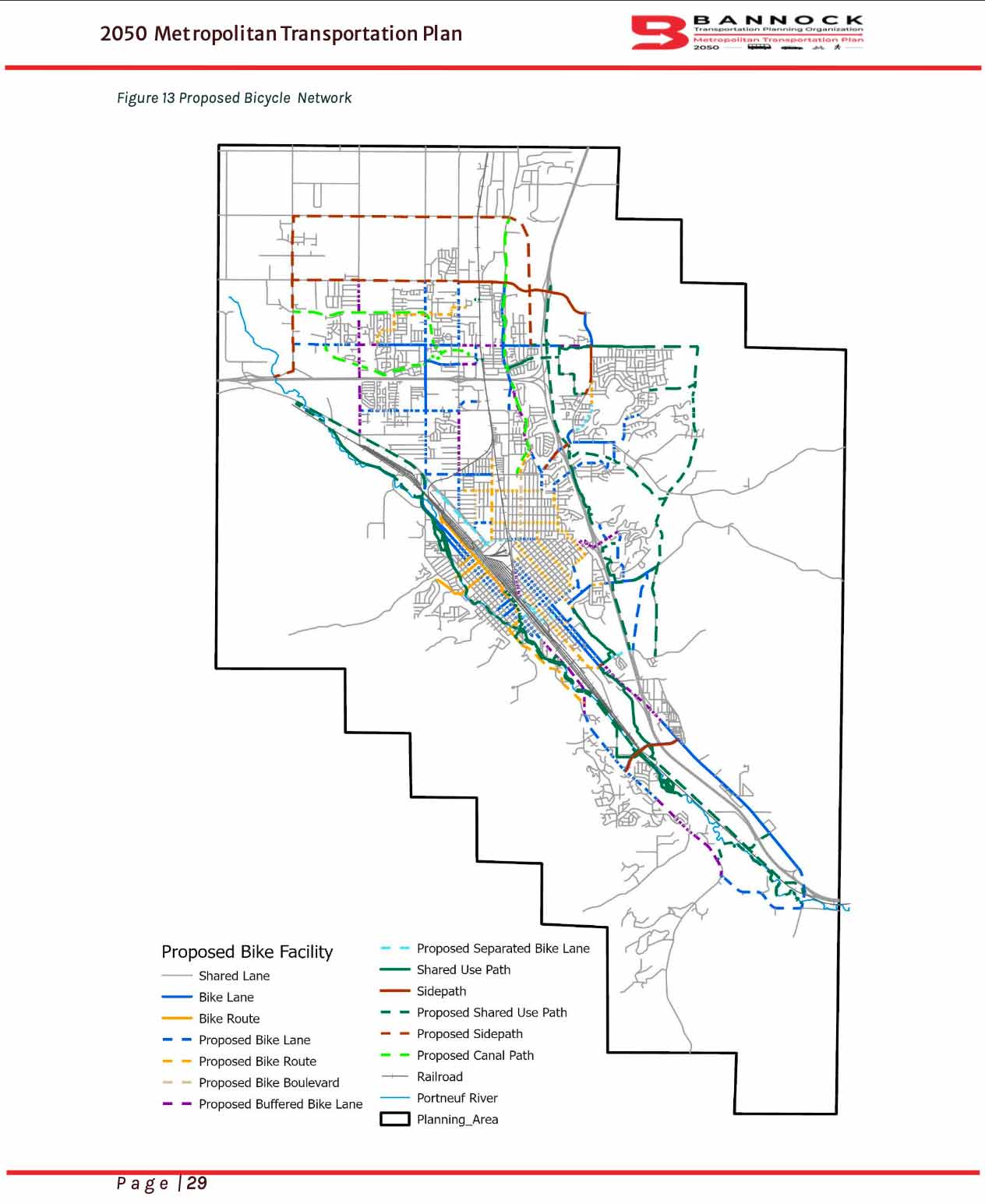
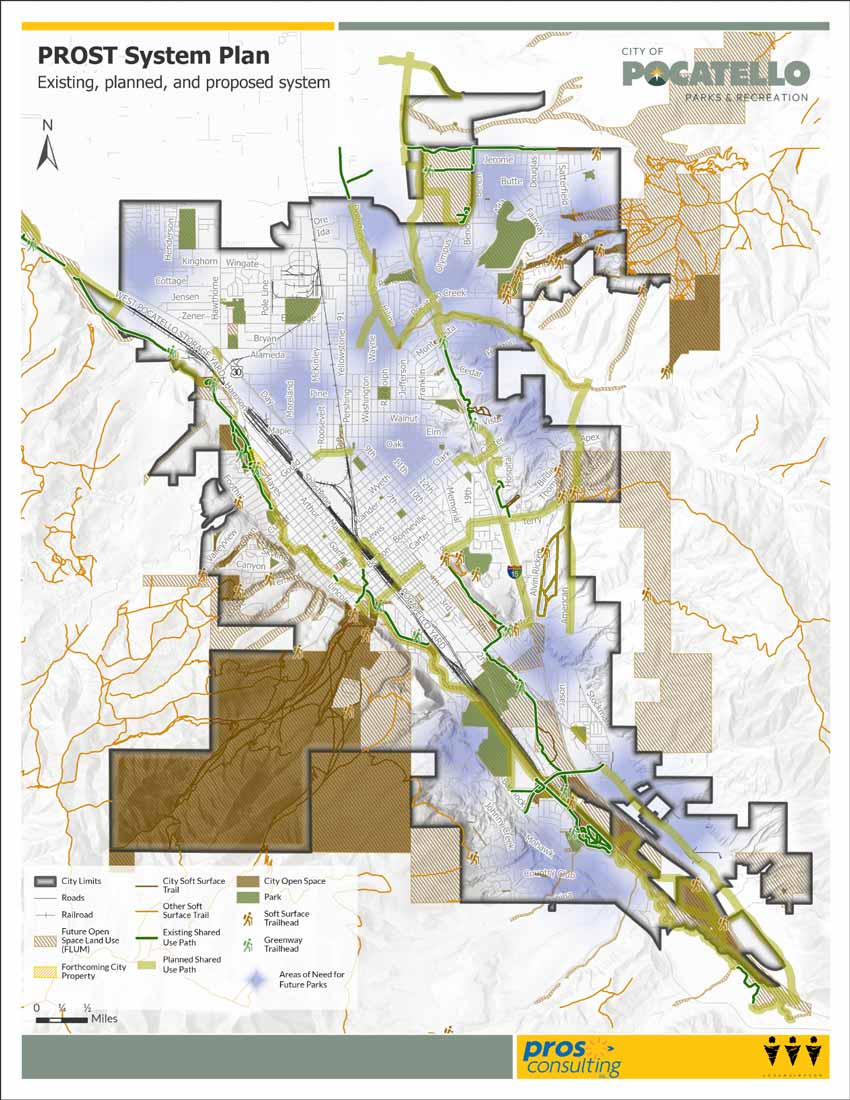
Menchaca plans to meet with Mayor-elect Mark Dahlquist and Rodney Burch, of Pocatello and Chubbuck, to talk to them about how the Legacy Partner Program would benefit the greenway and both cities.
“We’re actually coming to the cities with some money and a potential solution,” Menchaca said.
As far as Menchaca is concerned, it’s a win-win situation.
“I don’t think there’s a loser here,” Menchaca said.