



Framing the landscape: How to connect your yard to the view beyond
Published at | Updated at
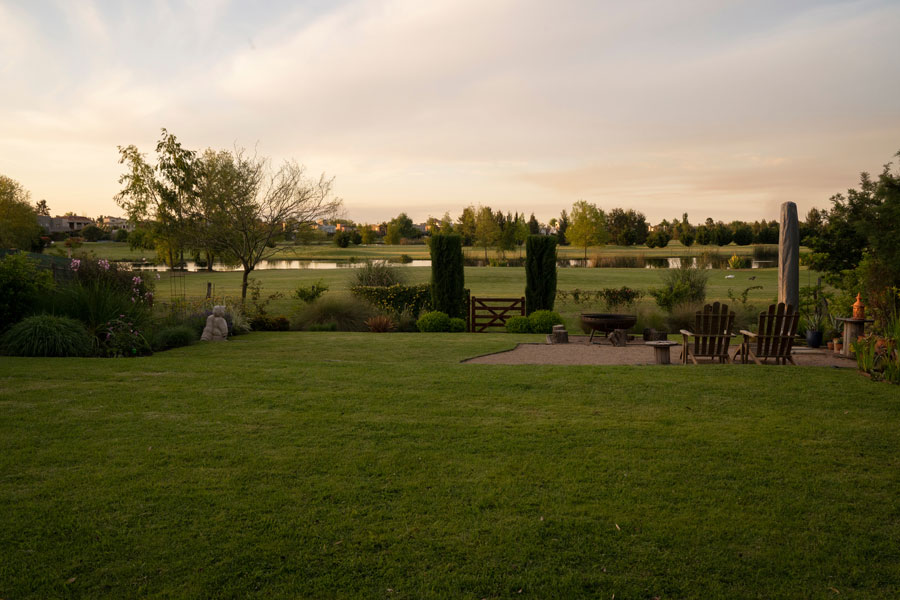
Editor’s Note: In this series on the principles of landscape design, we will be focusing on correcting common design flaws while accounting for East Idaho’s climate. Each week until February, we will take a detailed look at a couple of principles and how you can apply them to your property, elevating its aesthetic.
In landscape design, emphasis is used to create a focal point that draws attention to a specific area or feature. The emphasis idea is central to the design process. Focal points guide the viewer’s gaze.
We can — and should — create focal points with statues, fountains and specimen trees or shrubs. However, some items of emphasis may already exist outside the yard.
Many east Idaho homeowners use dense privacy barriers to isolate their yard from the outside world. There are legitimate reasons to do this.
Perhaps there is a busy road or an unsightly industrial building that you want to cover from view. Privacy fences, hedge plantings and trees — or a combination of all three — can help create a personal oasis amid busy living. However, these may also cut you off from stunning views or other appealing scenery, creating a closed-in, claustrophobic feeling.
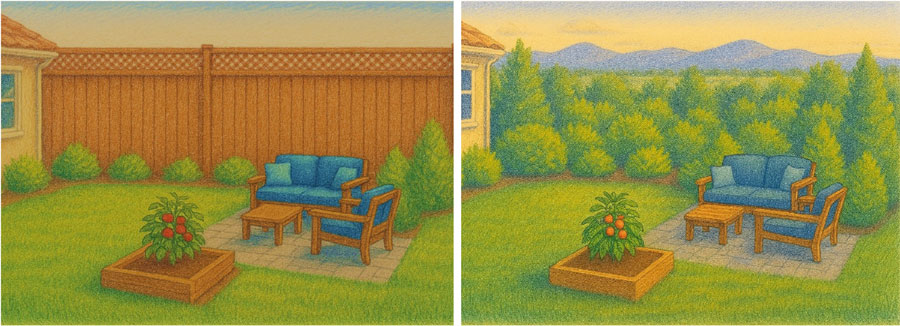
Existing scenery can be used as a focal point with forethought and planning. Before planning your escape haven, look outside your yard at what you’ll be hiding from view if you maximize privacy.
Is there an open field, a neighboring orchard, a nearby golf course, a river or mountain view, or a distant skyline? How might you integrate this into your landscaping rather than separating you from it?
You may transition a cultivated yard to native landscape using a layered “soft edge” of native grasses and unpruned shrubs instead of a solid fence. This can frame the view rather than blocking it, making the smaller yard feel connected to the surrounding landscape.
You can also preserve horizon scenery through shorter hedges or partial privacy screens that can be placed to block some or most of an undesirable view. When planning your home landscaping, thinking outside the box will keep you from living within a box.
Another consideration is the neighborhood atmosphere we all help create. What you do with your yard does influence the feel and dynamics of your neighborhood.
Open landscapes are inviting and friendly. Aggressive partitioning can lend an impersonal, unfriendly demeanor to your community.
Never overlook the potential inspiration and solace that your landscaping can lend to neighbors and passers-by.
This was illustrated to me by my growing giant pumpkins in full view of a residential roadway. Neighborhood walkers and passing motorists all watch it grow throughout the summer. I enjoy it more because my neighbors share in the appreciation of seeing how big it will get.