



Jackson newspaper settles $25M defamation lawsuit. What can be learned?
Published at | Updated at
Katie Klingsporn, WyoFile
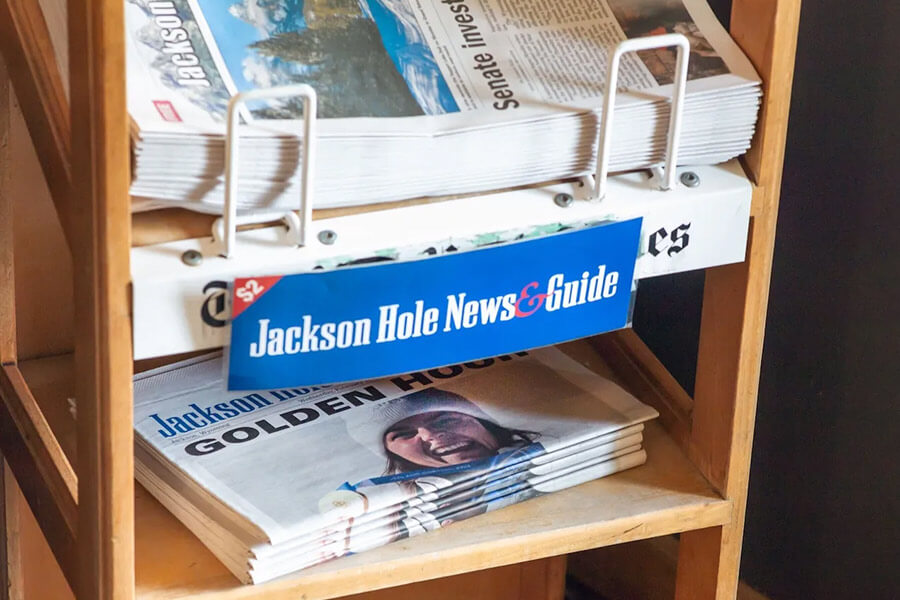
JACKSON, Wyo. (WyoFile) — On its face, it was an article about an Eagle Scout project that grew into a nonprofit advocacy organization. Not exactly the kind of piece newspaper editors think of when considering legally sensitive material.
But the article headlined “Words are power,” which the Jackson Hole News&Guide published in May, landed the paper in hot water when it was hit with a $25 million defamation lawsuit. That’s because, along with chronicling the young man’s project, the article included allegations that his father was physically abusive.
And, the father asserted in his lawsuit, the paper framed those false allegations without attribution, “which implies a factual determination.” By failing to seek comment pre-publication, or respond to written concerns after publication, the newspaper’s actions amounted to malice and willful disregard, according to the December lawsuit filed by David Mecartney.
Mecartney and the News&Guide entered into a confidential settlement in February. As part of the settlement, the paper — which is the newspaper of record for Teton County, Wyoming— published an apology and took the article down.
The outcome could have ripple effects in Wyoming’s small landscape of low-resourced newsrooms, retired media attorney and former long-time counsel to the Wyoming Press Association Bruce Moats said. The threat of facing a multi-million-dollar lawsuit could discourage journalists from pursuing public-interest stories, he said.
“Certainly that’s a concern,” Moats said, particularly “in today’s day and age where local newspapers are generally struggling for revenue.” Even settling for far less than $25 million “can be devastating” for a small business, he said.
However, Moats said, the case can also present a learning opportunity for newsrooms. “What I always advise is, anytime anybody’s accused of a crime, look at that seriously.”
Jackson Attorney Jason Edward Ochs, who represented Mecartney, also said this case highlights the importance of journalistic verification.
“Why a paper anywhere in the U.S. would want to draft an article that affirmatively states that someone who is a private individual is a child abuser, without doing enormous amounts of verification work and being certain that they are correct, is beyond my understanding,” Ochs said. “And unfortunately, that’s what happened here.”
In addition, the case underscores the crucial steps a reporter should take to ensure First Amendment protections, said University of Montana School of Journalism Director Lee Banville, who teaches media law.
If a source says something that can be checked against a public record like a police report or court filing, Banville said, “that extra effort is really worth it.”
Unfortunately, in today’s landscape of hollowed-out newspapers, he added, that can pile one more task onto an increasingly burdensome load.
“As you have fewer reporters trying to report what many more reporters used to generate, the pressure on individual journalists to crank out lots of stories makes it harder to tackle complicated stories” that touch on legally sensitive topics, Banville said.
Article and response
The May 21 article by the paper’s state government reporter Jasmine Hall focused on 18-year-old Dune Mecartney, who earned his Eagle Scout rank with a years-long project called Safe Kids U.S. The organization that grew from his project offers online resources on legal rights for children, and is specifically aimed at children experiencing domestic violence or abuse.
Dune Mecartney told the newspaper he was motivated by his own experience — he and his mother allege they are survivors of abuse at the hands of his father. The parents are divorced, a process that has involved years of legal battling.
Much of the article deals with reunification therapy, which Dune Mecartney was court-ordered to participate in with his father and which the teenager describes as a flawed system that endangers children.
Dune Mecartney has emerged as an advocate for laws intended to increase child safety in custody cases and has traveled nationally for that work, according to the article.
In December, David Mecartney sued the newspaper’s owner, Teton Media Works. The lawsuit asserted that the article contains numerous false and defamatory statements about the elder Mecartney; that the newspaper never reached out to Mecartney for his side of the story and that the newspaper had access to court records contradicting the abuse allegations but failed to represent them.
“The defendant’s decision to publish the defamatory article, despite having knowledge of the public court records, demonstrates a striking lack of professional due regard for the truth and a conscious indifference to the substantial harm it would inflict upon the plaintiff,” the suit stated. “Based on the information available to them, the defendant acted with malice and a willful and wanton disregard for the truth.”
Details
The lawsuit emphasizes a couple factors of particular concern for David Mecartney. The first is the existence of a 2021 Wyoming Supreme Court decision in Mecartney v. Mecartney.
According to that decision, the court found that no substantiated evidence of child abuse by the father was proven at trial. The newspaper’s decision to publish its article despite the public court records is analogous to malice, the lawsuit against Teton Media Works states.
The second factor relates to a letter Mecartney sent to the newspaper two days after the article was published. According to the lawsuit, Mecartney informed several members of the paper’s staff that the piece included factually incorrect statements that would harm his personal and professional reputation.
“Contrary to what was reported, I am not the abuser,” he wrote, according to the lawsuit. “The truth is far more complex and deeply documented.” He then listed court findings contained in the Supreme Court decision. He asked for a correction and a response within seven days, CCing the paper’s publisher, several editors and its CEO, according to the lawsuit.
Teton Media Works “never responded to the plaintiff’s letter,” according to the lawsuit. Instead, “they published a grossly insufficient ‘update’ that merely stated the plaintiff ‘denied allegations he abused his family’ and that the parents were ‘still in court after 10 years of litigation.’ This created a false impression of ongoing culpability and implied the court record supported the claims of abuse.”
Furthermore, the newspaper failed for months to update an Instagram post related to the story, according to the suit.
“The defendant’s conduct demonstrates a profound level of malice, outrage, and willful and wanton disregard for the truth and for the impact the defamatory statements would have on the plaintiff,” it concludes. “This behavior goes far beyond mere negligence, demonstrating a conscious and deliberate course of conduct that has caused significant and ongoing harm.”
Mecartney “has been subjected to hatred, contempt, ridicule and scorn” as a direct result of the newspaper’s conduct, the suit stated. “The publications have severely injured his reputation, diminishing the esteem, respect, goodwill and confidence in which he is held within his community and professional life” and resulted in economic loss.
Settlement
Ochs Law Firm, which represents David Mecartney, issued a press release announcing the confidential settlement agreement in early February, when the newspaper replaced the article on its website with a letter to readers under the heading “Acknowledgment and apology: ‘Words are power.’”
“We acknowledge, plainly and without qualification, that this article should never have been published,” the letter read. “It failed to meet the standards of verification, fairness, and judgment our readers are entitled to expect. We regret any harm it caused Mr. David Mecartney.”
News&Guide Publisher Adam Meyer directed WyoFile to the apology when asked for comment on the settlement.

In it, the News&Guide admitted that failing to verify allegations, seek comment and review court findings before publication represented “a serious lapse.” It also underscored many of the lawsuit’s central points and apologized to Mecartney.
The newspaper, which serves Teton County residents, recently won Wyoming Press Association’s award for general excellence for the third year in a row.
The paper did the right thing with its apology, attorney Ochs said. “Publishing a clear acknowledgement and apology is a meaningful step toward accountability in reporting, especially when accusations this serious are involved.”
The attorney who represents Dune Mecartney and his mother, Kelly Cornell, told WyoFile his clients had no involvement in the suit against the News&Guide. “I don’t have any information about that, and wouldn’t want to comment on anything that I don’t really have any information about,” Bradley Booke said. Dune Mecartney did not respond to an email from WyoFile.
Mecartney filed a separate defamation lawsuit against his son and his former wife in January. A response has not yet been filed.
Best practices
Reading through and discussing the case could generate meaningful conversations in newsrooms regarding ethics, best practices and pitfalls, retired attorney Moats said. Understanding precedent helps others avoid outcomes like lawsuits, he said.
“Journalists need to be aggressive,” he said. “So we need to talk about things to make sure we can remain [agressive], but still protect ourselves.”
Ochs, the plaintiff’s attorney, echoed that journalists play an important role.
“We need journalists,” he said. “They hold the line just like lawyers do.” But he reiterated the article’s headline: “Words are Power,” Ochs said.
“The title of the article … underscores the influence that journalists have,” he said. “The law requires [them] to be careful because of the fact that … journalists have the potential to wave a big stick.”
Banville sees journalistic takeaways on many levels. For individual reporters, he said, they include: don’t rely too much on an individual source, reach out for the other side of the story and take care with attribution.
For media organizations, he said, another takeaway is “to take seriously when someone pushes back against an article and points to factual errors or possible factual errors.” Even if the outlet believes it hasn’t made an error, it should always examine that possibility and respond to the concern, he said.
Defendants opt to settle for an array of reasons, he added, and a settlement doesn’t necessarily imply culpability, though it’s often perceived that way by the public.
Speaking generally, he noted that as outlets have shed employees like copy editors and desk editors, many reporters have become more isolated, and less supported, in navigating their work.
“If you’re going to tackle hard stories, which I think we want local media to do, it’s hard to do that when you’re stretched thinner and thinner,” Banville said. “That’s a scary lesson.”
RELATED | Longtime Wyoming newspaper executives to buy, reopen eight shuttered newspapers
WyoFile is an independent nonprofit news organization focused on Wyoming people, places and policy.