



Jurassic toe: Idaho State paleontologists investigate possible new dinosaur
Published at | Updated at
Devin Bodkin, IdahoEdNews.org
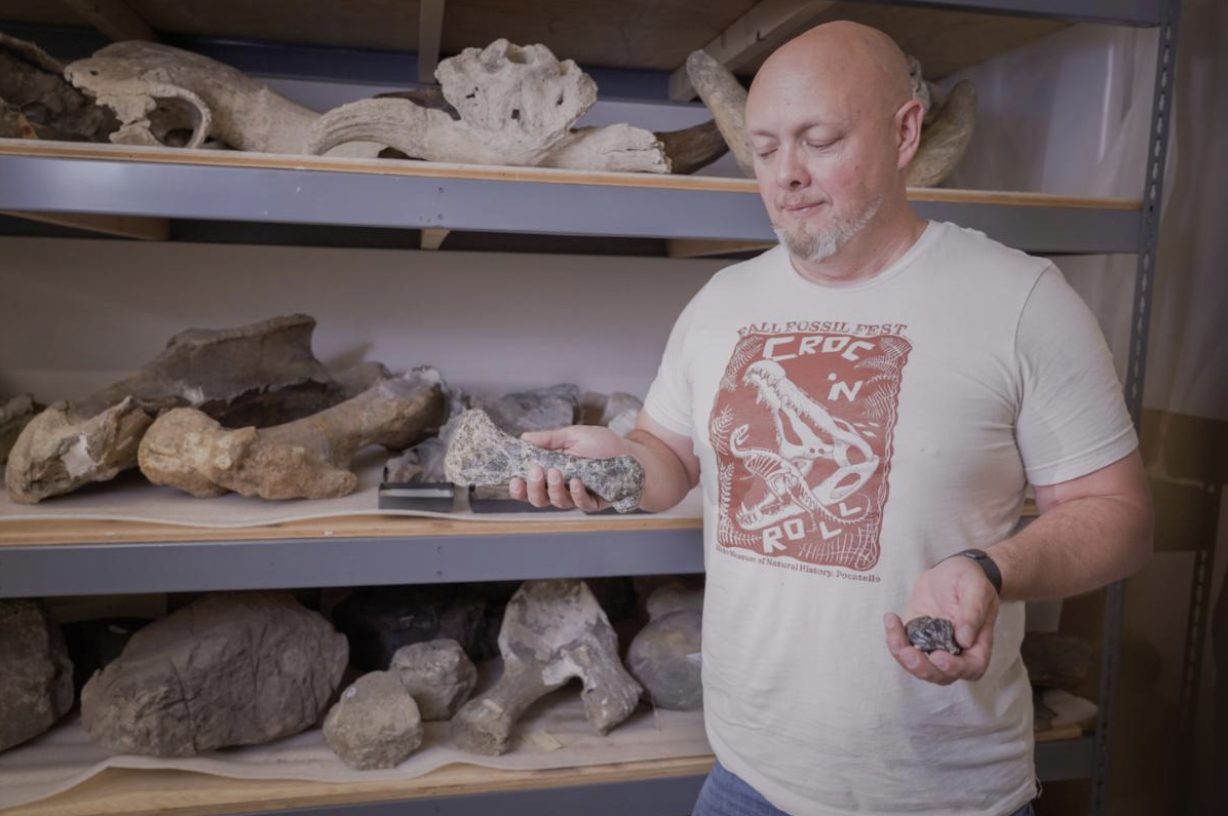
Turns out the key to discovering a new type of dinosaur might be a weird toe in an Idaho museum.
Or a skull in Switzerland.
Idaho State University paleontologists are examining whether these and other fossils represent one or more previously unidentified dinosaur species. They’ve laid their research out in a new study that has scientists rethinking long-confusing plant-eating Jurassic dinosaurs known as ornithopods.
It’s a possible breakthrough for dinosaur enthusiasts — and a lifelong ambition for ISU geosciences professor L.J. Krumenacker, who co-authored the study.
“Naming a new dinosaur is a childhood dream for me,” Krumenacker told EdNews.
Playing detective: A tell-tale toe bone
Paleontologists are basically detectives, but their suspects have been dead for 150 million years. They piece together Earth’s history from scattered leftovers.
Those leftovers can spark a hunch — but naming a new dinosaur demands evidence.
At least that’s how it’s played out for Krumenacker, who has long questioned a toe bone at ISU’s Museum of Natural History.
The bone has been attributed to the plant-eating, beaked ornithopod Camptosaurus after its discovery in a Wyoming quarry. Camptosaurus lived during the late Jurassic period in western North America and possibly Europe.
But something about the toe bone in the museum … stuck out to Krumenacker.
It’s long and skinny, not the typical short, stout Camptosaurus toe bone. And it’s grooved on one side.
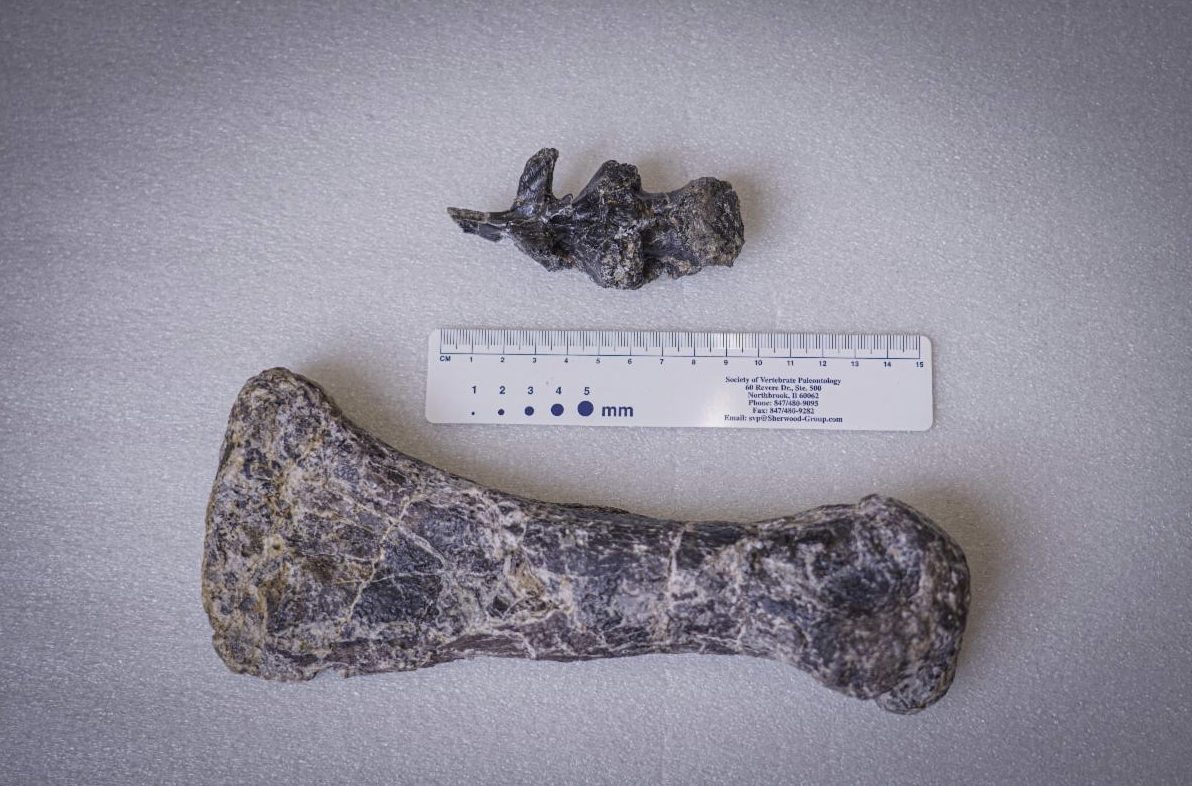
This might be the toe of a different dinosaur, Krumenacker thought.
Another bone at the museum, part of a skull, also prompted questioning with a pointy part that sticks backward.
Discovery is exciting, but science moves carefully. Bones can be tricky to identify. They vary with age and sex. Plus, “misidentification” is a dirty word among paleontologists. It can reset research and require course corrections.
Krumenacker had his hunch, but he needed to examine more bones.
Meeting Arky: A trip to Switzerland
The good news: More ornithopod dinosaur bones exist from the Wyoming quarry where the toe bone appeared.
The challenge: They’re some 5,300 miles away, in Zurich, Switzerland.
So Krumenacker did what any species-hunting paleontologist would: He booked a flight to examine a skull and skeleton scientists have dubbed Arky.
Arky’s features differ from similar ornithopods like Camptosaurus, including skull shapes scientists haven’t seen before.
These findings are important because when scientists try to discover a new dinosaur species, they look for bones shaped differently from those of known dinosaurs.
The comparison suggested the bones might belong to a different animal.
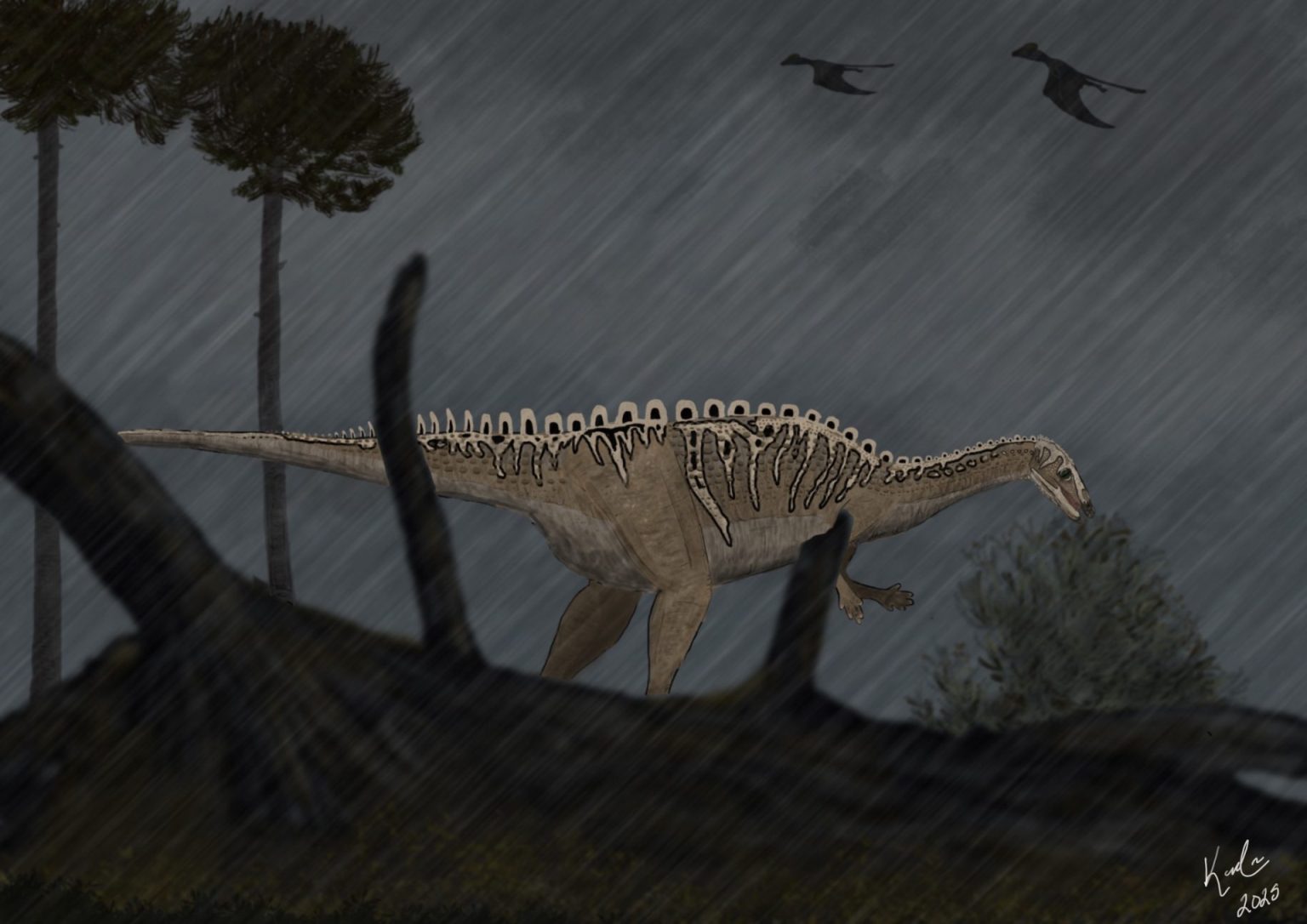
Krumenacker is confident they are unique. He envisions a dinosaur similar to plant eaters like Dryosaurus and Camptosaurus that would have walked on two legs, ate plants and lived during the Late Jurassic period.
He pointed to a computer sketch he created of what the dinosaur might have looked like.
What’s next?
The findings support a possible discovery, but more research is needed.
One weird bone isn’t enough to prove it’s a new species. Researchers must:
- Study Arky’s skull more closely
- Remove repaired parts of the fossil
- Take 3D scans
- Compare Arky to other dinosaur skeletons
Arky was only recently donated to the Natural History Museum of the University of Zurich, where deeper examination is possible. Krumenacker plans to return to Zurich to study the skeleton more closely and confirm if he and others have found a new species.
Time — and examination — will tell, but Krumenacker stressed the special nature of the opportunity to contribute to human knowledge and introduce something new.
Robert Gay, a study co-author and education manager at the Idaho Museum of Natural History, says a discovery would shine a brighter light on a confusing corner of paleontology — and a focus area of a couple of Idaho State researchers.
“The smaller plant-eating dinosaurs from this time in North America have confused scientists for nearly 200 years,” said Gay, adding that the researchers’ fossils are “frustratingly fragmentary” but show that there’s much more to learn.