



Utah may take ‘the first step of many’ to better investigate missing and murdered Indigenous people
Published at | Updated at
Will Ruzanski, Utah News Dispatch
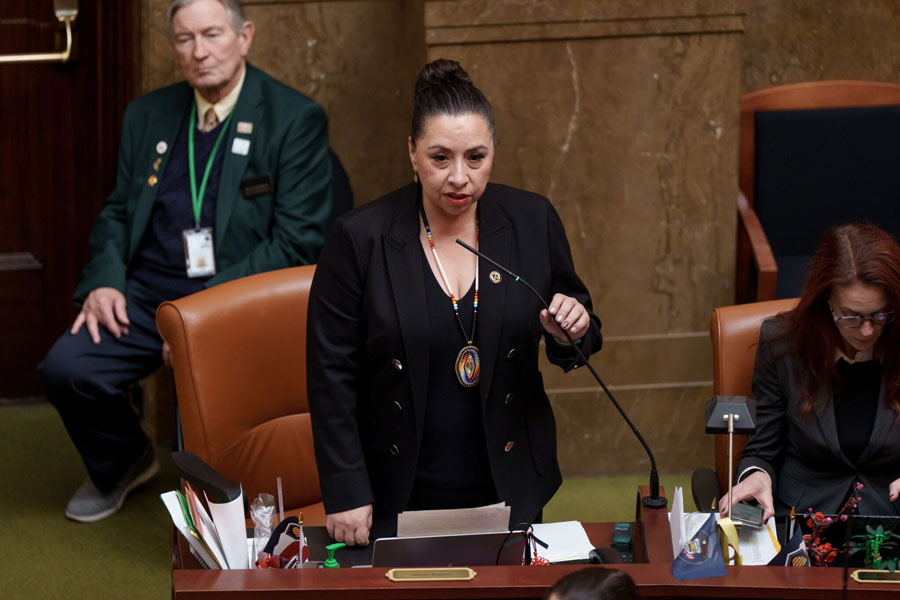
SALT LAKE CITY (Utah News Dispatch) — After a 2023 legislative report found Indigenous people in Utah are disproportionately more likely to be murdered or go missing, the legislature is advancing a bill to strengthen law enforcement investigations and reduce that disparity.
HB588 would direct Utah’s American Indian-Alaska Native Health and Family Services office to establish a training curriculum for law enforcement officers on how to investigate cases involving missing or murdered Indigenous people. Sponsored by Rep. Angela Romero, D-Salt Lake City, the bill passed unanimously through the House Law Enforcement and Criminal Justice Committee on Monday.
“There are steps to addressing this epidemic, because it is an epidemic,” Romero, the state’s only Native American legislator, told Utah News Dispatch. “This is just the first step of many steps while I serve in the legislature.”
A 2023 Murdered and Missing Indigenous Relatives Task Force report shows Indigenous people make up 5% of murder victims in Utah, despite representing only 1.5% of the state’s population. Romero served as chair of the task force and points to complications around law enforcement jurisdiction and poor data collection as leading factors in the murder-rate disparity.
“There’s really not a process (for investigating), and so that’s why we’re establishing the process,” she said. The task force’s report recommends standardized law enforcement protocols across different agencies, including heightened communication and collaboration to strengthen the investigations. Her bill aims to do just that.
“I’m hoping, once the curriculum is established, to take some other steps,” she added. “We have to take it seriously.”
One bill at a time
Romero said HB588 takes the first step toward strengthening law enforcement investigations into missing and murdered Indigenous people, adding to what she described as the legislature’s multi-year effort to better protect this vulnerable population.
She told Utah News Dispatch that HB588 intends “to develop the curriculum based on our study,” referencing the task force’s 2023 report. She said the impact “is yet to be seen, because we have to first develop the curriculum,” emphasizing the need for additional legislation to continue addressing the disparity.
“The huge gap is jurisdiction, and also who is an Indigenous individual,” she said, “A lot of times when someone Indigenous goes missing, people don’t know they’re Indigenous because there’s no way to track it. … I’m hoping with some of these other pieces of legislation, it’ll help with what we’re trying to do here with the education piece.”
Romero referenced another bill from earlier in the session that, if signed by Gov. Spencer Cox, would allow Indigenous Utahns to note their tribal affiliation on a driver’s license. She said the bill “will help us keep that tracking piece.”
A Shoshone-Bannock tribal member, Romero emphasized the need to treat this disparity seriously, as someone who is personally connected to the affected communities.
“When you look at marginalized communities, and many of these individuals go missing, they weren’t believed in the beginning … and they didn’t take it as seriously as they needed to, that’s why we see this epidemic,” she said. “That’s why I take it seriously, because it impacts me personally, but also it’s really important to see people for who they are and to see the systemic barriers that exist.”
To report or discuss a case involving an Indigenous person in danger, call the StrongHearts Helpline, a 24/7 crisis intervention hotline that provides assistance with safety planning at 844-7NATIVE (762-8483).