



After divisive session marked by budget cuts, Idaho Legislature adjourns 2026 session
Published at | Updated at
Clark Corbin, Idaho Capital Sun
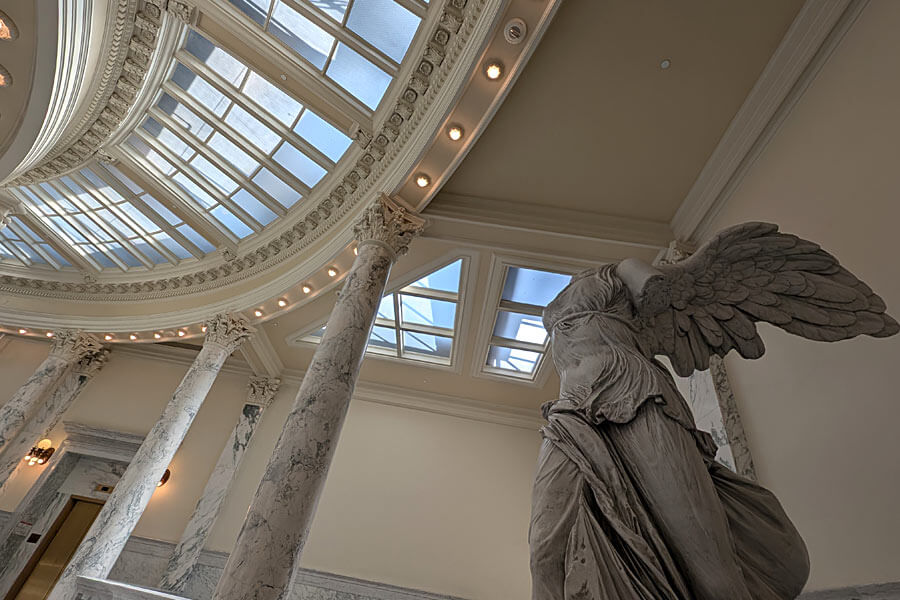
BOISE (Idaho Capital Sun) — The Idaho Legislature adjourned the 2026 session on Thursday, bringing to a close a chaotic and divisive legislative session marked by budget cuts and repeated concerns about doing lasting damage to essential state services and programs.
The Idaho Senate adjourned sine die at 6:18 p.m. Mountain time, and the Idaho House of Representatives followed suit at 6:29 p.m.
Sine die is the Latin phrase that legislators use to signal they are adjourning without scheduling a day to return, thereby adjourning for the year.
For 81 days under the Idaho State Capitol rotunda in Boise, the Idaho Legislature and Gov. Brad Little enacted a series of across-the-board budget cuts that reduced funding for most state agencies and departments by 4% this year and 5% beginning in fiscal year 2027, which starts July 1.
RELATED | Gov. Little signs so-called ‘crappy bill’ to cut state budget
RELATED | Disputed Idaho bill signed into law despite strong opposition in eastern Idaho
RELATED | Boise removes LGBTQ+ pride flag as Idaho governor signs bill to fine city for its display
“We are passing something today that has the potential to break the state, and you know that,” Sen. Kevin Cook, R-Idaho Falls, said on Feb. 13, just before the budget committee approved 5% budget cuts for most state agencies and departments in fiscal year 2027.
Cook and several other legislators also complained about a lack of transparency in the budget-cutting process and in the budget bills themselves.
“If you took that bill home and somebody at your town hall says, ‘Why did you cut that?” and you opened that bill and tried to find it, you’re not going to find it,” Cook said on the Senate floor March 2. “You’re going to be clueless. Bills should be transparent. You should be able to look at them and read them and say, ‘Oh, this is where it was, yeah, right there. That’s the cut; that’s how much it was cut.’”
State agency directors and some legislators from both political parties warned the cuts were sloppily applied to all agencies equally, regardless of need. Some lawmakers and state employees said the cuts risk doing long-term damage to state programs and agencies and were not drafted in a manner that is transparent to the public.
Legislators restored some funding for some of the cuts that Gov. Brad Little’s budget director warned would do the most harm.
That action includes:
- Bolstering funding for the Idaho State Tax Commission to process tax refunds and comply with federal tax changes under the One Big Beautiful Bill Act.
- Restoring some funding for education tuition benefits for members of the Idaho National Guard. Before approving the funding on the third try, JFAC voted two previous times to kill funding for tuition benefits for Idaho National Guard members.
- Restoring $265,200 to help the Idaho Department of Lands hire seasonal firefighters and gear up for the wildfire season.
But many cuts remained in place to avoid an unconstitutional state budget deficit and ensure there is an ending budget surplus of $150 million.
Republican legislative leaders said the cuts were necessary to guard against additional revenue uncertainty and to pay for conforming to federal tax changes President Donald Trump championed.
Democrats, however, said the Idaho Legislature created its own budget shortfall by passing $4 billion worth of state income tax cuts over the past five legislative years. Each of those tax cuts reduced the amount of revenue the state takes in to pay for programs and services.
This year, one new law in particular dominated the legislative session and affected so many other bills and budget debates that came after it. House Bill 559, which confirms retroactively to the federal tax changes from the One Big Beautiful Bill Act that Trump signed into law last summer.
What are some of the bills that the Idaho Legislature passed this year?
- The Idaho Legislature also forced the city of Boise to take down its LGBTQ+ Pride flag by passing House Bill 561, which called for a $2,000 per-day fine to be levied against government entities that fly unapproved flags. Gov. Brad Little signed the bill into law Tuesday morning.
- Little also signed into law House Bill 752, which makes it a crime for people who “knowingly and willfully” enter a bathroom, locker room, shower room or changing room that is designed for the opposite biological sex. Opponents of the bill said it is designed to punish trans people who use the bathroom that aligns with their gender identity.
- The Idaho Legislature passed House Bill 822, the Pediatric Secretive Transitions Parental Rights Act, which would require that teachers and doctors out transgender children to their parents.
- House Bill 913 calls for the state to implement work requirements by the end of the year for adults enrolled in Medicaid expansion in order to receive benefits. The bill proposes implementing the work requirements that were part of Trump’s One Big Beautiful Bill Act.
- The Idaho Legislature passed Senate Bill 1300, which would change current procedures for appointing the directors of the Idaho Department of Parks and Recreation, Idaho Transportation Department and Idaho Department of Fish and Game. Under the bill, those positions would be appointed by the governor and confirmed by the Idaho Senate. Currently, independent boards appoint those directors. Opponents said the bill jeopardizes the future of Harriman State Park because the Harriman family’s land gift agreement with the state stipulated the park be managed by a professional staff appointed only on the basis of merit. The nonprofit Friends of Harriman State Park said changing the appointment process to become a political appointment could violate the terms of that agreement.
- The Idaho Legislature passed House Bill 895, which is designed to protect water resources for farmers and other uses as new data centers are built in Idaho.
What are some of the bills that didn’t pass this year?
- On Thursday’s final day of the legislative session the Idaho House voted 37-29 to pass Senate Bill 1247a, an amended and rewritten bill that would require every law enforcement agency in the state to apply for 287(g) programs operated by the Department of Homeland Security and cooperate with Immigration and Customs Enforcement, or ICE. Although the Idaho House rewrote and passed the amended bill, the Idaho Senate ruled Thursday the bill was out of order and did not vote on it, which killed the bill.
- Also Thursday the Idaho Senate killed House Bill 896, a bill that would have allowed the attorney general to seek to disqualify local elected officials and government employees from holding office or working for the government if they willfully violate the law. Two proposed amendments to the Idaho Constitution that are related to state lands and public lands both failed this year.
- House Joint Resolution 10 was designed to remove the requirement that state endowment lands be managed to generate the maximum long-term financial return. Rep. Britt Raybould, R-Rexburg, said the change would reduce pressure on the Idaho State Board of Land Commissioners to sell state endowment land to the highest bidder. However, some opponents wondered about whether amending the Idaho Constitution in such a way could expose the state to lawsuits, and others said there should be a high bar overall for changing the state constitution. The proposed amendment failed to advance out of the House State Affairs Committee in February.
- Senate Joint Resolution 103 was designed to place any new, future public lands the state obtains from the federal government into a public trust that would prevent those lands from being sold. Instead, such land would be managed for multiple uses, including resource use and public access and recreation. The Idaho Senate never voted on the proposal, but sponsoring Sen. Ben Adams, R-Nampa, said he will work to improve the proposed amendment during the interim and bring the proposal back for consideration next year.
Idaho Capital Sun is part of States Newsroom, a nonprofit news network supported by grants and a coalition of donors as a 501c(3) public charity. Idaho Capital Sun maintains editorial independence. Contact Editor Christina Lords for questions: info@idahocapitalsun.com.