



How Latter-day Saints church members’ politics have shifted — and why
Published at | Updated at
Sarah Cutler, Idaho Statesman
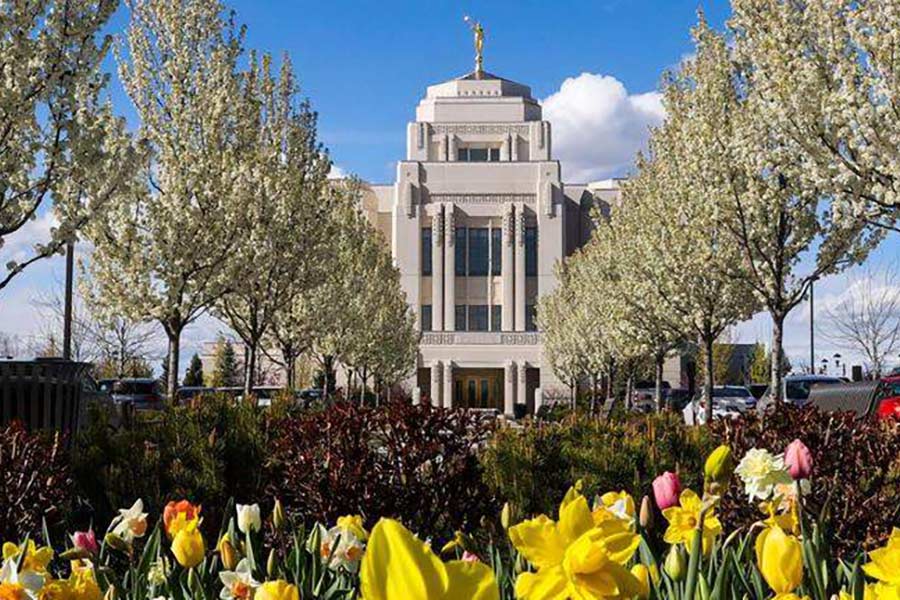
BOISE (Idaho Statesman) – In the early 2000s, members of The Church of Jesus Christ of Latter-day Saints were the most Republican-leaning religious group in the country.
Those days are over, a new study found. Between 2007 and 2025, the percentage of church members who reported leaning Republican dropped by 12%, according to an analysis by market research firm YouGov of data collected by the Cooperative Election Study, the largest academic survey focused on American elections.
That drop bumped church members into second place, below white evangelical Christians, for their support of the Republican Party, YouGov found.
But that doesn’t necessarily mean members of the community are shifting to the left. During the same period, Latter-day Saints’ support for Democrats rose by only 6%.
“It’s not really that these folks are, all of a sudden, becoming liberal,” said Sam Martin, a Boise State professor who studies the public discourses of conservative social movements. Instead, she said, they’re becoming politically “cross-pressured.”
Members of the church are “pretty culturally conservative, but they also place a lot of emphasis within the faith on discipline, family stability, civic duty, public respectability, moral seriousness and also institutional trust,” Martin said. Large swaths of the movement supporting President Donald Trump, by contrast, are “anti-institutional” and take a more aggressive approach to political confrontation, she said.
“For (Latter-day Saints) voters, I think the tension is not between religion and conservativism,” Martin said. “It’s between a religiously shaped set of moral expectations and the current GOP aggression, or performative aggression.”
Martin said the study’s findings aligned with trends she has observed. She credited some of the Latter-day Saints members’ shift away from the Republican Party to its discourse about immigrants. For a church with such a global emphasis, whose members serve missions abroad, learn other languages and form “intimate connections” with members of communities very different than their own, the Trump administration’s “very harsh language” around immigration “may well sit uneasily,” she said.
Members of the church may also balk at the administration’s emphasis on Christianity, and what they see as the marginalization of people of other faiths — especially given their own community’s experiences of exclusion, Martin said.
Trump has engaged in “arguments that denigrate non-Christian people across the world, and people who are (Latter-day Saints) are more likely than others … to recognize that as not pluralistic, not inclusive,” Martin said.
In 2017, Latter-day Saints made up 23% of Idaho’s population, the Idaho Statesman previously reported. About a third of Idaho’s 105 state lawmakers are LDS, InvestigateWest reported in 2025.
In 2022, elected members of the church told the Statesman that their religion only narrowly influenced their politics. The church takes stances on “moral” issues, but doesn’t tell members which policies to support, Sen. C. Scott Grow, a Republican from Eagle, said at the time.
“My faith is always involved in determining what I feel Jesus Christ would have us do in those circumstances, based on the laws and teachings that we find in the New Testament,” he said.
Grow and other lawmakers who belong to the church did not respond to requests for comment in response to this latest study.