



How a family fleeing internment built one of America’s largest potato companies
Published at | Updated at
EDITOR’S NOTE: “From the Field” is a weekly newsletter bringing you the latest agriculture news in eastern Idaho.
PINGREE – Frank and Agnes Wada moved from California to eastern Idaho in 1943 to start a farm on 160 acres of rented ground. Today, the 30,000-acre property in Pingree is “one of America’s largest grower-shippers of fresh potatoes, onions and sweet potatoes,” according to its website.
Wada Farms fresh packs and ships spuds to retailers and food distribution industries nationwide. Name a retailer or restaurant chain, and chances are pretty high that it carries potatoes grown at Wada Farms.
The 200,000-square-foot packhouse at 326 South 1400 West recently hosted a group of graduate students from the University of Idaho. It was one stop on the group’s statewide potato industry tour. EastIdahoNews.com took a tour on Monday, which you can watch in the video above.
Did you know…
Editor’s Note: All facts were obtained from the Idaho Potato Museum in Blackfoot unless otherwise specified.
- Henry H. Spalding, a Presbyterian missionary, was the first potato farmer within the borders of what is now Idaho in 1837, according to Idahoan Foods.
- Luther Burbank developed the first Burbank Russet potato in 1872, which eventually found a home in Idaho. It was developed to help combat the blight epidemic, the Great Famine, in Ireland, which claimed the lives of more than 1 million people. Burbank developed a hybrid that was more disease-resistant and would “revive the country’s leading crop.” Today, 94% of all potatoes grown in Idaho are russets.
- Potatoes began to be grown on a large scale in Idaho in the 1880s when the Oregon Short Line Railroad was completed, opening a nationwide market for Idaho potatoes.
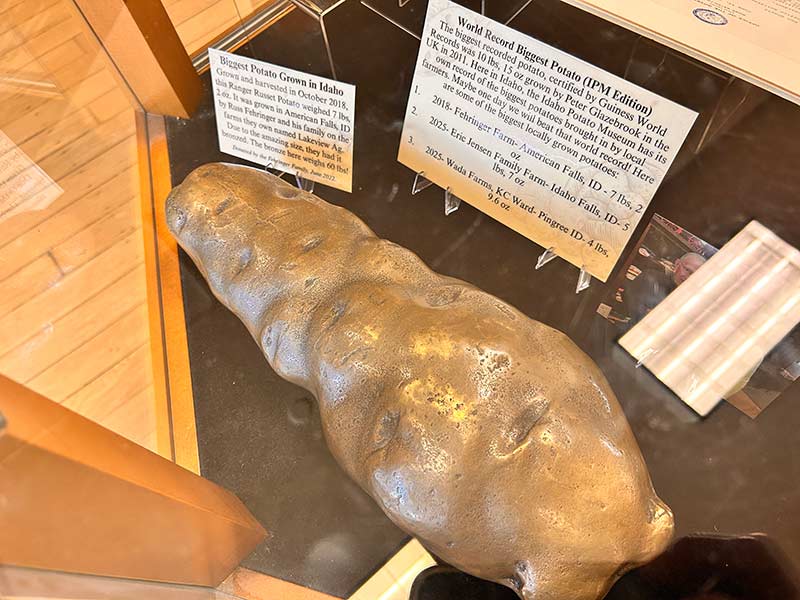
- The largest potato grown in Idaho was a 7-pound, 2-ounce Russet Burbank. It was grown and harvested in October 2018 at Lakeview Agriculture & Livestock Farms in American Falls by Russ Fehringer and his family. It’s since been bronzed and is on display at the Idaho Potato Museum.
- Of all the spuds grown in Idaho, 50% are harvested in the southeastern part of the state.
During the tour, company Vice President Kip Yeates explained how the company has grown and evolved through the years. It started across the street from where the packhouse now sits. An 85,000-square-foot building was added in 1997 and was later expanded.
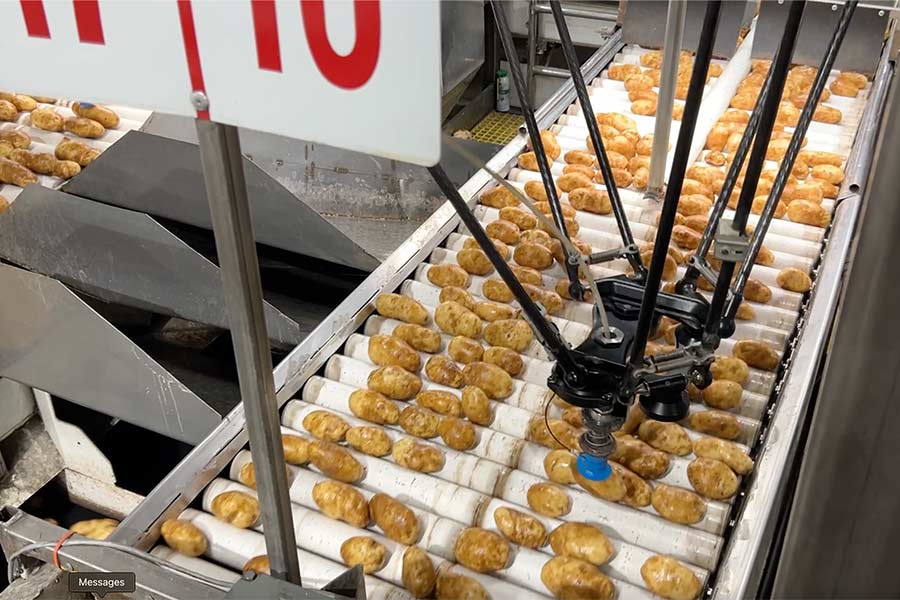
Yeates says Wada Farms was an early adopter of automation and was one of the first companies in the industry nationwide to use artificial intelligence to sort potatoes.
“We were a partnering force in developing the ability to use the technology to grade fresh potatoes,” Yeates says. “We were definitely right out front on that. It was a challenge.”
Today, as AI has become more prevalent, many have expressed concerns about its potential to replace human achievement and take over the job market.
Yeates says the use of AI has had a positive impact on the company as a whole. Although automation initially killed the company’s labor force, he says it has resulted in a highly skilled staff who know how to use technology to enhance their ability to get things done.
Since then, Yeates says, “I’ve never had to lay anybody off,” and no one misses those manual labor jobs.
“I started doing this in ’77 as a cleanup boy in the warehouse and worked my way up. I don’t have an education,” Yeates says. “I had no desire to have my children work like I had to work, stacking 100-pound bags. We worked our butts off to send our kids to college” and Wada Farms is benefitting from that generation’s efforts.
The roots and future of a farming empire
It’s a stark contrast to the company’s labor-intensive beginnings, when the Wadas — who immigrated to the U.S. from Japan in 1922 — came to Idaho in 1943 to escape incarceration in internment camps.
World War II was raging at the time. President Franklin Delano Roosevelt issued an executive order the year before, authorizing the U.S. military to gather up 120,000 people of Japanese descent, even those who were American citizens, and place them in internment camps scattered throughout the U.S.
The Wadas left their home in San Clemente, California, and relocated to Pingree. It’s not clear why the couple selected that community over others or how they knew about it, but Bingham County and the surrounding area already had an established potato industry. For a displaced farming family looking to rent land quickly, it would have been an attractive place to start over.
Ironically, Idaho had one of the largest Japanese internment camps in the West at that time. More than 10,000 Japanese Americans were housed at the Minidoka War Relocation Center in Jerome County between 1942 and 1945. It’s now recognized as a national historic site.
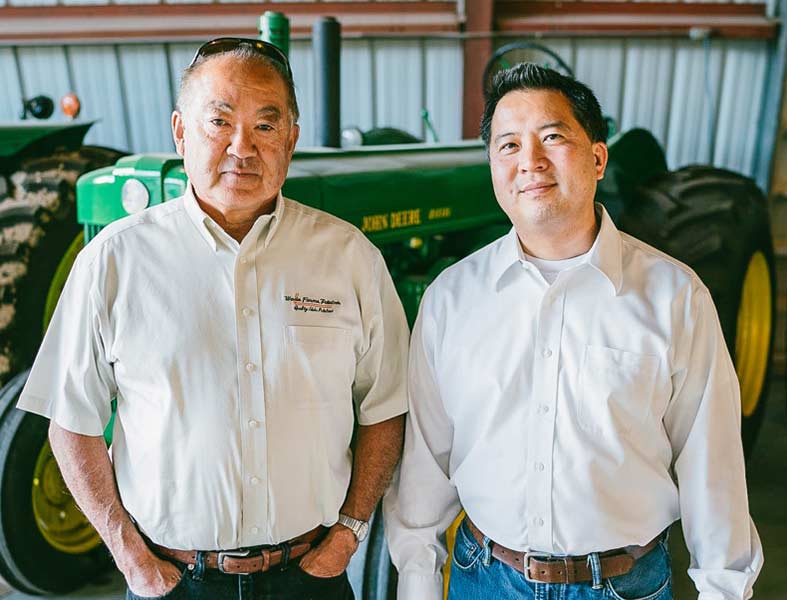
The Wadas have since passed away, but their grandson, Bryan Wada, is the CEO of Wada Farms today.
More than 80 years after its formation, Yeates says the company’s history has a strong growth trend, and there’s no reason to think it won’t continue.
“The level of innovation, the willingness to diversify and vertically integrate — all the things that afforded us the opportunity to be successful and continue with growth are in place, and who knows what’s next? I imagine it will get bigger and better and more exciting things that no one’s even thought of yet (will eventually come to fruition),” Yeates says.
AG AT-A-GLANCE
Mike Simpson backs bipartisan plan to tackle farm labor shortage
The following is taken from a news release from Rep. Mike Simpson’s Office in Washington, D.C.
WASHINGTON, D.C. – Idaho Congressman Mike Simpson cosponsored H.R. 9535, the Securing Agriculture’s Workforce Act, a bipartisan bill aimed at making key improvements to the accessibility and cost of agricultural labor through the H-2A visa program. This legislation is sponsored by the House Committee on Agriculture Chairman Glenn Thompson.
The legislation is supported by the American Farm Bureau Federation, the Western Growers Association, the National Milk Producers Federation, and more than 400 other agricultural groups across the entire industry, including 18 Idaho organizations.
Simpson recently joined Thompson, other cosponsors, producers, and stakeholder groups at a press conference to discuss the Securing Agriculture’s Workforce Act. Watch it in the video above.
If you have a From the Field story idea, send it to rett@eastidahonews.com. Remember to use ‘From the Field’ in the subject line.
IN CASE YOU MISSED IT…
- Fire line holds 1,579-acre Maze Fire as crews press for full containment
- Western stockgrowers cheer loosened grazing regs on public land as feds slash rangeland staff
- In rural Idaho, medical marijuana ballot initiative hits setback after signatures turned in late
- Supreme Court ruling blocks thousands of lawsuits against the maker of Roundup weedkiller