



Trial gets underway for Lindsay Clancy, with ex-husband detailing her mental health struggles
Published at
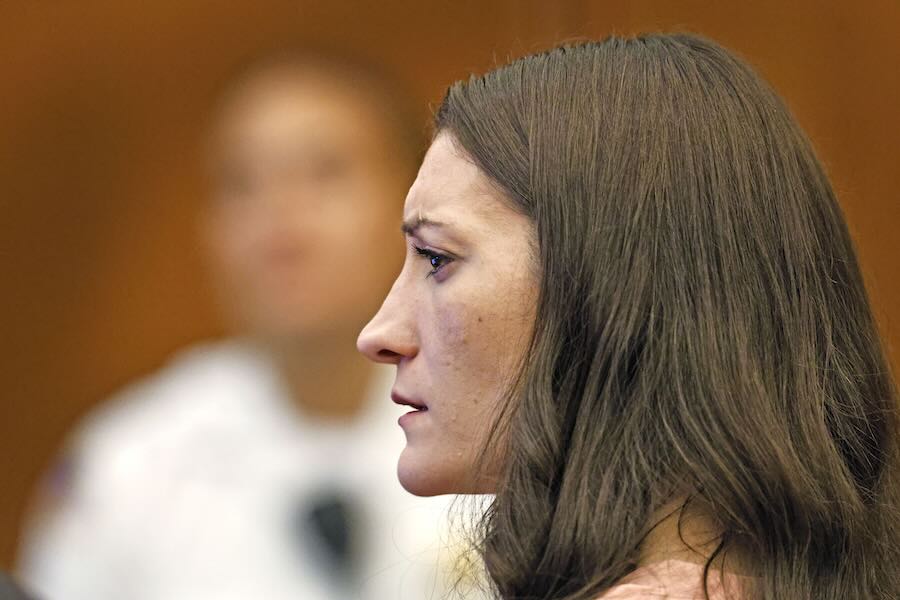
PLYMOUTH, Mass. — In the days leading up to that terrible Tuesday in January 2023, Patrick Clancy says his wife’s mental health seemed to be improving.
“I was hopeful,” he told jurors in a Massachusetts courtroom on Monday. “She seemed much better.”
Lindsay Clancy, his wife of seven years, had just been released from a psychiatric hospital. The 35-year-old mother of three was eight months postpartum and had been struggling with depression, suicidal ideation and thoughts of harming her children for at least the past four months, Patrick testified.
He said he was hopeful she was doing better, but when Patrick came home from picking up dinner on Jan. 24, he found the unthinkable. His three children had been strangled to death, and their mother was severely injured from an apparent suicide attempt.
Lindsay Clancy was later charged with the children’s murders, and her trial began on Monday with opening statements and the prosecution’s first witness — Patrick Clancy — taking the stand. Lindsay does not dispute the fact that she killed 5-year-old Cora, 3-year-old Dawson, and 8-month-old Callan — only the reason why she did it.
Opening statements
After calling the room to order, one of the first things Judge William F. Sullivan did was to rule on a motion filed last week on behalf of Patrick Clancy. The motion requested that the court restrict the media’s ability to disseminate certain evidence of the case, and the judge agreed to bar the dissemination of the recording of the 911 call and the children’s autopsy photos outside the courtroom.
The jury was seated by 10 a.m., and the trial itself began with opening statements.
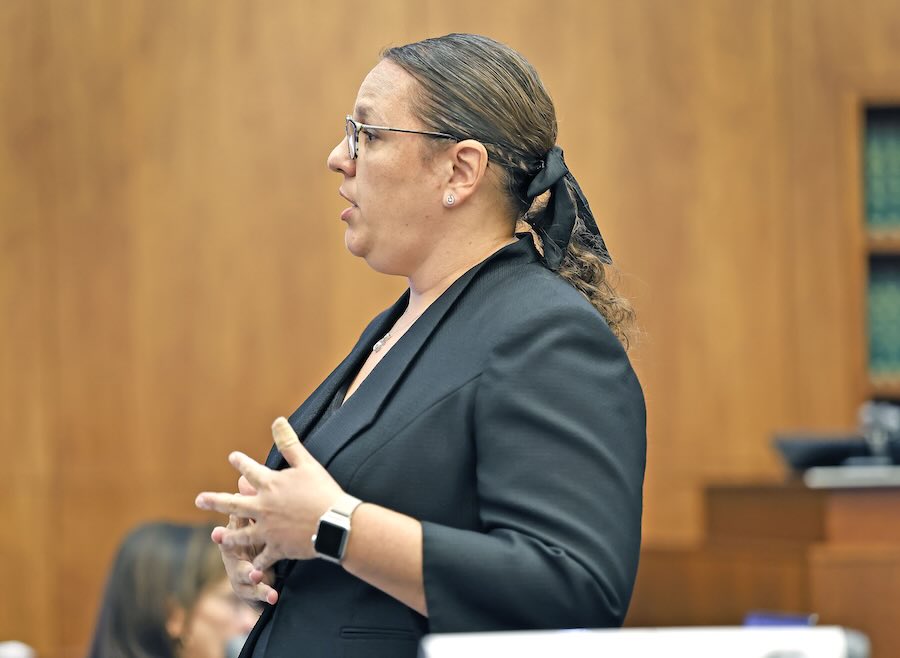
Plymouth County Assistant District Attorney Shanan Buckingham went first, detailing to the jury the events of the day of the alleged murders. She argued that Lindsay Clancy coldly executed her children in a premeditated act and should be held criminally responsible for their deaths.
“This was not a woman in the throes of psychosis,” Buckingham said. “This is not a public debate about women’s mental health and how the medical system treats women. This case is about this defendant, Lindsay Clancy.”
Buckingham told jurors the defendant had the time and opportunity to carry out the killings and tried to commit suicide by jumping out of a bedroom window to escape the consequences.
However, the defense argues that Lindsay Clancy did everything she could to get help for her mental illness. Her attorney, Kevin Reddington, says that the multiple psychiatric drugs she was prescribed are what ultimately led her to a state of postpartum psychosis and homicide.
When it was his turn to address the jury, Reddington told them this case should focus on what was going on in Lindsay Clancy’s mind at the time she killed her children.
He then proceeded to tell the jury about his client’s issues with mental health problems and how she had sought treatment that ultimately failed her. He argued that she was a dedicated mother until she became ill.
“She loved those children right up to the time of their death,” Reddington said.
Throughout the opening statements, Lindsay Clancy remained stoic.
First witness: Patrick Clancy
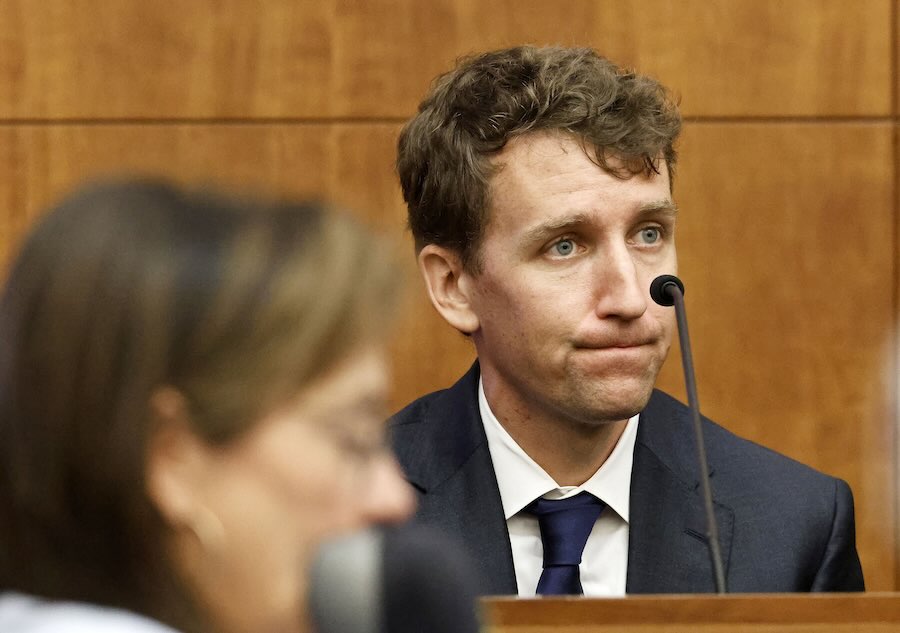
Patrick Clancy, now divorced from Lindsay Clancy, was then called as the prosecution’s first witness. He told the court about the history of his relationship with Lindsay, how their family life had been “great,” and gave examples of outings the family had taken to the beach and other places.
Patrick also talked of how his wife struggled to recover physically after the births of their first two children, and how that evolved into a struggle with anxiety when it came time for her to return to work. Still, he said she fought through it and made her way back to the labor and delivery floor as a nurse.
Patrick said that after the birth of their third child, Lindsay first started exhibiting signs of mental health problems in September 2022. He said she began seeing a psychiatrist and was prescribed the antidepressant Zoloft to treat her depression and anxiety. But he said Lindsay stopped taking the medication when she started to experience sleep problems.
Seeking help
From mid-October to December 2022, Patrick reported Lindsay’s mental health worsened. During this time, he said she began seeing a perinatal psychiatrist and was prescribed new medication.
In fact, from September to January, he said Lindsay was prescribed multiple different psychiatric medications — but he said she did not take them all.
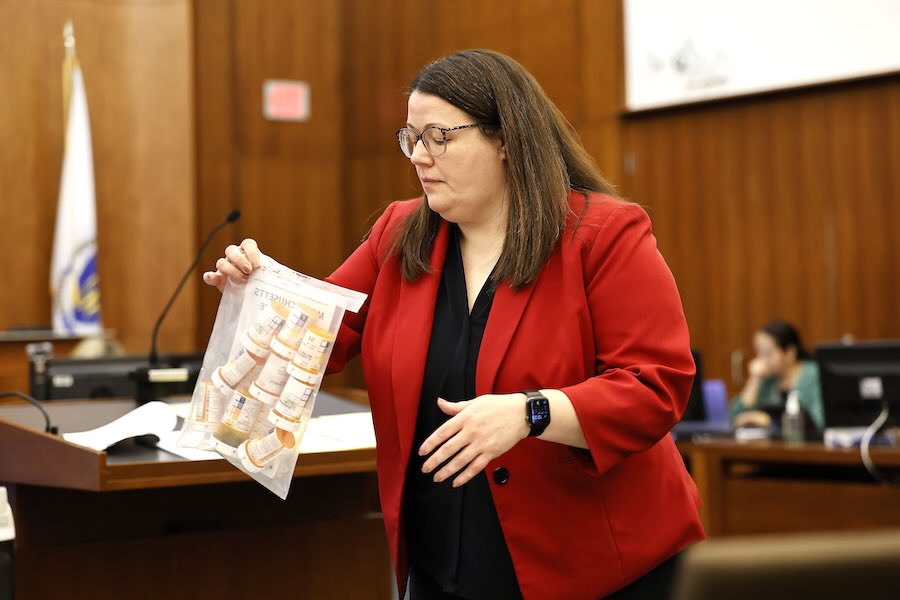
During their investigation, prosecutors say police found that from the September prescription for Zoloft, only seven pills had been taken. From an Oct. 26 prescription for Ativan, they found that only six of 30 pills had been taken, and the same was true of several other prescriptions she had.
In early December 2022, Patrick reported Lindsay had started taking Seroquel and her condition worsened. He said Lindsay lost weight and became more depressed. That month, she began to say she was suicidal and was having intrusive thoughts regarding harming the children, he said.
On Dec. 15, Patrick said he took Lindsay to the emergency room because of her suicidal thoughts. On Jan. 1, 2023, he said his wife was admitted to a mental health treatment center in the Boston area. There, she reportedly took medication and participated in group therapy, and she was discharged on Jan. 5.
January 2023
Over the next couple of weeks, Patrick reported Lindsay seemed to be doing well. He said that the day of the killings was no exception.
“She was having one of her best days,” Patrick said.
He testified about some of the day’s events and had begun discussing when and why he left the house to pick up dinner, when the judge decided to end the day’s proceedings.
There will be testimony given on Tuesday, but the judge did not say why. The trial is expected to resume on Wednesday at 9 a.m.
LIVE UPDATES: Defendant’s ex-husband takes the stand on Day 1 of Lindsay Clancy murder trial

Courtroom Insider is sponsored by Browning Law, representing southern Idahoans for decades and in over 114 jury trials. If you've been injured or accused of a crime, call for a free consultation: (208) 542-2700 1-76-BROWNING