



From coding to AI, Melaleuca tech camp prepares students for the future
Published at
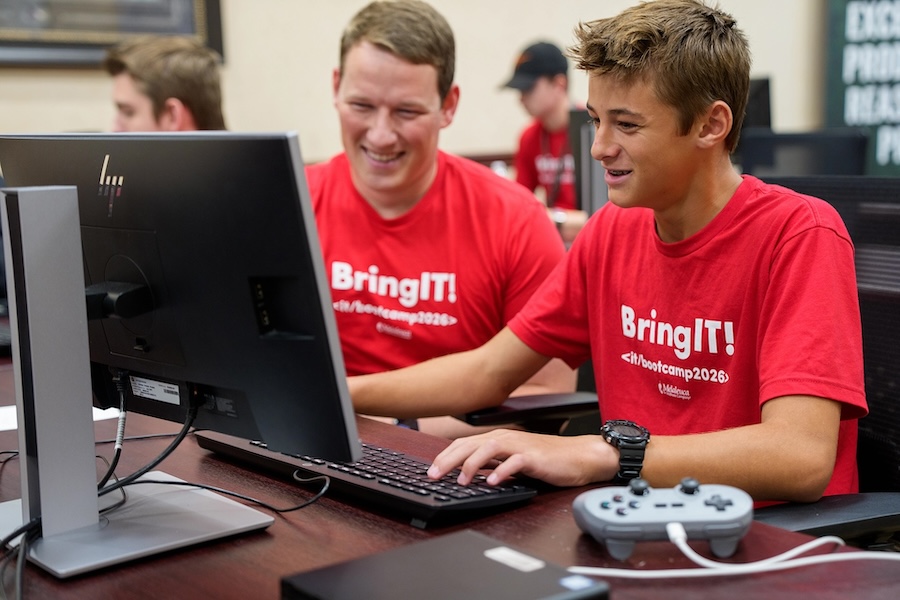
IDAHO FALLS — Melaleuca is helping Idaho high school students prepare for careers in technology by giving them hands-on experience with coding, software development and artificial intelligence.
The 2026 AI + IT Tech Camp marked the eighth year Melaleuca has welcomed high school students to its Global Headquarters for a week of immersive technology education.
Throughout the program, students learned coding fundamentals, experimented with emerging AI tools and heard from Melaleuca technology leaders about careers in the industry.
Preparing Students for the Future
As one of North America’s largest e-commerce companies, Melaleuca relies on advanced technology systems and a skilled IT workforce to serve customers around the world. The annual camp gives students a chance to learn directly from professionals who use technology to solve real-world business challenges every day.
“Technology is evolving rapidly, both in how accessible it is and how it’s being applied,” Melaleuca Chief Information Officer Todd Sorenson said. “It’s important that we continue creating opportunities for Idaho’s students to keep pace through hands-on experience and practical knowledge. Our goal is to help students build a strong foundation that they can continue to grow as they develop the skills needed for meaningful careers in science and technology.”
Those skills are becoming increasingly important as artificial intelligence changes the technology industry and what employers are looking for in future workers.
“Technology companies are looking for people who can solve problems, think critically and use emerging tools like AI effectively,” Idaho Technology Council President/CEO Diane Temple said. “When students get hands-on experience with those skills early, they are better prepared for the opportunities ahead. Melaleuca’s AI + IT Tech Camp gives students a practical look at how technology is actually being used and helps prepare these future leaders to compete and contribute in a global technology economy.”
Students got a firsthand look at those changes during the camp.
Software engineer and former BYU-Idaho computer information technology professor Nathan Birch led the instruction, beginning with basic coding concepts before moving into AI-assisted development. Birch said it was important for students to understand how the technology works before turning to AI agents to help build their projects.
“The level of ambition is higher than I have ever seen,” Birch said. “It is not necessarily because these students are more brilliant than previous groups. The tools are simply making these ideas much more achievable.”
This year’s camp also demonstrated how dramatically software development has changed in a relatively short amount of time.
In past years, students primarily used AI to improve existing code or add features. Today, the technology can assist with much more of the development process, allowing students to transform increasingly ambitious ideas into working applications.
But students learned that AI still requires human direction. Birch taught them that simply telling an AI agent to “build an app” often isn’t enough. Instead, students learned to carefully plan their projects and give AI clear, detailed instructions about what they wanted to create.
“The clearer and more specific the prompt is, the more likely the agent is to build what the student actually wants,” Birch said.
From an Idea to a Working App
Students then put those lessons into practice by developing their own applications.
Jared Fife created a multiplayer video game capable of supporting up to eight players. The game generates a shareable room code, allowing others to quickly join and begin playing together.
“Something that might have taken months before can now take 15 minutes,” Birch said. “A student can say, ‘Here’s my room code. Hop on,’ and suddenly everyone is playing a multiplayer game.”
Tennison Noyes developed the Idaho Fishing Guide, an application designed to help anglers prepare for a fishing trip based on their location, current weather conditions and the species they hope to catch.
Someone planning to fish for rainbow trout in the Snake River, for example, can use the app to receive recommendations on bait, line type and hook size. Building the application required Noyes to gather information from multiple services and bring it together in one place.
Students received 10 hours of classroom instruction and development time during the week. They also heard from Melaleuca leaders during daily lunch presentations.
Solving Everyday Problems With Technology
Birch encouraged students to think beyond games and other traditional projects and consider how technology could help solve problems they encounter in everyday life.
As an example, he built an application in front of the class to settle a recurring issue in his own family: deciding where everyone should sit at the dinner table or in the family vehicle.
Birch uploaded photos of his family’s table, vehicle and all seven family members. The application then generated a seating rotation showing where each person should sit.
Students were able to watch as a simple idea was transformed into a functioning application.
“Now I have an app I can install on my phone and my iPad, and my family can use it at home,” Birch said. “This year, AI has reached the point where the students can do that same kind of thing. They leave the camp with an app they can actually use.”
The projects demonstrate the broader goal of Melaleuca’s AI + IT Tech Camp: showing young people that technology can be a tool for solving problems, exploring their interests and turning their own ideas into reality.
By connecting students with experienced instructors, Melaleuca technology leaders and modern development tools, the program aims to build both practical skills and confidence while introducing students to potential careers in science and technology.
For the students who participated, the week offered more than a lesson in coding or artificial intelligence. It gave them the chance to see what they could create with emerging technology — and how those skills could eventually translate into careers of their own.