LIVE UPDATES: Patrick Clancy’s mom, medical examiner, and psychologist take the stand on Day 15 of Lindsay Clancy trial
Published at | Updated at
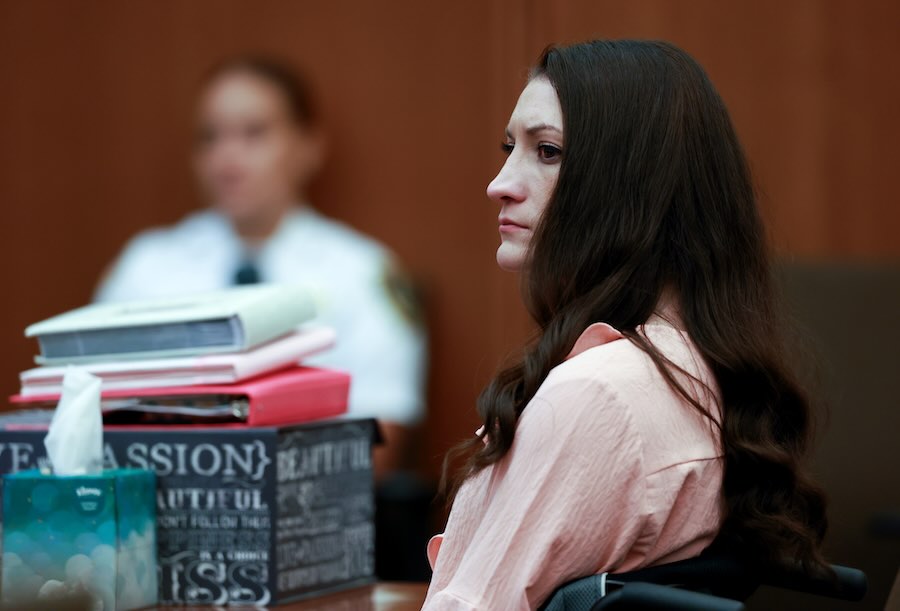
PLYMOUTH, Mass. (Courtroom Insider) — Lindsay Clancy’s murder trial is underway in Massachusetts. The 36-year-old woman is charged with three counts of murder for the strangling deaths of her three children, ages 5, 3, and 8 months old. Clancy is present in a wheelchair after she was paralyzed by injuries she sustained when she jumped from her home’s second-story window in an alleged suicide attempt. Her defense lawyer claims she was insane at the time, suffering from postpartum psychosis, and could not appreciate the wrongfulness of her actions. We are posting live updates from the courtroom here. Time notes are Eastern Daylight Time. Please forgive typos.
3:59 p.m. Judge notes the time is nearing 4 p.m., asks if this is a good place to stop for the day. Reddington says it is. Court is adjourned until 9 a.m. EDT on Wednesday morning.
3:57 p.m. Reddington: How long do people suffer from psychosis? Zeizel: They have intermittent symptoms. They can function normally one day, and they next they can be having hallucinations. Zeizel says, “Hallucinations are like waves at the beach — they come and go, come and go.” He says Lindsay only had auditory hallucinations, no visual. Reddington asks if patients can be in the throes of psychosis and do normal activities like have a conversation or drive a car? Zeizel says yes.
3:55 p.m Reddington asks what psychosis is, and Zeizel says a psychosis is considered a major mental health disorder. He explains that symptoms are most typically hallucinations, a patient can hear things or see things that are not actually there. Zeizel says there are 3 kinds of auditory hallucinations: benign, benevolent, and malevolent. He says a patient absolutely believes what the hallucination is telling them. Is disassociation an indicator of psychosis? Yes.
3:52 p.m Zeizel testifies that Lindsay sought help from emergency rooms, suicide hotlines, and in-patient programs. He says she was scared because she “felt that people could actually hear her thoughts”; she believed her thoughts were so loud that strangers could hear them and was worried about the negative impacts that could cause — like possibly losing her children.
3:49 p.m. Witnesses says Lindsay continued to seek help from doctors, but none for very long for various reasons. He notes that Lindsay reacted poorly to Seroquel. Zeizel says during this time Lindsay was feeling numb and experiencing “dissociation.” Explains disassociation as feeling out of your body, feeling removed from yourself — “as if you are not in your full body.” He says Lindsay said she could not feel her feelings and struggled to get out of bed.
3:47 p.m. Reddington verifies that Zeizel has gone through all of Lindsay’s medical records, interviewed her about her personal history, and is aware that she had delivered a child in the spring of 2022. Zeizel says it appears Lindsay started experiencing depression symptoms in September of 2022, says Lindsay started experiencing anxiety at some point after that and was then placed on medication. Testifies that Dr. Tufts put her on 25mg of Zoloft, but she did not feel better or get better when the medication was bumped up to 50mg.

3:43 p.m. Have you visited with Lindsay since that day? Zeizel has visited with Lindsay a few times during this trial while she is in lock-up. Says he did so because the “horrific nature” of this trial would be hard on anyone, and he wanted to make sure she was mentally stable. Also visited her pre-trial to make sure she was stable for future court proceedings. Counsel called to sidebar again after question from Reddington.
3:39 p.m. Lindsay asked if she could call Patrick on Zeizel’s phone. Zeizel agreed, but only on speaker phone. It took a few times and messages to get Patrick to answer. Witness says he was present and heard the conversation. Says Lindsay expressed her love for Patrick, told him she heard a voice in her head on Jan. 23 that told her “she didn’t have any choice, but that she had to kill her children and then kill herself.” Reddington: Did you help Lindsay to lie or make that up to help herself? Witness: No. Reddington: Why did you let her call her husband? Witness: “I let her call her husband out of human compassion.”
3:36 p.m. Witness says there were police officers outside the door and a nurse near the bed. He says he did an initial evaluation, asking basic questions. Testifies that Lindsay did not know where she was or what time it was, but she did know who she was and vaguely remembered what had happened. Says Lindsay expressed concern for Patrick and that she had not talked to him since Jan. 23.
3:33 p.m. Witness testifies that Reddington called him about his client Lindsay Clancy, said that she had been severely injured and was in the hospital, asked him to go evaluate her the next day. Witness was not immediately able to evaluate Lindsay at the hospital, finally got permission to see her on Feb. 4 – 11 days later. Says Lindsay was laying in a bed with tubes and wires needed for her treatment, and handcuffed to the bed. Testifies that he didn’t know any details of what happened, but went because Reddington told him he was concerned about his client’s mental health.
3:31 p.m. Witness says he worked to help assess soldiers for psychological injuries from war-zone trauma, fitness to continue to fight, etc. Has expertise in psychological problems associated with war zones.
3:26 p.m. Prosecution asks if Zeizel is aware that Lindsay Clancy was given an evaluation by the government? Yes. Do you have an opinion on whether Lindsay was being dishonest in giving her answers during that test? Yes. Please share that opinion with the jury. Zeizel says it is his opinion that Lindsay was not faking or trying to make herself look better when giving answers to the test. Reddington asks Zeizel to give more information about his experience in psychology and testifying in courts. Witness lists off a long list of experiences, including time spent working with combat soldiers in Afghanistan.
3:21 p.m. Defense asks a question about MMI test results in another case. Before answer can be given, judge calls counsel to sidebar.
3:18 p.m. Defense calls Paul Zeizel, a psychologist, to the witness stand. Explains the difference between psychologists and psychiatrists, says psychologists are in the domain of treatments, testing and counseling of mental illnesses, and 99% cannot prescribe medication. Testing refers to neuropsychological assessments, such as ADHD and MMPI testing. MMPI is a test originally created to find leaders in the military but is now used to determine adult personality traits and mental health disorders.
3:10 p.m. Court is back in session. Jury invited back into courtroom.
3:04 p.m. Questioning of Witness ends. Judge calls attorneys to sidebar. Judge says court will take a short afternoon break.
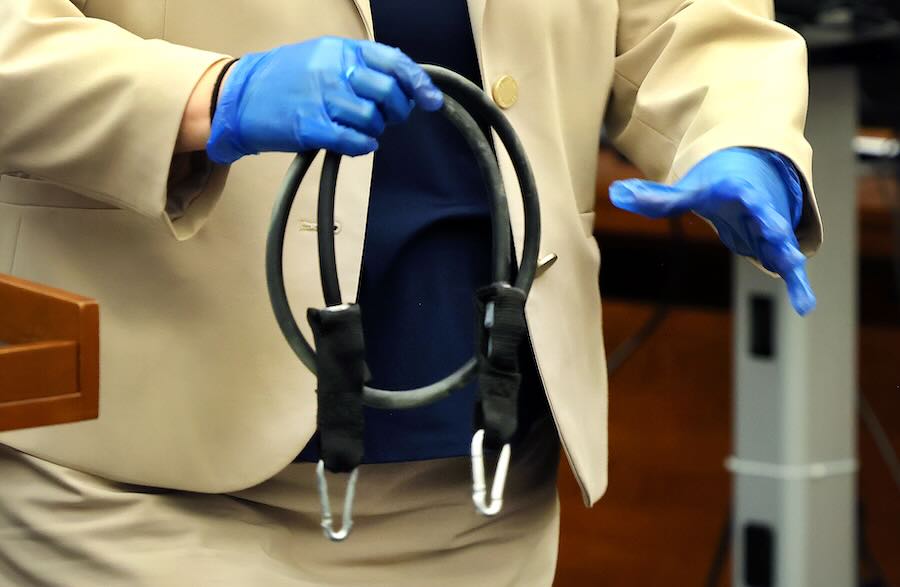
3:02 p.m. Prosecution and defense go back and forth, questioning the witness about how the Clancy children were strangled. Laposata maintains that these were ligature strangulations and that the ligature could be wrapped around the neck and left but would still hold continuous pressure on the child. Prosecutor pulls out one of the exercise bands used in the killings and demonstrates how, when she wraps it in a circle and leaves it, the exercise band does not stay tight like a ligature. (Lindsay is softly crying at the defense table through all of this).
2:59 p.m. Prosecutor: So you’re saying the children ent unconscious in 5-10 seconds, and then died within 5-10 minutes after that. With continuous pressure? A: Yes, because this is ligature strangulation, not manual.
Defense Redirect: What is the difference between manual and ligature strangulation? Witness says manual strangulation is a person pressing on the neck with their hands. With continuous pressure, blood can’t get back out of the brain. Continued pressure means the brain dies. Manual can be “kind of an off-and-on thing,” while ligature strangulation means compression on blood vessels and arteries is consistent, which “causes unconsciousness within 4-10 seconds.” Manual strangulation can cause a broken bone in the neck.
2:57 p.m. Prosecutor references witnesses’ review of Clancy children’s autopsy reports. Verifies that the doctor believes children went unconscious withing 5-10 sec. Prosecutor: Do you remember testifying in a 2011 case of another woman accused of killing her child by asphyxiation? A: Yes. Prosecutor says Laposata testified in that case that it could take 10-20 seconds to lose consciousness. You said once unconsciousness set in, you would have to continue to strangle for 2-3 more minutes before the child died, correct? Witness says that was a different case, and that was a manual strangulation with compression, not a ligature strangulation, meaning it was a totally different type of strangulation.
2:51 p.m. Prosecution Cross: You didn’t treat Lindsay, correct? True. You talked about a Jefferson fracture that is caused by hitting head first, but this can also be caused by hitting the back of the head, correct? No, not correct. Prosecutors verify that there were no skull fractures, brain bleeds, or stitches needed. Witness agrees, but surmises that Lindsay had bruising. Prosecution points out to witness that she can’t be “sure” that Lindsay had a bruise on her head because she didn’t physically examine her. Witness continues to say she is “sure she had bruising.” Pictures of Lindsay’s head in the hospital are shown. Prosecutor points out no swelling or blood can be seen in the photo. Witness maintains that Lindsay fell to the ground, on her head, but had no external injury to her head.
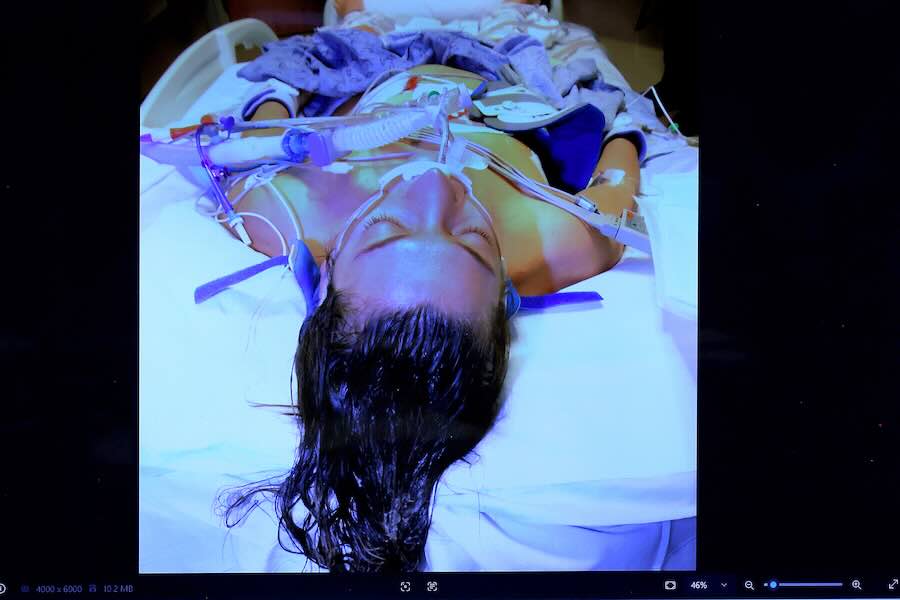
2:46 p.m. Laposata says Lindsay likely “coded” at the hospital because she was in spinal shock and experiencing hypothermia. Blood loss, and subsequent need for blood transfusion, caused by trauma around fracture in her back. Laposata says Lindsay went into hypothermia due to a combination of things, including cold temperatures, lying on frozen ground, being in wet clothing, and loss of ability to regulate body temperature beneath the injury to her spine.
2:43 p.m. Lindsay appears to be crying as she listens to Laposata’s testimony. Laposata moves on to describe back and torso injuries. She says the impact of her head hitting the ground reverberated down her spine and fractured her spine near her ribs, causing damage to her spinal cord. Ribs also fractured. Flex in her neck caused damage to her thyroid and vocal cords. Says break in the spine also caused Lindsay’s body to have trouble regulating temperature.
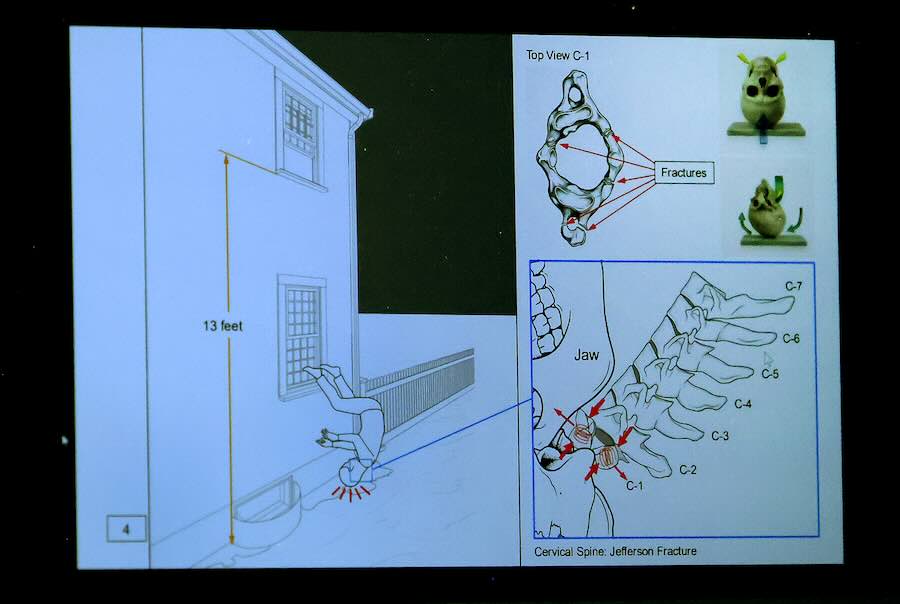
2:32 p.m. Reddington redirects witness to the graphic she created of Lindsay’s injuries. Laposata says she believes Lindsay went out the window head-first, and her back was broken by the force of her head hitting the ground. This is a “classic injury” for people who dive into the pool and hit their head on the bottom of the pool. Called a “Jefferson fracture” or a “bursting-type fracture.”
2:29 p.m. Laposata says she viewed children’s autopsy photos. Dawson had injuries consistent with the medical treatments he received at the end of his life. Do you have past experience with wrist and neck injuries made by someone wanting to end their life? Yes. Do you think Lindsay’s injuries are consistent with someone trying to kill themself? Prosecution objects. Objection sustained. Witness says she has deep injuries and “hesitation injuries” — or more shallow injuries — consistent with someone trying to end their life.
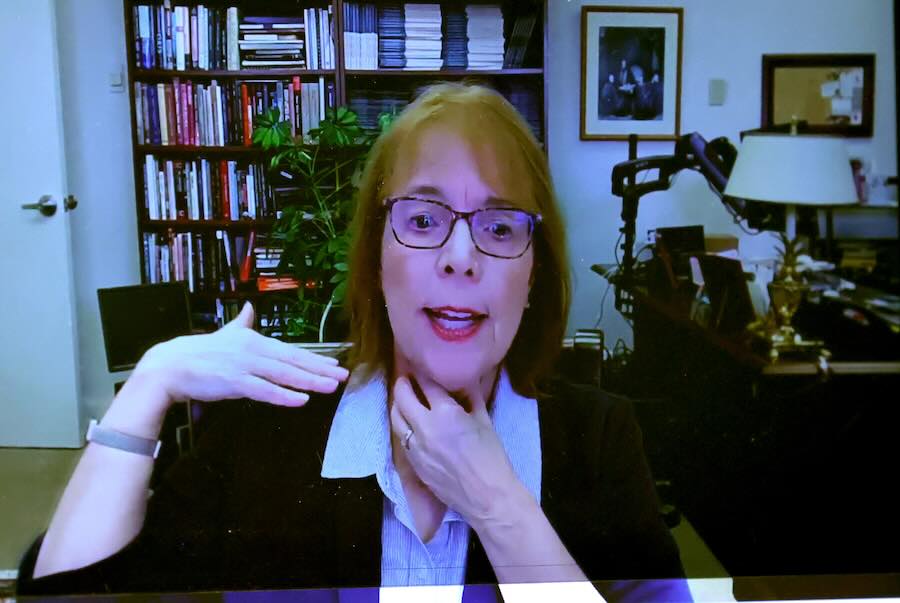
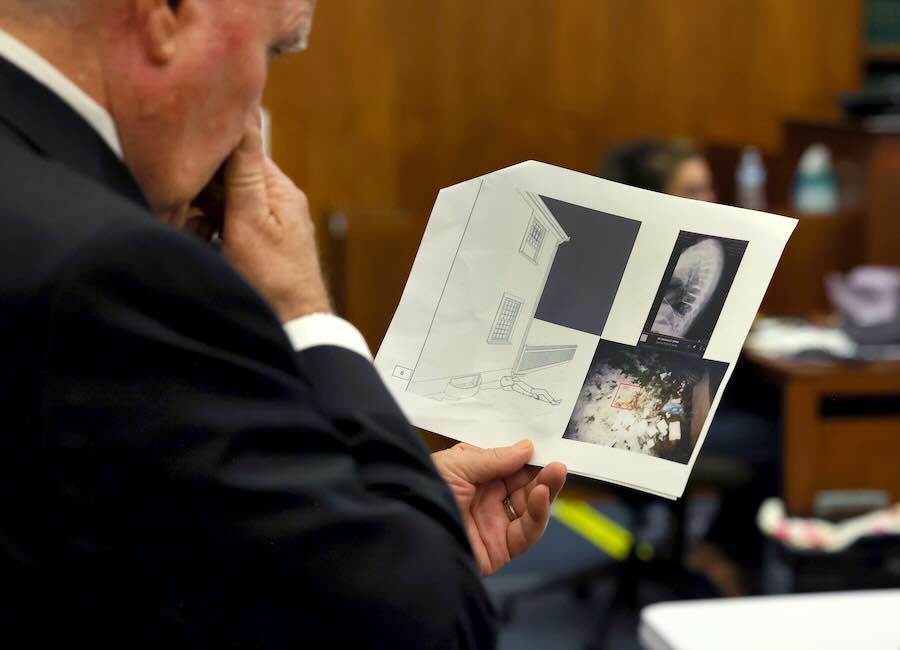
2:23 p.m. Laposata reviewed medical records, autopsy reports, and police reports for Clancy children. Also reviewed medical records for Lindsay Clancy. Reddington introduces a graphic created by a witness to illustrate her testimony. The graphic shows drawings of Lindsay’s injuries and how she may have been injured.
2:17 p.m. The judge introduces a new witness for the defense, telling the jury she will testify via a live video connection. Witness is Dr. Elizabeth Laposata, a medical doctor who has an active practice in forensic pathology. Says she’s an expert in investigating how people get injured and how people die. Shares a long list of credentials she has in the field, including former medical examiner roles.
2:11 p.m. Court is back in session for the afternoon. Jury is being brought into the courtroom.

12:23 p.m. Lunch break now until 2 p.m. One reason for the long lunch is to resolve the technical issues for the Zoom witness. Court is in recess.
12:21 p.m. Reddington asks if it’s appropriate to prescribe an SSRI to someone who is bipolar. Condie says it would need to be done cautiously and usually with a mood stabilizer. An SSRI could make manic symptoms worse. Reddington done. Prosecutor follows up by asking if she interviewed Lindsay Clancy. He did not. “So you’re speculating?” Yes, he replies. No further questions from either side. Judge calls for a sidebar to discuss scheduling.
12:19 p.m. Prosecutor says the only time Clancy reported hearing a voice was on Jan. 24, 2023. Condie says that’s what the records show. Prosecution has no further questions. Reddington is back at the podium. He asks if there are reasons women may not disclose all their mental health concerns to a health care provider – like if they are hearing voices. Condie says yes, they could worry about losing their children or Lindsay could have worried about losing her nursing license.
12:14 p.m. Prosecutor asks about Seroquel. It was a low dose (25 mg) prescribed for sleep issues. You can be prescribed up to 800 mg, Condie says. Rebecca Jolotta had suspicions that Clancy might have been suffering from bipolar and the goal was to get Lindsay to 400 mg.
12:11 p.m. Prosecutor asks about the prescription medication Clancy was prescribed. Prosecutor asks about Clancy being admitted to Mass General and Clancy being advised to go to an inpatient program, but she decided not to go.
12:07 p.m. Prosecutor asks if a blood test would show whether a person has been taking medication for less than a week. It would, he says. Prosecutor asks about insomnia and symptoms. Prosecutor asks about Tufts checkboxes on the records. Condie says there are a few sentences, but mainly text boxes.
12:03 p.m. Reddington finishes his questions. Commonwealth will now question Dr. Condie. Prosecutor asks where in Dr. Condie’s CV does it say he worked with postpartum women. It doesn’t say that specifically. Condie did not review any crime-related documents or records related to this case. Condie reviewed a New Yorker article before testifying and interviewed Patrick Clancy for at least 90 minutes.
12 noon Lindsay was also prescribed Diazepam and Amitriptyline. Reddington holds up a book of about 1,000 pages that he calls “the Bible of Psychiatry.” There is only one reference to postpartum psychosis. The World Health Organization lists postpartum psychosis as a separate entity – and that’s the reference insurance companies use for billing purposes.
11:56 a.m. Lindsay and her husband, Patrick, went to Mass General ER. They recommended going to McLean for inpatient treatment. The next time she went to the ER, she was admitted. Lindsay was repeatedly asked if she had a plan to kill herself, Condie says. Lindsay was prescribed Seroquel and Quetiapine. She often felt “spacey” on the drugs and hungover in the morning because the medicine makes people sleepy.

11:53 a.m. Reddington asks about suicide hotlines. She called the Aspire hotline twice and the records show she was told that because she did not have a suicide plan, she did not require a higher level of care, which would have been inpatient treatment.
11:51 a.m. Condie refers to the medical records and a lot of references to Clancy exercising. Julie Paul recommended a long run at one point. It’s common for postpartum women to be prescribed exercise. Condie says Lindsay ran on the day she delivered baby Callan, which is unusual.
11:48 a.m. Tufts and Jolotta never tested Lindsay’s blood or thyroid. Reddington pulls out a book and points to a section that says bipolar depressive disorder. This is an illness where people’s moods go up, which is the manic stage, and then go down, which is the depressed stage. There are different phases of bipolar depression. Most people spend more time being depressed than they do being manic. Manic – they feel euphoric “you’re really up, you might spend a lot of money foolishly, you’re optimistic.”
11:46 a.m. The symptoms Lindsay reported could be postpartum psychosis, Condie says. Reddington asks if a doctor can give a blood test to a patient experiencing these symptoms. Yes. Condie says blood tests can tell a lot, and it’s important to check the levels of the woman.
11:40 a.m. Lindsay has been prescribed multiple medications. Reddington asks Condie to explain SSRI’s – selective serotonin reuptake inhibitors. Reddington asks what effect hormones have on a woman who has a baby. “Many hormones increase. Progesterone goes down very quickly after birth, as do many hormones that go down after birth,” Condie says. Prolactin goes up, a hormone that increases breast milk. The change of all the hormones results in many women experiencing postpartum blues – a feeling of low energy and being sad. Postpartum depression is more serious – the woman may feel that she can’t connect with the baby.
11:37 a.m. Psychosis is a lack of understanding what is real opposed to what is not, Condie says. People can have hallucinations – auditory or visual. At times, Lindsay reported she had heard a voice. Her medical records show she couldn’t bathe, get out of bed, function. Jolotta prescribed additional medications to Lindsay. There was talk about Remeron and Busbar medications.
11:34 a.m. Lindsay was put on Benadryl. Her son was coughing at night and she was very worried about him. She was not able to sleep. Lindsay used the term “brain fog,” which is common for women who have postpartum depression. “It is a very unpleasant experience,” Condie says. Lindsay started getting treatment with Rebecca Jolotta. Reddington asks if disassociation and not in touch with reality is a symptom of psychosis. It can be, Condie says.
11:30 a.m. Dr. Tufts reported Lindsay’s psychiatric condition was deteriorating, according to a checkbox Tufts checked. Lindsay was having racing thoughts and “feeling not like herself,” her medical records show. Her depression was worse than it had been. Tufts considered giving Lindsay Zulresso, which Condie says is no longer available. The medicine cost $34,000 and is a 60-hour IV in a monitored setting. Lindsay stopped the Zoloft and felt better. She was less anxious.
11:29 a.m. The Zoloft prescription was increased to 50 mg. It gave Clancy insomnia and couldn’t sleep for 48 hours, Condie says. “She talked about being numb, not being herself, feeling worse, not better,” Condie says. He explains that antidepressants can take 2-3 or 4-6 weeks to have results, but sometimes side effects can happen very quickly.
11:27 a.m. Lindsay’s first prescription was 25 mg of Zoloft. It can combat anxiety and depression, Condie says. For some people, it can cause jittery or anxious behavior. Clancy had it prescribed, picked it up, but did not take it for a couple of weeks. She did not want to take it because she was breastfeeding. Zoloft would likely appear in the breast milk, Condie says. Clancy ultimately took the prescription, according to the records.
11:24 a.m. Condie says he reviewed Clancy’s records and it appeared she was going to go back to work as a labor and delivery nurse. She began experiencing postpartum anxiety and consulted with Dr. Tufts. Condie reviewed Dr. Tufts medical records. Reddington asks him to describe them. “They are somewhat sparse. There are many checkboxes in the records, but not a great deal of sentences that describe what was done during sessions.” Reddington asks Condie if he was aware that all the sessions with Clancy were telehealth. Yes, they were all on video.

11:22 a.m. Condie has never met Clancy and does not know the family or anyone involved. Reddington has consulted with Condie about the case. Condie has reviewed the records of Dr. Jennifer Tufts, Brigham and Women’s Hospital records, Women’s and Infants records, McLean records and Rebecca Jolotta.
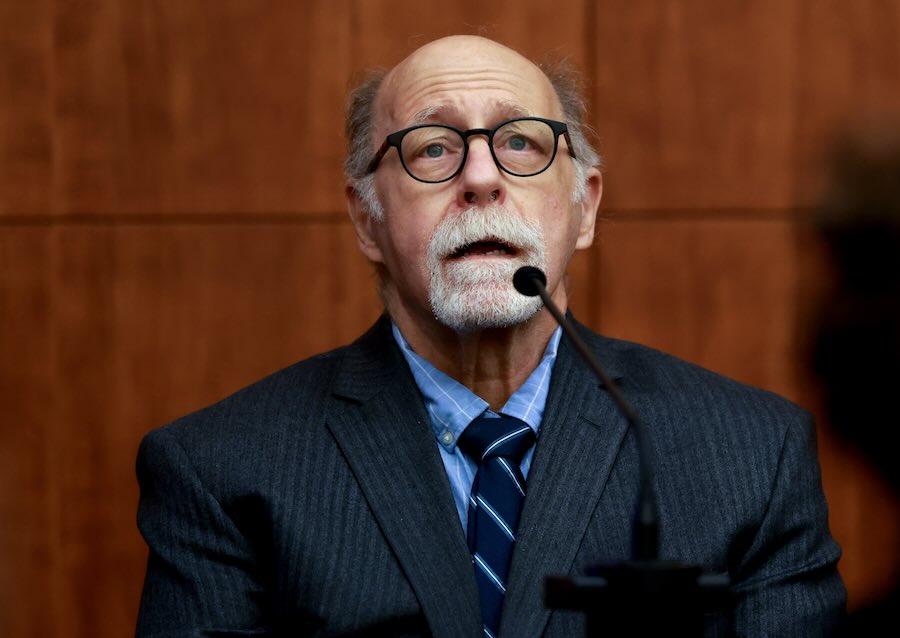
11:19 a.m. Dr. Condie has been a practicing physician for over 40 years. He was a fellow at Harvard Medical School and taught students about his specialty – general psychiatry, forensic psychiatry, and child/adolescent psychiatry.
11:15 a.m. Dr. Condie is board-certified in child and adolescent psychiatry. He has spent a lot of his career treating people in the state system who had mood or psychotic disorders at the Massachusetts Mental Health Center. He has treated a lot of people with psychosis or major depressive disorder. He has worked with pregnant women experiencing psychosis and women who have delivered babies who are then hospitalized with suicidal ideations or depression.
11:10 a.m. Judge Sullivan will allow Dr. Condie’s testimony. He is not allowed to give his opinion about the standard of care. Reddington says he will let the doctor know. Judge calls for jury to be brought into the room. Dr. Condie takes the stand. He is a clinical and forensic psychiatrist. Reddington asks about his professional background.
11:08 a.m. Reddington says they have not put on a doctor as a witness yet and the defense does not have to accept the prosecution’s doctors. He’s not going to get into criminal responsibility with the doctor – the focus will be on psychopharmacology, Reddington explains. “I’m well aware and know when you lose the jury. I’m not going to have them wax eloquently and bore the jury for hours.”
11:05 a.m. Court is back in session. Judge says tech issues can be dealt with during the lunch break. Next witness Dr. Donald Condie, a psychiatrist. Prosecutor has some objections about the witness and says it’s unclear what he’s going to testify about. She says it will be cumulative testimony. Judge says this is the first witness the defense is calling on the subject matter and the cumulative argument would be if they called a follow-up witness to testify on the same thing.
10:50 a.m. Court is back in session but there is an audio issue. Judge says, “I’m not sure this is going to work,” and now court is in recess. Standby…
10:17 a.m. Judge says he does not have a problem with slides 4-6. He isn’t sure about 1-3. Judge is allowing the latter slides in. Taking a break so court can figure out Zoom testimony and so exhibit slides can be changed for the jury.
10:15 a.m. Reddington says the window well in one of the slides is exactly where it is.
10:13 a.m. Reddington shows the diagram on the screen. He says the exhibit shows how Lindsay fell and hit her head. He shows how she got the Jefferson fracture, legs are facing out from the house, she’s laying in the snow. Reddington says if the prosecution has problems with the exhibit, they can raise it during cross examination.
10:10 a.m. Judge says the next witness is Dr. Elizabeth Laposata. She will be testifying via Zoom. Defense will be admitting exhibits during the testimony. Prosecution objects. She says the drawing on one exhibit in inaccurate – the window well is in the wrong place and where they have her falling and landing is wrong. Prosecutor says the drawing could mislead the jury.

10:08 a.m. Prosecutor has some follow-up questions. Susan Clancy is done testifying. Judge tells jurors they are now going to take a break.
10:05 a.m. Susan did not attend doctor appointments with Lindsay. Prosecutor has no further questions. Reddington has some follow up questions. He asks if Susan is aware that Lindsay called suicide hotlines twice and was turned away. Susan is aware. He asks if Susan is aware that Lindsay was turned away from a mental health clinic. Susan is aware. Reddington has no further questions.
10:03 a.m. Judge tells jurors to disregard the statement made about murder being a mortal sin. Prosecutor returns to questioning and asks if she was aware of Lindsay’s stay at the hospital in early January. She is. Susan is aware of the Museum of Science visit
10:01 a.m. Susan remembers having breakfast with the Clancys on Christmas day and breakfast was great. They then went to church and “church was beautiful.” Lindsay told Susan she was glad she went to church that day. Susan is an active Catholic. “You’re aware that murder is considered a mortal sin?” prosecutor asks. Judge asks for counsel for sidebar.
9:57 a.m. Prosecutor asks about a message Lindsay sent on Nov. 30. Lindsay told Susan she had never been this depressed and it was brought on by the medication. Prosecutor asks where Susan went for Thanksgiving. They went to their daughter’s house. Prosecutor asks if Susan recalls Lindsay saying that things were better around Thanksgiving. She doesn’t recall, but prosecutor reads from the grand jury transcript where Susan said Lindsay told her things were better.
9:54 a.m. Once Lindsay started to see Julie Paul, Susan kept in touch with Lindsay. Lindsay told Susan she felt she had developed a benzo-dependency. Lindsay told Susan they kept throwing different meds in the mix that aren’t helping. Susan replied, “So hard. So should you not use it?” Lindsay said she wouldn’t be able to sleep if she stopped using the medicine.
9:52 a.m. Prosecutor asks Susan if she is aware that Lindsay told one of her therapists that she isn’t close with her in-laws. Susan isn’t aware of that. Prosecutor asks if Susan knows Lindsay told a therapist that she didn’t let her mother-in-law watch the kids. Susan is not aware of that.
9:49 a.m. Prosecutor asks if Julie Paul is one of the only medical providers who is not named in a pending lawsuit. Susan says she isn’t sure. Susan offered to help out more with the kids while Lindsay was having postpartum issues. Susan worked the day shift. The kids did not come to Susan’s house to spend the night. “We decided together it was best for them to be in their own beds with their own belongings and Lindsay’s parents were actively involved in helping out,” Susan says. Susan and her husband never stayed at the Clancy’s house.
9:47 a.m. Prosecutor returns to questioning. Asks about Susan visiting with Lindsay at the ER. Lindsay was having problems sleeping and was anxious. Prosecutor asks if Lindsay told her she had consumed a weed gummy and if a weed gummy could cause a faster heart rate or anxiety. Susan doesn’t know. Lindsay left the ER in her own car. Susan and Lindsay remained in contact via text messages daily.
9:45 a.m. Reddington has no further questions. Prosecution asks if Susan worked with Lindsay. Briefly – Lindsay was a student at the time. The prosecutor asks if Susan reached out to Dr. Spinelli in connection with this case. Susan doesn’t think she did. Susan met Lindsay at the ER at South Shore Hospital, the hospital where Susan Works. Lindsay drove herself to the hospital. She was in the ER for an hour or two. Judge asks to meet with counsel at sidebar.
9:42 a.m. Lindsay “was begging for help,” Susan says. During holiday season of 2022, Lindsay was struggling and “we were all very concerned.” Lindsay and Susan communicated a lot through text messages. Reddington approached Susan with the Cellebrite extraction report showing the text messages between Lindsay and Susan.
9:40 a.m. Defense attorney Kevin Reddington asks Susan if she is familiar with Dr. Margaret Spinelli, an expert in postpartum. She is. Susan says Lindsay reached out to her in November and said she had insomnia, was losing her appetite, and was very anxious and sad. Lindsay asked for help. Susan reached out to her colleagues at South Shore Medical Clinic to see if she could help Lindsay.
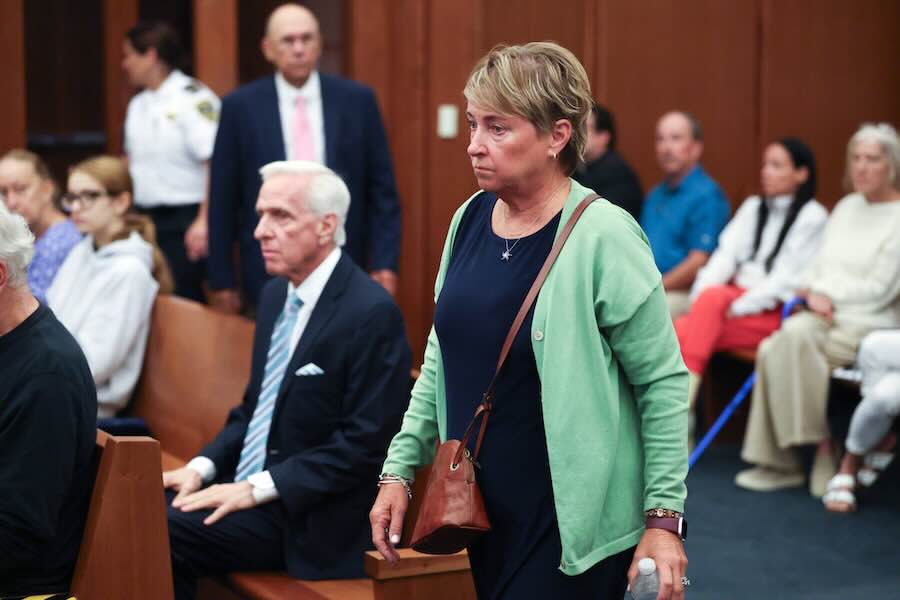
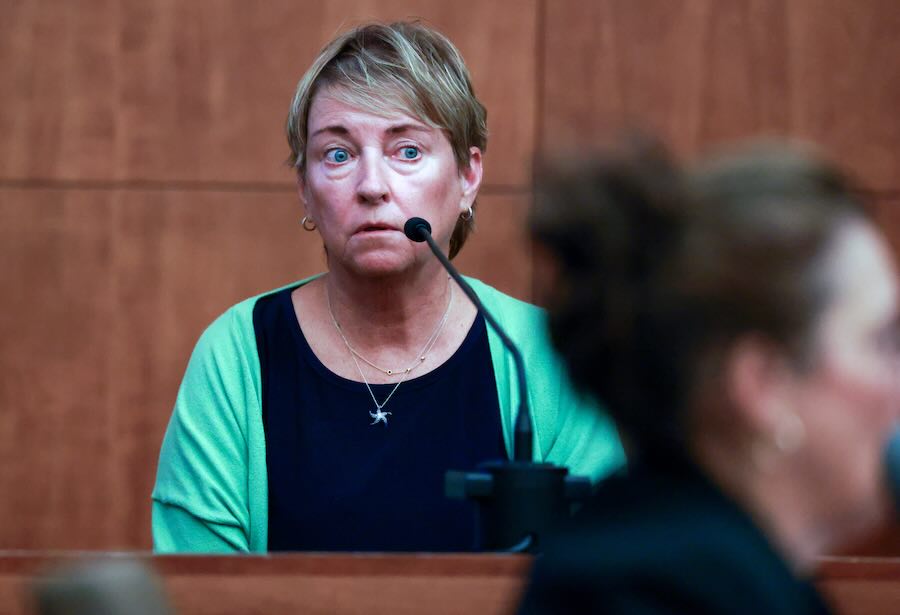
9:36 a.m. Susan Clancy, Patrick Clancy’s mom, is on the stand. Lindsay married Patrick “and we had a very good relationship,” she says. She visited their home. Susan had a “beautiful” relationship with the Clancy’s children. They visited them a few times a month. Susan worked in Labor and Delivery for about 38 years.
9:30 a.m. Judge William Sullivan is on the bench. Tells jury there will be some stops and starts today. The case is moving forward and the gaps are part of the reason to keep the case going, he says. Schedule will be similar to yesterday.
PHOTO GALLERY: