LIVE UPDATES: Psychiatrists offer dueling testimonies of Lindsay Clancy’s state of mind when killing her children, on Day 18 of trial
Published at | Updated at
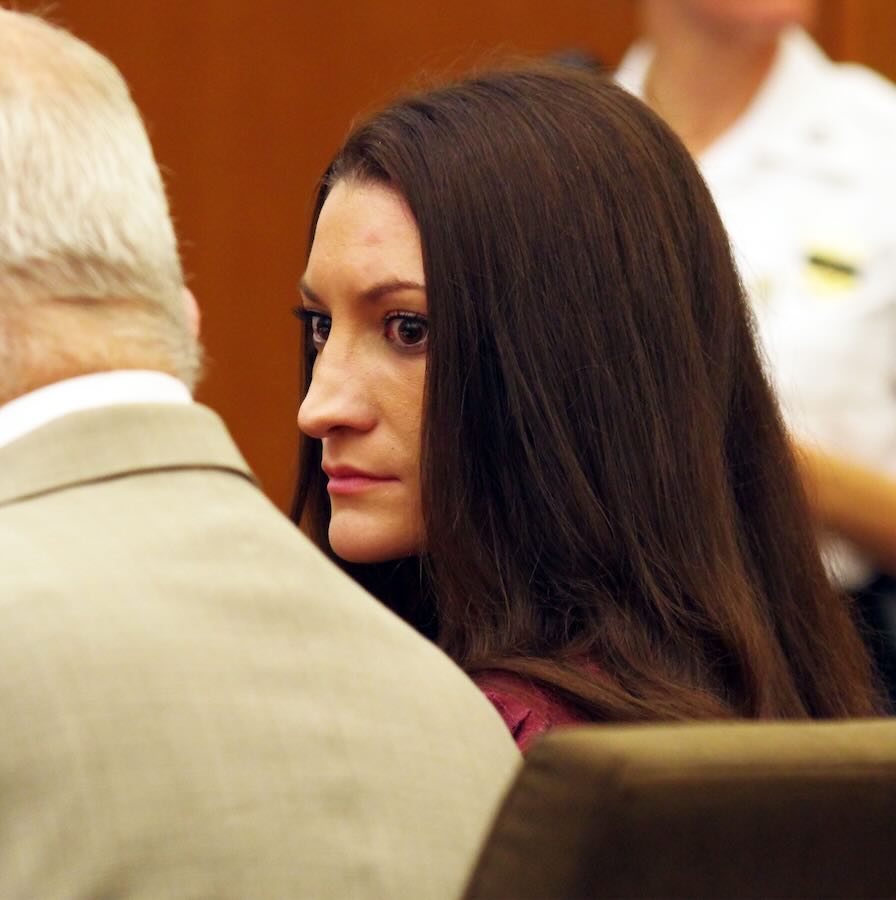
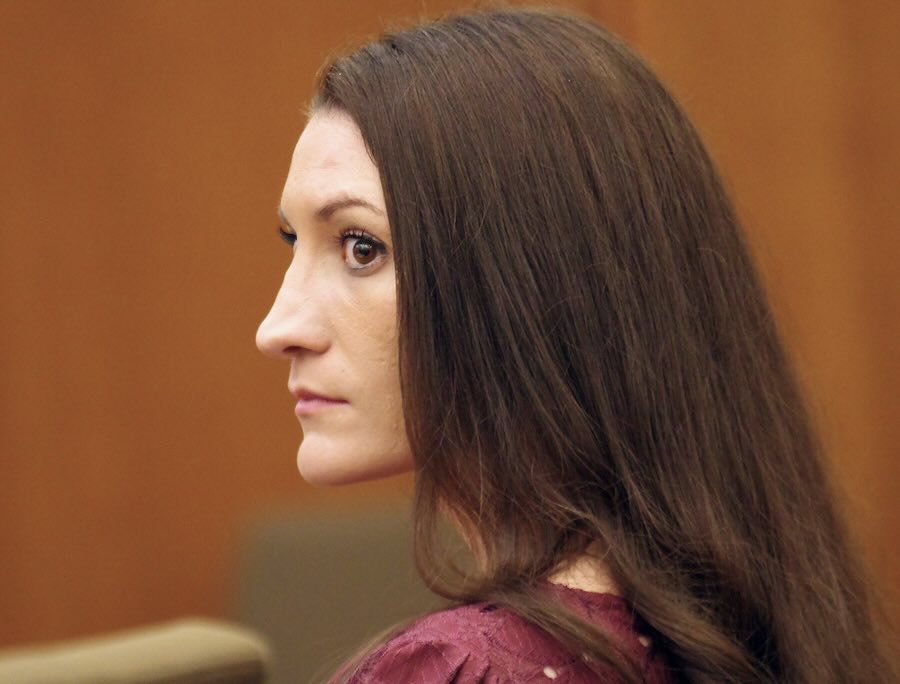
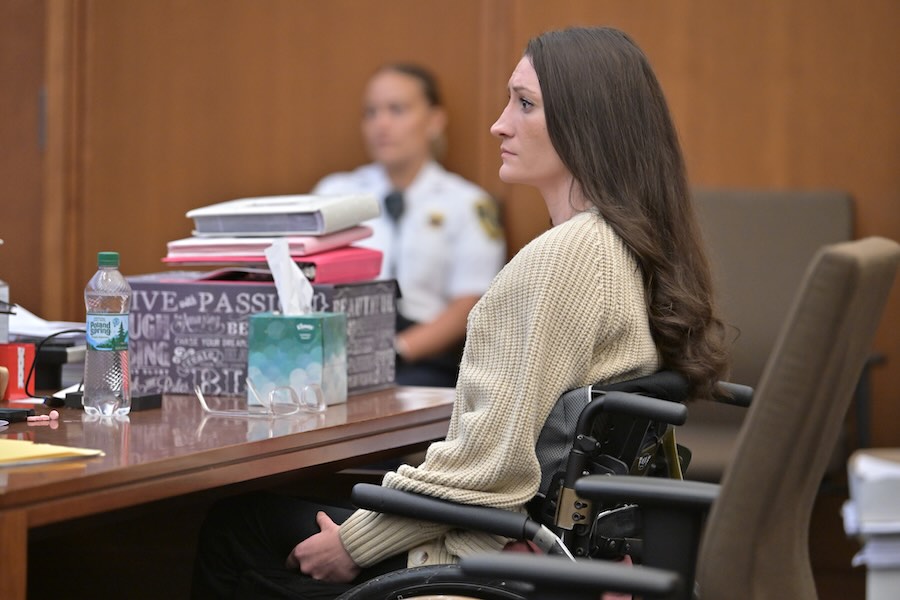
Lindsay Clancy’s murder trial is underway in Massachusetts. The 36-year-old woman is charged with three counts of murder for the strangling deaths of her three children, ages 5, 3, and 8 months old. Clancy is present in a wheelchair after she was paralyzed by injuries she sustained when she jumped from her home’s second-story window in an alleged suicide attempt. Her defense lawyer claims she was insane at the time, suffering from postpartum psychosis, and could not appreciate the wrongfulness of her actions. We are posting live updates from the courtroom here. Time notes are Eastern Daylight Time. Please forgive typos.
3:56 p.m. Judge Sullivan tells jurors that testimony will end for today, excuses them until 9 a.m. EDT on Monday morning. He assures them the trial is “well on schedule.”
3:54 p.m. Some back and forth argument during questioning, then Mack says postpartum depression is already in DSM 5, takes a moment to find it on page 173. He says this is a section about Bipolar 2 disorder, and it includes information about bipolar disorder “with peripartum onset.” This is a page that helps psychiatrists describe where the disorder is coming from. He explains that the panel that wants to put postpartum psychosis disorder into DSM 6 actually wants to change the word “peripartum” to “postpartum.” Judge calls sidebar to discuss scheduling.
3:45 p.m. Questioning turns to postpartum psychosis and how it is diagnosed. Reddington verifies that it is not in the DSM 5, and asks if it will be added to DSM 6. Mack says he doesn’t know. Reddington establishes that DSM 5 says that when speaking about women with bipolar disorder who are pregnant, the risk of a manic episode does not increase while pregnant unless medication is stopped. … Verifies with the witness that DSM5 says that bipolar 1 disorder happens equally in men and women; bipolar 2 disorder is more common in women than in men. Reddington reads from DSM 5 that women are more likely to report hypomania than men … childbirth may be a trigger to hypomania in about a quarter of women. Mack agrees with this.
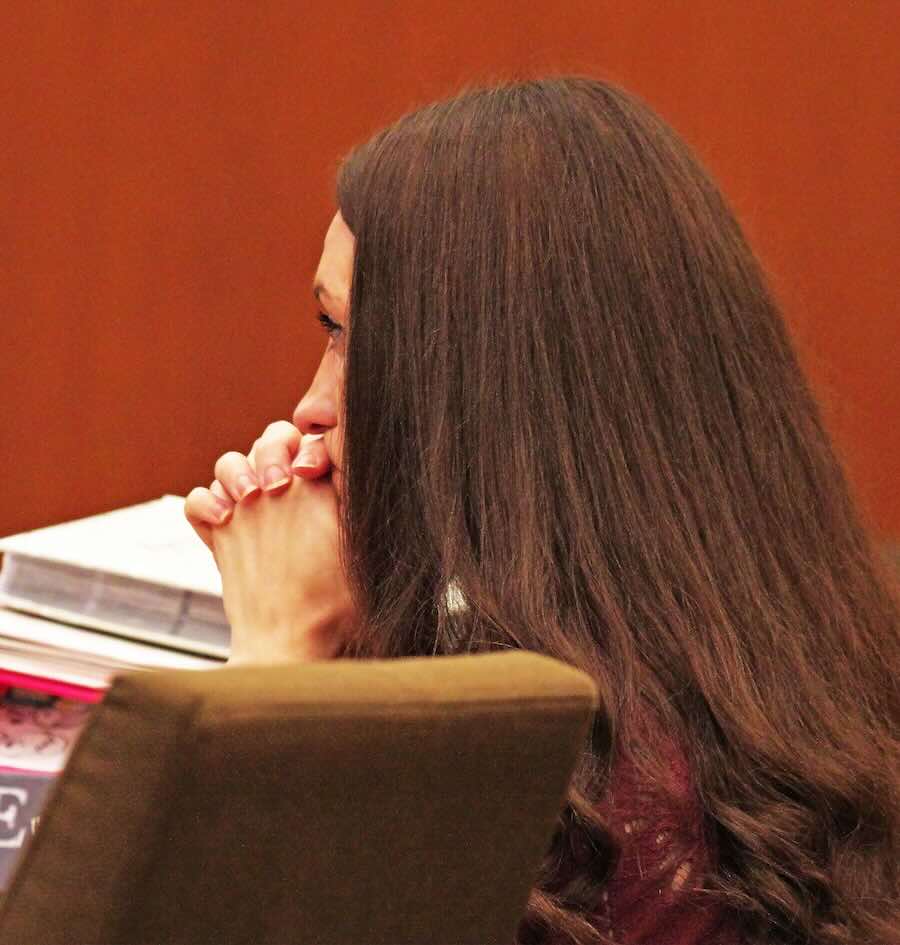
3:30 p.m. Mack: Traditionally, the teaching has been that what is called “postpartum psychosis” is a form of bipolar disorder. … Reddington: Do you know if Lindsay was ever diagnosed with postpartum depression? Mack: I don’t think so. Reddington: Was she ever administered the EPDS, or Edinburgh Postnatal Depression Scale? Mack: I don’t know. Reddington: Do you know she was off the charts on the scale? Do you know what her readings were, based on her records? … When did she see Dr. Tufts? Mack: September 2022, prescribed Zoloft in Oct. 2022. Reddington: Why didn’t she take it? Mack: Over time, Ms. Clancy has avoided taking medications. Reddington: She told you that? Mack: My evaluation says that. There are people in this world who resist taking medication, and she is one of them. … She had not taken medications, but she had had a lifelong resistance to taking medications. She was hardworking, and the anxiety drove that hard work. Mack says an example of this is when Lindsay was prescribed antidepressant medication after Callan’s birth and didn’t take it. Reddington: Did she tell you about this resistance? Mack: My evaluation is based on her description to me. Redington: She didn’t say she had problems with taking medication in grammar school, high school, etc. Mack? That’s what I believed. Reddington: She didn’t tell you that!
3:15 p.m. Reddington goes over Mack’s accreditations — where he is licensed to work, as well as his certifications, memberships, and experience. Goes over and verifies Mack’s extensive work in pediatrics and the study of adolescents, hallucinogenic drugs, and drug addiction disorders. Reddington: “Your focus is on adolescents who like to smoke weed and drink, correct?” Mack: No. Reddington: Where in here (your experience) does it say that you have any experience with pregnant women’s mental health? Mack: I see myself as a generalist who happens to have a couple areas of focus. Have been working in pediatrics — up to age 24 — since 2011. Before that, at Georgetown, it was all work with adults. Georgetown does have labor and delivery unit, so I have experience there. High-risk maternity unit at CHOP, I lead the group to tend to the psychiatric needs of these patients. How many women with postpartum psychosis have you treated? roughly 10. Over what period of time? Since 2001.
3:09 p.m. Reddington brings up Dr. Kirk Heilbrun, of Park Dietz & Associates. Mack says the first time he met Heilbrun was when they did a joint evaluation with Lindsay at Tewksberry. Reddington: So, you were under the umbrella of Park Deitz. You and Heilbrun, who will be testifying on Monday, interviewed Lindsay together? Is that appropriate? Mack: Yes. Reddington: Have you communicated with him since then? Mack: Yes, but not about the interview or testimony. Reddington: Have you reviewed his report about the interview? Mack: Yes. Reddington: Has he reviewed your report? Mack: I don’t know.
3:05 p.m. First communication with the prosecution was in late 2024. I was contacted through Park Dietz & Associates, a retention firm. Reddington prompts discussion about who Park Deitz is (an attorney who testified in Andrea Yates’ trial, who said Yates got her idea to kill her children from a Law & Order episode — later debunked, no episode existed). Prosecutors object to the statement; sustained.
2:57 p.m. Reddington asks more questions about Mack’s knowledge of who Lindsay is as a person and what she was experiencing mentally. The questioning is peppered with objections from the prosecution, mainly about talking over the witness. Judge asks witness to stick to yes or no answers on yes or no questions. Questioning continues. Judge calls sidebar with counsel.
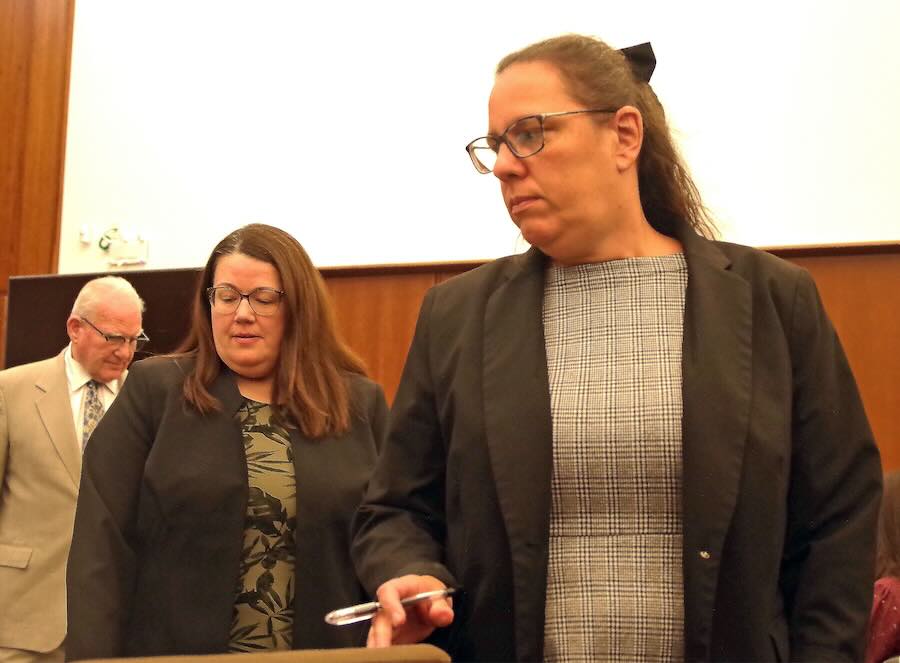
2:52 p.m. Defense Cross: Reddington points out that Mack is getting paid to testify. He then asks where he got the narrative of the day the children died, and Mack says he got it from Lindsay. Reddington: So, you know this is a woman who has mental health issues to the point that she is hospitalized and on suicide watch, and you take her account as the truth? Mack: Yes, I spoke to her, and I reviewed the records. … Reddington:You don’t know about her history and work reputation? Mack says his knowledge is a combination of what is in the records he reviewed and what was said in Phillip Resnick’s evaluation of Lindsay.
2:45 p.m. Prosecutor: Does Lindsay’s “Go to God” statement inform your opinion? Mack: Yes, it tells me that she is labeling the children as innocents while what she’s doing is wrong. It’s not only a hope of what will result from the situation, but also a description of what was happening (they did nothing wrong when this happened to them, implying that the thing happening is wrong), he says. Mack says Lindsay’s statement about feeling “horrified” about what she did shows a sense of shame and that she understands it was wrong. He also says that, in carrying out the killings, he believes Lindsay was engaging in this activity “methodically” — meaning the killings were carried out one by one, in an organized way, in an attempt to achieve a goal. He says events of her suicide attempt followed the same pattern, aiming for a goal. What is your opinion of Lindsay Clancy’s state of mind on the day she killed the children? Mack: My opinion is that she retained the capacity required for having criminal responsibility for these actions. End of questioning.
2:40 p.m. Mack testifies that he believes Lindsay retained the capacity to know her actions were wrong; it’s a continuation of a mental state she had for months. He says there is no indication that anything changed her overall capacity to know that. Prosecutor brings up Lindsay’s ability to conform her conduct to abide by the law. Mack says he believes Lindsay retained that ability on the day of the killings based on his analysis of her actions throughout the day, which show that she was able to follow traffic laws and interact with people appropriately. In addition, he says there is nothing in previous months that shows she lost that capacity at any point. Furthermore, he says she had thoughts of harming the children during those months, but voiced that she knew she could receive negative consequences for doing that. Mack says he doesn’t see any reason to explain why this ability would have changed on the day of the killings.
2:35 p.m. Prosecutor: When did the voice come? Mack: As soon as Patrick left the house. Prosecutor: Were there inconsistencies in what she told you as compared to the records you reviewed? Mack: Yes. Two things come to mind: the locking or closing of the bedroom door and the cutting of the screen. She denied locking the bedroom door, but records show that Patrick said the door was locked. There was a question about whether the screen had been cut. She said she took all the pills in her bedroom. She said at the time of the phone call with Patrick, she was holding the baby and getting food for the kids. But crime scene photos show their bowls were in the living room, and records show Patrick saw Dawson eating before he left.
2:30 p.m. What are command hallucinations? Command auditory hallucinations are when you believe a voice is telling you what to do. Lindsay said the command hallucination came to her in the late afternoon of this day. She said the voice was loud and told her to kill the kids. Mack says Lindsay told him she took Dawson down to the basement first and strangled him. While she was doing this, she said she was telling him to”Go to God.” He says she told him she repeated this with each of the other two kids. After the children were dead, she said she went to her room and took various medications, then cut at her wrists and her neck, and went out the window. He says she told him she cut the screen and then fell out the window.
2:24 p.m. Jan. 24, 2023, the day of the killings, Mack says Lindsay described the events of the early part of the day as good. He says Patrick reportedly said it was one of her best days. Mack says this is not inconsistent with suicide or the depressive order. Oftentimes, these depressive episodes start to recover after a few months; in my experience, sometimes this improvement trajectory gives them the energy to act on their suicidal thoughts.
2:20 p.m. Court is back in session. Commonwealth questioning of Dr. Avram Mack.
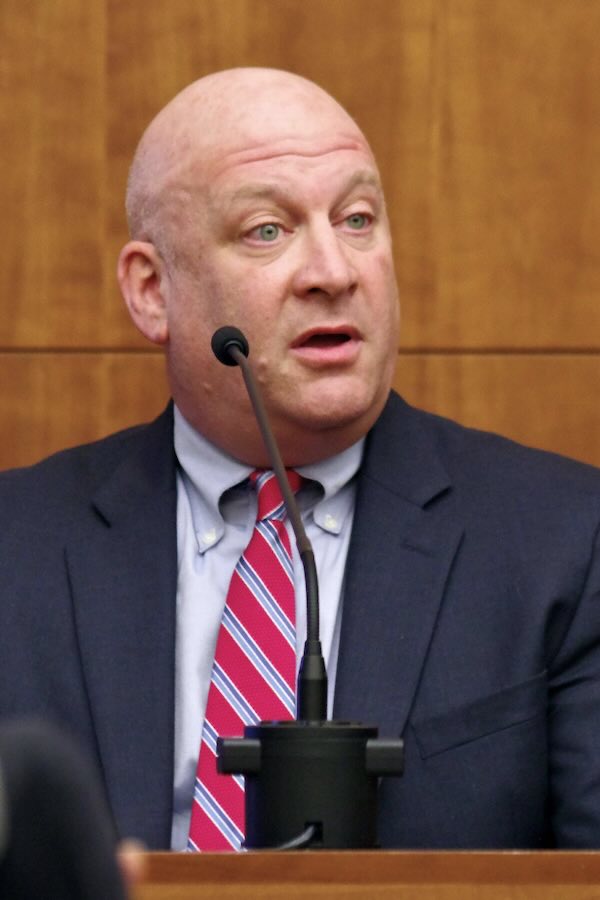
1:01 p.m. Judge Sullivan notes the time and calls for a lunch break. Court is in recess until 2 p.m. EDT.
1 p.m. Are intrusive thoughts or being suicidal a sign of psychosis? No, it’s a sign of suffering. It just occurs in someone with depression. Did Lindsay identify protective factors regarding her suicidality? Yes — her mother and her children. That is to say, despite the urges toward suicide, she chose not to go through with them because she didn’t want to hurt her mother or her children.
12:55 p.m. Prosecutor verifies that Mack does not believe Lindsay’s mental health decline can be called a postpartum episode because it happened outside the timeline for postpartum defined by the DSM. Prosecutor asks why Mack doesn’t believe Lindsay was suffering from psychosis. Mack points to her belief that people would take away her kids if they knew what she was thinking — “I don’t know that that is psychotic.” He says her belief that drugs had ruined her brain or body isn’t necessarily psychotic, either. Says she questioned her mother: “Can you hear my thoughts?” This is not evidence of psychosis; she understands that others may or may not be able to hear her thoughts, and she is engaging in reality testing by asking the question. Mack says Lindsay also had a worry that she had ketoacidosis — it may have been a false belief, he says, but “I didn’t think it was psychotic.” It was not a fixed false belief, but she worried about it. Mack defines a delusion as a fixed false belief — you can’t be convinced otherwise. But he says Lindsay’s worries aligned with her experiences and made sense. He says this is a person who was suffering and had the ability to question whether her thoughts were reality — not psychotic.
12:46 p.m. Mack defines psychosis as a form of thinking where the person has disorganization and may have a lack of ability to do reality testing; they can’t test if a belief or action is real or not. There’s no reason that psychosis, itself, inhibits a person’s reason to know the difference between right and wrong. Prosecutor: Did you consider bipolar disorder? Why not give her a diagnosis of bipolar? Mack says he can’t diagnose bipolar because he found no evidence of Lindsay having a manic episode or hypomanic episode.
12:35 p.m. Mack says that, after his interview with Lindsay and a review of her medical records, he believes that in the period of fall 2022-2023, Lindsay suffered from a major depressive episode. Says that diagnosis is based on the information about her feelings and the progression of her illness. Mack says a major depressive episode is defined in DSM as problems with depressed mood, feeling guilt or displeasure, etc. Says Lindsay’s history and description of her experience matched a major depressive episode. Mack verifies that Lindsay also had anxiety disorders. He says he does not believe Lindsay qualified for a psychotic diagnosis during this depressive episode in 2022 & 2023. Also found no evidence of mania or hypomania during that time period.
12:25 p.m. Mack says Lindsay was prescribed sertraline (antidepressant) in September but didn’t start taking it until October. Says she had other medications prescribed, but she did not take them more than a few times. Her initial dose of Seraquel was prescribed at 25mg — it can be used for sleep, as an anti-psychotic, or to help with depression. Would the amount of time she took Seraquel have any lasting effects on the brain or body? There’s no known long-term biological effect, but there could have been temporary effects to her ability to function. It can negatively affect a patient’s cognitive function, but that goes away when they stop taking it.
12:20 p.m. Mack says Lindsay told him she gets depressed about several things: remorse/sadness about the killings, her separation from her husband, her isolation from the rest of the world, and her paralysis. Did she use the word “remorse”? No, that’s my summary. Do you recall any head injuries from the Jan. 24 incident? She denied head injury. Did she understand the extent of her other injuries? Yes. Mack goes on to say that prior to 2022, Lindsay had no mental health diagnoses. Prior to 2022, she had been very driven. He says she did have 2 previous instances of anxiety/depression in which she was prescribed medication. He says she told him she didn’t take medications because she was determined to heal through hard work and exercise.
12:16 p.m Did you discuss hygiene and grooming? Yes, she said she didn’t care much about that. She said showering is embarrassing because it requires a lot of staff help. Mack confirms that Lindsay appeared groomed during the interview, with her hair combed and she was dressed nicely. Says Lindsay talked of having situational depression, in which she was miserable and still felt suicidal. Do you know her current medications? Yes. She’s on some psychiatric medications, but the main one of note is Olanzapine. It treats psychosis. Prosecutor: Are you aware that it’s prescribed to treat bipolar? Yes, because a bipolar diagnosis includes mania; this is a low dose. She is currently taking trazodone, Wellbutrin, clonidine, Propranolol (for anxiety); all her dosages here are considered low doses.
12:10 p.m. Mack says he interviewed Lindsay on April 10 & 12, 2026. What were your observations? Generally, she was friendly and cooperative. Did you perform a mental status examination on her? Yes. Mack says Clancy appeared rational and reasonable, though distressed at times (she cried). Generally, nothing abnormal was observed. Was she able to take care of herself physically? Yes, she was able to maneuver her wheelchair in and out and around as needed.
What did she describe about daily life at Tewksberry? She said she mostly stayed in bed or on her own; She wasn’t interested in the physical therapy she was getting there. She wasn’t interested in the food there. She was able to have visitors, who sometimes brought her food she liked. Who were her visitors? Family and a chaplain and a priest, people like that. Did she interact with patients at the hospital? To some degree, yes.
12:02 p.m. Prosecutor: How do you determine criminality in a person with mental illness? Mack says Massachusetts uses the McNaughton Standard, which has multiple components that a defendant must meet to be criminally responsible for their acts. First, McNaughton asks: Did the person have a mental disorder at the time of the event? Prosecutor: How do you go about determining that? Mack: I look at mood, affect, medical condition, substances used, etc. I’m essentially asking questions about symptoms and the degree of impairment symptoms might be causing an individual. Prosecutor establishes that psychiatrists use the DSM (manual of mental health diagnosis updated and reviewed by multiple psychiatrists) to diagnose patients with mental illnesses.
11:55 a.m Judge formally asks Commonwealth if they have any rebuttal witnesses. Prosecutor says yes. Dr. Avram Mack, forensic psychiatrist, is called to the stand. His credentials are verified and its established that he’s testified in other court cases. Prosecutor asks how a proper evaluation of a defendant in a criminal case is conducted. Mack says he needs to have as much information about the individual and their medical history/records as possible. Prosecutor asks what happens if he doesn’t have everything; how does that affect the conclusion? I make my conclusion based on the information I have, so it’s complete based on available information.
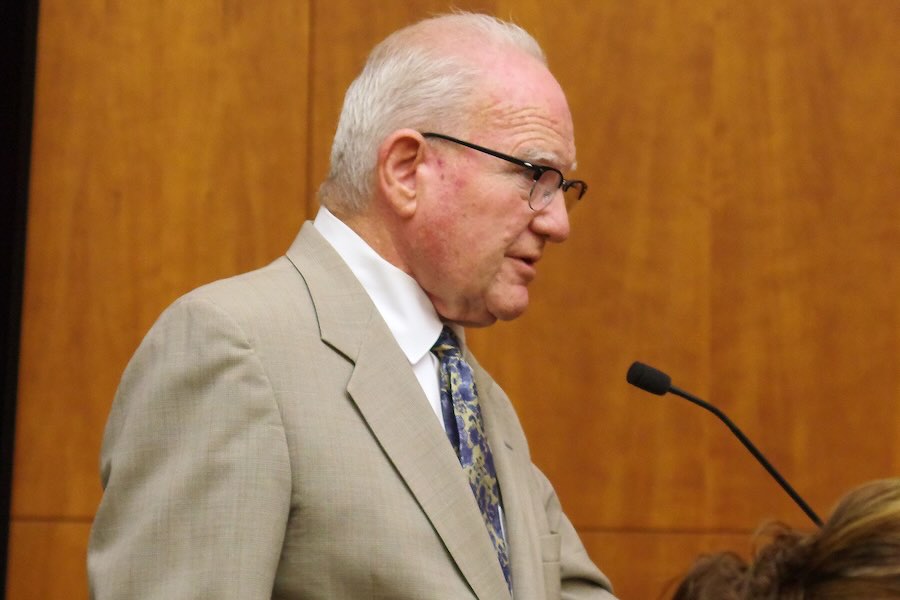
11:52 a.m. Defense rests its case. Judge tells jury he is going to call a sidebar to see if prosecution has rebuttal witnesses. Sidebar called.
11:45 a.m. Prosecutor: You said nurses told you Lindsay was crying every day? Are you aware that in Tewksberry’s notes, from people who watched her every day, there’s no record of her crying every day: Resnick: No, I have no knowledge of that. Prosecutor: You said her affect and emotions were flat and blunted. Do you remember portions of the video of your interview in which she laughed?. Resnick: Yes, but that’s not inconsistent with the flat affect from earlier. Prosecutor: I’m not asking that, I’m asking if you’re aware.
Prosecutor goes on to ask if Resnick is aware that postpartum depression/anxiety usually happens in the weeks after the birth? Resnick: Yes, usually. Prosecutor: Do these depression symptoms have to happen in the first 3 months after birth to be considered postpartum? Resnick: No, there are varying theories in the field of how long the postpartum period is; some say up to a year. Prosecutor: The thought that your children can be taken away is a rational thought, correct? Resnick: “It can be rational, but it was more irrational in her case.” End of questioning.
11:33 a.m. Defense Cross: Prosecutor: You teach people how to testify in trials? Resnick: Yes. Prosecutor: You teach psychologists how to hold back information as an element of surprise in court? Resnick: No. Prosecutor: It’s true that a woman who kills her child can have more than one motive? Resnick: Yes. Resnick verifies that child abuse is the most common method of filicide. Prosecution goes on to question Resnick about his past publications, apparently trying to point out contradictions between what he wrote and what he’s saying today.
11:31 a.m. Resnick testifies that Lindsay was actually a “more sophisticated” patient than most and was forthcoming in conveying most of her symptoms. The one area she was not totally revealing was that she had the impulse to harm her children. That was because she had an irrational belief that if people knew that, her children would be taken away.
11:29 a.m. Resnick says in his research, he’s developed 5 categories of why parents kill their children. The first is altruistic filicide — murder committed out of love rather than hostility; doing what is best for the child. The parent may also believe the child will be better off if she is not alive. He says Clancy believed her children would be better off in heaven, with her, than left on earth without her.
Resnick says his second category also applies to Clancy — it’s when the parent has no control over what they are doing and kills the child.
The other categories do not apply to Clancy; they are:
- Child maltreatment — child abuse homicide
- Unwanted child — child is a burden and is killed for the parent’s convenience
- Spouse revenge — parent hates their spouse so much that they’re willing to sacrifice their child
Resnick says Lindsay “could not imagine them continuing to exist and live without her being there as her mother.” He says she believed that she was doing what was right for her children, with her psychotic belief in her children’s absolute need for her.
11:25 a.m. Resnick Unable to conform to the law on the day she killed the children. This is because she was hearing a voice commanding her to kill; she did not feel a sense of control. “She was just following the command rather than being able to make any decision to do it or not.” Second evidence that she was lacking control is that she made a severe suicide attempt on that day by cutting her throat and jumping out the window, and she very much wanted to die.
11:23 a.m. Sidebar called. Judge tells jurors any psychiatrist or psychologist for purposes of evaluation cannot be considered as premeditation or intent to kill. Such references are admissible only in reference to the doctor’s evaluation.
11:20 a.m. Resnick says Did her best to not reveal the extent of her depression. Her family knew how bad it was, but with more casual friends she did not reveal much. On the day of her crime, I’m not suggesting she was “frankly psychotic,” but she had episodes. She was functioning at a level not “frankly psychotic” until she had a “command hallucination” while her husband was out doing errands. What is a “command hallucination”? Resnick: The commanding voice can be benign or malignant. 1/3 of hallucinations are command hallucinations; commands can be “open a window” or “get a glass of water” or “kill yourself.” She had a delusion of influence — not only did she hear a command, but she felt like her body was taken over by an external force, meaning she was in a dream-like state and felt like she was a puppet and someone else was pulling the strings.
11:14 a.m. Resnick determination: Lindsay had a severe depression based on DSM requirements. Ms. Clancy, as she approached the date of the crime, had 7 of the 9 symptoms of depression — meaning she was severely depressed. She also had evidence of some mania. “My diagnosis of her (on day of the crime) was Bipolar 2 with severe depression. Did you evaluate her for postpatum depression? Yes. Ms. Clancy had a history of anxiety and depression with the birth of each of her children, which got progressively worse each time. After the birth of Callan, she did fine for the first 3 months but then went into a similar postpartum reaction. Because of the timing, by Jan. 24, 2023, “Ms. Clancy was frankly psychotic.” It’s not common for this psychosis to happen 8 months after the birth, but it does happen. “She was clearly psychotic on that day.”
11:05 a.m. Reddington asks whether Resnick has reviewed the records of evaluations conducted by the government. Resnick says he has. Reddington asks when those evaluations were conducted. Resnick says about two years after the killings. Reddington asks if Resnik has reviewed Lindsay’s MMPI psychological evaluation results; he has. Resnick says results showed that Lindsay had a tendency to minimize and not exaggerate her own symptoms. Reddington: Did the test determine she was being truthful as best she could be? Yes, although the test is more specific of symptoms than lying or not lying — but it didn’t indicate dishonesty. Reddington verifies that the K scale on the test (related to dishonest) was not high, meaning she was honest.
11:01 a.m. Resnick says he was able to evaluate Lindsay about 4 months after the crime occurred. Resnick: I evaluated Lindsay and her parents. I spent roughly 3 hours with Lindsay and about 1.5 hours with her parents. Reddington: Tell the jurors what Lindsay’s mood was during your interview. Resnick: Her affect was flat. Nurses said she cried daily over the loss of her children. She was able to tell me the details of the killing, as she remembered it. She was medicated at the time, and her emotions were muted. Resnick says he also reviewed all of Lindsay’s medical records.
10:55 a.m. Defense continues questioning Phillip Resnick, who gives his background as a psychiatrist and professor. Says he has studied forensic psychiatry since the late 1970s and has maintained his certifications since then. Reddington: This case is referred to as filicide; can you tell the jurors what that means? Resnick: Filicide is a parent killing a child, and it is relatively rare. There are about a couple hundred cases each year in the United States. Resnick verifies that he has testified in multiple high-profile trials, consulting on trials for Jeffrey Dahmer, Ted Kazinski (the Unabomber), Casey Anthony, Andrea Yates, the Aurora, Colorado, movie theater shooting, the Oklahoma City courthouse bombing, and several filicide cases. Verifies Reddington reached out to him to evaluate Lindsay Clancy.
10:46 a.m. Court is back in session. Defense attorney Kevin Reddington says technical difficulties have been addressed, “fingers crossed.” Jurors are brought back into the courtroom.
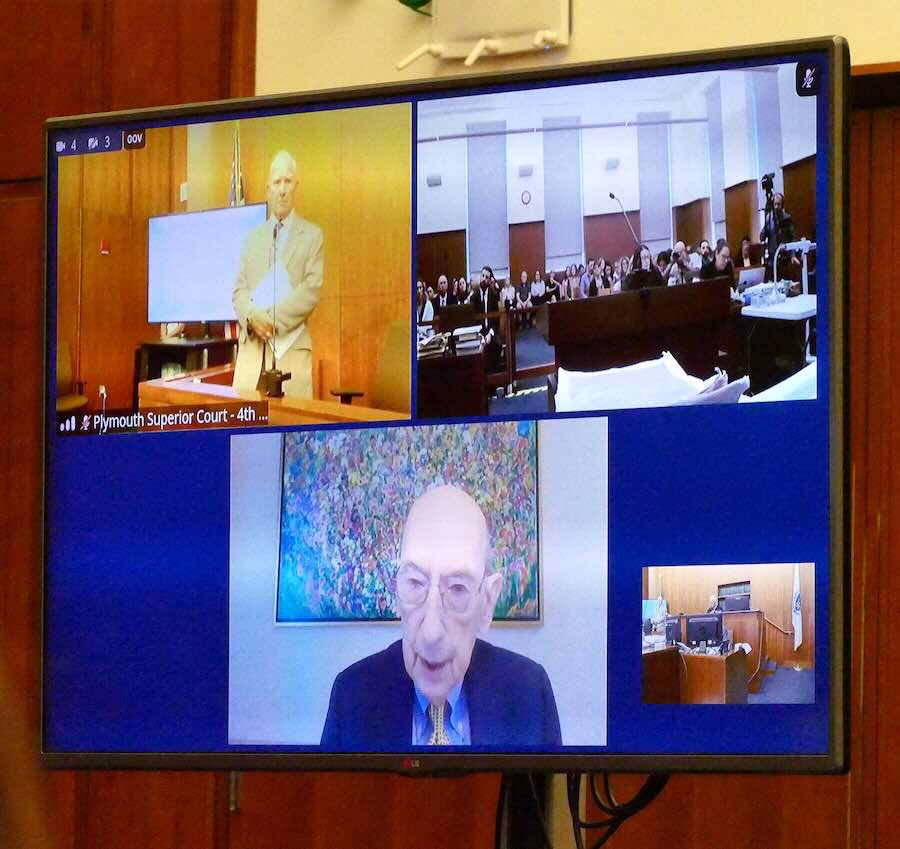
10:02 a.m. Defense calls Phillip Resnick, forensic psychiatrist. Resnick says he’s not appearing in person due to a recent illness and surgery; he has orders from his doctors not to travel. The court is having “technical difficulties”—the internet connection to Resnick is glitchy. The judge calls a short sidebar with counsel, then addresses the jury and says the court will take what he hopes is a short break so that IT people can fix the connection. Court in recess.
9:52 a.m. Jurors brought into the courtroom. Judge asks jury members if they’re all still in compliance with orders they’ve been given. They say they are. He explains that this morning’s delay was due to the need to set up a Zoom call for the defense’s next witness.
9:42 a.m. Court is now in session. First item of business: Judge William Sullivan calls counsel to sidebar.
9:17 a.m. As we wait for testimony to begin, here’s the plan for today: The defense plans to call its final witness. It appears Lindsay Clancy will not be testifying in her trial. The prosecution then has three rebuttal witnesses. Judge William Sullivan said closing arguments will likely be on Monday or Tuesday, then the jury will begin deliberations. Of course, this could all change, but it was the plan as of yesterday.
Do you think the prosecution has proven its case? Will the jury find Lindsay Clancy guilty of three counts of first-degree murder for the deaths of Cora, Dawson, and Callan? Let us know your thoughts in the comments.
PHOTO GALLERY: