



‘No other criminal has that kind of power’: Inside the mind of the serial arsonist
Published at | Updated at
Mathew Callaghan, The Spokesman-Review
SPOKANE, Wash. (The Spokesman-Review) John Leonard Orr never thought he would get caught.
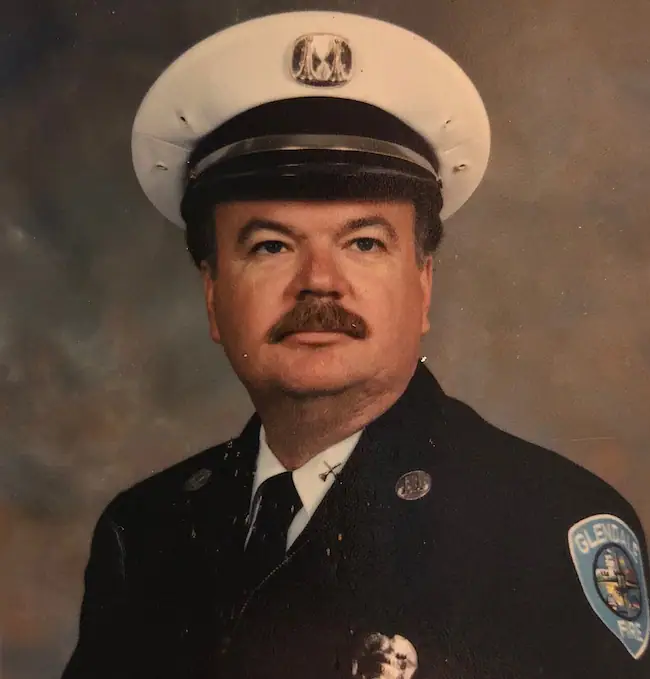
The fire captain taught fire investigation classes, appeared on local TV whenever a fire broke out and was considered to be one of the best arson investigators in all of Southern California.
He was so good at finding incendiary devices in the rubble of burned buildings that his colleagues viewed his skills as supernatural.
But Orr’s life unraveled after he left a fingerprint on an incendiary device at a scorched fabric store. Still, that bit of evidence wasn’t enough to convince his fellow firefighters he was setting fires.
It took a 350-page manuscript Orr had written about a fictional firefighter who set fires to local businesses to convince police he was guilty. The resemblance between Orr and the main character in his story was uncanny.
“He loved the inadvertent attention he derived from the newspaper coverage and hated it when he wasn’t properly recognized,” Orr wrote in his manuscript. “The deaths were blotted out of his mind. It wasn’t his fault. Just stupid people acting as stupid people do.”
A federal jury convicted Orr in July 1992 of three counts of arson, and he received three consecutive 10-year terms in federal prison. A California jury later convicted Orr of murder after they were able to prove a fire he set killed four people in a hardware store in 1984. A judge sentenced him to life in prison.
Then-L.A. County Deputy District Attorney Michael Cabral believed that Orr started roughly 2,000 fires in a 30-year span.
To this day, Orr – from the narrow confines of his cell at the Mule Creek State Prison – maintains his innocence.
As a UCLA forensic psychiatrist explained in court, Orr was a pyromaniac in the grip of an irresistible compulsion he could never admit to.
If he did confess to his crimes, the psychiatrist said it “would demonstrate to him that he’s been a failure all of his life.”
Evidence of such failure in Orr’s life traces back to his inability to join the Los Angeles Police Department after he failed the psychological exam. He was later admitted to the Los Angeles Fire Department, but the offer was rescinded after he was deemed physically unfit.
So Orr took a much lower-paying job with the fire department in Glendale, California, and eventually worked his way up to captain and arson investigator. And for 30 years, he was investigating the crimes he had just committed.
Types of arsonists
Dawn Dodsworth, an assistant special agent in charge of the Seattle Division of the Bureau of Alcohol, Tobacco, Firearms and Explosives and a certified fire investigator, said there are a few different kinds of arsonists.
According to a 1987 study in the FBI Law Enforcement Bulletin, the majority of arsons fall under the categories of vandalism (49%), excitement (25%) and revenge (14%). Crime concealment and a motivation to acquire profit, for instance, through insurance fraud, are also common motives.
But for a person who commits three or more acts of arson, their behavior is categorized into serial arson, spree arson and mass arson.
RELATED | ‘He is going to kill somebody’: Serial arsonist sentenced for June fire in Utah
Dodsworth said a spree arsonist is someone who lights three or more fires in different locations in rapid succession. A mass arsonist sets three or more fires in the same location at the same time.
The last category, to which Orr belongs, is known as a serial arsonist. Dodsworth said a serial arsonist is someone who sets three or more fires but at separate locations. For a person to be considered a serial arsonist, Dodsworth said there must be a cooling-off period, which serves as a “distinct emotional or temporal break in between each fire.”
“You can have a pyromaniac who is also a serial arsonist, but not all serial arsonists are pyromaniacs,” Dodsworth said. “To be a pyromaniac, you have to be diagnosed by a mental health professional versus a serial arsonist, you just need to fit in that category of setting three or more fires at different locations with that cooling off time in between.”
She described pyromania as an exceedingly rare, “distinct impulse control disorder” that involves repeated, strong desires to set fires.
Serial arsonists account for nearly 20% of all fire setters, but only 1% of those individuals are diagnosed with pyromania and receive appropriate treatment, according to a study published earlier this year in the Psychiatry Research Case Reports.
Similarities in Spokane and L.A.
If what Spokane’s suspected arsonist, Aaron Farinacci, said about setting 25 previous blazes near his apartment complex is true, then he would be considered a serial arsonist, as defined by the U.S. Department of Justice.
Dodsworth said about 70% of serial arsonists set fires within roughly 2 miles of their residence. Farinacci reportedly went on a 4-mile loop from his house, up Government Way and along the train tracks near the ignition point of the Old Trails Fire.
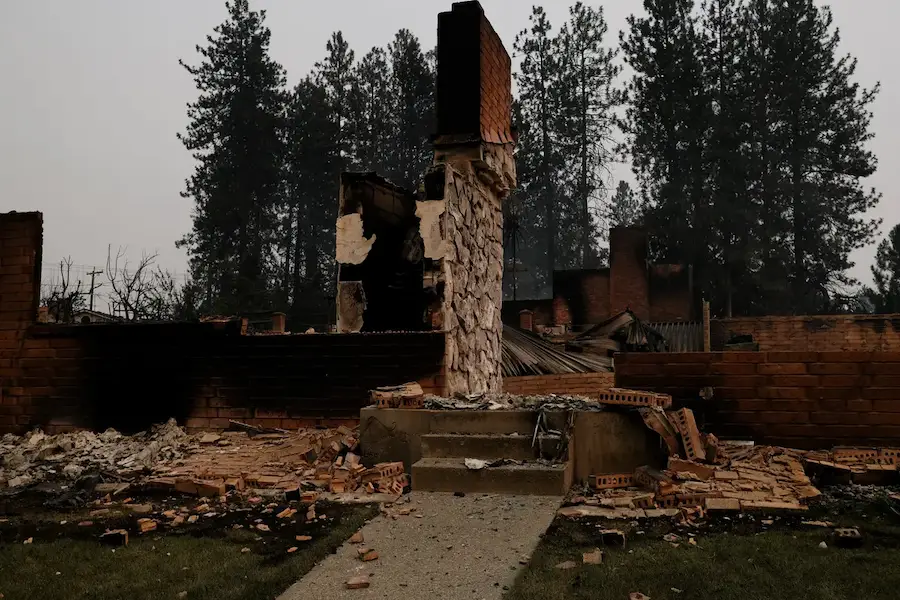
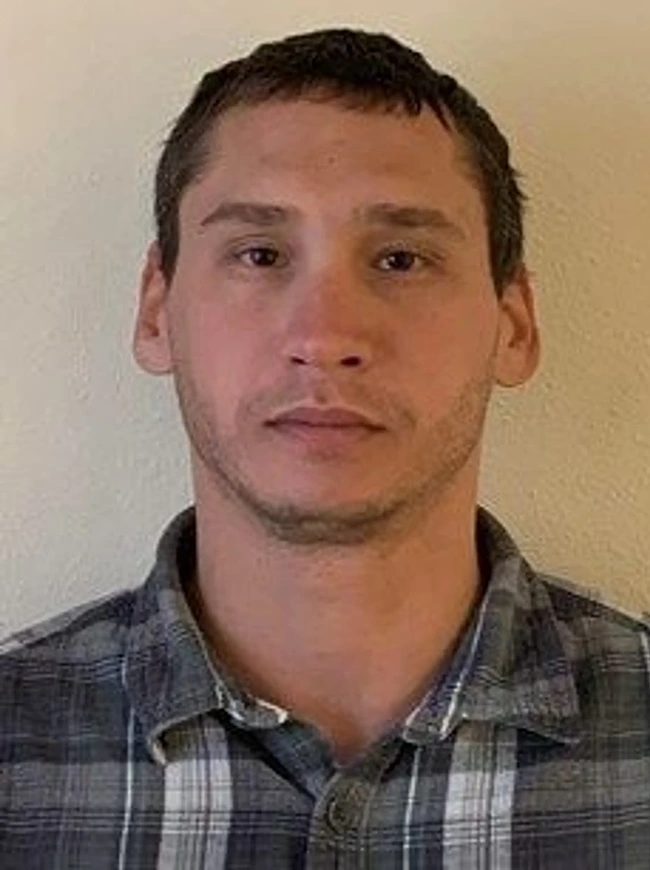
Farinacci, 37, is charged with starting the Old Trails Fire, which damaged or destroyed 694 structures. The manner in which he is accused of starting that fire is similar to Orr’s.
RELATED | Man charged with arson in Spokane told police he planned wildfire for weeks
Not only did Farinacci’s girlfriend find a screenshot on his Gmail account related to Orr, but the timed ignition device he used is nearly identical to Orr’s method.
Before the Old Trails Fire, Farinacci allegedly purchased notebook paper, matches, a cigarette and a rubber band.
Orr’s primary means of starting fires was to use a cigarette as a fuse, a piece of ruled yellow writing paper and matches as an accelerant, and a rubber band to tie the whole thing together. Since it takes time for a lit cigarette to burn down and reach the matches, that gave Orr about 10 to 15 minutes to vacate the scene of the crime.
Farinacci told investigators he was inspired by the man the FBI called “the most prolific serial arsonist of the 20th century.”
The mind of a serial arsonist
During the last 30-plus years, Ed Nordskog has investigated 2,100 arson cases, interviewed 60 serial arsonists and personally arrested about 40 serial arsonists.
He’s written numerous books on arson and spent 34 years with the Los Angeles Sheriff’s Department before retiring in 2019. Today, he teaches fire investigation classes at least twice a month and serves as a case analyst and expert for numerous government agencies.
He’s also written extensively about and corresponds with Orr. Nordskog called Orr “the most famous thrill-seeker arsonist in history,” which is a rare distinction.
“You want to get in the mind of the arsonist?” Nordskog said. “I go, ‘Why?’ Most of them are nuts. Why would you want to be in their mind? You get a headache from even thinking about it. Most of them are just so messed up, you feel bad for most of them.”
Nordskog described most of the serial arsonists he has interviewed as meek, mild and noncombative.
“When I interview them, they’re pathetic,” he said. “Most of them, not all, but most. So (Farinacci’s) a bit of an outlier that way. He has violence in his background.”
In 2010, when Farinacci was 21, he shot and killed his adoptive father in Mesa, Arizona, over an argument about washing dishes, according to court records. After his father’s death, he shot himself with the intention of striking his heart. The bullet missed by less than half an inch.
He spent about two years in jail, followed by another eight years in prison. In 2020, he was released from prison. In 2022, he moved to Spokane for a fresh start.
According to a forensic competency report written by Dr. Robert Cosby, Farinacci said he killed his father because he could “no longer tolerate the abuse.”
Though he denied childhood neglect or sexual abuse, Farinacci said his father would sometimes hit him and his brother excessively while continually telling them that he loved them.
“Childhood trauma of any sort tends to cause a brain injury,” Nordskog said, adding that up to 90% of serial arsonists have a brain injury of some kind.
But it isn’t just childhood trauma that determines whether a person might develop into a serial arsonist.
If an individual is born with fetal alcohol syndrome, if they’ve taken methamphetamine, if they were born dependent on a drug like oxycodone – or something similar – if they suffered a sports injury, or if they had a traumatic birth that resulted in complications can be factors that may contribute to the mind of a serial arsonist.
In Farinacci’s case, he “vaguely recalled hearing that his mother may have consumed alcohol during pregnancy, and he ‘heard’ that he might have fetal alcohol syndrome,” according to the forensic competency report.
He also admitted to drinking alcohol, smoking marijuana, using Spice (synthetic cannabinoid), heroin and methamphetamine while in prison. He denied any history of serious motor vehicle accidents, seizures, major surgeries or significant head injuries.
“Mr. Farinacci indicated that he used methamphetamine and heroin intermittently in prison from around 2017 to 2018,” the report states. “He estimated last using these substances in 2018 but reported abusing prescription pain medication from 2018 through 2019.”
One Spokane County sheriff’s detective who interviewed Farinacci said the suspect “feels fire is powerful, beautiful, and that things that go through fire experience a kind of rebirth.”
Just among serial arsonists, Nordskog said there’s 35 or more subtypes that he’s documented. He said there are some similarities among the serial arsonists he’s interviewed, but “they’re all different, too.”
Nordskog said many criminologists, academics and psychologists like to say that a serial arsonist is “manifesting power through his fire-setting and his ability to control the authorities and create excitement.”
Nordskog rejects this broad, sweeping categorization.
He said nearly 75% of serial arsonists do what they do out of frustration.
It could be anything, Nordskog said – society, their family, their job, or maybe life just didn’t turn out the way they had wished. So, they turn to lighting fires as an outlet for their frustration.
Similarly, Dodsworth, the ATF investigator, said serial arsonists usually do what they do as a way of relieving stress or to bring excitement into their life. But importantly, she said it’s usually a combination of multiple things going on in their lives.
Myths, misconceptions and general trends
A common misconception, Nordskog said, is that there’s a sexual draw to lighting fires. While Orr’s main character in his book got sexual satisfaction from lighting fires, that is rarely the case in real life. It’s a myth, he said, that’s bolstered by Hollywood portrayals.
“Serial arson’s completely different,” Nordskog said. “That’s an emotional-based fire, and we don’t understand those. Even the best of us don’t understand them. Even (the arsonists) don’t understand themselves.”
Another myth is gender and race. Nordskog said women set just as many fires as men, but men get caught up to 10 times more. Nordskog refers to many women arsonists as “mommy killers” because they set a fire in their own home to kill their children. But a woman arsonist who kills her children in a fire isn’t a “serial arsonist,” unless they’ve set multiple fires.
For many people, a lone white male comes to mind when they think of an arsonist, but Nordskog said it depends on the population of a given area. Dodsworth, however, noted there are some common themes among serial arsonists, with a history of substance abuse “setting the bill.”
She said probably about 90% of serial arsonists are male. Most range in age from their late teens to their mid-30s. They often have a history of unemployment or lower-paying jobs, and their education is usually somewhere between the 10th and 12th grade range. This isn’t the case for every serial arsonist, but it is the trend, Dodsworth said.
“They’ll go through weeks and months where they don’t light fires. Life’s going good,” Nordskog said. “They don’t have any problems. Next thing, they get in a fight with their wife or they don’t like their boss, and they get mad, they drink and they light a fire.”
Farinacci’s frustration
Throughout Farinacci’s competency report, there are numerous mentions of him feeling frustrated. He described being frustrated by his difficulty finding steady employment and the “longstanding difficulties” he had with his girlfriend because of his unwillingness to help with household chores and issues being emotionally vulnerable.
In prison, he was taught to “put up a wall” because “vulnerability is a weakness.”
He also “expressed frustration with needing to attend mandated therapy and anger-management requirements,” according to the report. Overall, he emphasized feelings of enduring depression, anxiety, disappointment, lack of motivation and frustration with the general direction of his life, as well as difficulty adjusting to prison and then readjusting to life once he was released.
His girlfriend backed up his statements in a video interview with “Truth on the Streets.”
“He struggled a lot because no matter how much he tried to put a job application in, nobody would hire him because of a violent felony,” she said. “His depression grew and grew and grew. He tried to kill himself a couple times. He idealized it.”
Farinacci described suffering from depression and anxiety since late adolescence. Along with being diagnosed with ADHD at a young age, he also believed he may have been diagnosed with obsessive-compulsive disorder around 18 by a provider in Mesa. Beyond Behavioral Health in Spokane listed OCD as a primary diagnosis for Farinacci. In addition, he reported a period of repetitive hair-pulling and sometimes eating the roots of his hair, which are symptoms associated with trichotillomania, a condition that causes a strong urge to pull out one’s hair.
While serving time for killing his father, Farinacci spent approximately 30 minutes per day washing his hands and approximately 20 minutes per day brushing his teeth as a way of coping with his new environment. After he was released, the washing time diminished to just a couple minutes per day, but he began wearing latex gloves and “developed an aversion to touching objects that had been on the floor.”
In his competency report, Crosby said the available information doesn’t establish diagnosis of a post-traumatic stress disorder or obsessive-compulsive disorder. But Farinacci did “meet criteria for major depressive disorder, recurrent, with anxious distress.”
“How we catch (serial arsonists) is their obsessive behavior,” Nordskog said. “They’re completely off-the-chart obsessive-compulsive. Maybe their daily travel patterns, maybe how they make their devices, just how they live their life.”
After being released from prison, Farinacci had homicidal fantasies multiple times. On one occurrence, in April 2024, children reportedly knocked on his door “disrespectfully.” He acknowledged having violent thoughts during a therapy session, to the point where he “wanted to kill them.”
On Oct. 2, 2025, a clinician with Frontier Behavioral Health responded after Farinacci’s mother said that an argument between her and her son had escalated to the point where he made statements about killing her and then dying from “suicide by cop.”
Just this summer, in July 14, he discussed with his therapist previous thoughts he had about killing people, including a violent fantasy he had about murdering his cellmate.
Since killing someone carries a life sentence, Farinacci reportedly said he wouldn’t care if he killed someone now because “what more could the judge do to me?” He denied any intended victim or plan, but described a potential target as “anyone,” while also noting that women and children were “off the table.” He didn’t want to harm anyone, according to the competency report, but felt his circumstances were “bleak.”
On July 30 – one day before the Old Trails Fire consumed hundreds of homes – Farinacci arrived on time for a therapy session at Frontier Behavioral Health. During this session, he mentioned having been verbally harassed by someone he didn’t know while walking around the day before. That interaction gave him a “temptation to burn stuff,” the competency report said.
He mentioned previously experiencing similar thoughts. He recalled telling himself, “I’m not going to burn anything,” and expressed worry over the consequences of lighting a fire. He denied any intent or plan during that therapy session, despite later telling detectives that he had planned igniting the Old Trails Fire two weeks ahead of time.
He researched the weather and waited for a day with high winds and high heat, he told detectives, eventually settling on Saturday, Aug. 1.
“If he truly waited until there were high winds and low humidity and high temperatures, that’s just not done,” Nordskog said. “And so you have a real-deal guy there. … The only few guys who do stuff like that are the high-end firefighter serial arsonists because they understand fire dynamics. Most citizens do not. So, he could be the real-deal guy.”
In Orr’s case, even years after the fact, he was never able to come to terms with his crime. To him, the damage and death he inflicted was never his fault. It was “just stupid people acting as stupid people do.”
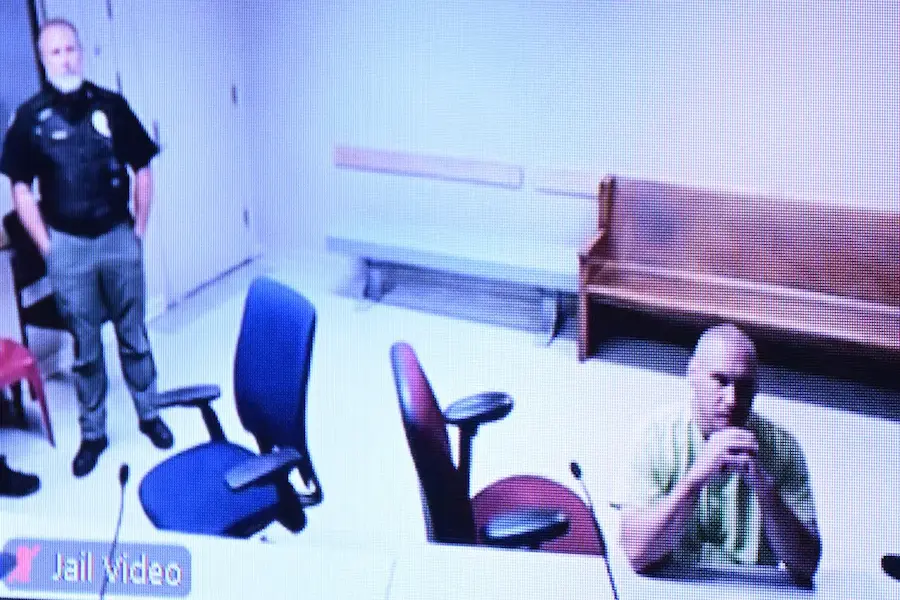
That’s seemingly not the case for Farinacci. From inside his cell of the Spokane County Jail, the competency report detailed how he’s punched himself repeatedly, began reading the Bible, feels anguish and believes that he’s eternally damned.
“The most dangerous criminal in the world is the determined wildland arsonist,” Nordskog said. “If he sets his fire on the correct day at the correct time, he has the power of a nuclear weapon at his fingertips. No other criminal has that kind of power.”