



Tiny birds, sharp talons and a spectacular fall migration at Camas National Wildlife Refuge
Published at | Updated at
“I’ve got a sharpie in the net and need some help,” came a message over the radio at the bird banding headquarters at Camas National Wildlife Refuge last Monday morning. One of the three workers banding and recording data on captured songbirds headed out on a bike to help get the Sharp-shinned hawk out of the mist net. About 15 minutes later, Chan Mendiola, one of the leaders of the banding team, showed up with a small juvenile feisty hawk looking for a fight.
After the hawk was weighed, aged, and determined to be healthy, it was ready to be released, but it locked its talons into Mendiola’s finger requiring help from Tyler Jensen, another leader of the banding team to help remove the talons from the finger. After the excitement, the banding continued as usual with the four technicians recording the data of each bird captured.
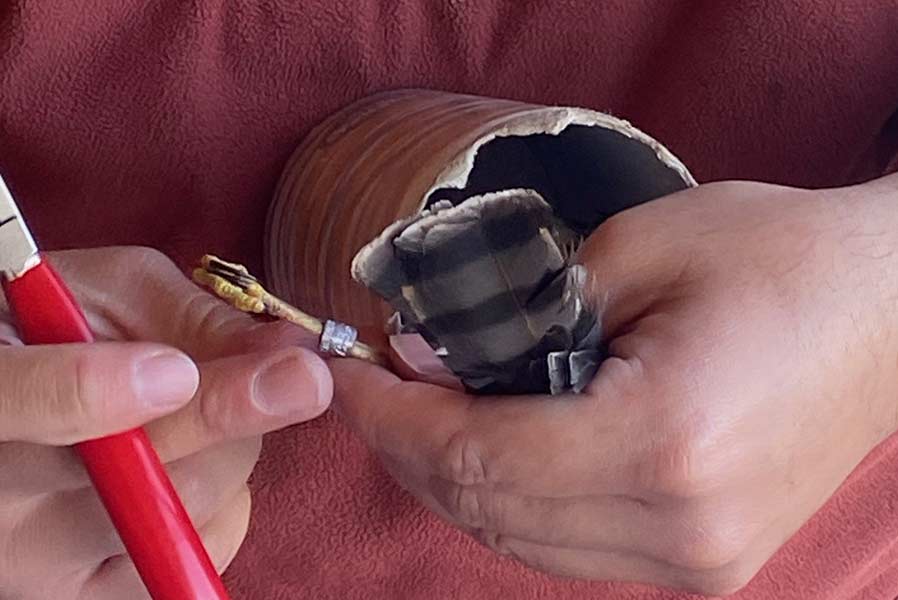
The team, consisting of Jensen, Mendiola, Grace Spella and Lily Gowens have been banding about 90 different species of birds each day since August. The largest number of birds banded was 122 on September 21. The banding operation will continue each day of the week, except Tuesdays until October 15.
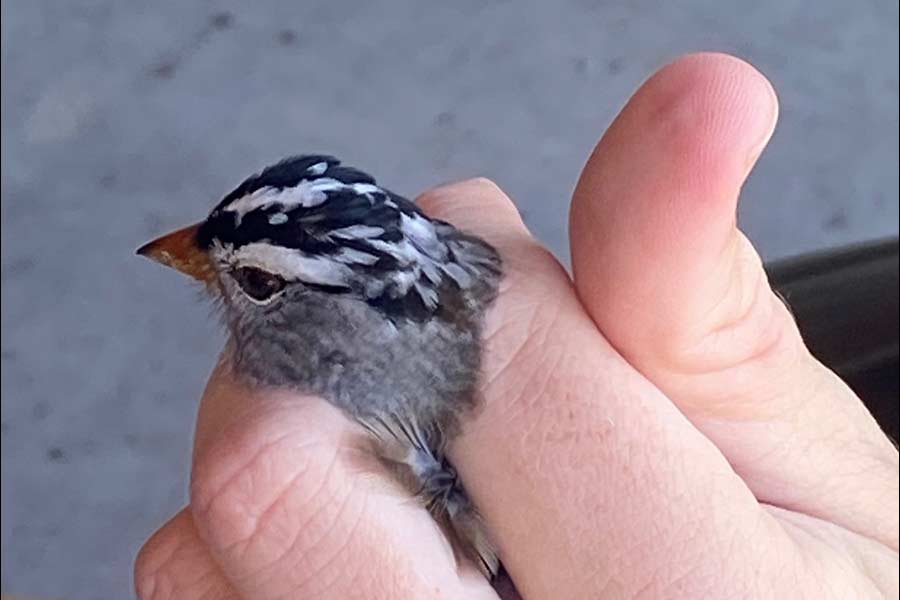
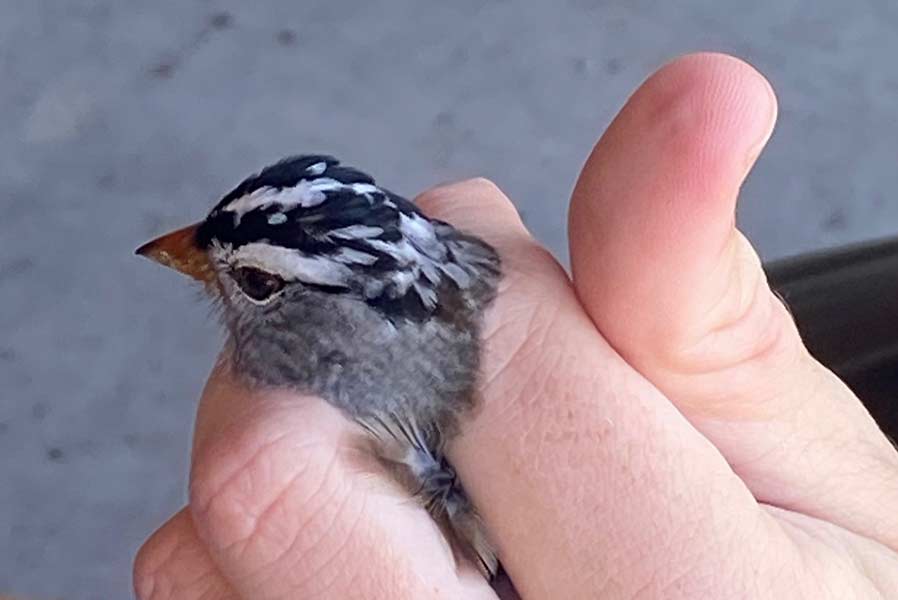
When I first arrived, Grace and Lily were working two very noisy birds, an American robin and a Gray catbird and they were the two largest songbirds that I watched being processed. Then came the smaller, more colorful birds. Three species of sparrows showed up, including the Song, Lincoln and White-crowned sparrows. The Lincoln and the White-crowned were the most numerous of the birds that were captured. After I left the banding station and drove around the Auto Route, I saw hundreds of these two sparrows feeding on weed seeds.
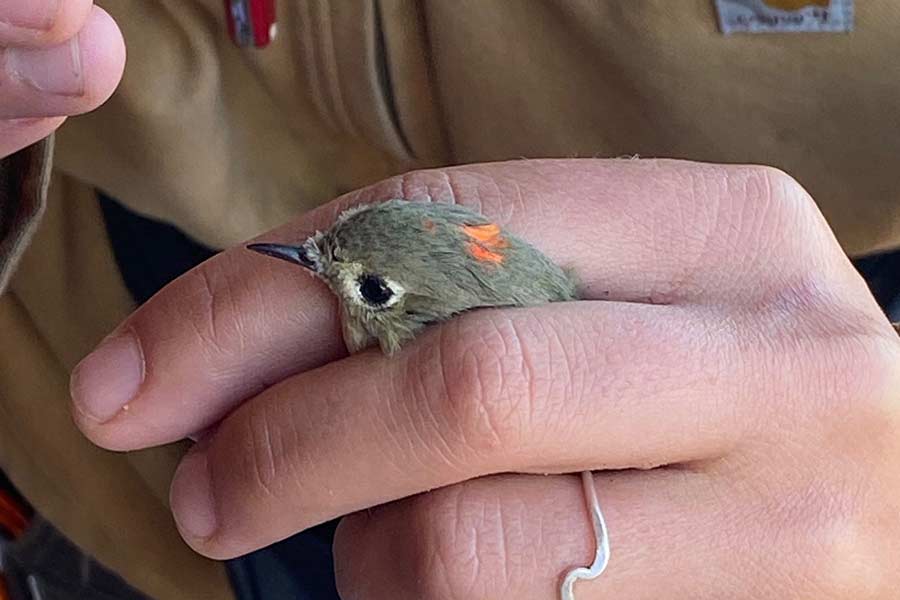
I misidentified a small bird that I thought was a warbler that turned out to be a female Ruby-crowned kinglet. Later on, multiple male Ruby-crowned were captured with its bright red crown visible. The Ruby-crowned kinglet, that weighs about six grams, is the smallest bird that the team is able to band and record during this study. Any hummingbirds captured are listed but are not banded.
Another plentiful bird was the Orange-crowned warbler, but their identifying “orange crown” was difficult to see because this time of the year it is very faint. Grace showed me how blowing on the top of their head allowed you to see the crown.
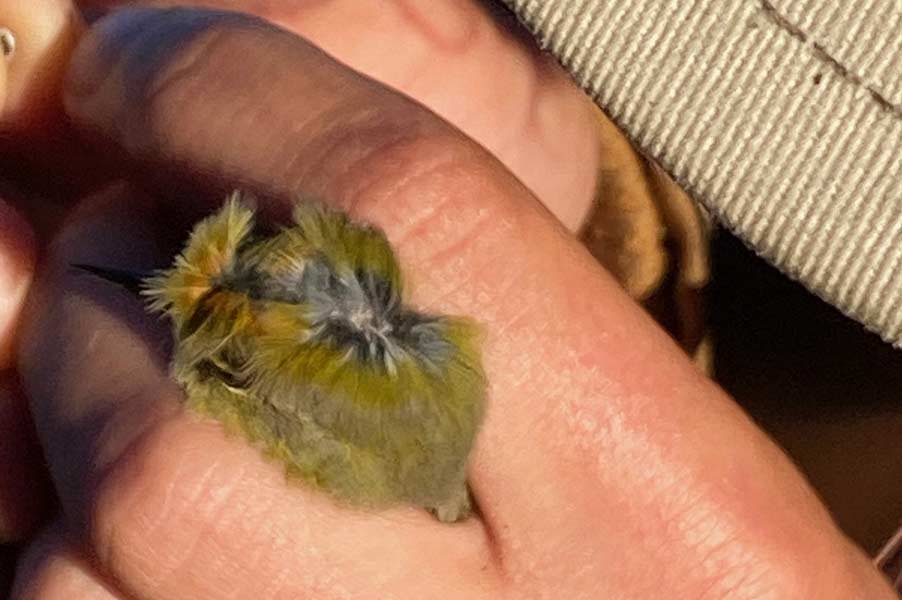
Blowing on the birds to separate the feathers so the workers could see the skin, was very common. The blowing on the head of each bird would show the development of the skull to determine the age of each bird. Blowing on the body would show the fat content of the body to determine fat reserves needed for their migration and the health of the bird.
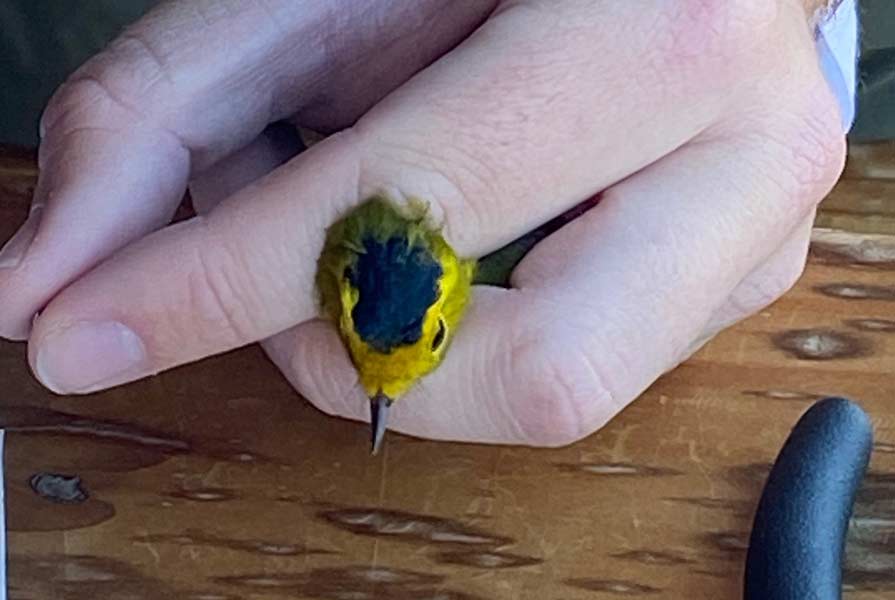
The most colorful birds captured were the Wilson’s warblers, which were very easy to identify with their beautiful yellow and black feathers. These birds’ migration is about over as they were the most numerous species about three weeks ago when hundreds of them could be seen on the refuge.
If you are interested in going out to watch the banding operation, the team is willing to visit with visitors as they work the birds. They band the birds every day except Tuesday and they usually end each day at about 11 a.m. They have to stop operation when the wind picks up for the safety of the birds.
It is a great time and place to be able to see small birds up close and to learn about the habits and migrations of the songbirds. The large Sandhill cranes are starting to migrate to the refuge and as I was leaving about noon, I saw several hundred of them coming back to the refuge for water after their breakfast in nearby fields.
Autumn is an exciting time to be outside with nature.

Living the Wildlife is brought to you by Yellowstone Teton Territory. Experience 7,500 square miles of untamed wilderness in Eastern Idaho's Yellowstone Teton Territory. Where majestic peaks meet endless adventure, your perfect outdoor escape is waiting. Start planning at YellowstoneTeton.com.