



Christa Pike is on a ventilator and unconscious after surviving lethal injection. What happened?
Published at | Updated at
Eric Levenson, CNN
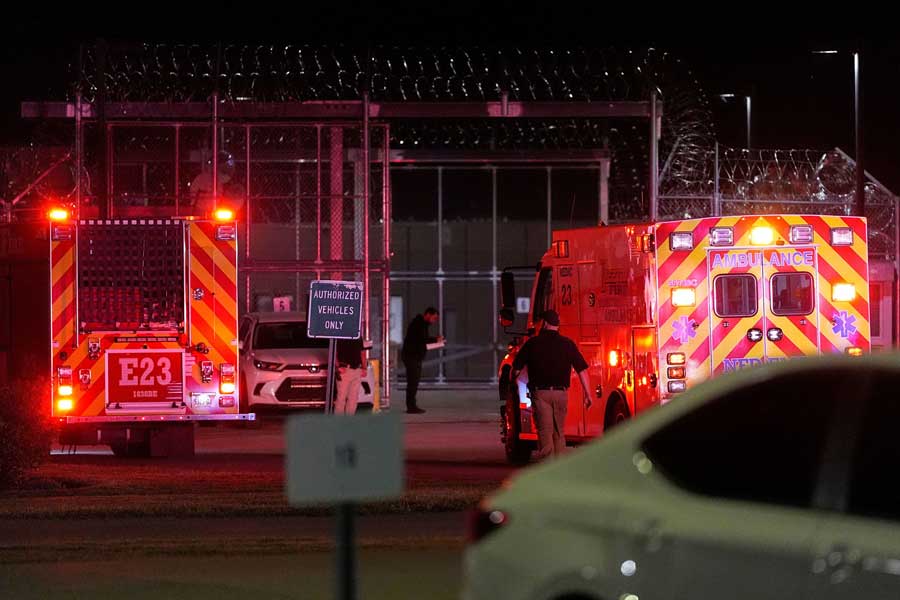
NASHVILLE, Tenn. (CNN) — Christa Pike survived Tennessee’s attempt to execute her via lethal injection on Wednesday, but her medical and legal future remain remarkably unclear.
Pike is intubated, on a ventilator, and remains unconscious in a Nashville-area hospital, her attorneys said in a court filing Friday.
Pike is receiving lifesaving care after being injected with two ostensibly fatal doses of pentobarbital, her attorneys said Friday.
“She is being treated for the serious effects of the pentobarbital administered during the execution attempt, including significant injuries to both arms,” Pike’s attorneys Stephen Ferrell and Luke Ihnen said in a statement.
COURTROOM INSIDER | 2 doses and still alive: What happened in the botched execution of Christa Pike?
Pike’s legal team filed an emergency motion Friday asking a court in Nashville to require the Tennessee Department of Correction to “protect and preserve all evidence related to the State’s failed attempt to execute her on Wednesday night.”
They’ve also asked for an expedited hearing on the motion. The state Department of Correction declined to comment on the pending litigation.
Pike, who was sentenced to death for the 1995 murder of 19-year-old Colleen Slemmer, was set to become the first woman executed in Tennessee in 200 years. Now, her legal case will be at a standstill.
Gov. Bill Lee, a Republican, announced a third-party review will take place to “determine what exactly occurred” in Pike’s case, according to The Associated Press. CNN has reached out to the governor’s office for comment.
“The Governor has appropriately called for an investigation,” the office of Tennessee Attorney General Jonathan Skrmetti said in a statement. “We need to know what happened.”
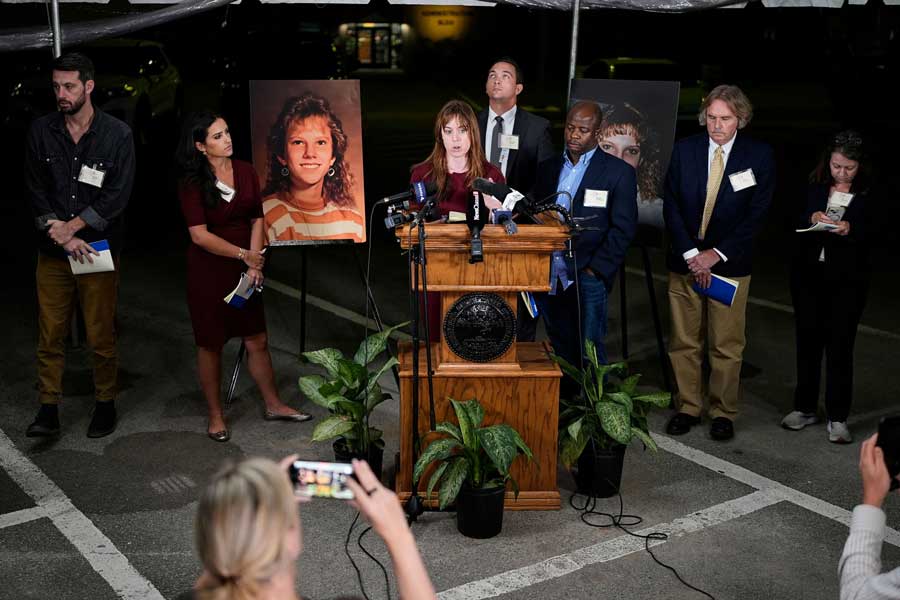
The administration has not informed Slemmer’s family of what might be next for Pike, Justice Coalition Executive Director Robert Bracewell told CNN.
“They are devastated and exhausted,” Bracewell said Friday.
Bracewell, who has helped Slemmer’s parents navigate the process, said the family is “mad at the state for not being helpful or forthcoming as to what is next.”
The moratorium is part of the stop-and-start use of executions in Tennessee the past few years. Lee similarly paused executions in 2022 for a review, and earlier this year the state failed to carry out a lethal injection on a death row inmate after struggling to find a vein.
The governor halted another execution scheduled for December, according to an attorney for the death row inmate, Gary Sutton.
His attorneys say they are thankful for the pause, adding “nobody should be forced to suffer the way Christa Pike did.”
Attorneys call for commutation
Pike was initially scheduled to be executed on Wednesday morning, but last-minute legal appeals delayed the execution to later in the day.
The execution protocol began in the early evening, and she gave her last words at 7:26 p.m., according to media witnesses. Yet after two doses of the drug cocktail, she was snoring and appeared to be alive, the witnesses said.
“None of it was normal,” said Catherine Sweeney, a reporter for WPLN. “I covered all the executions last year and most of the ones this year. We haven’t seen anything like it. It went really poorly.”
RELATED | Christa Pike survived an execution. What went wrong?
The Tennessee Department of Correction said it acted according to its protocol throughout the failed execution.
“The Tennessee Department of Correction followed every step of the State’s lawful, established execution protocol approved by the Attorney General’s Office,” the department said in a statement Wednesday. “The lethal injection chemical in the protocol has consistently been effective, and the protocol does not allow for additional procedures beyond what was carried out this evening.”
Randy Spivey, one of Pike’s attorneys, said the governor’s call for a review of the execution protocol doesn’t go far enough. He called for Lee to commute her sentence, saying she had endured punishment “greater than any other person in the history of the American death penalty.”
The attorneys said they had warned the court beforehand that Pike’s vein issues would make it difficult to carry out the lethal injection.
“We take no pleasure in being right, but the concerns raised by Ms. Pike proved to be true: difficult vein access, blown veins, degraded pentobarbital, no emergency medical care available when things inevitably go wrong, all under a protocol that remains veiled in secrecy,” attorneys Spivey and Kelly Gleason said in a statement.
But what happened Wednesday was essentially her “biggest fear,” attorney Ferrell said.
“It was not a fear of dying. It was a fear of prolonged, painful, traumatic death. That’s what happened, minus the death,” he said.
Precedent for surviving an execution
Pike’s failed execution has called into question the state corrections commissioner’s record with unsuccessful lethal injections.
Commissioner Frank Strada was the deputy commissioner of corrections in Arizona from 2020 until 2023, when he accepted the top corrections job in Tennessee.
All three executions held in Arizona during Strada’s tenure were “visibly problematic,” according to the Death Penalty Information Center.
Those executions in 2022 were the first in the state since 2014 and prompted Arizona’s governor to call for an independent review of execution protocols, triggering another pause on capital punishment. The review in Arizona was announced weeks after Gov. Lee promoted Strada to his current post in Tennessee.
While it’s not uncommon to have a “botched” execution – when something differs from official protocol – it’s exceedingly rare for an execution to simply fail, said Austin Sarat, an Amherst College professor and author of several books on the death penalty and lethal injection.
“Those cases where people survive an execution create a real dilemma for the legal system. Now what?” he said.
Sarat said there is some legal precedent for inmates who survived an execution being put to death again.
In a case 80 years ago, 16-year-old Willie Francis survived an execution via the electric chair in Louisiana due to a malfunction. He appealed his case to the U.S. Supreme Court, saying a second execution would violate the double jeopardy clause of the Constitution and the protections against cruel and unusual punishment.
The Court rejected his appeal, and he died in a second electric chair execution.
Similarly, in a 2009 case, Ohio personnel attempted to execute Romell Broom by lethal injection, but they were unable to access a vein and establish an IV line. Afterward, he argued a second execution attempt would violate the double jeopardy clause and protections against cruel and unusual punishment.
The Ohio Supreme Court ruled against him in 2016, saying that setting the IV line was only a “preliminary step” to an execution, so a second execution attempt would not be considered a violation of the double jeopardy clause.
Broom ultimately died of COVID-19 in 2020 while still on death row, according to the Death Penalty Information Center.
Still, Pike’s case is unique because the lethal drugs actually entered her system, Sarat said.
“So we’re in kind of unprecedented territory with Pike in the sense of she survived her execution,” he said.