



‘Closure that we need’: Miguel Salguero-Olivares sentenced to life in prison for murder of Faith Hedgepeth
Published at | Updated at
Trey Baylor and Jordan Ormond, Courtroom Insider

DURHAM, N.C. — “We’ve been waiting a long time, over 14 years, and I’m just glad that we have the closure that we need,” Connie Hedgepeth told a Florida judge on Friday afternoon.
Her words came shortly after Miguel Salguero-Olivares was convicted of first-degree murder in the 2012 killing of her daughter, Faith Hedgepeth. Jurors also found Salguero-Olivares guilty of first-degree rape, first-degree sexual offense and first-degree burglary in connection with the murder of the 19-year-old University of North Carolina student.
“I have peace,” Connie continued. “I forgave; it was just three weeks after her death. It didn’t matter who done it, I knew that I had to forgive, and I do forgive. But my heart aches for this family.”
Faith’s partially nude, beaten and bloody body was found on the morning of Sept. 7, 2012, in the off-campus apartment she shared with a friend. The murder weapon, a liquor bottle, was left near her body, and investigators say there was also evidence — including DNA — that Faith had been raped.
But even after testing hundreds of Faith’s friends and acquaintances, police could not match the DNA evidence to anyone and her case saw little movement for nearly a decade.
Then in 2021, after the emerging science of genetic genealogy helped redirect their search, police arrested Salguero-Olivares. Investigators said testing showed his DNA matched the unknown male DNA found on Faith’s body and the liquor bottle.
Salguero-Olivares, now 33, pleaded not guilty to the charges against him. But after 11 days of testimony at his trial, jurors disagreed and found him guilty on all counts Friday.
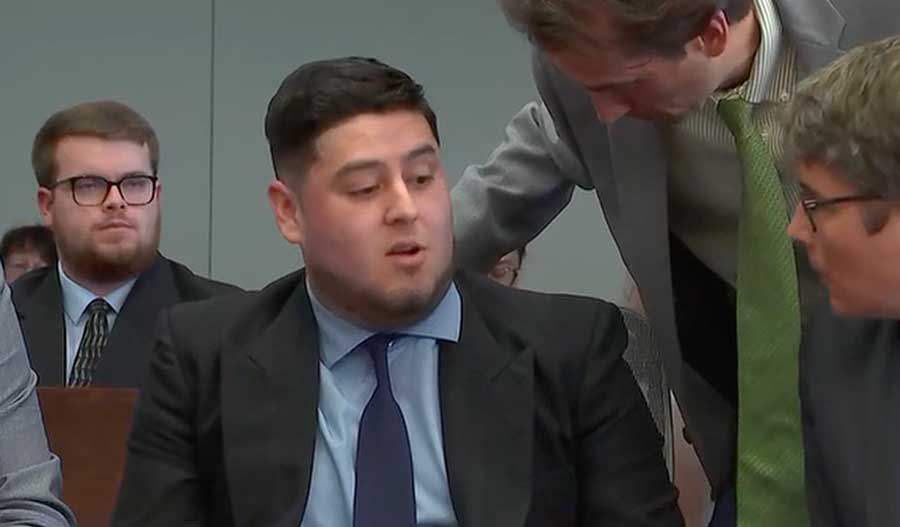
Superior Court Judge Keith Gregory opted to sentence Salguero-Olivares shortly after the verdict was read. But before handing down Florida’s mandatory sentence of life in prison without the possibility of parole, the judge allowed Faith’s family members to make victim impact statements.
Gregory seemed personally moved by Faith’s mother’s statement and made a point of telling her so.
“Miss Hedgepeth, I will say this to you, from parent to parent: It should never be easy for a judge to sit up here in a trial when it comes to looking at another parent. It should never be easy, it should never — and it’s not,” the judge said.
“I do think it’s amazing — and I know that you’re not supposed to talk about God and so forth, but every time before I come out here, every day before I come into this courtroom or any courtroom, I go in my chambers and kneel down and say a prayer,” Gregory continued. “And (I) say, ‘God, please help me do the right thing.’ So, that’s why it should not be easy. I should listen, and any judge should listen and want to know everything a victim’s family has to say.
“And I’ll conclude with this: My son is one year younger than Faith, and he was a second year (student) at Chapel Hill (when Faith was killed). We’re not supposed to watch our children leave this earth before we do. But the grace that you have bestowed and shown me, as a judge, just reminds me that I will continue to do this to the best of my ability to do always the right thing, sitting up here. And your ability to forgive just gives me the ability to say, ‘Yes, Keith, there is still goodness in mankind. So, thank you.”
Faith’s cousin Alexis Evans, who testified as the first witness for the prosecution, spoke next.
“I don’t know what to say,” Evans told the judge. “I don’t want to address the defendant; I don’t have words. My grandmother (Connie Hedgepeth) is stronger than me, and always she has more grace than me,” Evans said.
“We’re working on that,” she continued, “because what he took from our family — we feel it in every event, in every moment, every place we go.”
When she was finished, Gregory asked, “Can I respectfully disagree with one thing you said? … You said you don’t have it as strong as your grandmother, but you took the witness stand. You were the very first witness for your family, speaking on behalf of Faith. … and you told this jury your story. Yes, you have strength, trust me.”
Evans sister Schylar Steverson also took the opportunity to speak.
“I know Faith’s murder messed up all of us to some degree, to our core,” Steverson said. “I was a, personally, a junior in high school. And going to college, and turning 19 — and she died when she was 19 — I felt the most unsafe at college. I couldn’t even enjoy my college life to the fullest because of this man, because of the fear that I let him instill in me, the anxiety — the fear that somebody was coming for my family.
“But today, I take back that power. And he will not have power over me, and I pray he will not have power over my family. Today we get justice.”
Then Steverson added: “I just pray that there will be more good people in this world than there are bad. And I pray that he (Salguero-Olivares) finds salvation and that God will forgive him.”
Roland Hedgepeth, Faith’s father, spoke last. He began by telling the judge, “I thought about two dates: Sept. 7, 2012, and today’s, what? Oct. 23, 2026. That’s 14 years, six weeks and four days, or 169 months and 18 days, and it’s 5,158 days — but who’s counting, right? That’s how long it’s been (since Faith died).”
He went on to explain how empty his life has been during that time without the daughter who brought him so much hope and joy. He called her “a gift from God” and “a beacon of hope” for him, having been born when he was struggling to get out of drug addition.
“Faith never judged me,” he said. “She loved me unconditionally, just like I loved her unconditionally.”
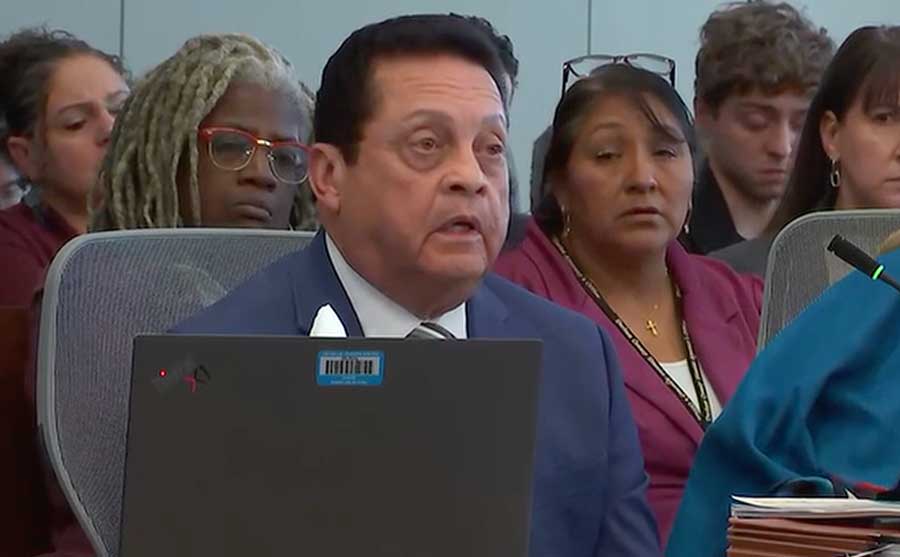
He also remembered Faith as “a joy to almost everybody she met.” Then added, “I thought she was a joy to everyone she met, but apparently not.”
“She just had this way of making everybody, making you feel like everything was OK, and that all ended on September the 7th, 2012. And things haven’t been the same for us ever since,” the grieving father said.
“Our hearts are ripped out, and it’s like there’s a hollowness there. I can’t feel,” he said. “And so to the person who took her life, I say this: You didn’t have any reason to take her life. And he didn’t have any right to take her life; he just didn’t have any right to take her life.”
Then, just as his wife before him, he offered forgiveness to Salguero-Olivares — but with one caveat.
“I know, and I say it without reservation, that I do forgive Miguel for what he did. … But I don’t have the right to forgive the act. All the things that were done to her were sinful, and only God has the right to forgive sin. Only God forgives sin. I still pray for him (Salguero-Olivares) that he’ll repent for what was done. And if he doesn’t, then may God have mercy on his soul.”
Salguero-Olivares, who listened to the victim statements without looking and Faith’s family members, occassionally shaking his head and mouthing what appeared to be “It’s not fair,” was also permitted to make a statement to the court. He, however, declined to do so.
Gregory then announced his life sentence for the murder, along with several other prison terms. For the charges of first-degree rape, first-degree burglary and first-degree sexual offense, Salguero-Olivares received a total of a minimum of 544 months in prison or a maximum of 780 months in prison. Those sentences are to be served after the life sentence is completed, so they are largely symbolic.
Salguero-Olivares was then handcuffed and allowed to speak briefly with his mother, who was seated behind him in the gallery, before being led out of the courtroom.
Once the hearing ended, Faith Hedgepeth’s loved ones lingered in the courtroom hugging one another.