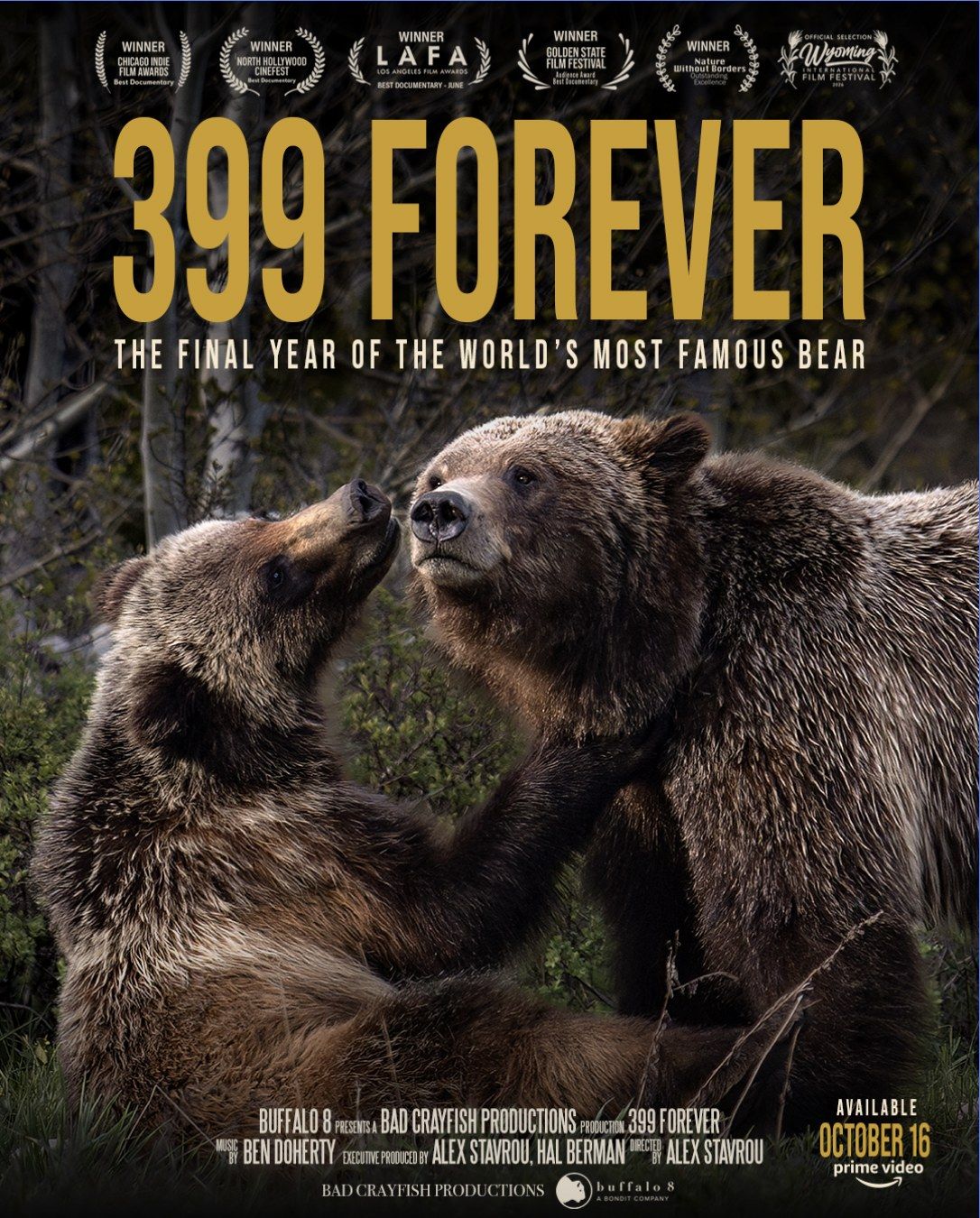
Grizzly 399 was already famous. Then a filmmaker discovered a story bigger than one bear.
Published at | Updated at
There are some movies where you know how the story ends before you ever sit down to watch them.
That doesn’t necessarily mean you know what the story is going to be.
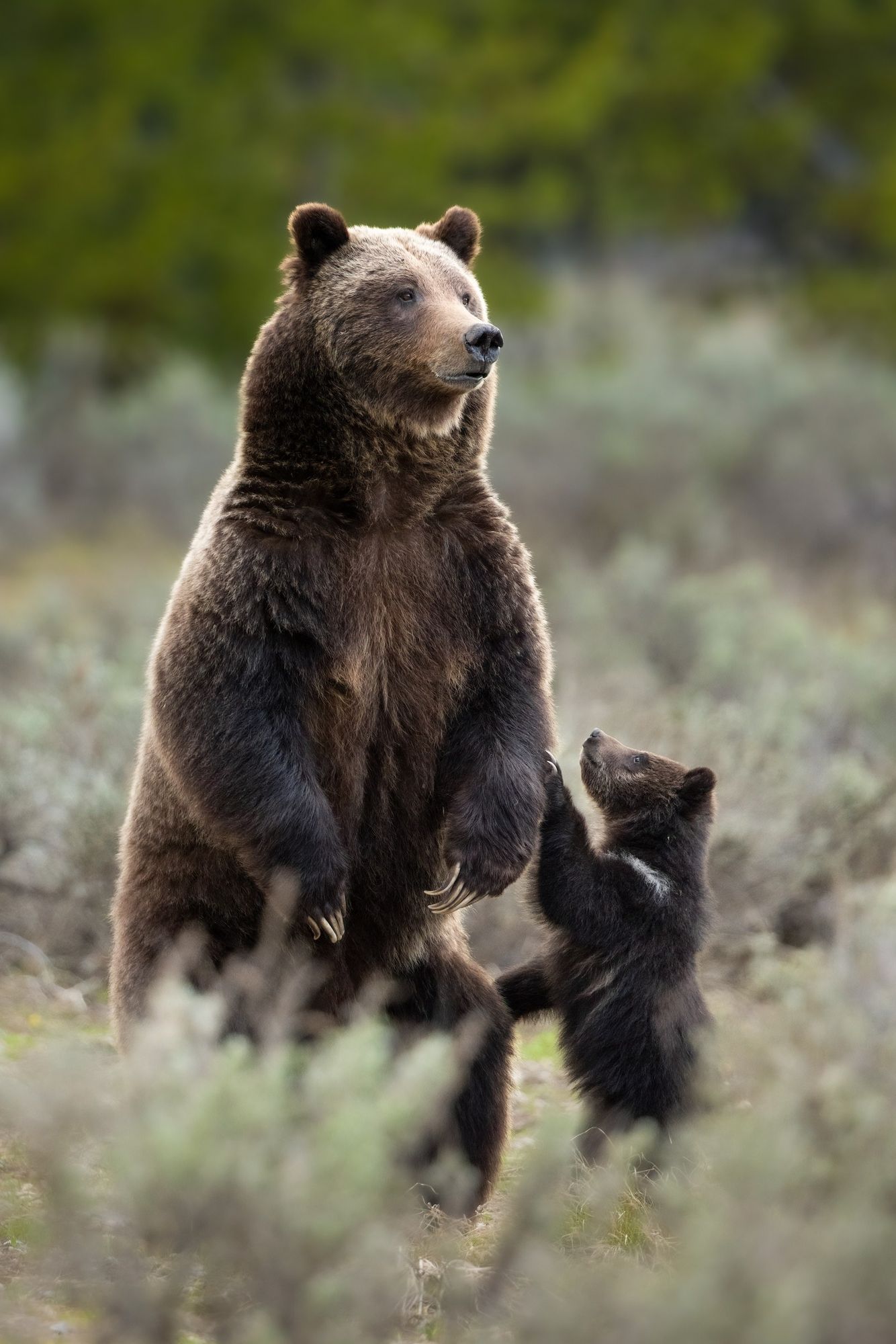
If you’ve spent much time in eastern Idaho or western Wyoming, chances are you’re familiar with Grizzly 399. Even if you never had the opportunity to see her in person, you’ve probably seen her photographs, followed her adventures with her cubs, or heard about the crowds she attracted in Grand Teton National Park.
She was arguably the most famous bear in the world. And when she was killed by a vehicle in October 2024, the news hit hard for a lot of people.
Filmmaker Alex Stavrou was one of them.
But Stavrou was in a somewhat unusual position. He was already making a documentary about 399, and her death didn’t just affect him personally. It changed the movie he was making.
I recently had the opportunity to watch Stavrou’s documentary and talk with him about 399, the people who loved her, and the challenge of making a movie when the story you’re telling changes suddenly.
And yes, I got emotional watching a movie about a bear. Thanks, Alex.
A bear, a community, and a complicated relationship
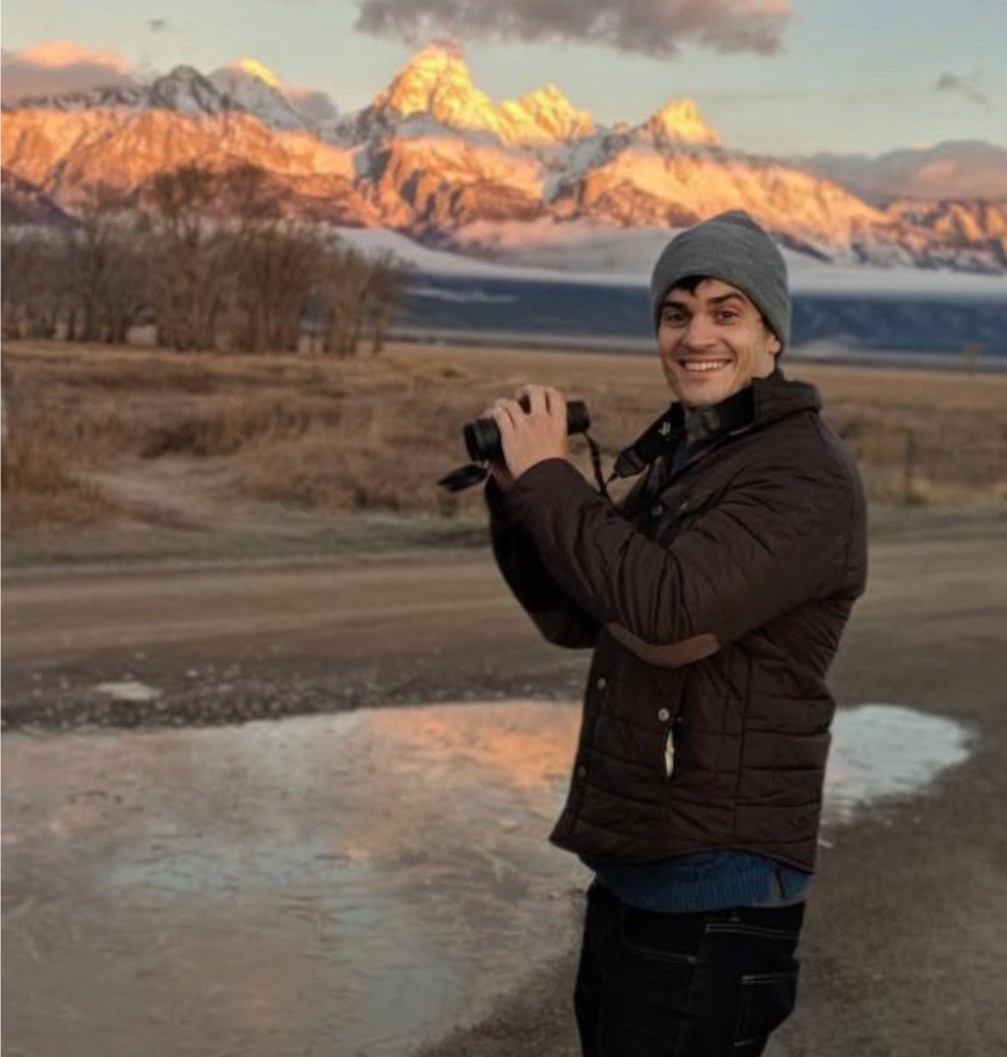
When Stavrou first became interested in 399, it wasn’t necessarily the bear herself who drew him into the story. It was the people.
Wildlife guides, photographers, and conservationists had spent years watching her. Some had developed remarkably personal connections to this wild animal. They loved her, but they also had complicated feelings about her fame.
“I think what really initially got me into it was the people and just how complicated and nuanced everything is,” Stavrou told me. “Sometimes that’s a one-sentence headline and people have their assumptions. I actually got introduced through the wildlife guides, and at first I just thought it was so interesting that they all had this relationship with this one bear.
“They’re wildlife guides, and they’re showing people wildlife all the time, but they all had very specific stories and their own complicated thoughts on whether this bear should be so famous. Had she been given too many chances? At the same time, they loved her because she brought so much joy. Right when I saw that, I saw how complicated it was.”
The documentary explores those competing feelings without trying to tell audiences exactly what to think. We see the excitement of a bear jam, when cars line the road, and visitors scramble to catch a glimpse of 399. We also hear from people who worry about what those crowds mean for the animals.
And I have to admit, watching some of those early scenes, I wasn’t entirely sure what to make of it.
There were so many people trying to get a photograph that it almost felt like a zoo rather than a national park.
But as the film continued, my perspective changed.
The documentary introduces us to people who had seen 399 countless times and still experienced that same excitement whenever she appeared. Their enthusiasm wasn’t simply about getting another photograph. For many, these encounters meant something much deeper.
Stavrou noticed it himself when he saw her.
“For me, or maybe someone going through Grand Teton for the first time, seeing bears can be a very powerful thing,” he said. “When you hear the wildlife guides’ point of view, they feel the same way, but maybe with hundreds of people surrounding them, it’s not the wildlife experience they necessarily signed up for when they first moved to Wyoming, the least populated state in the Union.
“But what surprised me was that the bear jam was perfectly civil. Even though there were a lot of people, she just brought so much joy to hundreds of cars. You could really feel it in the air. Everyone was just so happy to see her.”
One photographer featured in the film, Evan Watts, captured an intimate photograph of 399 that became particularly meaningful after her death.
Stavrou told me that Watts later donated the proceeds from that photograph to Vital Ground, a wildlife conservation organization, raising $42,000.
When the story changes
One of my favorite documentaries is “Icarus,” in part because the filmmakers started out telling one story and ended up somewhere entirely different.
As I watched Stavrou’s film, I couldn’t stop thinking about that.
He had already spent considerable time interviewing people and gathering footage when 399 died. Suddenly, the documentary wasn’t just about a famous bear and the people who followed her. It was also about loss.
And I was curious what that meant for a filmmaker who had spent so much time getting to know his subjects.
“Before she died, my goal was to tell the story through the people on the ground who had developed these really intimate relationships with her,” Stavrou said. “People who spent years watching her and following her. I was really fascinated by how they were all connected by one wild animal.
“But when she died, it became clear, maybe this was always the case, that 399 was the star. She was always going to be the center of it.”
That realization came with another challenge. Stavrou had developed friendships with some of these people, and now he needed to ask them about something deeply painful.
“It almost felt invasive in a way at first,” he admitted. “I was worried it would be too invasive because these relationships are so personal. But what I found was that they were all happy I was there. They were happy I was telling the story.”
He also found himself changing his approach to filmmaking.
“What I really learned while making the film is that it was up to the wildlife guides, photographers and conservationists to tell their story. It was up to me to follow along and see what their opinions were, how they felt, and show their point of view without judgment. Just hear what they wanted to say.”
One of the most interesting examples of how the documentary changed involves another bear, 610, one of 399’s daughters.
The film recounts an incident in which 610 was struck by a vehicle. Stavrou had already been working with that material, but he wasn’t entirely sure how prominently it belonged in the film.
After 399’s death, that changed.
“Once I found out how she died, the story of 610 and her incident became so much more important,” Stavrou explained. “Before that, I thought, well, I don’t know if this really belongs. But all these guides and photographers are always talking about speeding.
“A story about ‘please go the speed limit’ is only so interesting. But when you realize, oh, this is the cost, it becomes that much more important. And that helped lead up to the ending.”
I found that fascinating because, as an audience member, the connection seemed so obvious. The incident with 610 felt like a natural piece of foreshadowing.
But Stavrou hadn’t planned it that way. He couldn’t have. That’s part of what makes documentary filmmaking so interesting to me. Sometimes the story tells you where it needs to go.
Finding a movie in all that footage
I love movies. I also love learning how movies are made.
And while it’s easy to appreciate the scale of a giant Hollywood production, I find documentaries fascinating for an entirely different reason.
A documentary filmmaker spends countless hours interviewing people, gathering footage, tracking down photographs, and researching events. Then somehow, they turn all those separate pieces into a coherent story that people actually want to watch.
I asked him how he even begins putting something like that together.
“At a certain point, you just kind of have to pick a lane and go with your gut,” he said. “I think the harder things to put together were the sections that were about ideas, like delisting under the Endangered Species Act or social media as a concept. Those were hard because you have to figure out how you actually tell that.
“The parts that were maybe easier to put together were incidents. You decide how you’re going to play with the tension there. Like the incident with 610, where she was hit by a car. That was almost a starting point because the story was so much simpler in a way. She got hit, she’s hurt, and we wanted to give her space. How do you tell that story in a compelling way?”
But even with a straightforward event, Stavrou still had to figure out how to present it.
“It’s always a challenge to decide who says what,” he said. “Eventually, you have to boil it down to whose story you want to tell from this point of view. The bear jam from Savannah Rose’s point of view is very different than it is from a tourist’s. Getting that viewpoint was important, and that almost simplified things in a way.”
Some of the best moments, however, weren’t planned at all.
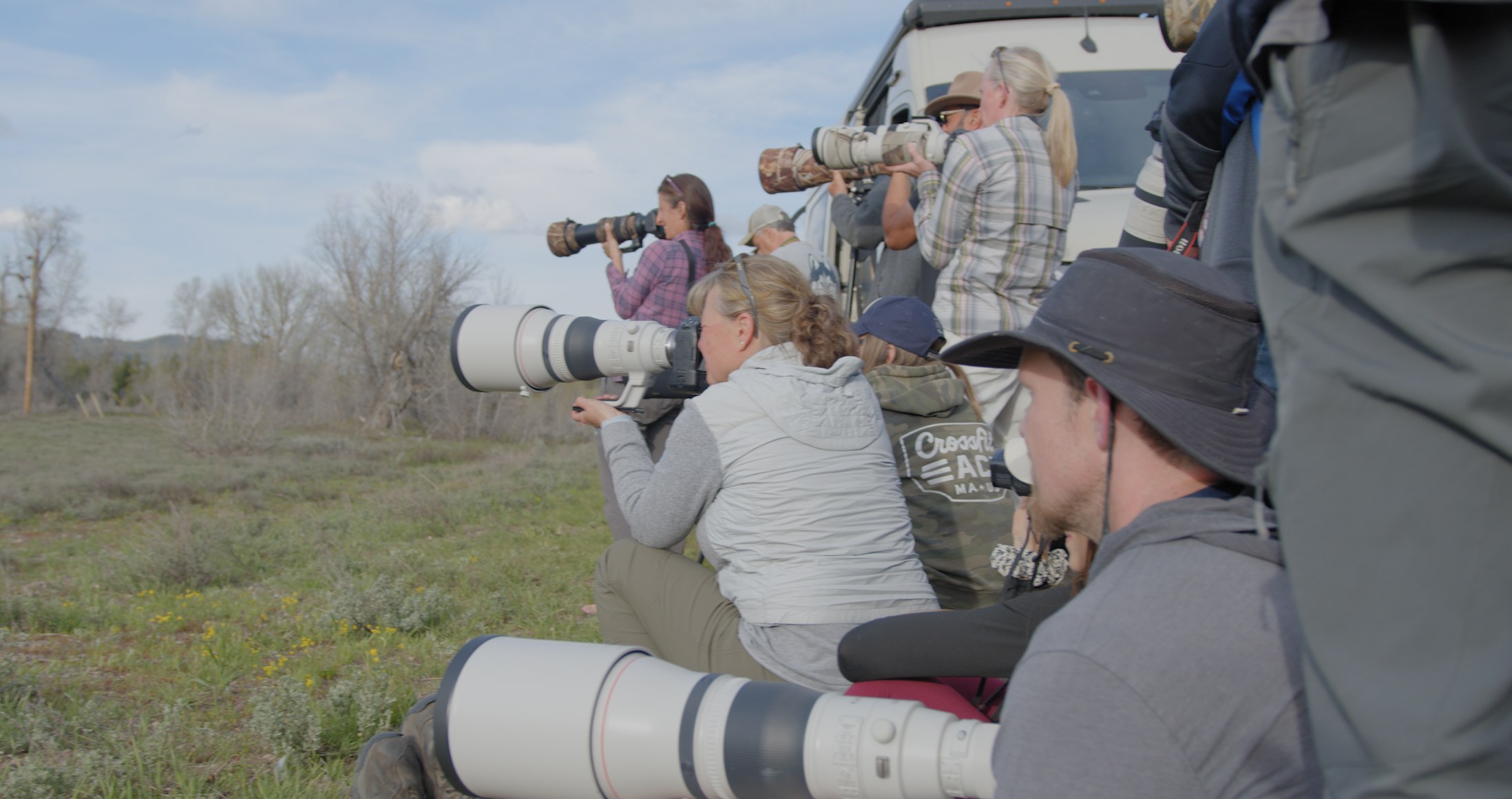
In one scene, a tourist describes the excitement surrounding professional wildlife photographers as being like the Super Bowl.
Stavrou saw an opportunity.
“One of the tourists says, ‘This is like the Super Bowl for these photographers.’ And I just thought, oh, it’d be interesting to show the shots of the professional photographers. It’s not something I planned. It just kind of happened in the moment.
“So, it’s a combination of planning and almost improvisation.”
Another unplanned moment became even more important.
Near the end of the documentary, Savannah Rose, one of the people featured in the film, takes a photograph of Pilgrim Creek.
Stavrou was filming the moment but didn’t fully recognize what he’d captured until he reviewed the footage.
“I was alone, and even though I was asking the questions and filming, it wasn’t until I looked at the footage later that I really saw what I got,” he explained. “There’s a moment at the end where I saw Savannah take a photo of Pilgrim Creek. I didn’t even see it happen when I was filming it, but once I saw it, I said, ‘Oh, this is the ending. This is the end.’
“It’s not something I expected. It’s just something kind of magical that happened on camera.”
And that’s one of the things I appreciated most about the film. It doesn’t feel like a collection of interviews interrupted by pretty pictures of bears. It feels like a story.
Composer Ben Doherty’s score also deserves some credit. The music supports the film’s emotional moments without constantly announcing that you’re supposed to be feeling something.
I mentioned to Stavrou how much I appreciated that restraint.
“I had a great composer, Ben Doherty, and he scored the film. He had a lot of those great ideas of how to carry the emotion,” Stavrou said. “I had an initial idea of making a bear jam like the opening of ‘Saving Private Ryan,’ in like 20 minutes. But using music and combining the footage, you can get as close as you can to what the feeling was like in a bear jam. That music really helped.”
It’s one of those elements that can be easy to overlook when it’s working well, but it makes a difference.
Why 399 mattered
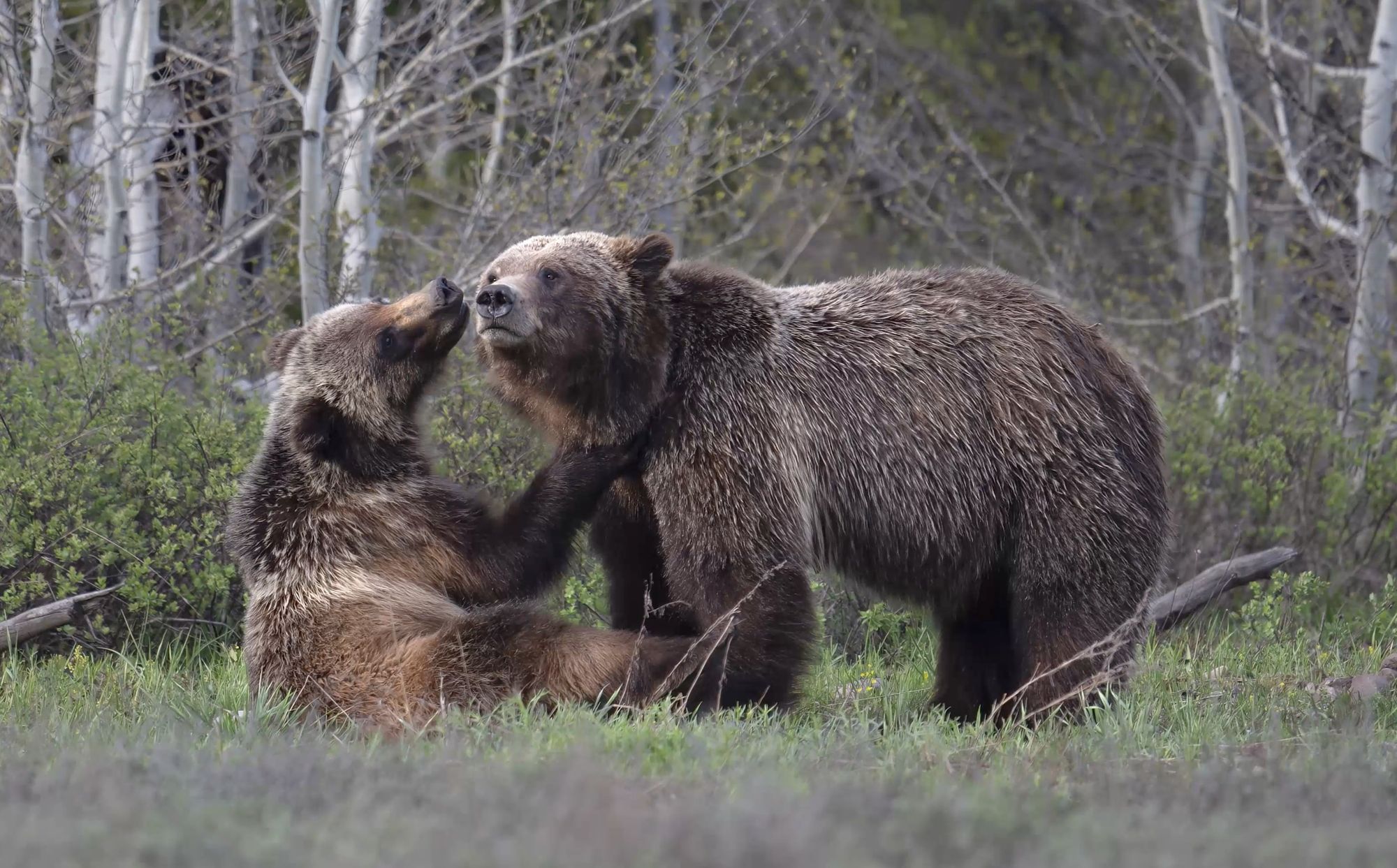
There are plenty of bears in the Greater Yellowstone Ecosystem.
So why did this particular bear become such a celebrity?
I asked Stavrou what he thought made 399 different.
“I think there’s definitely something to motherhood,” he said. “She always had cubs, and she was always so recognizable. A lot of these bears are misidentified all the time, but especially when she had the four cubs, it was like, hey, that can only be one bear. That’s 399.
“She was also the one that was most comfortable around people. So I think it’s exposure, just the fact that we know so much of her life. Bears are kind of unknowable in some ways. Even 399, the most famous bear in the world, most of her life we don’t know what she was up to.
“There’s that fascination with the unknown, where she could be, where she pops up, and people being able to follow that story for so long.”
But for some people, following 399 became much more than a hobby.
Stavrou pointed to Savannah Rose, whose story is particularly moving.
“She dealt with personal issues with her father passing away, and then seeing wildlife, seeing 399 having to get up in the morning no matter what and take care of her cub, that’s what it meant to her,” Stavrou said.
“She said, OK, they don’t have a choice. I’ve got to get up and move, too.
“Stories like that are one of a thousand where seeing this bear had some really impactful and emotional meaning to people.”
That’s the kind of connection I found most interesting.
399 wasn’t a pet. She didn’t know the people who followed her social media accounts or drove hours hoping to see her.
But she still became an important part of their lives.
And perhaps that’s what makes her story so unusual.
A story close to home
For east Idaho residents, Grand Teton National Park isn’t some distant place most of us only see in photographs.
It’s practically our backyard.
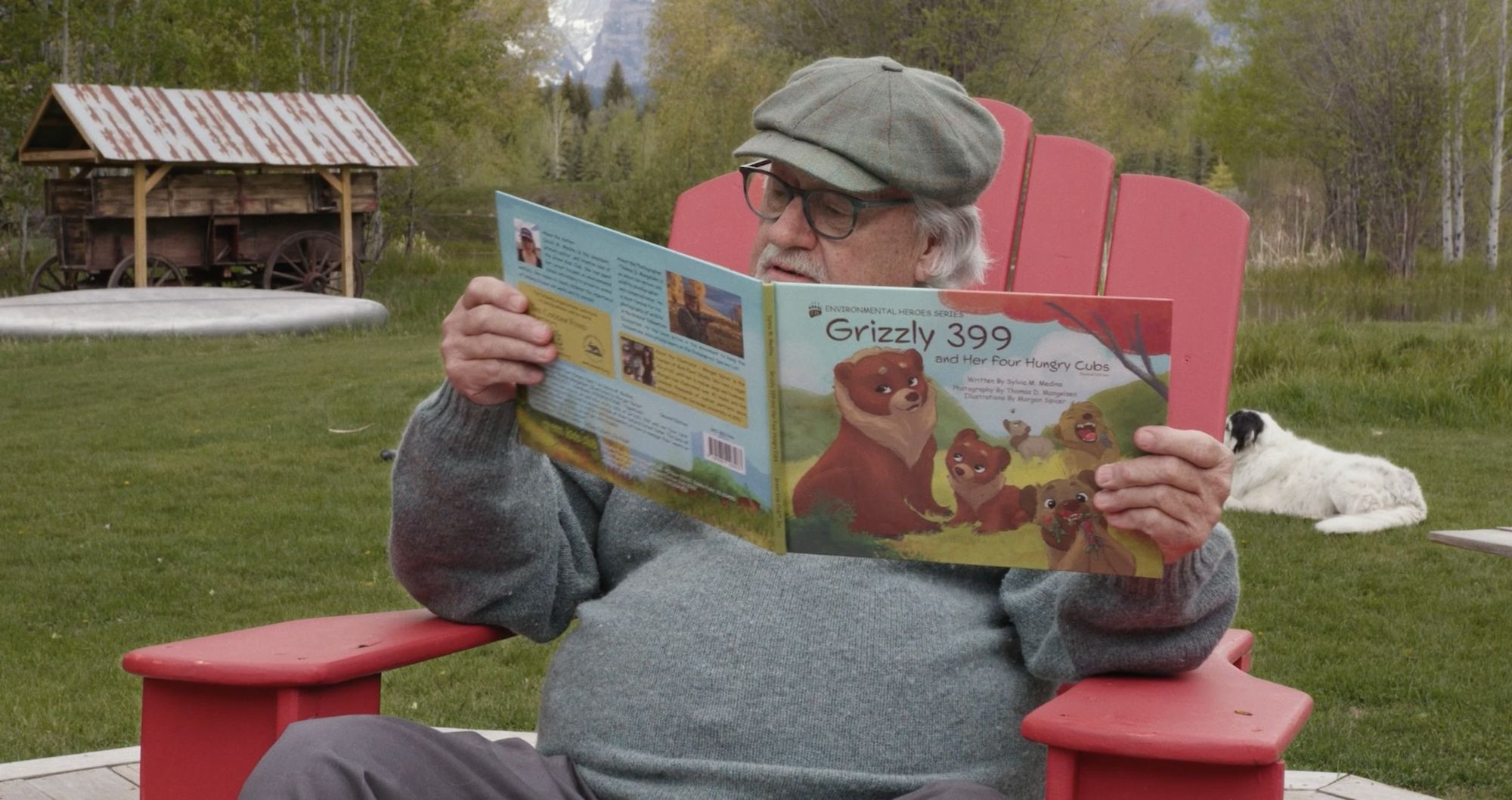
Stavrou’s documentary includes people from the region, including a children’s book author from Idaho Falls and others from Victor.
But he also discovered that 399’s influence extended far beyond the Tetons.
“We had a screening in Cheyenne, Wyoming, which was five or six hours away,” he said. “At the other film festivals, you have to explain, hey, she’s a celebrity bear, she’s very famous. But there, everybody knew who she was. You didn’t have to explain anything.
“I think the social media relationship people might have is interesting. Things can catch wildfire, maybe in a good way, maybe in a bad way. But one big difference between that relationship and having a relationship on the ground is seeing all the nuance that you might not see purely from online.”
That nuance is an important part of the documentary.
The film celebrates the joy of seeing 399 while also exploring the dangers that can come with making a wild animal famous.
After all, when people see incredible wildlife photographs online, it’s natural to want to capture something similar.
I’ve done it myself. You see an incredible scene, pull out your phone, take a picture and then wonder why the result looks absolutely nothing like what you’re seeing.
But with wildlife, trying to get a better photograph can lead people to make dangerous decisions.
Stavrou said the photographers and guides he interviewed were very aware of that tension.
“Bo Wildin says in the movie that he posts a photo of a wolf and it gets this many views, but he posts 399 and it gets so much more,” Stavrou explained. “So the idea of that incentive to get more attention using a celebrity bear is something they were definitely worried about.
“Bear jams are very safe, and they’re a symbiotic relationship, if you will, where people can see the bears in a safe way. But it was important to show their point of view, which is, hey, something could happen. You always need to be careful and not chase it with your iPhone.”
It’s a reminder that the animals we love to watch aren’t there for our entertainment, even when they happen to be very entertaining.
More than a famous bear
Stavrou’s documentary, “399 Forever,” arrives on Amazon Prime Video on Friday, Oct. 16, where it will initially be available to rent or purchase.
The film’s release is also bringing some additional attention to 399’s legacy. The filmmakers recently collaborated with Wyoming Whiskey on a new bourbon called “Queen of the Tetons,” with proceeds benefiting the Grand Teton National Park Foundation. They’re also hosting an online watch party with the National Park After Dark podcast.
The film has also been making the festival rounds, winning a Best Documentary award at its first festival and generating opportunities for screenings connected to wildlife conservation efforts.
Stavrou told me those events have been particularly rewarding because they’ve introduced 399 to audiences who had never heard of her.
“Our first festival, we won Best Documentary, and there are no grizzly bears in California,” he said. “It was very rewarding to see that this started resonating with people who really didn’t know anything about 399.”
And the screenings have offered something beyond the movie itself.
“One of the great things about these screenings is that they’ve brought attention to wildlife conservation causes,” Stavrou explained. “We did a screening in Jackson, and Jackson Hole Bear Solutions was there, the organization that helps get bear-proof trash cans on the landscape.
“It’s a great way to bring attention directly. You can watch a movie and say, hey, you like that? Here’s a way you can directly help.
“We even did a screening in Connecticut, where there are no grizzly bears, with the Audubon Society. And 399 always was, and still is, a way to bring attention to wildlife conservation causes. That’s been really cool and rewarding to see.”
When I asked Stavrou what he hopes 399’s legacy will be, he didn’t focus on her celebrity or the photographs that made her famous.
He came back to the relationship between people and wildlife.
“I hope the movie gives people an understanding of why she meant so much to so many people, but also helps them realize that this story is bigger than one bear,” he said.
“She brought people closer to wildlife, but she also shows how complicated that relationship can be. A lot of people want wildlife and animals in their lives, but we also have a responsibility to make room for them and figure out how to coexist.
“I hope people walk away caring a little bit more about wildlife, thinking about our role in protecting it and understanding that it’s always on the line. What happens next is up to us.”
I went into this documentary knowing how it ended. I knew 399 was gone. I knew what happened to her.
What I didn’t know was how much I’d care about the people who had spent years watching her.
Or how much their stories would change the way I thought about the crowds, the photographs, and even the bear herself.
That’s what Stavrou’s film does particularly well.
It’s a documentary about a famous grizzly bear, certainly. But it’s also about the strange and wonderful ways we become attached to things that aren’t really ours.
399 belonged to the wild. She always did. But for a lot of people, she also became part of their own story.
And thanks to this documentary, those stories have a chance to live on.