




Incumbent Republican faces Democratic opponent in race for District 31 House Seat A
Published at
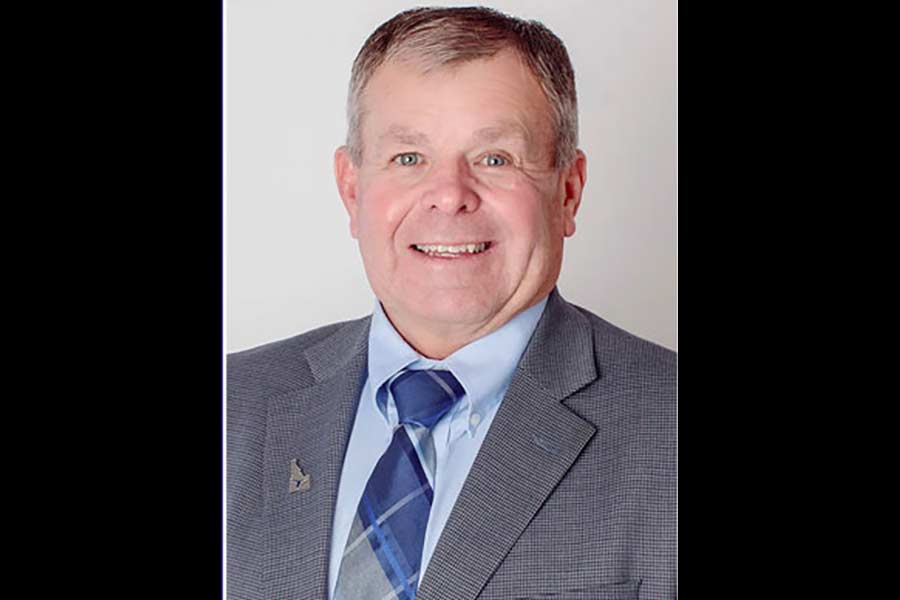
MENAN – Rep. Jerald Raymond, R-Menan, is seeking a third consecutive term for District 31 House Seat A. Newcomer Kindsey Smith, a Rigby Democrat, is running against him.
District 31 encompasses Clark, Fremont, Lemhi, and Jefferson counties.
Raymond was first elected in 2018 to the Idaho House of Representatives. He was defeated in 2020 by Karey Hanks, but was elected again in 2022.
EastIdahoNews.com sent the same eight questions to each candidate. Their responses were required to be 250 words or less. Raymond is the only one who responded. His unedited answers are below.
To learn more about Raymond’s campaign, click here. Smith does not have a website, but additional information about her is available here.
Election day is Nov. 3.
Tell us about yourself — include information about your family, career, education, volunteer work, and any prior experience in public office.
Raymond: I am a fourth-generation Idahoan, and come from a family of republicans as far back as I can track. My wife, Cheri, of 49 years and I have 6 married children and 25 grandchildren. We have lived in Jefferson County our entire lives and educated our children in Jefferson School District 251. We both graduated from Rigby High and attended Ricks College. We are in the livestock industry and own/operate a feedlot near Menan. In addition to parenting and church service opportunities I have leadership experience in the Farm Bureau Federation (local, state and national), the Idaho Cattle Association (past president) and as a former County Commissioner, serving 4 years as chairman. I have recently been nominated to my fourth legislative term where I currently serve as Agricultural Affairs committee chairman.
Why are you seeking political office in your community? Briefly explain your political platform.
Raymond: As a multi-generation Idahoan and Republican, I appreciate where we have come from, where we are currently and what our future holds. We are among the fastest growing states in the nation and holding onto our Idaho values is of utmost importance! My parents and grandparents taught me conservative principles that guide my every decision. As a business owner I understand the value of money, risk and balancing budgets. I am fiscally conservative, socially conservative and adhere to the principals of our Founding Fathers. Our best decisions are made closest to the people. I bring local government experience to the state house and have defended local government on multiple occasions. Even taxes levied, governed and spent at the local level are better than centralizing government.
With rising housing, fuel, and food costs facing Idahoans, can the state government help bring relief to Idaho citizens? Is it the role of the Idaho Legislature to help deal with these issues?
Raymond: Idahoans are facing a three level “gut punch”, currently. Housing, fuel and food costs all contribute to household inflation that is putting the squeeze on families. All are tied, to a certain extent, to supply and demand with state government having very little control. Idaho can do what Idaho does best — reduce red tape and government regulation. We have done much in the past and will do more! Our tax policies MUST be sound. We must be certain that tax reform does not equate to tax shifts. As chairman of House Ag committee, I recognize that high input costs and low “at the gate prices” are tightening margins for farmers and ranchers. I am working closely with our state and national agriculture partners to create policy that widens those margins while providing affordable healthy food options for families.
How will you best represent the views of your constituents – even those with differing political views? How do partisan politics play into your role as an elected leader?
Raymond: I have found that listening is one of the best ways to bridge the gap between political views, and there are many views! There are moral and ethical lines that I will not cross. I recognize that I don’t have all of the answers, and am willing to try others’ ideas. Rep. Furniss, Sen. Burtenshaw and I have always kept an open-door policy between our constituents and between ourselves. We often discuss proposals and
how they would help our constituents.
What parts of the Legislative budget could use more funding? Where are places in the budget where cuts could be made?
Raymond: Because the 2027 budget cycle was a tough one, we will soon see what needed more funding. I know that there were some transportation projects that are on hold because of budget constraints. That cannot continue. Deferred maintenance is deficit spending. We cannot leave this to our grandchildren to figure out. There are discussions on improvements to education funding. I welcome those discussions. Our law enforcement men and women are in need of additional funding. We will be having those discussions as well. As I have stated before, I prefer to use the term “appropriate funding”. Every state agency needs to evaluate expenses annually and determine what is appropriate. Our Joint Finance and Appropriations Committee does a great job of evaluating this every session.
In 2026, Idaho suffered a historic drought, leaving eastern Idaho’s reservoirs at an all-time low. As a result, crop yields were significantly impacted. What specific strategy or legislation would you support to protect groundwater and surface water resources, and what is your timeline for measurable improvements?
Raymond: The 2024 water settlement agreement between Idaho’s ground and surface water users has worked, almost miraculously. In spite of its challenges, we made it through the 2026 irrigation season better than most thought was possible. Now our reservoirs are at record low levels. I am not sure what legislation could be proposed to bring them back up — prayer is our best hope! Pray for an old-fashioned winter! Now, for the long term a group of East Idaho legislators are working on a project called “750K by 2100,” meaning 750-thousand-acre feet of storage in the upper Snake River basin by the year 2100. We are headed to Washington D.C. in November to discuss funding with our congressional delegation — our second trip for this purpose.
One of the biggest issues on the November ballot is Proposition 1, a citizen-led ballot initiative that would repeal Idaho’s abortion ban. Do you support Proposition 1? Why or why not?
Raymond: I am opposed to Prop-1. I am and have always been Pro-Life. I recognize some challenges to Idaho’s current law, but Prop-1 is NOT the answer.
Idaho House Joint Resolution 4 (HJR 4) is a constitutional amendment on the November ballot that would give the legislature exclusive authority to legalize or decriminalize marijuana, narcotics, and psychoactive substances. It would also ban citizen initiatives that would allow voters to directly have a say on the issue. Do you support the passage of HJR 4? Why or why not?
Raymond: I support HJR4, in fact I am a legislative co-sponsor. It is NOT, as some have surmised, an effort to limit citizen involvement in the legislative process. It is, in fact, quite the opposite as it relates to drug policy. We want and encourage public hearings on these matters, as well as committee votes, floor votes in both the Senate and the House and the Governor’s review of said policy. These are serious matters that deserve serious consideration by those elected to direct drug policy. As a side note, there was a single republican who voted no on this resolution when it came before the legislature for consideration. All other republican legislators voted in favor.