



Murder with a smile: The origins of the killer clown
Published at
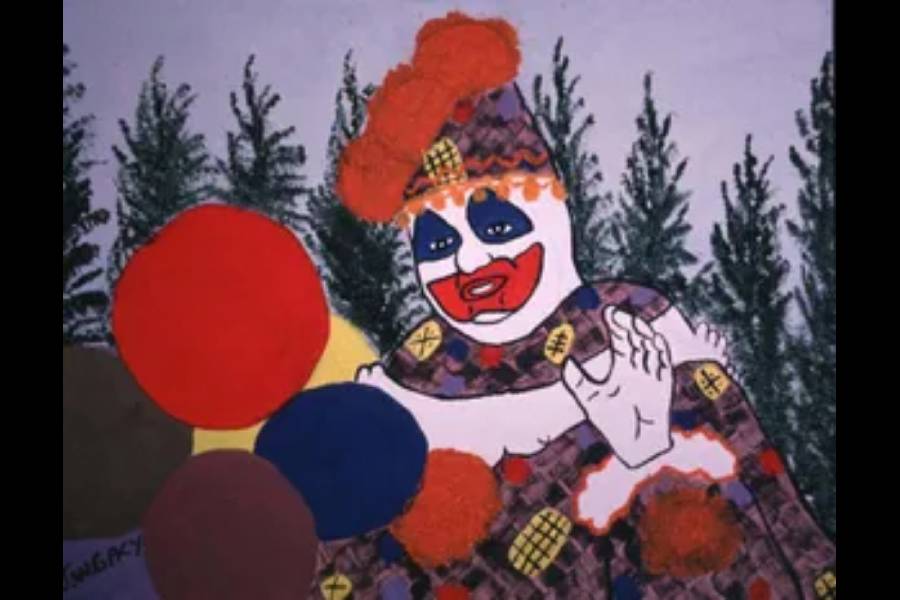
IDAHO FALLS — If clowns are supposed to be fun comedians, spreading laughter and balloon animals wherever they go, then why are all our most famous examples of them murderous? How does face-paint, oversized shoes, ridiculous outfits and general buffoonery somehow combine together into something anyone could call scary?
The idea of a killer clown, or even just an evil clown, is about as old as clowns themselves. However, with the exclusion of maybe Ronald McDonald — who might still be scary, depending on your personal opinion of Clowns — we’ve opted to forget the fun, happy clowns in both history and media in favor of their killer cousins.
Pennywise, the Joker and John Wayne Gayce all have two things in common: They’re killers and have had tremendous impacts on pop culture and media. But that raises another question: Have clowns always been a little creepy, or has society been plagued by real-life face-painted killers who twist “clowning,” as the profession is referred to, into something morbid?
Clowning around for centuries
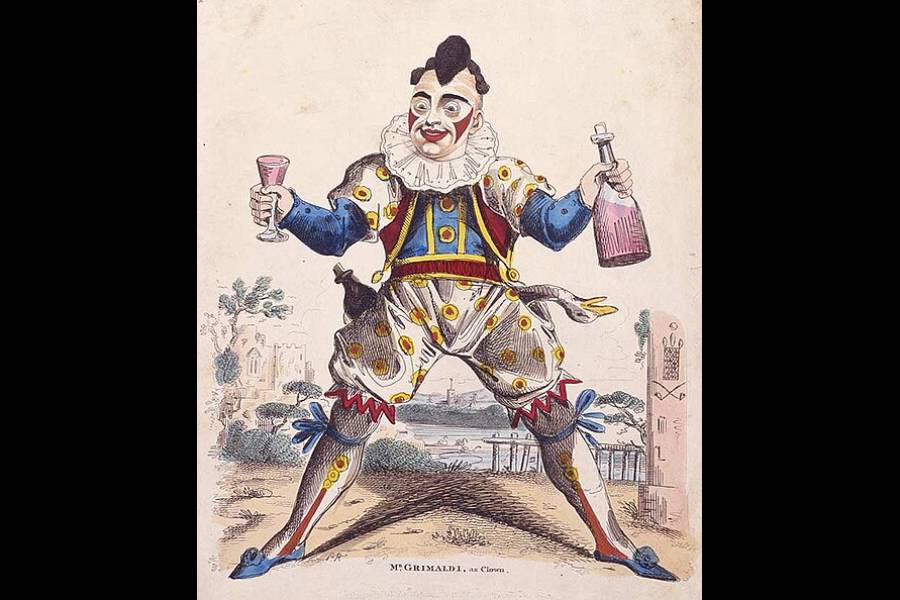
Clowns have their roots in Greek theater, according to Britannica , but we don’t start seeing examples resembling modern clowns until the 17th century.
The encyclopedia cites Joseph Grimaldi in 1805 in the United Kingdom as the first example of a modern circus clown. The header of the website that honors Grimaldi, JosephGrimaldi.com, puts the history of clowning best:
- “The history of clowning stretches back more than 4,000 years — from the sacred buffoons of ancient Egypt to the whiteface circus clowns of the modern big top. Along the way, the clown has been jester and priest, anarchist and innocent, terrifying and tender. But the character we recognize today — the painted face, the outlandish costume, the physical comedy that makes children shriek with laughter — was invented by one man, in one city, in the early 19th Century. His name was Joseph Grimaldi, and every clown who followed him was called a ‘Joey’ in his honor.”
Clowning made its way across the Atlantic to the United States early in the country’s history through the circus. In fact, George Washington attended the nation’s first circus in 1793, according to the Smithsonian, with clowns being popularized a short time later, in the 1800’s, as a children’s attraction.
Clowns didn’t turn bad – they were just never fully good
Ask someone today, and it’s probably a 50-50 chance they say they like clowns (technically, 54-46, according to one study published by Frontiers). Yes, clowns and the acts they evolved from were meant to be funny, but they have always carried a darker undertone.
A History.com interview with Benjamin Radford, author of ““Bad Clowns”“, the most recognizable cousin of the clown, the harlequin, was taking on the dual role of killer-comedian as early as the 16th Century.
“It’s a mistake to ask when clowns went bad, because they were never really good,” Radford says in the article.
In the late 1800s and early 1900s there was more emphasis on child-friendly clowns, but the early 1900s also had examples of killer clowns in literature, theater and early film, such as in the 1924 silent film, “He Who Gets Slapped.”
There isn’t any one crazy example, real or imagined, that made society decide clowns are scary — at least not one that we can point to as the definitive turning point.
Killer clowns hit pop culture
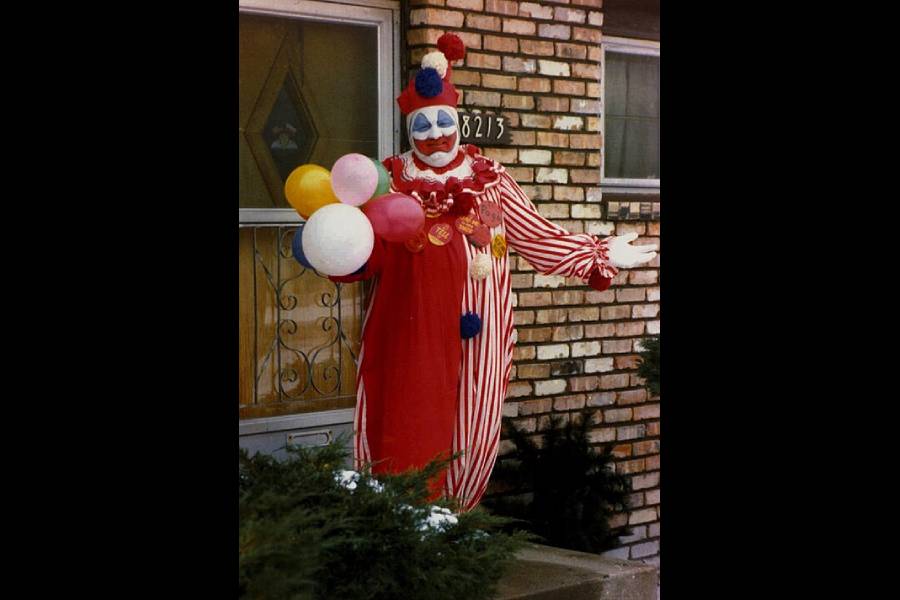
John Wayne Gacy and Stephen King’s “It” might be able to explain the popularization of the killer clown in the 1980s and 1990s.
‘It’
“It” was published in 1986 and was a best-selling book that year. The popularity of the book prompted the release of a TV miniseries of the same name in 1990.
Pennywise the murderous clown-demon retained enough popularity that 27 years later, the miniseries was remade into a two-part movie series. “It” was released in 2017, and “It: Chapter Two” followed in 2019.
Now, 40 years after the original story debuted, Brittanica lists Pennywise as the second-most famous clown in history. Who is the most famous? The encyclopedia says that spot belongs to the “clown-attired bloodthirsty aliens in ‘Killer Klowns from Outer Space’.”
John Wayne Gacy
The encyclopedia also says the charachter Pennywise may have been inspired by serial killer John Wayne Gacy.
That said, it may be inaccurate to label Gacy a “killer clown.” Yes, he was a convicted serial killer. Yes, he had a clown persona — “Pogo the Clown.” However, Gacy never actually killed anyone while dressed as the clown, at least as far as we know.
Nonetheless, Gacy’s infamy created a link between clowns and serial murder that has, unfortunately, stood the test of time.
Gacy killed 33 boys in the 1970s, and his crimes received international media attention. Living in a suburb of Chicago, Gacy was well-known and well-liked. He would reportedly host annual summer parties that were quite popular, and he’s said to have attended a variety of events dressed as “Pogo the Clown.”
While in prison on death row, Gacy allegedly maintained his enthusiasm for clowns through painting. Britannica reports that he frequently painted clowns, and the works later became popular auction items.
Modern criminal clowns
The whole concept of killer clowns is almost entirely fictional, but that “almost” is important. There are a handful of real-life individuals who arguably were killer clowns, like Gacy or Jean‑Gaspard Deburau, a famous French clown from the 1800s who struck and killed a boy with his cane, according to the Atlantic. (Deburau also wasn’t in costume at the time of the killing.)
Below are three examples of true killer clowns — individuals who murdered or allegedly murdered someone while donning the face-paint and costume.
Sheila Keen-Warren

On the morning of May 26, 1990, Marlene Warren opened her front door in Wellington, Florida, to what looked like a delivery person holding balloons and a basket of flowers while dressed like a clown, PEOPLE reports.
In an interview with CBS News, Marlene’s son, Joe Ahrens said at the time he had a cast on, so when he and his mother saw a clown approaching, they thought someone was just making a kind gesture.
But Ahrens told CBS that after Marlene opened the door, he heard a “bang” and his mother fell to the floor.
PEOPLE reports Marlene had been shot in the mouth, and after carrying out the act, the clown, later identified as Keen-Warren, calmly walked back to a car and drove away.
The outlet reports that for years, law enforcement suspected Keen-Warren of the crime. She was 26 at the time of the killing and was having an affair with Marlene’s husband, but police said they didn’t have enough evidence to charge her.
In 2002, PEOPLE reports Keen-Warren and Michael Warren, Marlene’s former husband, wed in Las Vegas. Nearly three decades after the killing, in 2017, Keen-Warren was arrested. Advances in DNA technology helped authorities prove that hair found in the killer’s car belonged to Keen-Warren, investigators said.
Keen-Warren took a plea deal in April 2023, according to CBS News. She was given a 12-year sentence but was awarded time served for the six years she spent in confinement awaiting trial. Due to 1990 Florida law that allows for significant time off for good behavior, Keen-Warren was released from prison on Nov. 2, 2024.
Christian Lee Gulzow
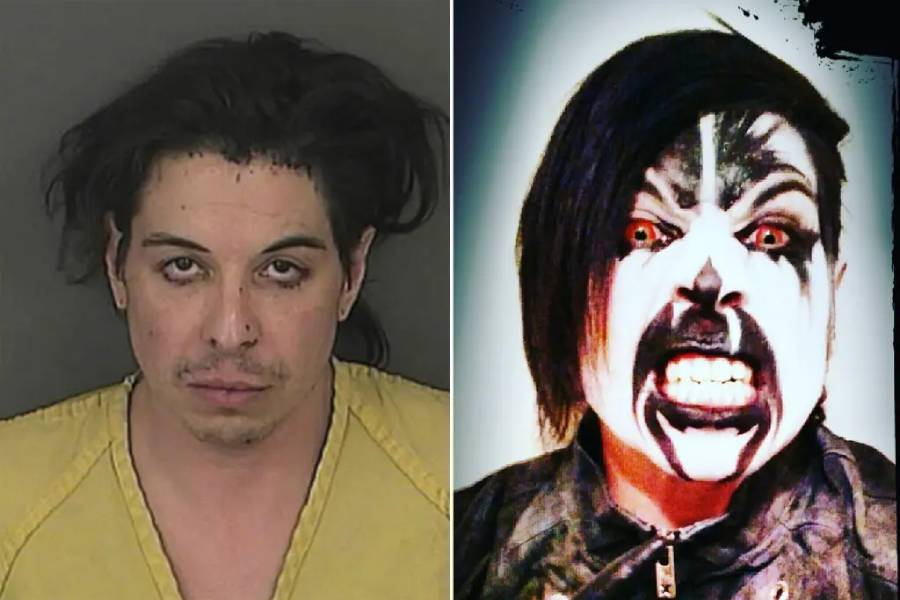
Whether or not Christian Lee Gulzow counts as a killer clown may depend on how flexible your definition of a clown is. The makeup and outfit Gulzow wore at the time resembles a member of the band Kiss more than an actual clown, but according to a report from the Denver Police Department obtained by Vice, witnesses described Gulzow as having “white, clown-type makeup with black streaks on his face.”
Gulzow fatally stabbed 29-year-old Brian Lucero in the parking lot of a Denver taco restaurant at about 12:40 a.m. By the time law enforcement arrived, the New York Post reports that they found Lucero unconscious. Guzlow had fled the scene.
Witnesses described Gulzow as having the black and white “clown-type makeup” and “a glove with blades on the end of each finger,” according to police reports.
Gulzow was seen by witnesses fleeing on a scooter, and a short time later an individual matching the clown’s description was spotted a few blocks away on a High Activity Location Observation (HALO) camera, Vice reports. The camera recorded the individual throwing what looked to be a knife into the bushes. The knife was later recovered by law enforcement.
According to the Vice, Gulzow was arrested after he was seen riding a scooter, covered in blood and clown makeup, near a busy Denver intersection. On June 25, 2018, a jury found Gulzow guilty of second-degree murder, and he was later sentenced to 42 years confinement.
St. Louis Clown 2026
The suspect in the alleged killer clown case from St. Louis in August hasn’t been named, as the individual is a minor, and unfortunately, few facts about the case are available.
On Aug. 3 at about 10 p.m., the East St. Louis Police Department received a report of a body in a roadway, according to FOX 2. The victim was identified as 78-year-old John W. Allen, who was found with multiple stab wounds.
FOX 2 says police identified the suspected killer and located him at a residence where he were taken into custody.
Prior to the teen’s arrest, the individual was seen on doorbell cameras walking around the area in a clown costume. At one house, the clown walks up to the door, look directly into the camera and whispers, “I’ve been looking for you.”
Prosecutors are pushing to have the teen tried as an adult, according to STL News.
2016 Clown Sightings
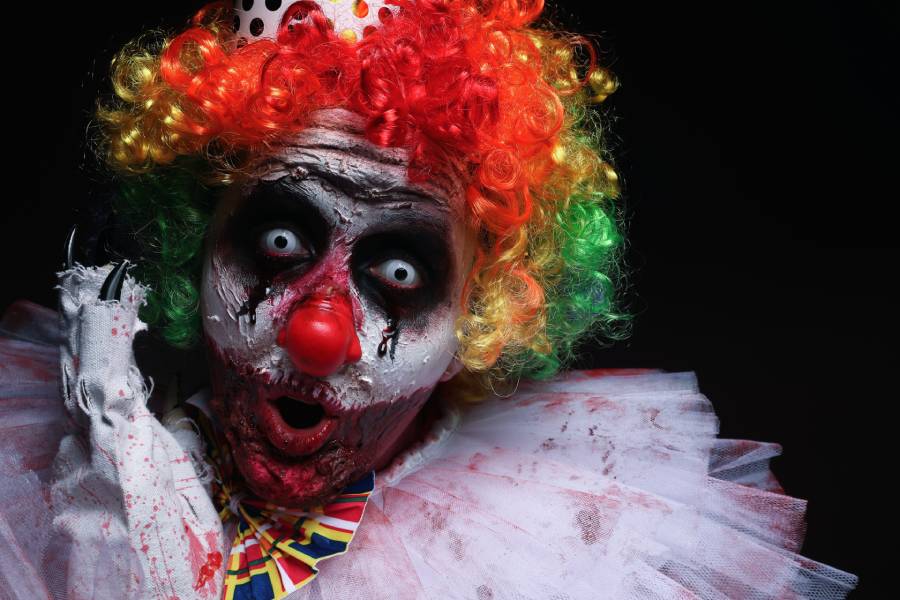
Although 2016’s killer clown trend was less serious than an actual murder, it was far more widespread. And while it may be the most familiar clown story for many readers, 2016’s clown sighting trend wasn’t anything novel, according to an interview with Benjamin Radford done by PEOPLE,
Radford told the outlet that “clown panics” — as he referred to them — have been happening since the 1980’s, and the majority of the reported clowns are never verified. In a 2016 clowning incident in Pocatello, Idaho, the clown supposedly stalking a local high school turned out to be a Photoshop hoax.
In cases that are “real” or where a clown was actually found, the alleged killer clown usually turned out to be a prankster.
Radford told PEOPLE the cases that involved real people dressing as clowns are normally just “low-risk, high-reward” stunts because, while dressing up like a scary clown and going out in public isn’t often illegal, it does frequently make the news.