




Pocatello Democrats talk affordability and more at town hall
Published at | Updated at
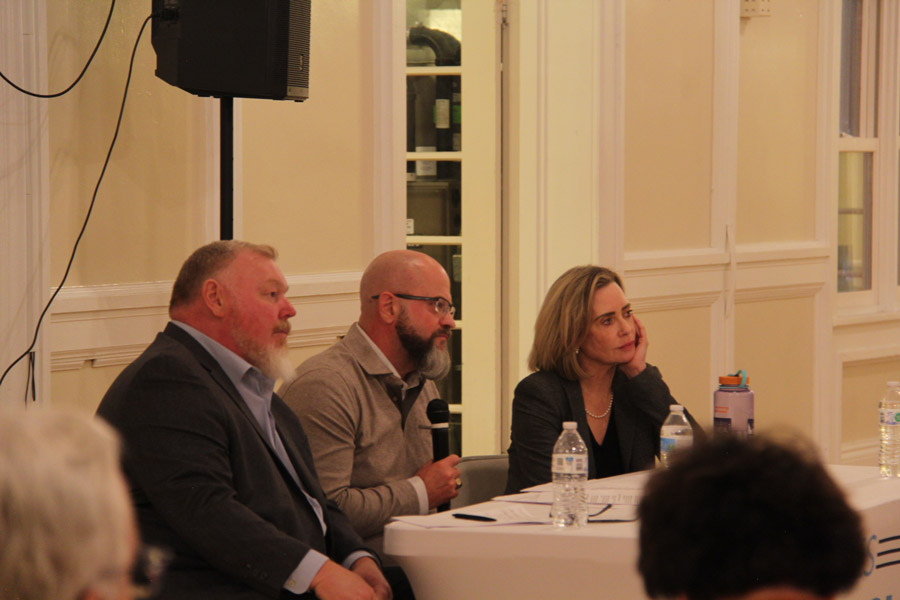
POCATELLO — The three Democrats running to represent the Gate City in the state Legislature held a town hall to make their case to voters before the general election.
Thursday evening, Sen. James Ruchti and candidates Mary Shea and former Rep. Nate Roberts, who are running for District 29’s seats A and B respectively, held a town hall where they addressed issues surrounding affordability, as well as controversial ballot initiatives that voters will see on the November ballot.
In his opening remarks, Ruchti talked about the issues facing Idaho residents and asserted that there are options that his fellow legislators could utilize to ease the burden.
“The Idaho Legislature could do some things to help, but they’ve chosen not to,” Ruchti said.
EastIdahoNews.com was invited to attend and cover the town hall through a news release sent on Oct. 7. To date, we have not received notification of equivalent events being held by the opposing candidates.
Ruchti is running for reelection against Republican challenger John Crowder, a former Bannock County commissioner. Shea is challenging Republican Rep. Dustin Manwaring for his seat, and Roberts is competing with Jennifer Miles for the seat currently held by Republican Rep. Tanya Burgoyne, who beat Roberts in the 2024 election, and was then defeated by Miles in the May primary election.
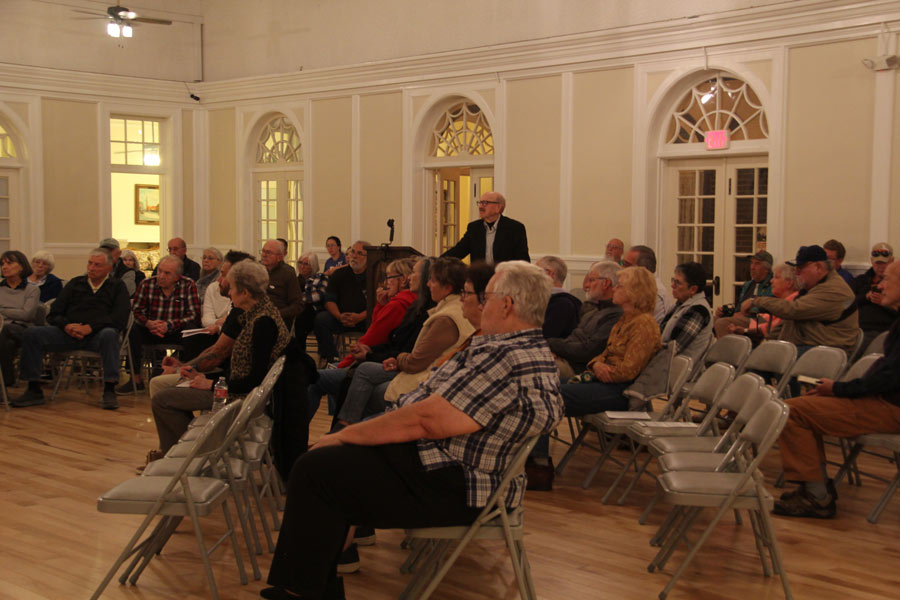
The town hall drew around 40 to 50 people in total, with primarily older people in attendance. The attendees gathered in the main hall of the Bannock County Veterans Memorial Building, where the candidates spent around an hour and a half fielding questions.
And while the town hall was publicized as an affordability town hall, that’s not what the first question was related to. Rather, the first question was asked by a man who heard that if Proposition 1 were to pass, then minors would be allowed to go out and get abortions without parental consent, and wanted to know if that was true.
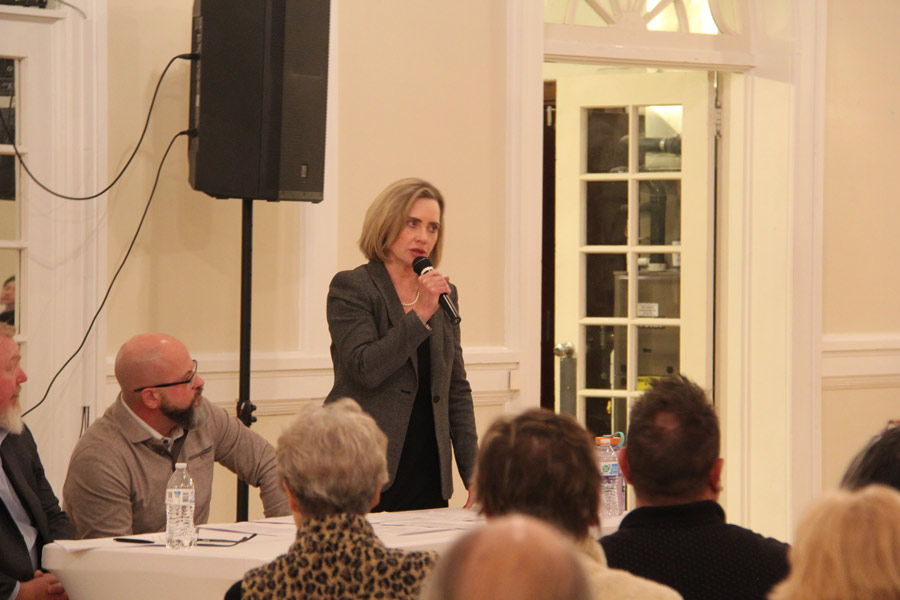
Shea responded to this question, saying that Proposition 1 would not override Idaho’s existing parental-consent laws for minors. This is because two laws that govern abortion access for minors, Idaho Code Section 18-609A, and the Idaho Parental Rights Act, are both still on the books, and would still apply if Proposition 1 passed, she said.
The only way a minor could receive an abortion without parental consent under these laws “was to go to a judge and argue to a judge why they should not have to get parental consent,” Shea said.
And based on her experience, it’s an option that’s rarely utilized.
“I will tell you, I’ve been a family law attorney in Pocatello for 26 years. Nobody has ever asked me to do that for them,” Shea said.
Other attendees raised concerns about healthcare access, ranging from uncertainty surrounding continued healthcare coverage to the effects Medicaid cuts will have on affordability.
Roberts, who served on the Health and Welfare Committee while in the Legislature, said that he has seen health insurance plans “beginning to retract a bit,” and that much of that can be blamed on “the defunding of the Medicaid system.”
“(The Legislature) took money out of Medicaid to, once again, give tax cuts to… others, shall we say,” Roberts said.
In his comments, Ruchti expanded on these tax cuts, saying that over the last five years, the Legislature has flattened Idaho’s income tax brackets, which led to over $4 billion in lost state revenue.
RELATED | ‘These students feel betrayed’ says ISU professor at town hall on cuts to higher education
Specifically, the Idaho Center for Fiscal Policy found that these tax cuts have amounted to $4.5 billion, according to a report from June. That report also said that “the largest benefits overwhelmingly flowed to wealthy households, while some low-income Idahoans experienced tax increases and increased financial strain.”
Ruchti argued that this lost tax revenue could have been invested in “a program to build affordable housing. … We could have put money into the childcare program, to make childcare more affordable for young families.”
“Instead of looking at it that way and saying we need to invest in all of these things, we gave money … to corporations and the richest in this state, and the rest of us are paying the price for that,” Ruchti said.
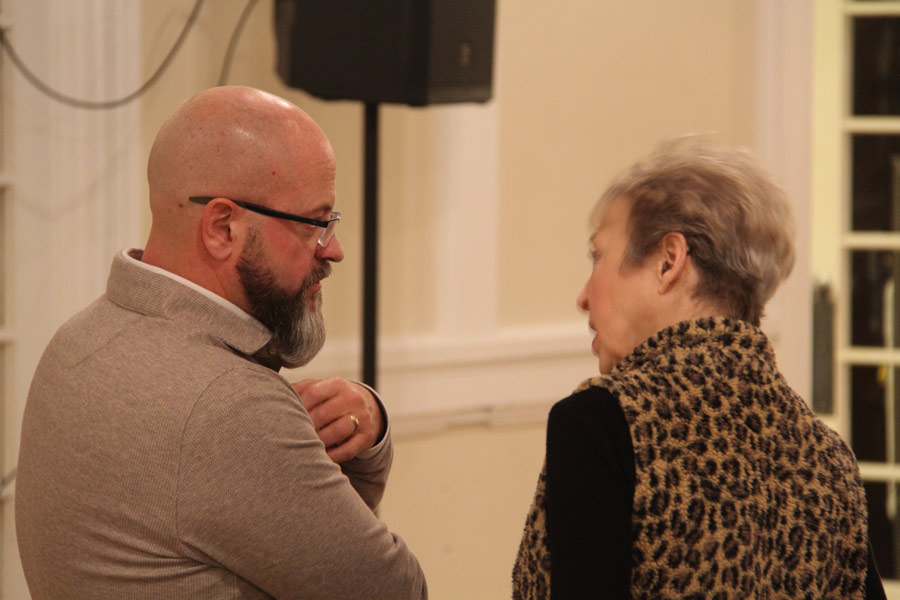
But the candidates aren’t against all tax cuts. During the town hall, Shea expressed support for cutting taxes on social security benefits, the grocery tax, overtime pay and tips, and also bringing back Idaho’s child tax credit.
Another topic of discussion during the meeting was housing affordability and what the Legislature could do to address the problem. In addition to building more affordable housing and investing tax revenue in housing programs, Ruchti also said the legislature could increase the homeowner’s exemption.
But Shea highlighted another problem related to this in her opening statement, saying that Pocatello is among the top 10 cities in the nation where wages have not kept up with the cost of housing. In a post to her campaign Facebook page, she sourced information from the Joint Center for Housing Studies of Harvard University to support her claim.
Roberts addressed the issues of low wages in his opening statement, asserting that, “Since 1985, Idaho has been participating in a wage suppression scheme. It’s called right-to-work.”
Despite the name, right-to-work laws don’t guarantee employment or prevent firing. Rather, it’s a state regulation that stops employers and labor unions from making union membership a condition of employment.
Under federal law, unions are still required to represent non-members in contract negotiations and workplace grievances, even if those employees don’t pay dues for a union membership.
“That’s one of the biggest levers I think that the Legislature has to actually begin to raise wages and make life affordable in Idaho, and that is to repeal right-to-work,” Roberts said.
While the majority of people who attended the town hall were older people, not everyone was. Caspian Pence was one of the last attendees to ask the candidates a question.

“What incentives do you give young people to stay in Idaho? Because as I see it, I don’t really see a future for myself here in Idaho,” Pence said.
Shea replied that it’s more than the affordability crisis that’s driving young people away from Idaho, “because the entire country is facing an affordability crisis.”
Based on what young people have told Shea, she sees the cause as “the culture wars and feeling maybe unsafe or unwelcome or unable to express their point of view.”
Shea expressed hope that people in Idaho have grown tired of this.
“So I’m hopeful that if we can crack that part of the code and get the Legislature to start focusing on the needs of the people again instead of trying to divide the people. That we’ll be able to encourage more of our people to stay,” Shea said.