




Political newcomer and former representative square off for District 29B
Published at | Updated at
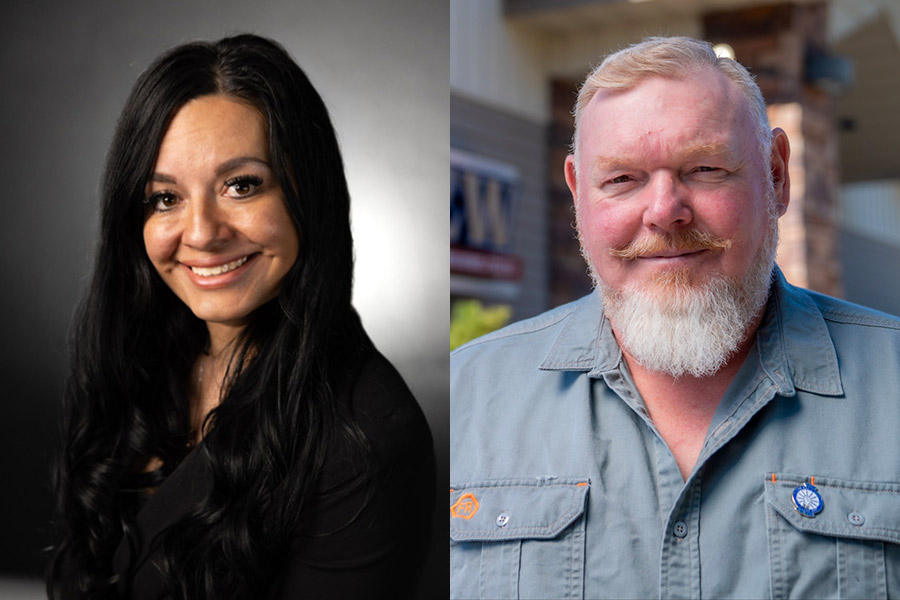
POCATELLO – A former representative and a first-time candidate are competing to represent the Gate City in the Idaho house.
Republican Jennifer Miles, who won the primary against incumbent Rep. Tanya Burgoyne, R-Pocatello, and Democrat Nate Roberts, who held the seat from 2022 to 2024, are running for District 29 seat B.
District 29 is a small district in terms of land area, encompassing the majority of Pocatello, but its representatives and senator represent over 53,260 residents.
EastIdahoNews.com sent the same eight questions to Miles and Roberts. Their responses, listed below, were required to be 250 words or less, and were not edited.
Election Day is May 19.
Tell us about yourself — include information about your family, career, education, volunteer work, and any prior experience in public office.
Miles: I am a lifelong Idahoan, wife, mother, small business owner, and licensed clinical social worker who believes in hard work, personal responsibility, and serving our community. I earned bachelor’s degrees in political science and social work at Idaho State University and a Master of Social Work from Boise State University.
For eight years of my career, I was a clinical director for an agency in Pocatello serving those who struggle with mental illness and substance abuse treatment which gave me experience working with individuals, families, and community organizations. Currently, I am a small business owner of two businesses in the Pocatello area. I have extensive experience in health care, business operations, and the challenges facing Idaho families.
Roberts: I am a working electrician, a union member, a labor leader, and a former Idaho State Representative. For 36 years, I’ve earned my living with my hands, working on jobsites across the country and experiencing the same challenges that working Idahoans face every day. My career began in industrial work before I found my calling through an electrical apprenticeship. That education gave me more than a trade. It gave me a career, financial independence, and a deep appreciation for the value of skilled labor. I’ve also worked as an educator, helping prepare the next generation of skilled tradespeople. I’ve served as president of the Pocatello Central Labor Council, advocating for workers, their families, and the dignity of honest work. In 2022, the people of Pocatello elected me to the Idaho House. During my term, I served on committees dealing with agriculture, commerce, employment, and healthcare. I supported the Idaho LAUNCH workforce-training program and helped defend Medicaid expansion against efforts to undermine it. I’ve spent my life learning that whether you’re on a jobsite or in the Statehouse, the best results come when people work together, respect one another, and take responsibility for getting the job done. I’m proud of my record of standing up for working families, and I’m ready to continue that work for the people of Pocatello.
Why are you seeking political office within your community? Briefly explain your political platform.
Roberts: I’m running because I feel that Idaho’s economy is rigged against working Idahoans. Because of this they are getting priced out, pushed aside, and flat-out ignored. Due to my life experience as a working family man, I know what it’s like to put in a hard day’s work only to watch your paycheck disappear into groceries, housing, utilities, and healthcare. Meanwhile, politicians in Boise keep on rigging the system, giving tax breaks to wealthy corporations, diverting public money into private school voucher programs, and making budget decisions that leave working families holding the bill. I believe government should work for the people who keep Idaho running, not just those who can afford lobbyists. My priorities are straightforward: eliminate Idaho’s grocery tax, make housing more affordable, restore fairness to our tax system, protect public education, defend Medicaid, and ensure workers receive fair wages and safe working conditions. I also believe that decisions affecting Pocatello should be made by the people of Pocatello, not dictated by politicians in Boise. When I served in the Legislature, I learned that one representative who is willing to speak up, ask tough questions, and vote independently can make a real difference. I’m running to finish the job I started. Idaho belongs to the people who build it, teach its children, care for its sick, and make our communities work. It’s about time our government started acting like it.
Miles: I grew up in Southeast Idaho, and this is home. I care deeply about the families, schools, businesses, and communities that make this part of Idaho special. I want the next generation to be able to build a life here, raise a family here, and find the education, work, healthcare, and opportunity they need to thrive.
I believe in practical solutions, fiscal responsibility, and putting people first. My priorities include strengthening public education, protecting parental rights, improving access to healthcare, supporting public safety, and making Idaho more affordable for Idaho families. I support limited government, protecting our constitutional freedoms, supporting small businesses, and preserving Idaho’s water, agriculture, and public lands. I am committed to responsible spending, accountability, and ensuring our communities have the resources they need to thrive. Above all, I believe in listening to the people and finding responsible, common-sense solutions which protect Idaho’s future.
With rising housing, fuel, and food costs facing Idahoans, can the state government help bring relief to Idaho citizens? Is it the role of the Idaho Legislature to help deal with these issues?
Miles: I am for working with the executive branch and supporting their efforts to improve affordability. I want to see Idahoans succeed and any efforts we can do within our duties as aligned by our state constitution I would support.
Roberts: Absolutely. If the Idaho Legislature can find millions of dollars for corporate tax breaks and private school vouchers, it can find ways to make life more affordable for working families. First, eliminate the grocery tax. Idaho families shouldn’t pay sales tax on the food they need to survive. And they shouldn’t have to wait until tax season to get some of that money back. Second, address housing affordability. Working people who grew up in Pocatello should be able to afford to live here. We need to incentivize construction of starter homes, give local governments the flexibility to address housing shortages, and restore a homeowner’s exemption that keeps pace with property values. Third, stop shifting costs onto families. When massive data centers receive tax breaks while demanding enormous amounts of electricity and infrastructure, everyday ratepayers shouldn’t be stuck with the bill. If a corporation creates the cost, that corporation should pay the cost. Finally, we need a fairer tax system that doesn’t ask working families to shoulder the same burden as the wealthiest Idahoans. Government can’t control every price, including global oil markets. But it absolutely controls taxation, infrastructure investment, and many of the policies that determine whether families can get ahead. Affordability isn’t somebody else’s problem. It’s our job.
How will you best represent the views of your constituents – even those with differing political views? How do partisan politics play into your role as an elected leader?
Roberts: I’ve been an electrician for 36 years. On a jobsite, you don’t get to choose your coworkers based on their political party. You work together, solve problems, and get the job done safely. That’s how I approach public service. When I served in the Legislature, I worked with Republicans and Democrats alike. I supported good legislation regardless of who sponsored it and opposed bad legislation regardless of which party supported it. My responsibility isn’t to a political party. It’s to the people of Pocatello. I also know that political disagreements often disappear when we start talking about real problems. Republican families pay the grocery tax. Democratic families pay the grocery tax. Independents struggle with housing costs, healthcare bills, and property taxes just like everyone else. We have far more in common than the political establishment wants us to believe. That doesn’t mean I’ll compromise my principles. I’ll stand up for workers, public education, personal freedom, and responsible government, even when doing so is unpopular. But I’ll always listen, explain my decisions, and treat constituents with respect.
People don’t have to agree with me to deserve representation. They just have to live in the district. That’s the job, and it’s one I take seriously.
Miles: I will open up my email, office line, social media, and focus on listening to all the constituents’ concerns and do my best to thoughtfully reply to each one. As a legislator I believe we represent all Idahoans not just the ones who agree with us. I am also looking forward to having open dialogue on social media with those who comment in good faith.
What parts of the Legislative budget could use more funding? Where are places in the budget where cuts could be made?
Miles: I want to work to ensure our state government fulfills its constitutional responsibilities while remaining fiscally responsible and accountable to the taxpayers. I will work on identifying areas where we can improve efficiencies and cut waste. I also want to make sure we are listening to our constitutions to ensure we are meeting our specific funding needs that help our state thrive.
Roberts: Idaho doesn’t have a shortage of needs. We have a shortage of honest priorities. Our public schools need adequate funding, our school buildings need repairs, and our teachers deserve better support. Medicaid and home- and community-based services need protection, particularly for seniors, people with disabilities, and rural families. We also need to invest in roads, bridges, affordable housing, childcare, and workforce training. These aren’t luxuries. They’re the foundations of a functioning economy. As an electrician, I’ve learned that ignoring maintenance doesn’t save money. It guarantees a more expensive repair down the road. Government works the same way. Where should we cut? Start by eliminating wasteful tax giveaways and spending programs that don’t deliver measurable benefits to Idahoans. I’d repeal the private school voucher tax-credit program, which directs taxpayer money toward private education without the accountability required of our public schools. I’d also reevaluate special-interest tax exemptions for large corporations, including data centers, and demand clear evidence that taxpayers are receiving a worthwhile return. We must also stop repeatedly cutting revenue through tax policies that overwhelmingly benefit the wealthiest Idahoans while leaving our communities to pick up the tab. Responsible budgeting isn’t about cutting everything. It’s about funding what matters, demanding accountability, and making sure working families get their money’s worth.
In 2026, Idaho suffered a historic drought, leaving eastern Idaho’s reservoirs at an all-time low. As a result, crop yields were significantly impacted. What specific strategy or legislation would you support to protect groundwater and surface water resources, and what is your timeline for measurable improvements?”
Roberts: Water is the lifeblood of Idaho agriculture, and when farmers don’t have enough water to grow their crops, the entire community pays the price. In my job as an electrician, I work on water infrastructure systems regularly and I know that maintaining infrastructure before it fails is always cheaper than fixing it afterward. We need to apply that same common sense to water management. I support expanding aquifer recharge, modernizing irrigation infrastructure, and investing in water conservation technology. These investments should be made in partnership with farmers, irrigation districts, and local water managers who understand our resources better than politicians in Boise. I also believe we need greater scrutiny of large industrial water users, particularly data and technology centers. Before we hand out tax breaks to billion-dollar corporations, Idahoans deserve to know how much water those companies will consume and how their operations will affect agriculture and surrounding communities. During the upcoming legislative sessions, I will work to expand funding for water conservation and recharge projects, establish stronger reporting requirements for large industrial water users, and require annual progress reports. If these programs are applied, within two to three years, we should be able to measure improvements in conservation capacity, recharge volumes, and infrastructure efficiency. We can’t make it rain, but we can make better decisions about the water we have.
Miles: I believe Sen. Kevin Cook, R-Idaho Falls, and other East Idaho legislators have done a good job with leading the way Idaho protects our groundwater and surface water resources. Water is a complex issue and as a new legislator, I would work closely with those who are experts in this area and support their effort.
One of the biggest issues on the November ballot is Proposition 1, a citizen-led ballot initiative that would repeal Idaho’s abortion ban. Do you support Proposition 1? Why or why not?
Miles: I believe some of the language in this bill is not in alignment with Idaho values, I want to work to help create a legislative solution on this issue.
Roberts: Yes, I support Proposition 1. I believe in personal freedom, and I don’t believe politicians in Boise have any business making private medical decisions for Idaho families. For fifty years, women had the freedom to make these deeply personal decisions in consultation with their families, their faith, and their doctors. I believe we need to restore that freedom. I’m not going to pretend that abortion is a simple issue. People have deeply held beliefs about it, and I respect that. But whatever your personal beliefs may be, we should be able to agree that a woman experiencing a pregnancy emergency deserves medical care without politicians standing between her and her doctor. Our current laws have created uncertainty for doctors and heartbreaking situations for Idaho families. That’s not the Idaho I want to live in. Proposition 1 restores important protections for reproductive healthcare and gives Idahoans the opportunity to make their voices heard. I’ve spent my life standing up for working people and their families. That means trusting them to make their own healthcare decisions. My position is simple: these decisions belong to women, their families, and their doctors, not the government.
Idaho House Joint Resolution 4 (HJR 4) is a constitutional amendment on the November ballot that would give the legislature exclusive authority to legalize or decriminalize marijuana, narcotics, and psychoactive substances. It would also ban citizen initiatives that would allow voters to directly have a say on the issue. Do you support the passage of HJR 4? Why or why not?
Roberts: No, I oppose HJR 4. The Idaho Constitution says that all political power is inherent in the people. I believe that means something. HJR 4 would take away Idahoans’ ability to use the citizen initiative process to change certain drug laws and give that power exclusively to the Legislature. Whether you support cannabis legalization or oppose it, this should concern you. The question isn’t just about cannabis. It’s about whether politicians in Boise should be allowed to take power away from the voters who elected them. I’ve served in the Idaho Legislature, and I can tell you that legislators don’t have a monopoly on good ideas or common sense. Idaho’s initiative process gives ordinary citizens a way to hold their government accountable when elected officials refuse to address an issue. That’s an important constitutional right, and I believe we should protect it. We can have serious disagreements about drug policy, public safety, and legalization without stripping voters of their voice. If the Legislature wants Idahoans to trust its decisions, it should earn that trust through transparency, accountability, and results. Government derives its authority from the people, not the other way around. I won’t support changing our Constitution to undermine that principle.
Miles: The voters have made it very clear they do not want recreational marijuana and have also made it clear they do not want their initiatives taken away, I will support the voters. As a representative I want the voters to know that I am listening to them and will support what they want.