



State prosecutors argue Luigi Mangione’s ‘different crimes’ mean double jeopardy doesn’t apply to him
Published at
Kara Scannell, Lauren del Valle and Nicki Brown, CNN
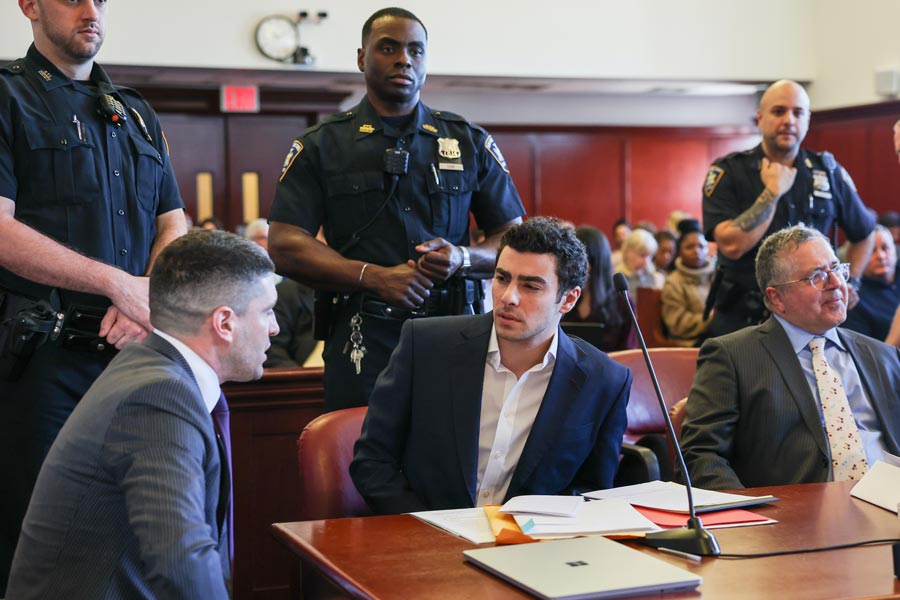
NEW YORK (CNN) — Luigi Mangione should go to trial in state court for fatally shooting United Healthcare’s CEO because murder “has nothing to do” with the federal stalking charges he pleaded guilty to in August, Manhattan prosecutors said in a court filing Friday.
“The stark differences in the definitions between these federal and state statutes thus demonstrate the different purposes of the two regimes,” wrote Joel Seidemann, the lead prosecutor for the Manhattan District Attorney’s office.
Mangione’s attorneys have asked New York State Judge Gregory Carro to dismiss the state murder and weapons charges, arguing under the state’s double jeopardy laws he can’t be prosecuted twice for the same crime. Mangione pleaded guilty to two federal stalking charges in August and admitted he traveled to New York “with the intent to shoot Brian Thompson.”
Seidemann argued murder and stalking are different crimes and double jeopardy wouldn’t apply. To bolster his argument, he cited arguments Mangione’s lawyers used to convince the federal judge to throw out federal murder and weapons charges, which took the death penalty off the table.
The federal murder charge is predicated on being carried out through a violent crime that must also be charged in the indictment. Mangione’s legal team successfully argued that at the time, the two underlying stalking charges in the federal indictment were not violent crimes.
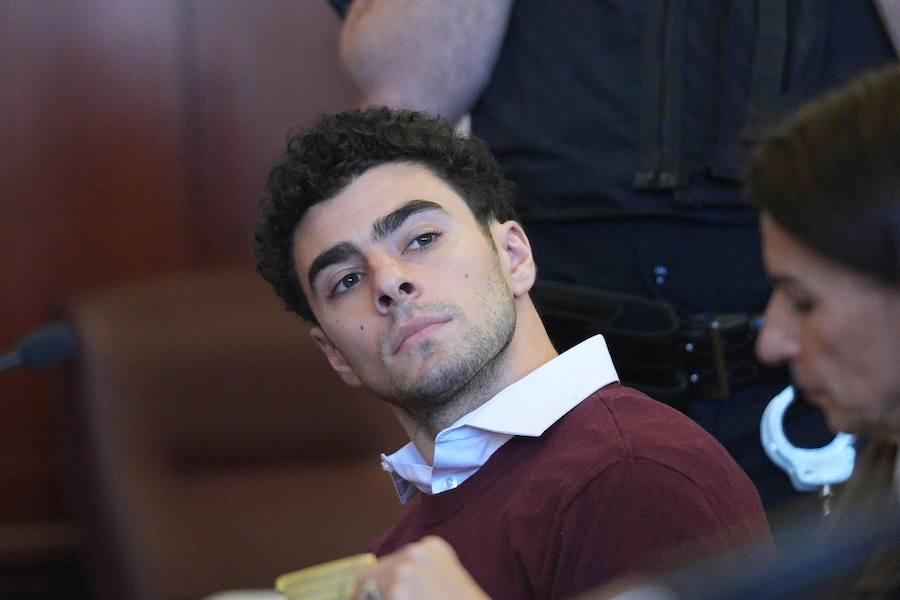
The DA’s office argues that the defense argument proves the state’s second-degree murder charge – a violent felony – is inherently different from his federal stalking conviction. Specifically, prosecutors argued that proving a defendant’s intent is necessary to support a state murder charge, but it is not required to prove federal stalking charges.
“In a nutshell, the essence of federal stalking or cyberstalking has nothing to do with murder, and the essence of state murder has nothing to do with stalking or cyberstalking: different harms, different evils, different purposes, different crimes,” Seidemann wrote. The state law, he said, “permits the continued prosecution of defendant’s state murder charge.”
The state weapons charges should also proceed, according to prosecutors, because U.S. District Judge Margaret Garnett had already tossed the firearms charge from Mangione’s federal indictment before he pleaded guilty, so he was never “separately prosecuted” for that conduct.
The district attorney’s office asked that, if Carro does dismiss any charges, he does so without prejudice so state prosecutors can refile an indictment against Mangione if his federal conviction is overturned or otherwise undone on appeal after his December sentencing.
Prosecutors also rejected Mangione’s suggestion that he couldn’t put forward a defense to the state case – potentially that he suffered from an extreme emotional disturbance at the time of the shooting – because it could be used against him in the federal trial, where a psychological defense is not allowed.
“The evidence in this case incontrovertibly establishes that this was a long-premeditated and well-choreographed killing,” prosecutors wrote.
Mangione confessed to the killing
Mangione, 28, was arrested in a McDonald’s in Altoona, Pennsylvania, in December 2024, ending a dayslong manhunt after Thompson was shot and killed in midtown Manhattan.
Authorities said they found key evidence inside Mangione’s backpack that linked him to the shooting, including a 3D-printed gun that matched shell casings from the crime scene and a notebook with writings expressing animosity toward the healthcare industry and an intent to commit an attack.
WATCH | Newly unsealed footage shows Luigi Mangione’s arrest
Friday’s filing said prosecutors with the DA’s office traveled to Altoona the same day Mangione was arrested. Over five days, prosecutors presented evidence and called 25 witnesses to a New York grand jury to obtain an indictment.
The case has attracted national attention and put a spotlight on some Americans’ frustrations with the healthcare system, as Mangione has seen an outpouring of support from devoted followers who sympathize with Mangione’s cause.
The potential double jeopardy argument permeated pretrial court hearings, with prosecutors suggesting the defense was using delay tactics to invoke double jeopardy.
Mangione’s lawyers repeatedly raised concerns about the dual prosecutions, arguing their client was being unfairly tried twice for the same crime. Mangione himself even mentioned the issue during an outburst at a state hearing in February: “Same trial twice. One plus one equals two. Double jeopardy by any common sense definition,” he said as he was led out of the courtroom in handcuffs.
State prosecutors were adamant their trial start first because if it followed the federal trial, their case could be thrown out on double jeopardy grounds. The courts ultimately settled on a September start date for the state trial, followed by the federal trial in January 2027.
But in August, Mangione confessed to the killing and pleaded guilty to two stalking charges, staving off the federal trial. His legal team immediately filed a motion to toss out much of the state’s case on double jeopardy grounds, prompting the judge to effectively postpone the state trial while the parties litigate the issues.