



DNA evidence testing to move forward for former Utah death-row inmate Douglas Carter
Published at
Sorina Trauntvein, ABC4
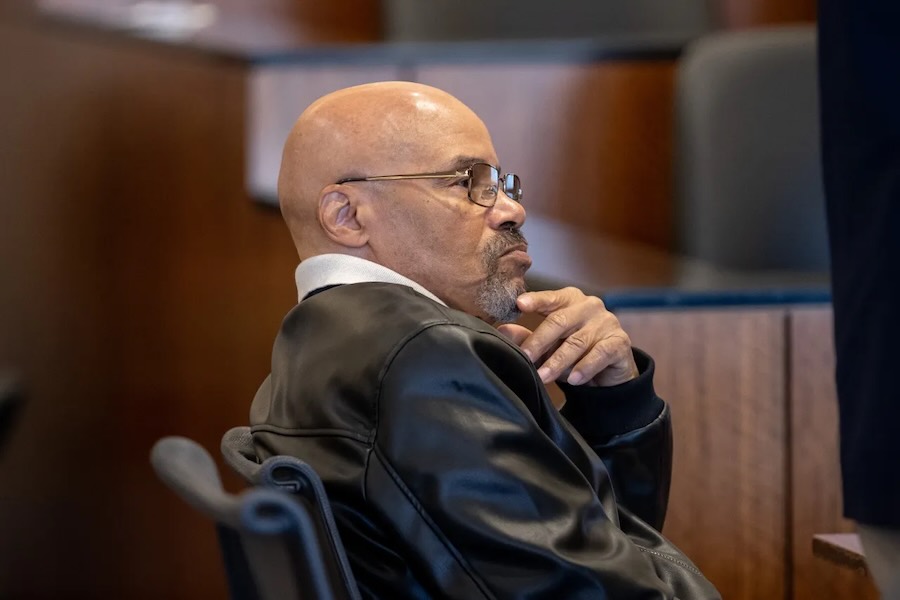
PROVO, Utah (ABC4) — DNA testing will soon be moving forward for the man getting a retrial after decades on Utah’s death row.
Now 71-year-old Douglas Stewart Carter was once convicted and placed on death row for the 1985 aggravated murder of Eva Olesen. After nearly 40 years on death row, that conviction was overturned, and his sentence was vacated.
Facing a retrial, Carter is out of jail, and the death penalty has been withdrawn.
During Tuesday’s hearing, attorneys discussed motions to retest DNA evidence that previously excluded Carter. A court order is required to move forward with testing, whether by the prosecution or an independent third party hired by the defense.
The prosecution explained that it was looking at two labs for DNA testing and decided to go with Bode Technology, which it found to be better than the other.
The defense, on the other hand, says advisors told them Bode is “good, but not the best,” and they want to use Resolve Forensics to test the evidence. Additionally, Resolve is located in Utah, while Bode is located in Virginia.
“Our position is that we want to use the best, which is also the closest,” said defense attorney Neal Hamilton.
After some discussion with Judge Derek Pullan, the attorneys agreed that the State will do testing, and the defense will have Resolve do independent testing afterward. The defense offered to share the results of its test with the State Bureau of Investigation.
Blood evidence from the alleyway and knife handle will be subject to these tests. Judge Pullan ordered that no consumptive testing (which would destroy or “use up” evidence) could be performed without a separate court order.
All attorneys agreed with this, and the defense was asked to draft an order for the judge to review.
Briefings in the case are expected to be completed on Dec. 11, which is Judge Pullan’s last day before retirement. The defense and prosecution had hoped to set an earlier date, but that is the soonest that will work.
Following the discussion of motions, the prosecution asked the judge to “severely limit” media access to future hearings after a media outlet (not ABC4) in the courtroom broadcast a conversation between attorneys before court was in session.
The judge called this “gravely concerning” and temporarily removed that outlet’s permission to carry proceedings until it reviews and certifies that it will abide by the decorum order.
Who is Douglas Carter?
In February 1985, 57-year-old Eva Olesen was found dead inside her home after being tied up, stabbed ten times, and shot. In June, then-29-year-old Douglas Carter was arrested and charged with Olesen’s murder. After his December trial, Carter was sentenced to death by lethal injection
In 1989, the Utah Supreme Court overturned Carter’s death sentence, determining that the jury had been erroneously instructed during the sentencing process. Carter re-appeared before the court in 1992 for his resentencing, where he was again sentenced to death.
Carter was set to be executed on June 30, 1995; however, over several decades and numerous appeals, the date was delayed again and again. Ultimately, in 2025, the Utah Supreme Court ruled that there were various “constitutional violations” in Carter’s trial and sentencing.
Several witnesses had recanted their testimony since the 1985 trial, claiming that the Provo City Police Department had interfered. Olesen was the aunt of the Provo Police Chief in 1985.
Based on those allegations, Carter was granted a new trial.
In June 2025, the Utah County Attorney’s Office requested a DNA sample from Carter, who objected to the motion. The court denied the request, reasoning that the state had not shown that an unidentified DNA profile had been discovered at the crime scene or any evidence at the crime scene.
At that point, the state began to retest various items of evidence for DNA, which reportedly showed the presence of unknown male DNA profiles. The trial court compelled Carter to provide the state with a DNA sample.
Based on those results, which excluded Carter as a possible contributor, the prosecution withdrew the notice of intent to seek the death penalty.
An arrest and/or charges are allegations only. All arrested persons are presumed innocent unless and until proven guilty beyond a reasonable doubt.