



Georgia mom Lacy Jo Lee Boles found guilty of murder for shooting husband
Published at
Trey Baylor, Courtroom Insider
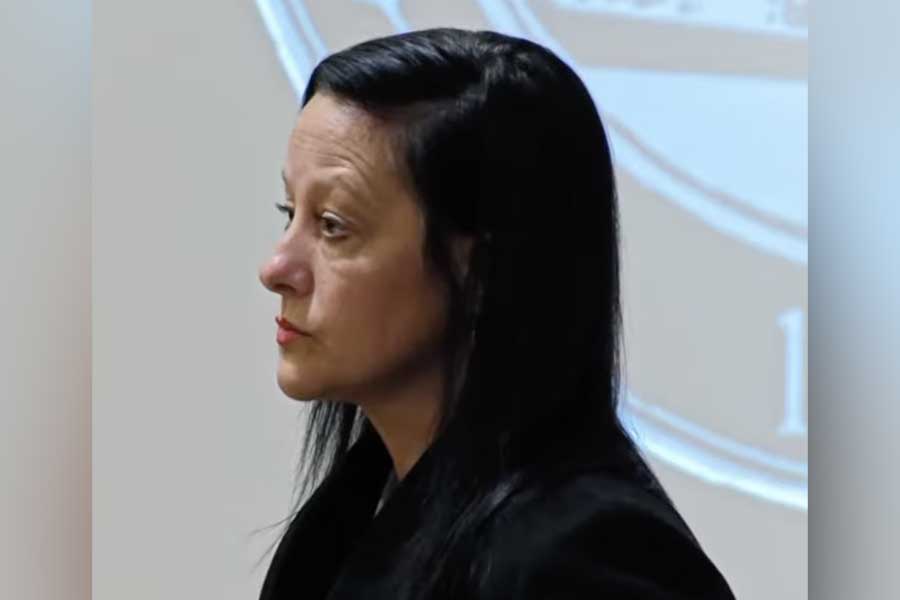
DALLAS, Ga. (Courtroom Insider) — After more than a week of trial, a Georgia woman has been convicted of murder for killing her husband in December 2019.
Lacy Jo Lee Boles, 43, was found guilty Tuesday of felony murder and aggravated assault for fatally shooting Daniel Akers after he arrived home in the early hours of Dec. 22, 2019. Jurors determined she was not guilty of two other charges: malice murder and involuntary manslaughter.
During the trial, prosecutors presented evidence they said showed Boles and Akers had a tumultuous marriage and had been fighting via text message in the hours leading up to the shooting. They said Boles plotted a confrontation with her husband prior to his return, shot him and then staged the room to look like Akers had died by suicide.
Boles and her attorneys, however, argued that Akers was depressed and shot himself that night, despite Boles’ attempt to get the gun away from him.
Jurors deliberated for about four and a half hours before returning with the two guilty verdicts.
The crime
The investigation into Akers’ death began at 12:22 a.m. on Dec. 22, 2019, when Boles called 911 to report that Akers had shot himself in their Dallas, Georgia, house. In an audio recording of the call, Boles is hysterical as she tells the dispatcher that Akers is not breathing.
When the paramedics arrived, they found Akers deceased with a gunshot wound to the face.
Paulding County sheriff’s detectives soon noticed inconsistencies in Boles’ account of the events related to the shooting and the evidence they found at thee scene. Akers’ body was sent to the Georgia Bureau of Investigation Crime Lab in Atlanta where an autopsy was performed; results showed Akers’ gunshot wound was not self-inflicted and his death was ruled a homicide.
Boles was arrested for investigation of murder on May 29, 2020, and later charged. She was released from jail a week later on a $100,000 bond, sparking a petition that called for her bond to be revoked.
The mistrial
Due to the COVID-19 pandemic and other delays, it took nearly seven years to get Boles’ case to trial. The trial was originally scheduled for June of this year, but an issue with some members of the jury pool led to the trial being postponed.
Jurors are typically advised not to do any of their own research on whatever case they are assigned to; they are also advised not to discuss the case with anyone, including the other jurors. Despite that, it came to light that a potential juror had used ChatGPT to research the case, and then allegedly discussed their findings with other potential jurors.
Judge Dean C. Bucci held the potential juror in contempt of court, and Boles’ case had to be postponed to get a new set of jurors.
The new trial
The murder trial started for the second time with jury selection on Nov. 9; opening statements began two days later, on Nov. 11.
The attorneys’ two competing theories of murder and suicide resulted in heavy debate surrounding how the firearm would have had to be held in either scenario to create Akers’ fatal wound.
On Monday, defense attorney Brian Steel called several witnesses who criticized the way sheriff’s investigators collected evidence at the scene. They pointed out that the investigators had not even photographed the clothes that Boles was wearing at the time of Akers’ death, which they said may have had valuable blood pattern evidence.
One witness went as far as to say that the investigators in the case failed to perform even “basic” investigative procedures correctly.
In his closing argument on Tuesday morning, Steel called jurors’ attention to the autopsy findings, which his witnesses had testified were flawed.
The jury was sent to deliberate shortly after 3 p.m. Tuesday. Judge Bucci was about to call them back into the courtroom and send them home for the night when jurors said they had reached a verdict.
Akers’ daughter speaks
Following the verdict, Bucci allowed Akers’ daughter to make a statement to the court.
Lindsay Akers told the court that since her father’s death, both she and her younger sister have been diagnosed with depression and post-traumatic stress disorder.
“Every time I pass the street they used to live off, I feel a pain in my chest,” Lindsay Akers said. “Not a single day goes by that I don’t miss my dad. I want to call him and tell him about work. I want to hear the new songs he’d think I’d like. It’s been seven years, and I still can’t believe he’s not here to watch how much I have grown.
“If he were here right now, he would be so proud of me.”
Boles’ sentencing has been scheduled for next week.