



Increasing the odds, EIRMC showcases advanced robotic technology aimed at treating lung cancer
Published at | Updated at
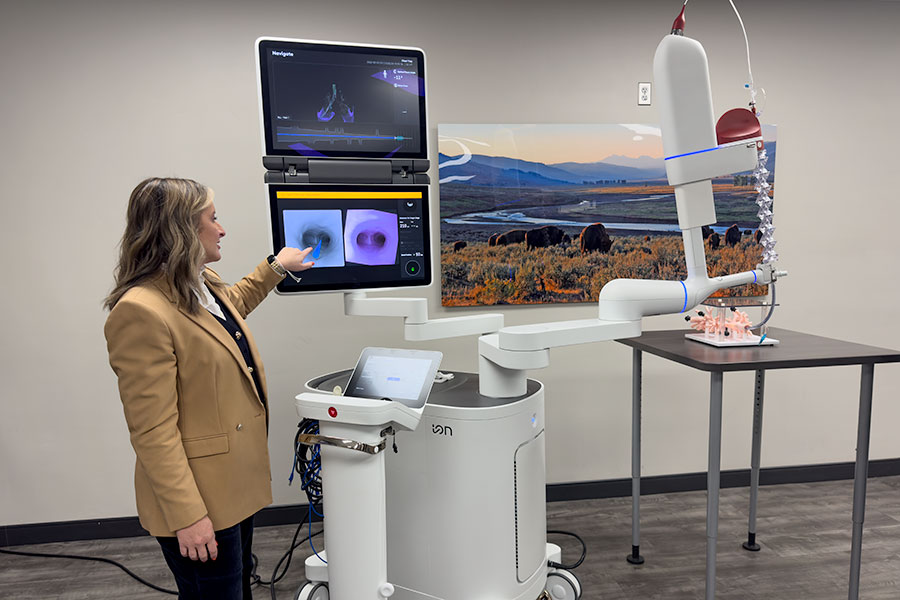
IDAHO FALLS — With November marked as Lung Cancer Awareness Month, Eastern Idaho Regional Medical Center invited community members to see the hospital’s advanced robotic bronchoscopy system on Tuesday. The system is designed to improve survival rates for those diagnosed with cancer.
According to the American Lung Association, lung cancer is one of the leading causes of cancer deaths in the United States, with 229,410 people diagnosed in 2026 alone.
The national average for individuals diagnosed who are still alive after five years was 31%.
Dr. Melissa Cheers, Cardiothoracic Surgeon at EIRMC, told EastIdahoNews.com that the reason this specific cancer has a high mortality rate is due to when it get’s detected, which is often in the later stages.
This is where EIRMC’s advanced robotic bronchoscopy system is working to improve those odds.
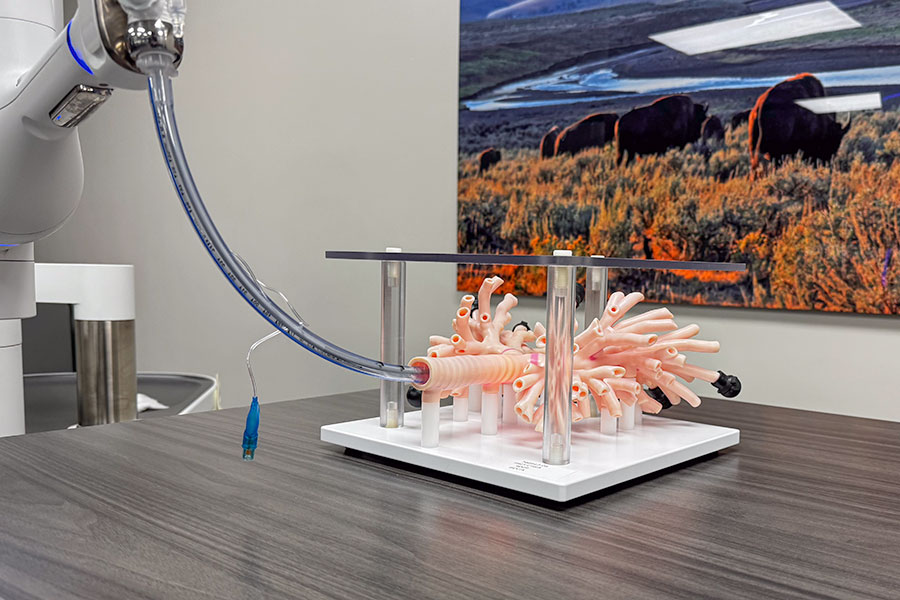
Cheers said that before, physicians had to wait until lung nodules were big enough to biopsy or do a percutaneous biopsy.
This system uses data from a CT scan to build a map of the lungs and help navigate to the suspicious areas. She said the machine allows them to navigate deep into the lungs and biopsy suspicious nodules as small as six millimeters.
“Lung cancer patients, lung nodule patients, had to go as far as Salt Lake City for detection and treatment,” Cheers said. “We are now offering this here at EIRMC so that we can give you a diagnosis and treat you, hopefully within a six-week window. Overall, significantly improving your outcome and your survival.”
While EIRMC has had the machine for about a year, Cheers said the technology has been around for the past five years.
Cheers recommended that community members who want to schedule a CT scan consult their primary care physician or come to the EIRMC.
The current national guidelines for those who should be screened are: those who are between the ages of 50 and 80 years of age, have a 20 pack-year history of smoking, and are currently smoking or have quit within the past 15 years.
“It’s a simple CT scan. Knowledge is power. Early detection has a significant survival benefit,” Cheers said.