



Keep growing this winter by propogating houseplants
Published at
As fall fades into colder weather and snow, houseplants can be another branch of your horticulture tree to keep you growing through the winter. Propagation is the practice of growing a new plant from plants you already have.
Depending on the plant, you can start with a piece of stem, a leaf or a small plantlet. With a spider plant, you can pot up a pup as soon as it starts to show roots. With pothos, you can turn one long vine into several cuttings.
Potting up a spider plant pup
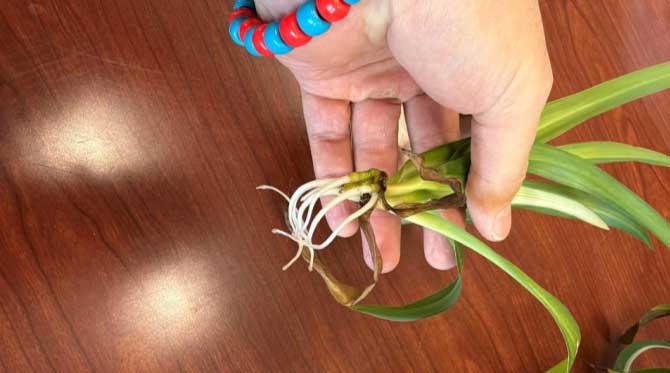
Turn the pups over and look for short, white roots at the base of the leaves.
Once you find one that has roots, use clean scissors or snips to cut the thin stem, called a runner, that connects the pup to the parent plant. Runners are specialized stems that grow outward from the parent plant and can form a new plant at one of the nodes.
After you snip off the pup, you can remove the runner if it is bare by cutting it where it meets the parent plant. If smaller pups are still attached, leave the runner in place so they have time to develop roots.
Choose a small pot with drainage holes and enough room for the pup’s roots. Cover the roots with houseplant or indoor potting mix, keeping the base of the leaves at the surface. Water in the mix to settle the roots and let the excess drain. You can also root spider plant pups in water by submerging the roots in water and keeping the leaves above the waterline before potting them up.
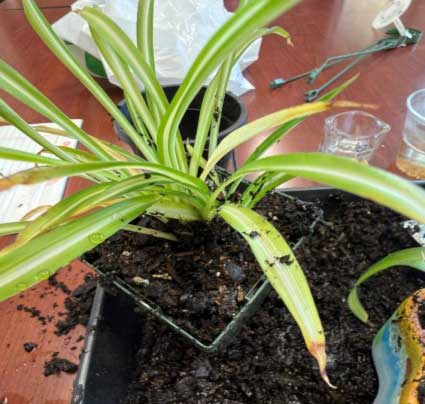
Established spider plants grow and produce pups well in a snug pot (they like being somewhat root-bound). Once the roots crowd the container, move the plant up one pot size. Boston ferns and strawberry geraniums also produce runners and can be propagated from them.
Taking and rooting pothos stem cuttings
Look along the vine for the spots where leaves join the stem. Each spot is called a node. You may see a small brown nub there where a root will begin to form if it comes in contact with water or moist soil.
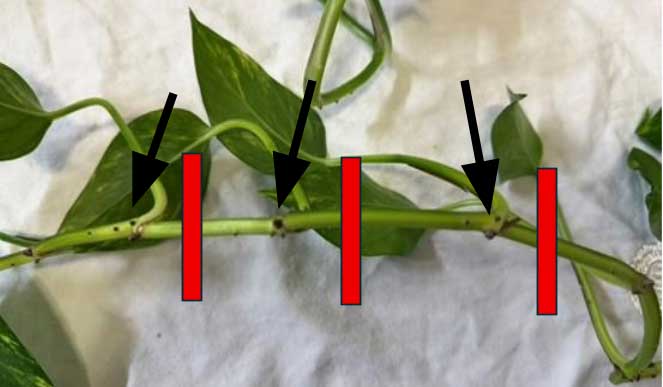
Divide the vine into sections with one or two nodes each. Keep track of which end was closest to the original pot by cutting it at a slight angle and cutting the other end in a straight line. For two-node sections, remove the lower leaf so the bare node can sit below the waterline and leave the upper leaf in place.
Place the cuttings in a clear jar or glass with enough water to cover the rooting node. Keep the leaves above the waterline. Change the water once or twice a week to keep it fresh and remove any cuttings that become soft or slimy.
Once the roots grow to about an inch, you can plant the cuttings in potting mix. If several cuttings share a jar, potting them up at this stage also helps keep the roots from tangling. Water-rooted cuttings may show signs of stress as they adjust to the potting mix.
Keep the newly potted spider plant pups and the rooting pothos cuttings in bright, indirect light. Once you move the pothos into a pot, keep the mix evenly moist while the cutting settles in.
The next time you trim a pothos vine or spot a spider plant pup with roots, give it a place to grow. It is a simple way to keep growing your horticulture tree through the winter, and you may end up with an extra plant to share or give to a loved one during the holidays!