



Sandhill cranes are gathering around Camas National Wildlife Refuge
Published at | Updated at
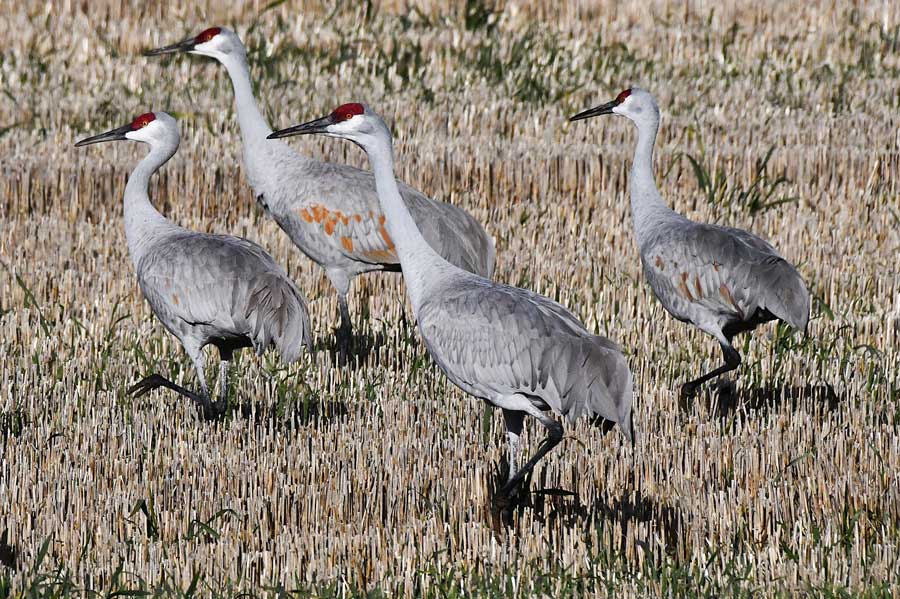
HAMMER — As we were coming back from hunting rocks on Tuesday afternoon, a flock of sandhill cranes was leaving the ponds of Camas National Wildlife Refuge. They were crossing the freeway, heading east to feed on the stubble fields for their evening meal.
I had gone out on Monday morning to watch the cranes and geese as they left
Sandhole Lake to go out for breakfast. Most of them flew only about a mile to a stubble field near the southeast corner of the refuge. Once they got full of grain, about 11 a.m., they headed back to the refuge for a drink and to rest until it was time for their evening meal.
The nice weather we have been having this fall has allowed farmers to disc or plow most of the wheat and barley fields under where many of the cranes feed during their migration. We also have not seen any of the large flocks that nest in Canada migrate through Idaho.
Usually, an early snowstorm in Canada will bring down large flocks of not only cranes, but also snow geese, tundra and trumpeter swans, and ducks. But this year, Canada has also not had an early snowstorm.
However, the rain and snow that began Saturday and is predicted to last through Wednesday may change everything.
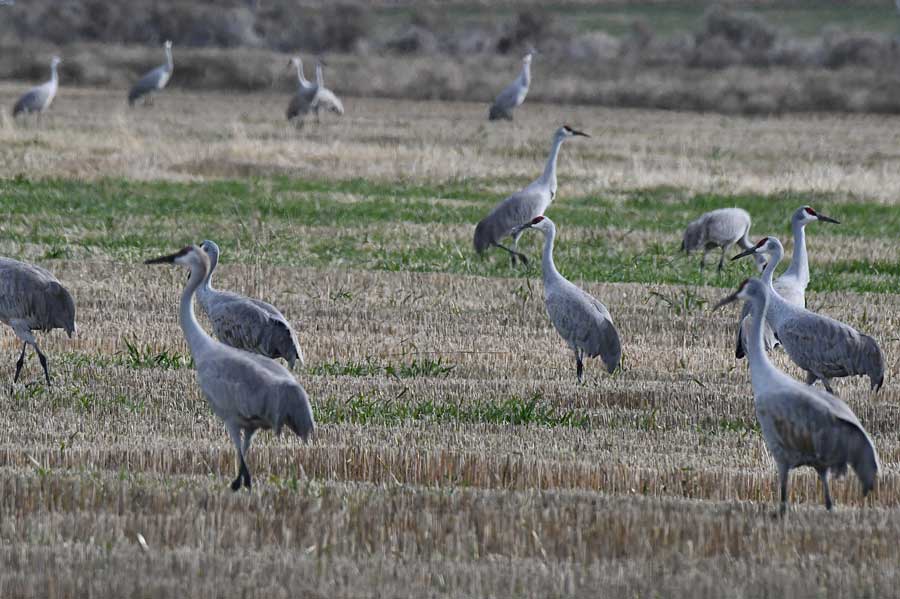
While migrating, they have to find food each morning to replace the energy they used the previous day, then find an air updraft to reach almost a mile in the air, where they can catch an air current taking them toward their wintering grounds.
The cranes migrating through Idaho use the Pacific Flyway. They nest in Idaho, Montana, Oregon, Washington, or the west coast of Canada, and they are “short” migrators. They usually spend their winters in New Mexico or western Mexico.
Even these short migrations of 1,000 to 1,500 miles can consume up to 20% of their energy reserves.
Cranes learn their migration route by traveling in family groups. If they can get a good tailwind, they can glide up to 70 mph; if they can’t, their top speed will be 50 mph and will burn a lot more of their fat reserves.
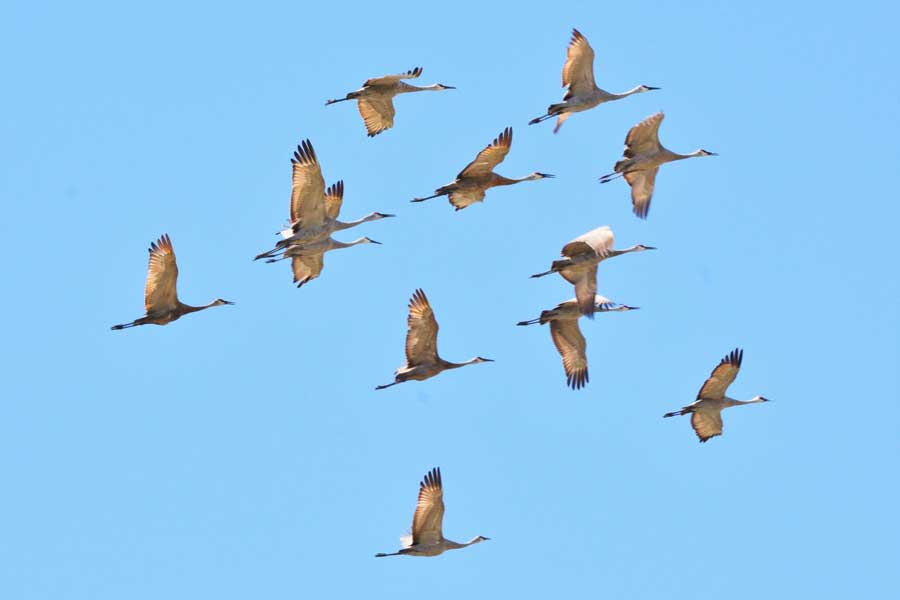
One of my favorite things to do during the fall is to go outside in the evenings and listen to flocks of large birds as they migrate over my home. The geese and swans will migrate during the night, but the cranes have to migrate during the day. By the time it gets dark, cranes have to find a suitable stopping place where they can sleep in water that is shallow, but deep enough to protect them from foxes and coyotes — their two most common enemies.
This fall I have only heard one flock of cranes and one flock of tundra swans
flying over. If this predicted storm materializes, and snow covers the agricultural fields in Canada, we may finally see large flocks stopping in southeastern Idaho — or at least flying over.
Next week could be an exciting time to observe these migrations.
Have a good and safe week; also look out for the migrating big game animals, as they will be crossing the roads.

Living the Wildlife is brought to you by Yellowstone Teton Territory. Experience 7,500 square miles of untamed wilderness in Eastern Idaho's Yellowstone Teton Territory. Where majestic peaks meet endless adventure, your perfect outdoor escape is waiting. Start planning at YellowstoneTeton.com.