



Utah lawmakers introduce bills expanding where high-level nuclear waste is allowed
Published at | Updated at
Alixel Cabrera, Utah News Dispatch
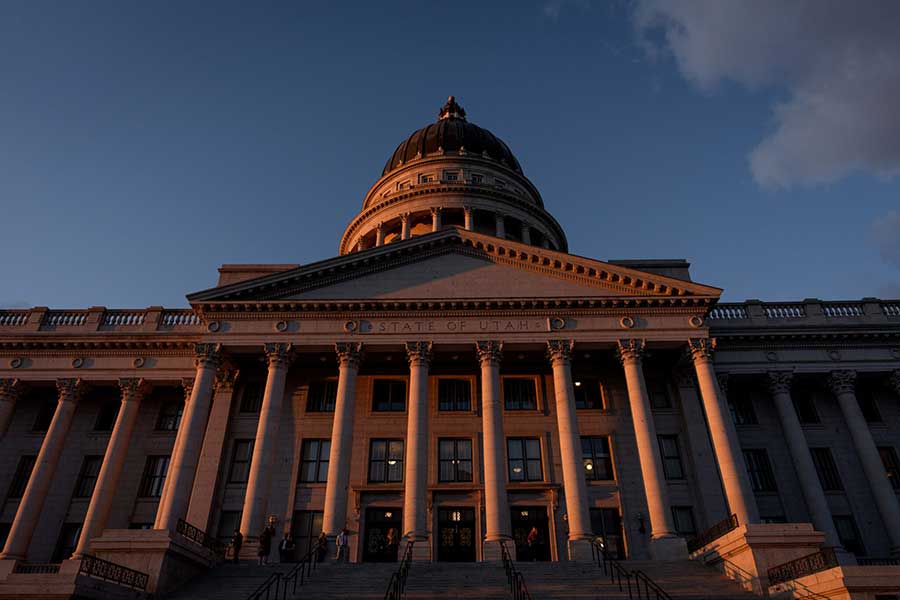
UTAH (Utah News Dispatch) — The U.S. Department of Energy hasn’t released its final decision on sites for “nuclear lifecycle innovation campuses,” but Utah, one of the finalists, is preparing its regulatory framework with a set of bills proposed for next legislative session.
Fountain Green Republican Sen. Derrin Owens is sponsoring a bill on regional nuclear lifecycle campuses. The draft isn’t publicly available yet, but Owens said it will lay out the state’s involvement in safety practices for the site proposed in Tooele County.
Utah currently has strict regulations on high-level spent nuclear fuel waste storage, but has made exceptions for test reactors in state facilities, like the one at the San Rafael Energy Lab. If the bill becomes law, state restrictions on high-level nuclear waste won’t apply to the designated campus zone.
“Before the U.S. Department of Energy can commit to Utah, state law needs to be adjusted and cleared, and limited exceptions for that type of handling of fuel needs to be allowed, or made legal in the state,” Owens told the Public Utilities, Energy and Technology Interim Committee on Wednesday.
Shipments of the material would also need to be allowed, Owens said. But that would need both federal and state legislation.
That exception may also be extended to commercial nuclear reactors under another bill sponsored by Richfield Republican Rep. Carl Albrecht. That draft would also update the high-level waste law in Utah, providing exceptions for nuclear power reactors located in the state and licensed by the Nuclear Regulatory Commission, including commercial plants, which currently aren’t allowed to store high-level waste on site.
Meanwhile, U.S. Energy Secretary Chris Wright acknowledged earlier this month that before a nuclear lifecycle campus could take shape, Congress would need to approve a new nuclear waste disposal site.
What would Utah’s campus allow
Owens’ bill would also list activities allowed within the nuclear innovation campus, which, he said, would include advanced nuclear reactors, nuclear fuel fabrication and enrichment, recycling and reprocessing of used nuclear fuel, storage and disposal of nuclear material, and medical and industrial isotope production, as well as research, manufacturing, workforce training, and the needed infrastructure to support all of those activities.
The campus impact could be comparable to 10 times that of Kennecott’s copper mine, “if you did some weird math,” Owens told the committee. “So we are approaching this strategically and carefully and slowly and trying to get it right.”
Utah leaders, including Gov. Spencer Cox, have made a big push to become one of the Department of Energy’s choices for the campuses, saying in a June statement the state’s nuclear efforts would strengthen national security and help secure energy independence for the country.
However, environmentalists from the nonprofit Heal Utah said in a news release in August that the proposal would position the state “to become a destination for not only testing of new nuclear reactors, but also to become the nation’s high-level radioactive waste dumping ground.”