



Iron chlorosis? Here’s what you need to know
Published at | Updated at
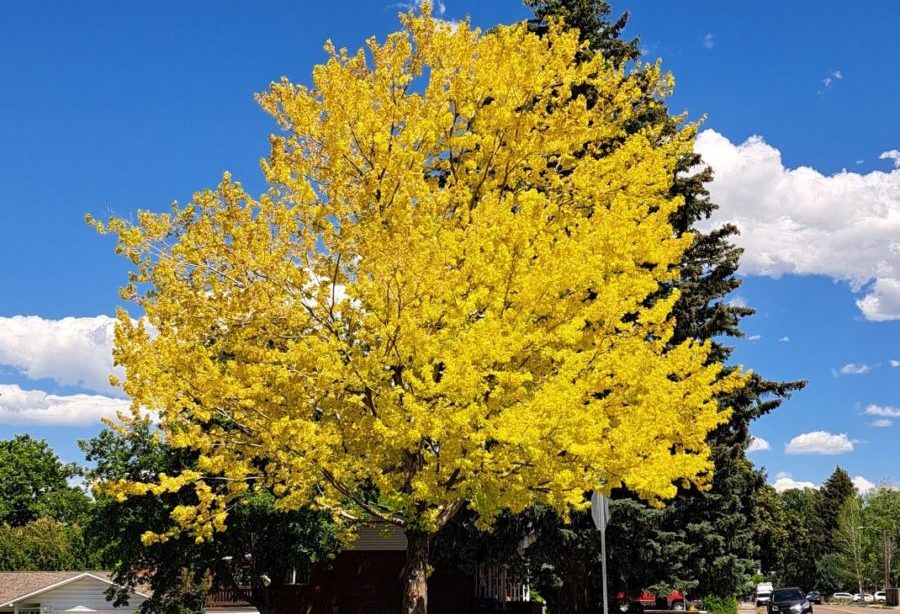
As you drive around the area and look at trees and shrubs, you will see several species of plants that look pale or yellow in the middle of the summer. For a few plants (such as the sunburst honeylocust) this is natural. However, for most plants this is an indication of a nutrient deficiency.
Chlorosis is a yellowing of normally-green leaves due to a lack of chlorophyll. The most common nutrient deficiency that causes yellowing in eastern Idaho is iron. Although iron is not in chlorophyll, it is involved in the synthesis of chlorophyll.
Symptoms
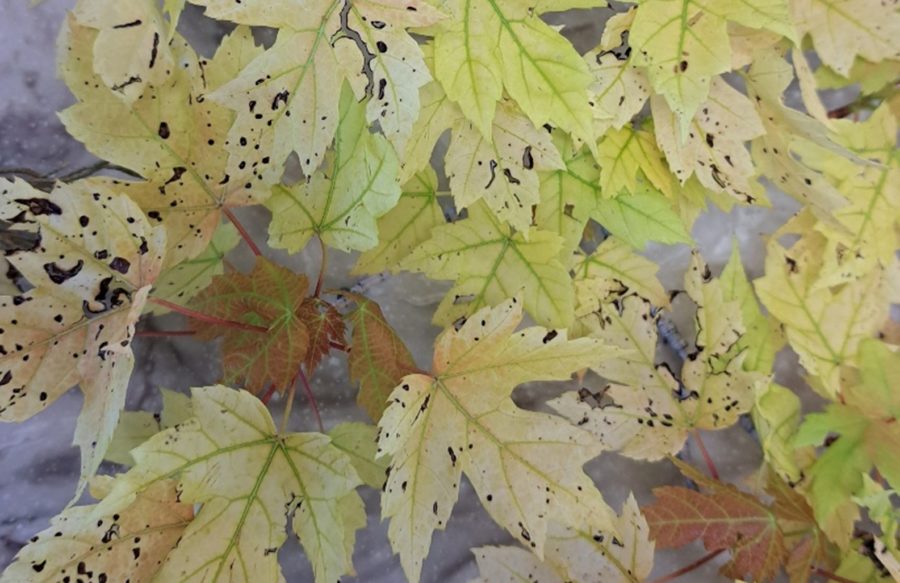
Iron chlorosis is quite easy to recognize. Newer leaves are affected first because iron is not mobile within the plant. The earlier leaves get enough iron, but as the summer progresses there is less available for the newer leaves. The veins of these affected leaves remain green. As the condition progresses, the leaves may turn nearly white and necrotic spots (dead spots) will show up.
Affected Plants
Certain plants have less ability to extract iron from the soil. The most common plants that show iron chlorosis symptoms to differing degrees include:
- Silver maple
- Autumn Blaze maple
- Amur maple
- Sugar maple
- Tatarian maple
- Flowering plum
- European white birch
- Peach
- Raspberry
- Apple
- Cherry
- Rose
- Mountain ash
- Grape
- Boxwood
- Kentucky bluegrass
How to treat
Iron chlorosis is most pronounced where the soil pH is above 7.0—most of eastern Idaho. When the reason for high pH is because of calcium, as is the case in eastern Idaho, it is very difficult to lower the soil pH. Even adding elemental sulfur to the soils only results in a temporary pH reduction. In addition, well water is also going to have a high pH. So, what can be done?
Irrigate less often. Frequent, shallow irrigation, particularly in the spring, exacerbates iron deficiency symptoms. Lawns should never be irrigated more than twice a week unless you have very sandy soil.
Each time you irrigate, apply enough to water the root zone. This depends on your soil texture. Lawns should get 1 – 1.5 inches of water each week. Apply that with one or two irrigations for heavy soils and three irrigations for sandy soils. Trees and shrubs should be irrigated up to three inches every one to four weeks, depending on the plant.
Add iron to the soil. In these cases, the form of iron the iron product will have great effect. Iron sulfate is a short-lived solution as the soil chemistry will quickly tie up the iron. A chelated iron will last longer in the available form. There are several chelation formulations. The one that works best in Intermountain West soils is EDDHA.
Remember, any condition that weakens a plant will make it more vulnerable to other diseases and insects.
The best way to reduce iron chlorosis problems is to select plants that do well in our soils. Otherwise, be prepared to treat your plants every year.