



‘Not guilty’: Ex-Caldwell police sergeant acquitted of bribery, sexual abuse charges
Published at | Updated at
Alex Brizee, Idaho Statesman
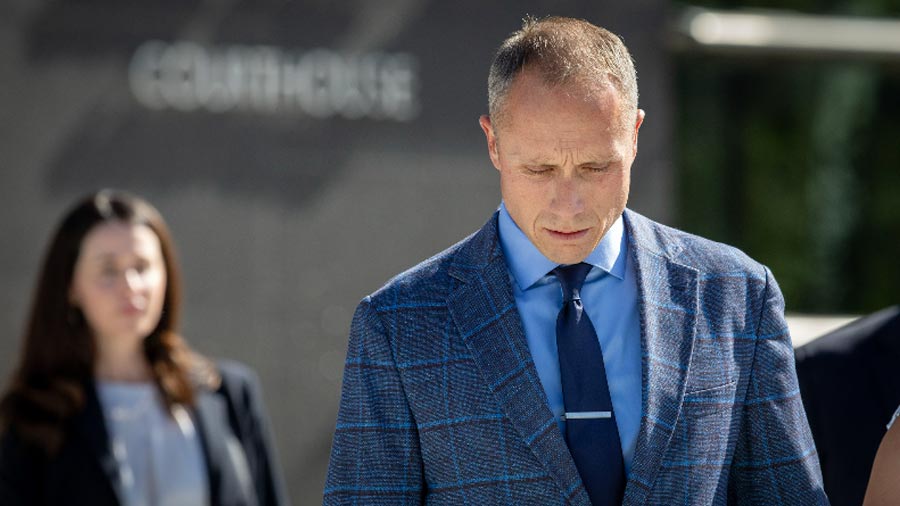
CALDWELL (Idaho Statesman) — It took two hours of deliberations for a jury to decide former Caldwell Police Sgt. Ryan Bendawald was not guilty of all five felony counts against him, concluding Thursday that the federal prosecutors didn’t prove he sexually assaulted two women and collected, or attempted to collect, sexual favors from others.
Prosecutors for more than two weeks worked to convince the jurors that over the course of his law enforcement career, Bendawald, now 43, victimized vulnerable women who struggled with drug addictions by exploiting his position of power over them. Assistant U.S. Attorney Katherine Horwitz argued in her closing arguments that he chose women he thought “no one would believe.”
Meanwhile, Bendawald’s attorneys successfully worked to discredit their testimonies, arguing that the prosecution didn’t successfully prove their case “beyond a reasonable doubt.”
“If you are left with any doubt at all, that means they did not reach their burden,” Debra Groberg, one of his defense attorneys, said in court Thursday morning. “It is proof beyond a reasonable doubt. We do not convict people in our country if we’re unsure.”
Bendawald had a 13-year career with the Caldwell Police Department and rose through the ranks until he resigned in November 2021. He was most known for his work handling gang and drug crimes.
RELATED | Ex-Caldwell police sergeant is accused of abusing power for sex favors. What to know
Groberg argued that he was likely one of the “most effective” gang enforcement officers in the area, and he was targeted by the women, some of whom had ties to gangs.
“His work undoubtedly made Caldwell a safer place,” she said.
As Chief U.S. District Judge David Nye’s clerk read off each not guilty verdict, Bendawald, along with his wife and daughter, began to cry, and as the last count was read — and he was found not guilty of all five charges — Bendawald and Groberg embraced in a tight hug.
Other friends and family members in the courtroom exhaled, and the U.S. Marshals left the room after it was clear they wouldn’t be needed.
Bendawald maintained his innocence as the FBI investigated allegations against him and former Caldwell Lt. Joey Hoadley, who faced allegations of misconduct. Bendawald was charged by the U.S. Attorney’s Office in October 2023 and pleaded not guilty to all of the counts against him.
“He is not guilty as to every single charge in the indictment,” Groberg said at the conclusion of her closing arguments. “He is not guilty, not guilty, not guilty, not guilty, not guilty.”
Bendawald was initially accused of victimizing seven women, but only faced five felony charges at trial: three counts of federal program bribery and two counts of deprivation of civil rights under color of law involving aggravated and attempted sexual abuse, according to the indictment.
The program bribery charges stem from the allegations Bendawald traded sex and sexual favors with women in exchange for letting charges go, according to his indictment. Prosecutors said the women could have faced thousands of dollars in fines if they were convicted of the crimes Bendawald initially stopped them for.
Two of the bribery charges and one misdemeanor count of deprivation of rights under the color of law were dismissed at the prosecution’s request over concerns about the victims’ health and welfare.
RELATED | Ex-police sergeant denies in Idaho courtroom that he used his role to victimize women
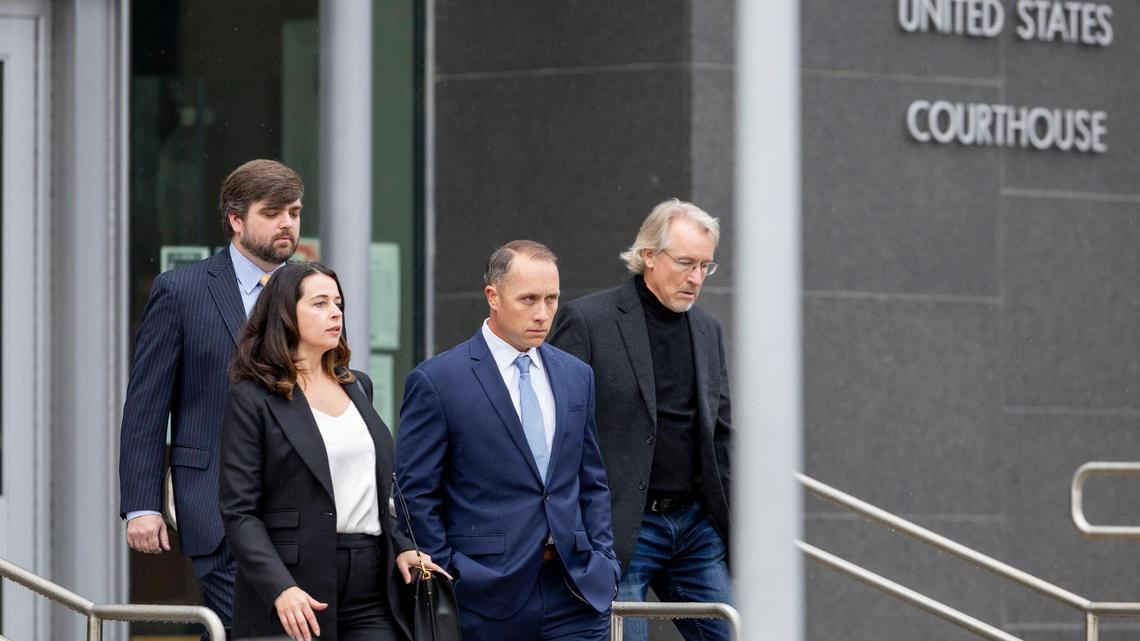
Prosecution had tunnel vision on Bendawald, Groberg says
Groberg in her closing arguments poked at the credibility of the women’s stories, which prosecutors used as the foundation for their charges.
She argued that some women knew each other, an indication that they were colluding; that they were untrustworthy because of their criminal histories; and that they had ties to gangs and inconsistent testimonies. She also said the women received benefits for coming forward, like lesser charges or cases being dropped.
One of the women, who Groberg accused of colluding with another, pushed back on the implication that the sexual relationship she had with the other woman had anything to do with their accusations against Bendawald. She said in court that their relationship was her personal life and had “nothing” to do with the case.
She was “appalled” by Bendawald’s attempt to solicit a sexual favor from her, she said, adding that it was difficult to be in court and testify about the case.
“I’ve grown up dealing with sexual abuse,” she said. “So it’s just kind of nerve-racking, just being around more predators, I guess.”
But Groberg most heavily focused on the first count against Bendawald, which accused him of pulling over a woman at night in a remote area in July 2017. Prosecutors alleged that he pinned her against the car, then groped and touched her breasts and genitals over her clothes before penetrating her with his fingers.
Groberg said none of the pieces of the woman’s story fit her client. While the officer identified himself as Bendawald at the traffic stop, the woman never physically identified Bendawald as the suspect, Groberg said, adding that the description of the assailant didn’t match.
Witnesses are typically asked to identify the suspect in court, but the prosecution skipped that process for the woman tied to the July 2017 allegation, allowing the defense to cast doubt on whether she could even identify Bendawald as the man who assaulted her.
The woman said in court that Bendawald was driving an unmarked vehicle, but testimony from fellow officers at the time stated he was driving a typical patrol car, Groberg said. The woman said he was wearing plain clothes and a badge around his neck, but he was assigned a uniform at that time, Groberg said. She also never noted the assailant’s tattoos, despite Bendawald having “incredibly noticeable” tattoos down the length of his forearms, Groberg added.
RELATED | Ex-Caldwell sergeant who allegedly traded police favors for sex indicted on 7 felonies
Horwitz said in response that investigators didn’t go into detail about Bendawald’s physical description because she’d already identified him, adding that the type of car or clothing the assailant was wearing wasn’t the woman’s focus as she was being assaulted.
She “told you exactly who raped her, the defendant, Ryan Bendawald,” Horwitz said. “This wasn’t a guess or a mistake.”
Horwitz added that Bendawald told her exactly who he was because he wasn’t hiding, just like he didn’t hide from the other women he’d dealt with.
What bothered Groberg most about that incident, she said, is that if the assault did happen, then the woman didn’t get any justice. She said the prosecution had tunnel vision, with a focus on Bendawald as the suspect.
Even the judge voiced his own concerns over two of the charges.
On top of echoing Groberg in concerns about the July 2017 allegation, he also called one of the bribery counts troublesome, but didn’t elaborate on the specifics that concerned him. He added that he puts “a lot of confidence” in the jury system, but if it became necessary for him to rule on the decision, he’d do so after the jurors came back with a verdict. If Bendawald was found guilty on any of those counts, or if the jurors were unable to reach a decision, under state law, Nye could have acquitted him of the charges himself.
Once the verdict was read, Nye walked down from the bench and shook each one of the attorneys’ hands, then shook Bendawald’s.