



When should you look into getting hearing aids?
Published at
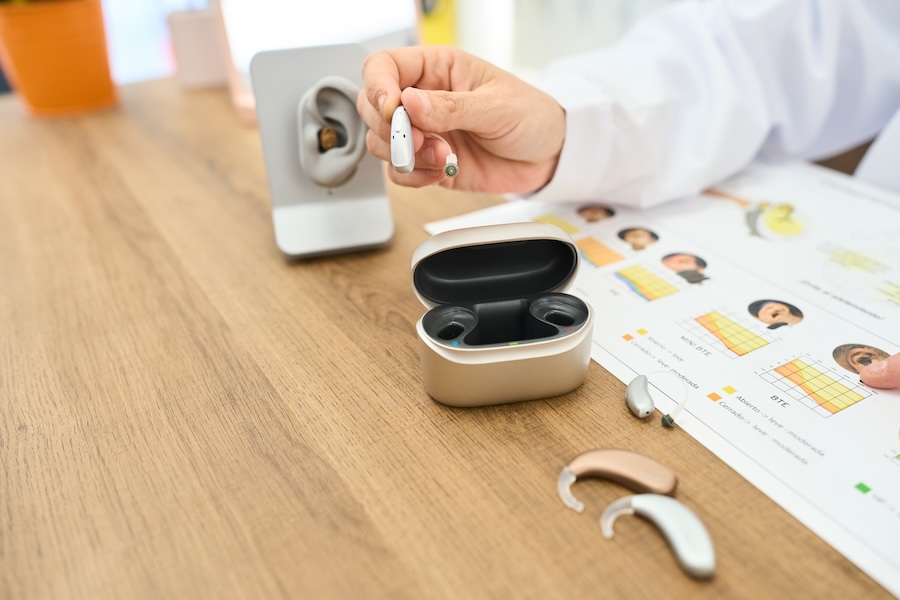
Have a medical-related question you've always wanted answered? The doctors at Mountain View Hospital and Idaho Falls Community Hospital are here to help! Email your "Ask the Doctor" questions to news@eastidahonews.com and they might end up in our weekly column.
Question: When is a good time to pursue hearing aids?
Answer: A good time to pursue hearing aids is as soon as hearing loss begins to affect your daily life, especially when you experience mild to moderate hearing loss. Early use makes it easier for your brain to adapt, preserves your ability to process sounds and speech, and prevents auditory strain. Common signs to consider getting hearing aids include difficulty hearing conversations, needing to increase the volume on devices, trouble hearing in noisy environments, and frequently asking others to repeat themselves.
Question: What is the difference between over-the-counter (OTC) hearing aids and hearing aids from an audiologist?
Answer: The main difference between over-the-counter (OTC) hearing aids and hearing aids obtained through an audiologist lies in the level of personalized care, customization, and professional support.
● Personalized Hearing Assessment:
○ Audiologists conduct comprehensive hearing evaluations to diagnose the type
and severity of hearing loss accurately.
○ OTC hearing aids are sold without any professional assessment, risking
inadequate or inappropriate amplification.
● Custom Fitting and Programming:
○ Hearing aids from an audiologist are custom programmed to the user’s specific
hearing profile using advanced fitting software.
○ OTC devices are generally pre-set or adjustable by the user without professional
calibration, often resulting in less effective hearing correction.
● Ongoing Support and Adjustments:
○ Audiologists provide ongoing care, including adjustments, repairs, counseling,
and hearing rehabilitation to optimize hearing outcomes.
○ OTC hearing aids do not typically come with professional follow-up, which can
limit user success and satisfaction.
● Complex and Severe Hearing Loss:
○ Audiologists are qualified to manage complex hearing losses and can
recommend advanced hearing technologies and surgical options if needed.
○ OTC hearing aids target mild to moderate hearing loss and are not suitable for
severe or complex cases.
● Quality and Warranty:
○ Devices dispensed by audiologists often come with better quality control,
warranties, and trial periods that protect the user’s investment.
○ OTC hearing aids may lack comprehensive warranties and return policies.
Question: Can hearing aids help with tinnitus (ringing in the ears) or just hearing loss?
Answer: Hearing aids can help with tinnitus, especially for people who have both tinnitus and hearing loss. They work by amplifying external sounds, which helps reduce the brain’s need to compensate for missing auditory input. This amplification can mask or drown out the ringing or buzzing sounds of tinnitus, making it less noticeable, particularly in quiet environments. Additionally, the consistent sound input from hearing aids may help “retrain” the brain and reduce tinnitus perception over time. Many hearing aids also include built-in masking sounds that soothe tinnitus directly.
Question: Does hearing loss cause dementia?
Answer: This is a myth. Hearing loss does not directly cause dementia, but it is a significant independent risk factor and is strongly associated with a higher risk of developing cognitive decline and dementia, especially when unaddressed. Research has demonstrated that people with hearing loss have a higher risk of developing dementia. The risk increases with the severity of hearing loss—mild hearing loss nearly doubles dementia risk, moderate loss triples it, and severe loss increases risk by five times compared to those with normal hearing. However, association does not necessarily mean causation; other shared factors (like aging or vascular health) might also contribute to both conditions.
Question: Will my insurance cover hearing aids?
Answer: Insurance coverage for hearing aids varies widely depending on your specific insurance plan, age, location, and whether you have government or private coverage. Currently, most standard health insurance plans still do not routinely cover hearing aids for adults, but there are important exceptions and newly proposed changes for 2025.
Dr. Allred grew up with hearing loss himself. He understands firsthand the life-changing benefits of optimal hearing health and is excited to help the greater Idaho Falls community.
This column does not establish a provider/patient relationship and is for general informational purposes only. This column is not a substitute for consulting with a physician or other health care provider.

Ask the Doctor is brought to you by Mountain View Hospital and Idaho Falls Community Hospital. Mountain View Hospital is proud to offer the community compassionate surgical, labor and delivery, NICU, diagnostic and rehabilitative services. And when the seconds count, count on Idaho Falls Community Hospital for emergency care. With around-the-clock trauma services, state-of-the-art technology, and a highly-skilled team, Idaho Falls Community Hospital is always ready to provide patients with the best possible treatment.