



Bighorns gather for the rut near Lone Pine and Jackson Hole
Published at

The unseasonable warm weather is causing havoc with a lot of outdoor activities, but is not slowing down or stopping other things.
Many of us have put on hold ice fishing on Henrys Lake, Hebgen Lake and Island Park Reservoir, but the Bighorn sheep near Lone Pine and Jackson Hole have gathered for their annual rut.
My friend, Steve Meyers, and I, recently drove through fog from Mud Lake to Lone Pine to try to catch the herd of Bighorns feeding and chasing each other in a pasture near the mouth of Skull Canyon. Through the thick fog, we could barely make out the wild sheep of about 35 of them in a tight cluster.
Occasionally, a ram would chase one ewe out of the herd, but it appeared that the rut was slowing down with most of the ewes unwilling to engage the rams.
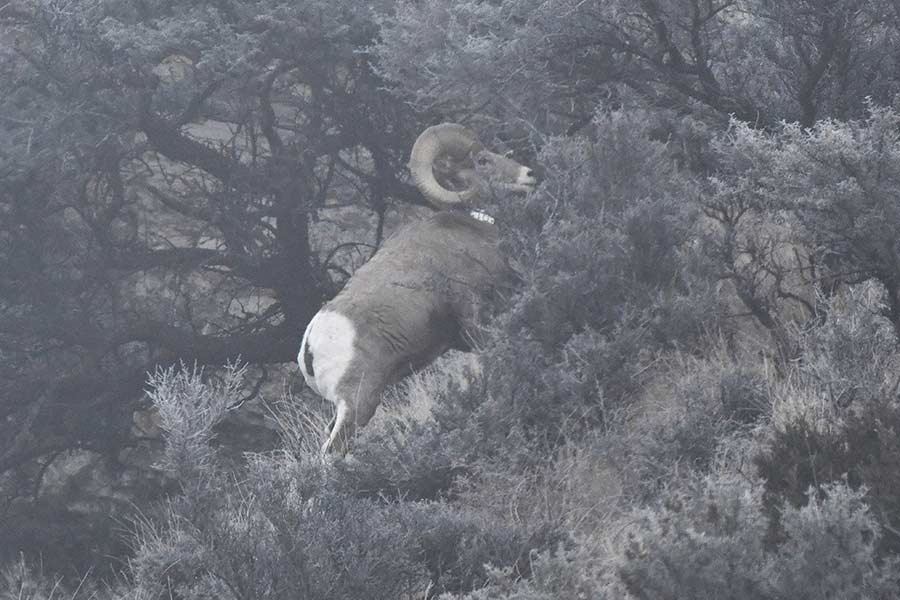
With the thick fog, getting pictures was difficult, so we decided to drive up Skull Canyon to see if some of the animals were up there. As we climbed in altitude, the fog thinned and we had a ram and a male lamb cross in front of us. As they worked their way up through the cliffs, the fog lifted enough for us to see one ewe standing on a rock at the skyline. It appeared that the herd that had gathered for the rut several weeks before was starting to break up.
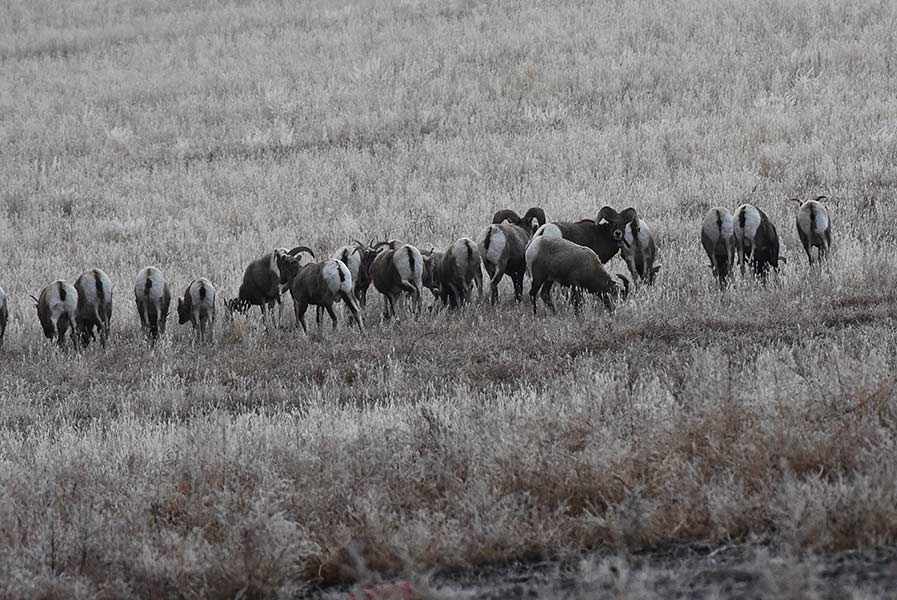
Bighorn sheep are social animals; they like to be together. For most of the year, mature rams form bachelor groups and between the age from two to four, the young males will join these groups. This last week, I ran into a group of six mature males in the Little Lost River Valley that had formed. Will other males join this group? Probably. I will see if I can find them in January when I will be doing a bird count in that area.
The ewes and the lambs join in what is called “family” social groups of about eight to 12 individuals. During the summer months you will rarely see a mature male with a group of ewes and lambs.
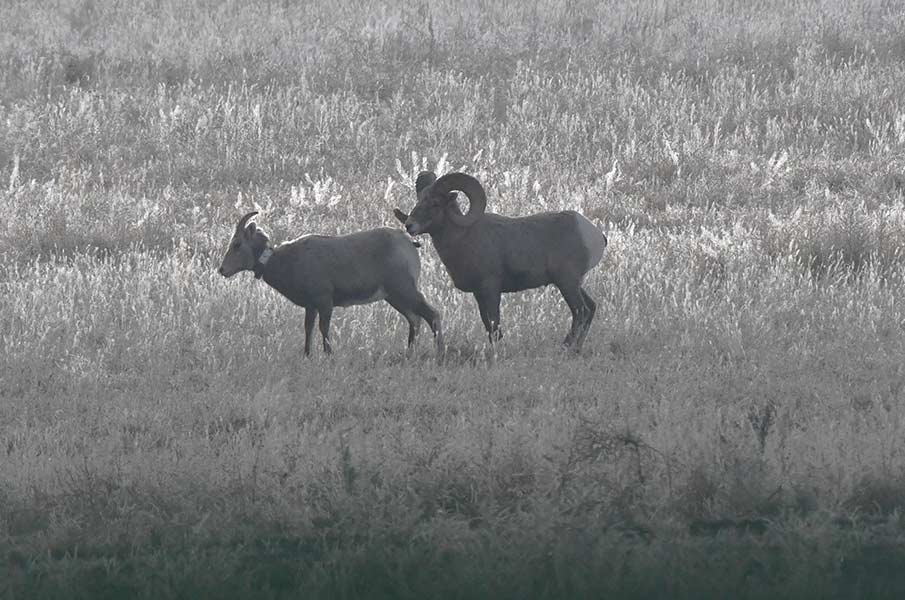
Bighorns are native to Idaho, and we have two subspecies of them; the native Rocky Mountain bighorns and the California bighorns. Both are classified as “sensitive” subspecies because we have an estimated 3,400 of them combined. Their greatest danger to survival comes from disease. Domestic sheep and goats carry a pneumonia that is deadly to the wild sheep.
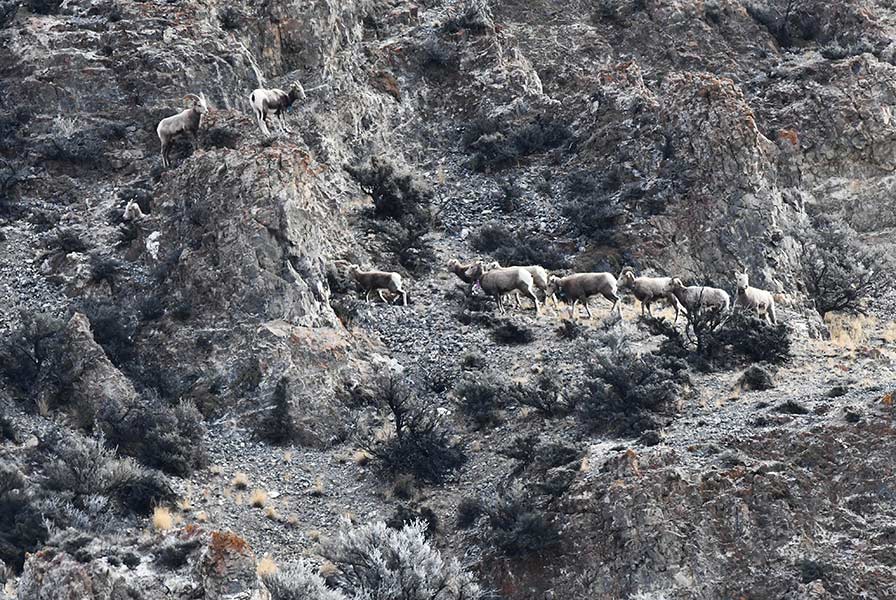
After the fog lifted, we could see the herd climbing up through the cliffs, the lambs jumping from rock to rock and they seemed happy just playing on the steep cliffs. It reminded me of kids playing in mud puddles. I always enjoy watching the wild sheep enjoying themselves in the high mountains of Idaho.
On social media, we are seeing a lot of pictures from Jackson Hole where the rams are still chasing the ewes. The elk refuge is always a good place to watch the bighorns. Other places to watch bighorns are the Salmon River, Hells Canyon, Owyhee Canyonlands, near Hebgen Lake, near Palisades Reservoir and the mountains of Central Idaho.

Living the Wildlife is brought to you by Yellowstone Teton Territory. Experience 7,500 square miles of untamed wilderness in Eastern Idaho's Yellowstone Teton Territory. Where majestic peaks meet endless adventure, your perfect outdoor escape is waiting. Start planning at YellowstoneTeton.com.