



‘The toll is heavy.’ Idaho’s Afghans face uncertainty as Trump targets immigrants
Published at | Updated at
Kevin Fixler and Carolyn Komatsoulis, Idaho Statesman
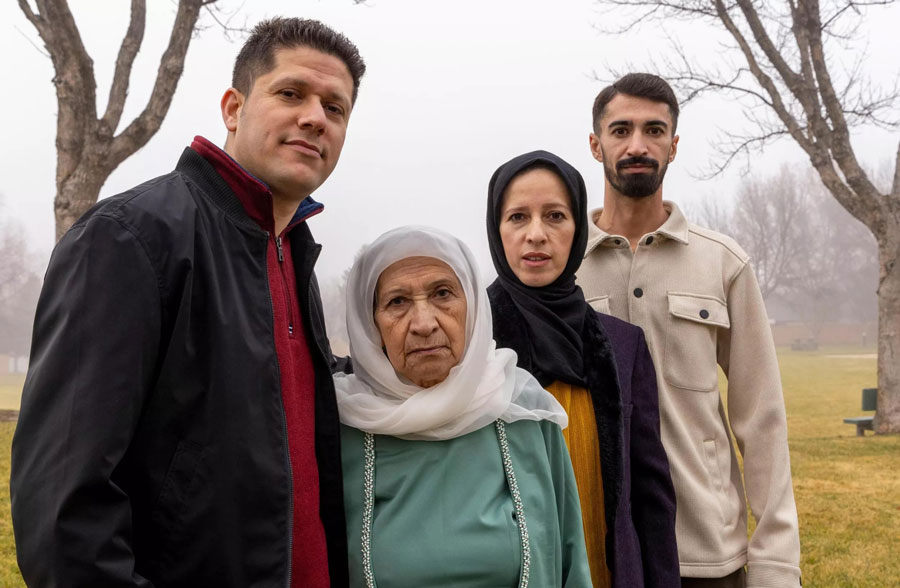
BOISE (Idaho Statesman) — Eddie Hamdard moved to the U.S. from Afghanistan in 2014 to build a new life. After helping support the U.S. military for several years in the western part of his home nation, he accepted a guarantee out for himself and his family as one of many Afghans granted the chance to escape the violence of war forever.
Hamdard arrived in Boise to work toward U.S. citizenship amid ongoing fighting that threatened his family’s lives back in the city of Herat, near the borders of Iran and Turkmenistan. Following years of U.S. checks into his background – all while maneuvering a complex web of immigration policies for his immediate family – he became a naturalized citizen in 2020.
Hamdard also found pathways of entry for his mother, sister and older brother. His brother-in-law and sister-in-law remain in Afghanistan, which immediately reverted to Taliban rule with the U.S. military exit in August 2021.
But that promise of safety and stability is seemingly evaporating after disaster struck the day before Thanksgiving in Washington, D.C. Two National Guard members were shot, allegedly by an Afghan man from Bellingham, Washington. One of the victims, Sarah Beckstrom, 20, died the next day. The other, Andrew Wolfe, 24, has just started breathing and standing again on his own.
The tragedy has become political, affecting immigrants who had nothing to do with the alleged actions of Rahmanullah Lakanwal, 29, who is charged with first-degree murder in the National Guard shooting. Lakanwal was granted asylum by the Trump administration, according to an NBC News report.
In the aftermath, the Trump administration wants to review all refugee applications for people who largely came during President Joe Biden’s administration, pause all visas for Afghans, and review Afghans who came to the U.S. under Biden. Those are just some of the changes President Donald Trump has authored or planned.
The shooting further hastened the administration’s heightened scrutiny of Afghan people already in the U.S. The president called for renewed screening of immigrants from 19 “high-risk countries,” which included Afghanistan.
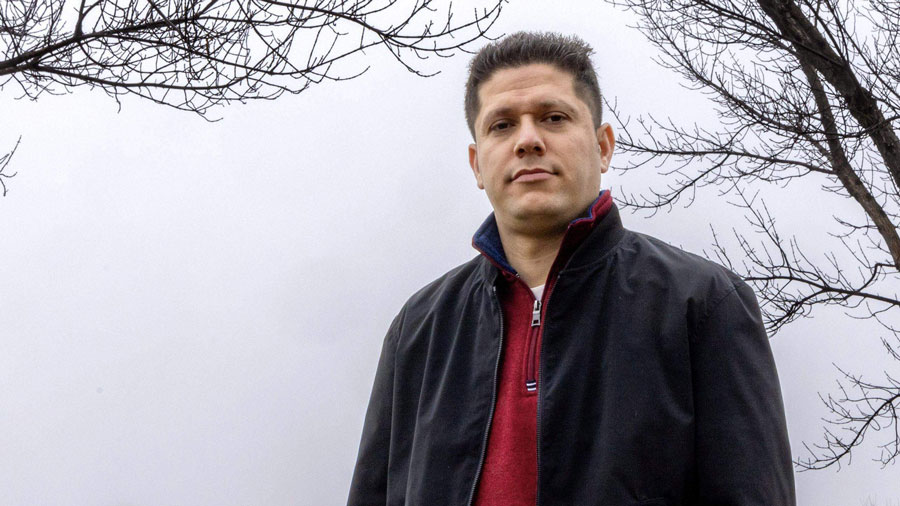
Hamdard, 31, received a special immigrant visa for lending security and telecommunication services to the U.S. military. Immediately after the shooting, he felt the reverberations thousands of miles away in Boise. Recent political rhetoric has made him and his family feel unwelcome, he said.
“The idea that someone’s entire presence in this country can be questioned overnight, based on a single high-profile crime, makes many in our community feel like they are one headline away from being treated as a problem instead of neighbors,” Hamdard told the Idaho Statesman.
It remains personal for Hamdard. His brother finally received approval for asylum earlier this year, but his situation has once again been thrown into uncertainty. When Trump retook office, he began to reshape U.S. immigration policies, including for refugees from Afghanistan who arrived on the promise of citizenship. Trump campaigned on deporting undocumented immigrants, but he has cracked down on legal immigration, too.
More than 1,140 Afghan refugees have resettled in Idaho since the U.S. military’s withdrawal, according to the Idaho Office of Refugees. That placement is traditionally intended to be permanent.
These newer members to the community consider themselves Idahoans, said Holly Beech, the nonprofit’s spokesperson. They are as devastated as anyone by the events that took place in the nation’s capital, she said.
Members of the greater Afghan-American community have denounced this lone actor’s decision to turn to violence.
“It’s hard to see an entire group bear the consequence of one individual’s actions,” Beech told the Statesman in a phone interview. “Everyone wants to be able to live and be judged by their own actions. Afghans in our community are shocked and heartbroken to see something like that happen.”
Making people undocumented
Immigrants sent to a notorious El Salvador prison. People arrested with their children watching or in their parent’s arms. Since Trump took office, the American public has watched as the president makes good on his promise of mass deportations of undocumented immigrants.
As part of his crackdown on legal immigration, Trump’s new policies have also turned people who immigrated legally into people who are undocumented, advocates have said.
Legal status is not an inherent quality. Someone could come to the U.S. without status but be approved for asylum, which is an internationally recognized protection for people who face persecution in their home countries. Others could enter legally with a student visa, for example, but overstay.
On his first day in office, Trump suspended all new refugee arrivals in a “realignment” of U.S. policy. Over the months that followed, his administration has whittled away at the Temporary Protected Status program for people from a variety of countries, adding Afghanistan to the growing list in May. The protection, which extended to at least hundreds of thousands of people, is available for those who cannot safely return to their home countries, whether that’s because of war, natural disaster or another reason.
The next month, Trump banned all immigrants and visitors traveling from Afghanistan – plus 11 other countries – from entering the U.S., citing national security concerns. Seven more countries also had partial restrictions placed upon them.
Hamdard’s brother initially was granted TPS status when he arrived in the U.S. His asylum approval came right in time with help from the office of U.S. Sen. Mike Crapo, R-Idaho, just ahead of the Trump administration’s changes to the policy for Afghanistan. Had his asylum application continued to sit unresolved, he could have been expelled back to Afghanistan, where he could face violence because of his brother’s past assisting the U.S. military mission, Hamdard said.
In the aftermath of the shooting in Washington, D.C., the Trump administration announced several new measures, at least one of which could make legal immigrants undocumented, Boise-based immigration lawyer Chris Christensen told the Statesman in a phone interview. The government paused immigration benefits for anyone from the 19 countries listed in the White House’s summer travel ban, including Afghanistan. Trump has provided few details about the length of time that may last.
The administration will review people from those countries who entered after Biden took office, Christensen said. In practice, Trump’s benefit pause means no one from those countries can obtain a work permit, green card or citizenship. Someone who is in the U.S. legally could lose their status since their application can’t be approved, Christensen said.
“At this point, it feels more like hostility toward an entire group just because of the place of your birth,” Hamdard said in a video call. “It’s not a pause if there’s no specific time frame. It’s not a pause if it’s indefinite. … It’s simply a collective punishment.”
Trump’s new policies have already led to citizenship interviews for December being canceled, Slobodanka Hodzic, senior program director at the Boise-based Agency for New Americans, told the Statesman in an email.
When asked about the canceled interviews, a Department of Homeland Security spokesperson said that the U.S. had paused adjudications for immigrants from the listed “high-risk countries,” while immigration officials worked to make sure they are all “vetted and screened to the maximum degree possible.”
“The pause will allow for a comprehensive examination of all pending benefit requests for aliens from the designated high-risk countries,” the spokesperson said in an email. “The safety of the American people always come(s) first.”
The Trump administration has also put all asylum applications on hold, regardless of someone’s country of origin, Christensen said. With the administration’s hardening attitude toward immigrants, asylum-seekers are struggling with a more chaotic environment and challenging bureaucracy.
In addition, the government also plans to reexamine all refugees who entered largely during Biden’s term and potentially re-interview them, even though they have already been screened, Christensen said. However, this plan was in place before the shooting.
Plus, the government has paused visas for Afghans.
“l think the administration is essentially saying that because one Afghan individual did a very bad thing, we’re going to punish all Afghans,” Christensen said in a phone interview. “And even going a step further and punishing everybody from the 19 countries … and all asylum applicants and reviewing all refugees’ applications who arrived between January of 2021 and February of 2025.”
‘Most patriotic people’
When Afghanistan fell back into the hands of the Taliban, members of the Afghan Air Force flew dozens of military jets and helicopters out of the country north to Uzbekistan. They hoped to prevent the aircraft from advancing the regime’s goals that are once again in conflict with American and pro-Western objectives, one former Afghan Air Force member now in Boise told the Statesman by phone.
The 29-year-old man, who requested anonymity to avoid retaliation while his path to U.S. citizenship remains unsettled, said he was stunned when instead of being welcomed with open arms in neighboring Uzbekistan, the hundreds of Afghan Air Force members were jailed for nearly a month. The U.S. finally secured their freedom, and they were sent to the United Arab Emirates for several months, where they were vetted before being transferred as refugees to American soil, he said.
“Trump makes it sound like these people just got on the plane randomly in August or September of 2021 in Afghanistan,” said Christensen, the Boise immigration lawyer. “I’ve worked with tons of Afghans. Many of them waited at the airport for four or five days to get through security, to get clearance. They never flew directly to the U.S. They went to Qatar or they went to the UAE where they were kept on a military base often for weeks and then screened very, very thoroughly.”
Once they got to the U.S., they spent more time on a military base for more screening until they were released, he said. Some refugees waited years going through the immigration process, he said – including screening.
The former member of the Afghan Air Force now in Idaho first arrived in New Jersey in October 2021, he said. Then he moved to Boise in February 2022 because a friend lived locally and had a job as a pilot with a commercial airline.
Already a skilled pilot himself, he began training anew in flight school not long after getting to Idaho to obtain a commercial license with a goal of working for a major airline. He said he completed more than 1,500 hours between Mountain Home Air Force Base and a civilian flight school and also was approved for a work permit in the U.S.
But because he has not yet been able to get his green card, he cannot land a job as a commercial pilot, he said. So he works as a ride-share driver for as many hours as he can each week to provide for himself, and also to send money to support his fiancée back in Afghanistan and his family hiding in Iran after escaping when the Taliban returned, he said.
“What I’m doing right now is barely sleeping,” he told the Statesman. “Being in limbo – not for a week, not for a month, for years – it’s really frustrating. And also it’s a lot of stress on the people who really did the most … for them.”
The Trump administration’s updated policies toward Afghan refugees stand only to prolong his process toward his green card on his potential path to citizenship. He said he fears he could see a years-long delay – or now even be kicked out of the country despite prior assurances to grant him and his family a new life in the U.S.
“Refugees are some of the most patriotic people you’ll meet,” Beech said. “They don’t take freedom for granted. There’s no entitlement. They know what it’s like to not have it. They have a desire to build and give back and strengthen the community that they’re now part of and to be active in that.”
Unlike Hamdard and other Afghan civilians who provided assistance to the U.S. military and received special immigration visas, members of the Afghan Air Force are not eligible for the program. A bipartisan Senate bill was pitched in 2023 to expand SIVs to members of the Afghan military now in the U.S. to smooth their path to citizenship. Along with Crapo, U.S. Sen. Jim Risch, R-Idaho, co-sponsored the proposed law, but it failed to receive a vote.
“This is to help out the people that helped us in Afghanistan,” Risch told the Statesman in November 2023. “These are people who put their lives on the line as advisers or helpers of one kind or another, and, I mean, it’s only right that these people get legal status here, whether it’s citizenship or whatever. To me, that’s a no-brainer – an absolute no-brainer.
“In the overall scheme of things, from a numbers standpoint, it isn’t a big deal. From an equity standpoint – ‘Hey, we ought to stand by the people that helped us’ – it’s a really big deal.”
Promises kept
After the attack in Washington, Risch signed on to a letter demanding that Afghans in the U.S. be put through more rounds of screening. Risch chairs the Senate Foreign Relations Committee as its top Republican.
“It is past time for the United States to revisit the deficiencies of the Biden administration’s vetting process for Afghan nationals and remedy the resulting egregious security threats such a process created in the United States after the disastrous August 2021 withdrawal,” read the Dec. 4 letter sent to Secretary of State Marco Rubio.
Meanwhile, leading Democrats on the Senate Foreign Relations Committee sought to quell indignation aimed at the larger Afghan community.
“Afghans across the United States have condemned the attacker’s senseless actions and reiterated their gratitude to America for the opportunity to rebuild their lives in safety,” their statement read. “… We must reject any attempt to cast blame on an entire community of Afghans or diminish the service and sacrifice of those who served alongside U.S. forces and personnel.”
Risch previously helped former Idaho Gov. Dirk Kempthorne plan and fund a private flight out of Afghanistan in late 2021 to get nearly 400 more people – a mix of Americans and Afghan allies – out of the country and to safety in the U.S.
“Promises made are promises kept,” Kempthorne told Boise’s KIVI-TV Channel 6 about the effort.
Crapo’s office, meanwhile, said he backs Trump’s revised immigration policies in the wake of the D.C. shooting.
“While Sen. Crapo has been supportive of assisting Afghans who have aided U.S. military forces, the safety of the American people remains paramount,” Kyra Smith, Crapo’s spokesperson, said by email. “The senator supports the president’s decision to revisit these cases to prevent those who wish to harm Americans from taking advantage of our asylum laws.”
Like many Afghans in the U.S. today, Hamdard and his family remain concerned that new Trump administration policies mean that the “door to safety is closing,” including for his brother, who had previously received Crapo’s help for asylum. Where his case goes from here – and for how long – is unknown.
“Emotionally, the toll is heavy,” Hamdard said. “People who once felt proud to have partnered with the United States now find themselves questioning whether that loyalty is remembered or valued. It creates a constant background anxiety even when things look normal on the surface – that at any moment, the rules might change again.”