Remembering the Teton Dam’s contentious backstory 50 years after its collapse
Published at | Updated at
EDITOR’S NOTE: This is the first in a series of stories highlighting the 50th anniversary of the Teton Dam Disaster.
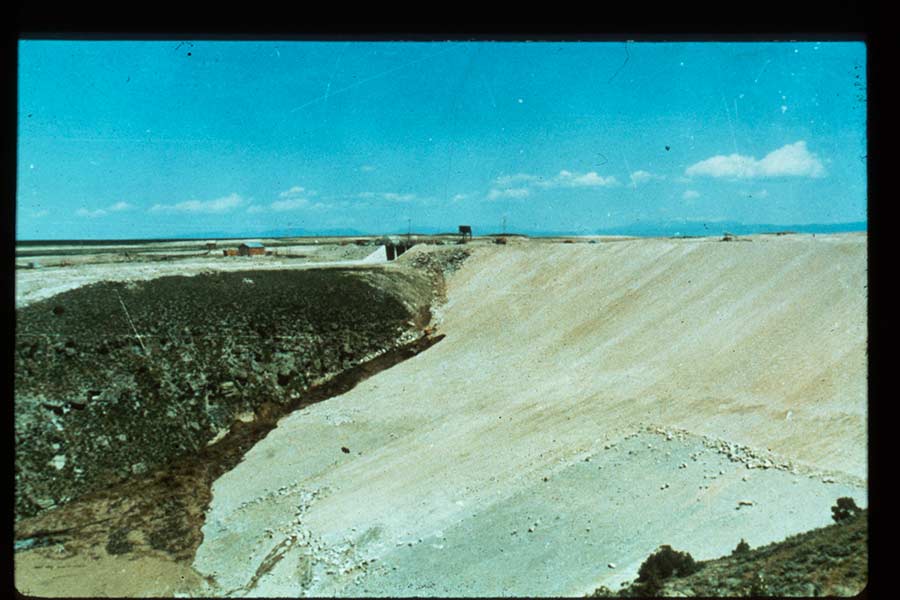
REXBURG — Don Ellis overlooked the Teton River as he watched a wall of water break through the newly-completed Teton Dam.
It was 11:55 a.m. on June 5, 1976, and the local radio personality was broadcasting live on KRXK as the 3,100-foot-long flood mitigation dam, about 15 miles northeast of Rexburg, collapsed.
“The whole north side of the dam is caving in!” Ellis reported. “People downstream better get out!”
Funding for the $100 million Teton Dam project had been approved by Congress five years earlier. The U.S. Bureau of Reclamation broke ground on the project in 1972.
Despite concerns about the dam’s design before and during construction — it sat on a foundation of compacted dirt that covered porous and unstable canyon rock — the dam was completed and rushed into operation without any testing. The reservoir was initially filled at the standard rate of 1 foot per day and was later doubled at the request of engineers to keep up with spring runoff. The fill rate was doubled again about a month later.
Hours before its collapse, the reservoir was nearly filled to capacity and the dam was operating without a functioning outlet works or spillway gate. Without a mechanism to control water flow and pressure, the dam’s failure was imminent.
Two contractors were on site that morning. John Calderwood and Owen Daley tried in vain to plug seepage holes on the downstream face of the dam.
Nathaniel Gee, a dam safety expert and author of an upcoming book about the Teton Dam, explains what happened.
“They were there pushing stuff in the hole (with a bulldozer) as the dam was falling around them. Daley’s bulldozer got stuck. He ran to get another bulldozer to try and pull his out. As he hopped out to get it, his bulldozer fell in and (the water) washed it downstream,” Gee tells EastIdahoNews.com.
Undeterred, Gee says Daley quickly ran to another bulldozer at the top of the dam and started pushing dirt on the other side.
At 11:52 a.m., three minutes before the dam’s collapse, the torrent of water had increased, and Daley abandoned his efforts.
Following Ellis’s live report, the studio announcer confirmed with local law enforcement what was happening and urged people in the area to evacuate.
“Evacuate your homes immediately! Just go!” the announcer said.
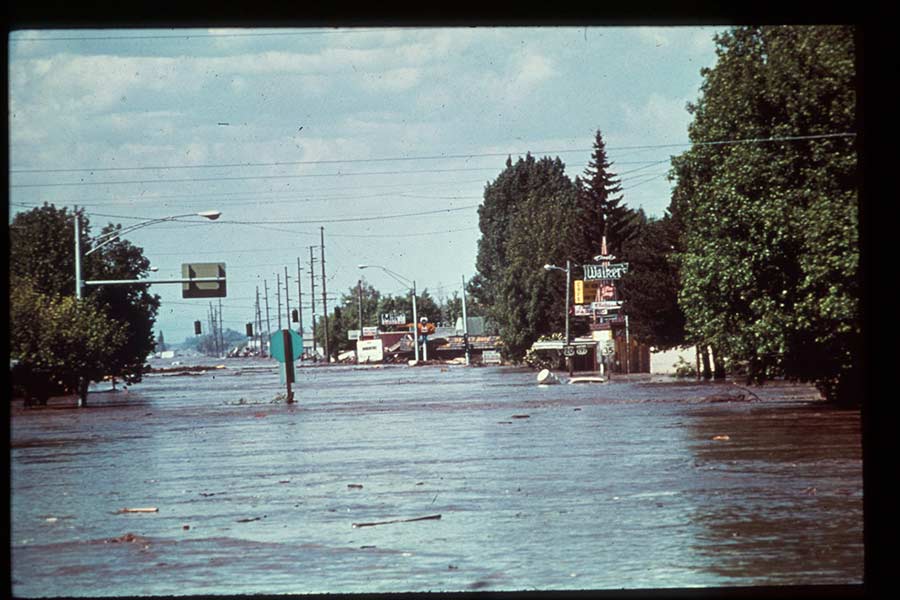
Ultimately, the dam’s collapse spilled 80 billion gallons of water into eastern Idaho. The results were devastating.
Eleven people died in the disaster, along with 1,500 head of livestock. Homes and tens of thousands of acres of land were heavily damaged or destroyed. The Idaho Transportation Department estimates that about 3,000 people were made homeless by the flood. Cleanup took months and cost over $2 billion — more than $11 billion in today’s dollars.
Gee, a Salt Lake City resident with family ties to Rexburg, grew up hearing about the Teton Dam Disaster. His new book, which draws on many firsthand accounts and more than a decade of research, is called “Failure and Fortitude: How Faith, Politics and Power Shaped the Teton Dam Disaster.” It will be released in May ahead of the 50th anniversary of the dam’s collapse.
Gee provides some context on the contentious political history that led to the dam’s construction.
A project 2 decades in the making
It all began during the 1950s. America was in a rebuilding phase amid its recovery from World War II. The national focus on post-war growth made dam construction a popular idea.
Between 1950 and 1979, more than 40,000 dams were built across the country, mainly for hydropower and irrigation, according to a 2016 news report.
In Idaho, dry farms dotted the landscape. Gee says many people felt dams would improve farming conditions through irrigation and flood mitigation. The potential for generating hydroelectric power was another appealing factor.
The U.S. Bureau of Reclamation started looking into possible dam locations in eastern Idaho. The proposal to build the Teton Dam was one of many proposed construction projects early on.
Hamer Budge, a Pocatello Republican who represented Idaho in Congress from 1951-1961, was popular among voters at the time. He had voted against many proposed dam projects, including the Teton Dam.

During a study of the Teton Dam proposal, Gee says the U.S. Bureau of Reclamation had concerns about the location and the cost, and Budge felt the project “wasn’t a good use of federal dollars.”
Budge eventually put forth a bill to build Burns Creek Dam near Palisades Reservoir. He had a difficult time trying to gain voters’ approval.
“People didn’t see it as a viable project, and it failed,” Gee says.
Budge’s opposition to numerous dam projects failed to secure him an election victory in 1960. Malad Democrat Ralph Harding defeated Budge with 53% of the vote, according to voting records.
“Harding pushed this issue. He tried to get Burns Creek Dam at first; he realized early on it wasn’t going to fly, and so he tried to get the Teton Dam authorized,” says Gee.
With the support of U.S. Senator Frank Church and other delegates, the Teton Dam proposal moved forward. It was approved in 1964.
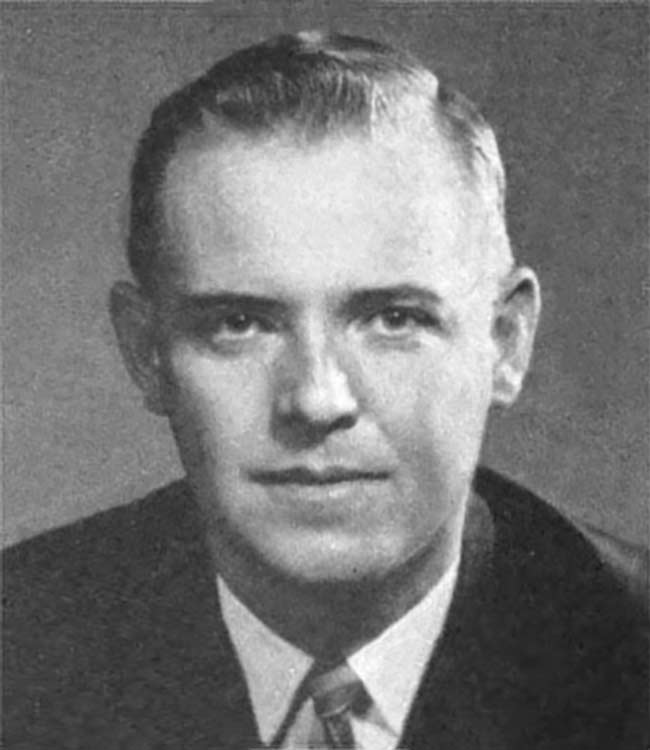
Despite this, Harding’s approval among voters waned because of his public criticism of Ezra Taft Benson. The high-ranking leader of The Church of Jesus Christ of Latter-day Saints was a Republican who had served as President Dwight Eisenhower’s secretary of agriculture. He was also an ardent supporter of the John Birch Society.
Harding, a fellow church member, publicly berated Benson in Congress. He believed Benson was using his church position to support a political agenda. The two duked it out in the press through a series of op-eds. It left Harding in a bad spot, politically.
“Harding pushed for the Teton Dam as a last-ditch effort to save his campaign,” Gee explains. “He thought that if he could get it passed, people would be excited and they’d overlook (the dispute) and vote for him.”
After Congress passed the bill, President Lyndon B. Johnson accompanied Harding, Secretary of Interior Stewart Udall and Ohio Congressman Mike Kirwan, chairman of the House Committee on Appropriations, to eastern Idaho on a float trip along the Teton River. In a later press conference, Kirwan agreed to fund the project only if voters reelected Harding.
The statement didn’t sit well with Idaho voters.
“Voters in Idaho felt like this was blackmail,” Gee says.
Harding lost the election to Republican George Hansen. Although Hansen made multiple attempts to acquire funding, Kirwan wouldn’t let it happen.
The project stalled over the next seven years. Hansen and other Congressional delegates finally succeeded in funding the project in 1971, after Kirwan had died.
Despite multiple flaws in its design, Gee says the years of political debate surrounding the Teton Dam had become tiresome. The players involved decided to begin construction and figure out how to resolve issues along the way.
After the Teton Dam’s failure in 1976, the topic of rebuilding it was discussed. It’s unclear why it never happened.

Rebuilding the Teton Dam
Fifty years after its collapse, a proposal to rebuild the Teton Dam is gaining momentum. During the 2025 Legislative session, Sen. Kevin Cook, R-Idaho Falls, co-sponsored a non-binding resolution that called on federal and state agencies to study and develop new water storage projects. Rebuilding the Teton Dam is one of six proposed projects.
During a recent trip to Washington, D.C., Cook brought letters from county commissioners and mayors throughout the Snake River Plain who support its reconstruction.
“I’ve talked to several engineers that have their fingerprints all over dams in Idaho, and every one of them say we can rebuild it safely,” Cook said in December. “But we need to do a study. We have 50 years of new technology that can tell us whether or not we should build it.”
Gee, a former manager with the Bureau of Reclamation, says it’s an intriguing idea. He can’t say whether it should be built without a thorough study examining the benefit, cost and long-term environmental impact.
“It was tough to justify this project back in the 1970s,” he says. “People often ask me, ‘Could you build a safe dam on that site?’ The answer is yes, but it would be a very expensive, safe dam. To deal with the geology is going to cost a lot of money to deal with it properly. Is it worth that cost? I don’t know.”
WATCH OUR INTERVIEW WITH GEE IN THE VIDEO ABOVE.