



Local students head to Washington, DC, this week for ‘future city’ competition finals
Published at | Updated at
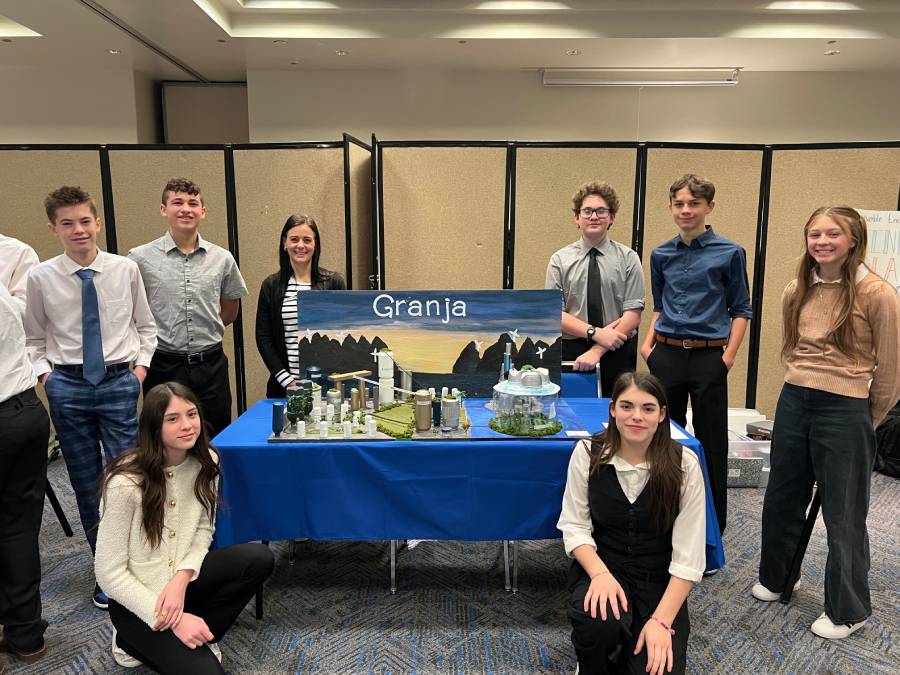
IDAHO FALLS — Three local eighth grade students will be heading to Washington, D.C., this weekend to participate in the ultimate STEM competition.
It’s called “Future City” and is a nationwide hands-on, cross-curricular educational program that brings STEM to life, according to its website. It’s for students in grades six to 12 and challenges them to use science, technology, engineering and mathematics. They additionally have to write an essay and use public speaking and presentation skills.
Hillary Congdon, an eighth grade science teacher at American Heritage Charter School in Idaho Falls, said her students were divided into groups and designed a city that focused on sustainability.
“There’s a theme given, and this year’s theme was ‘farm to table.’ The students needed to design a city 100 years in the future, involving eliminating food waste,” said Congdon.
A design won a regional competition in early January in Boise, and the city model will be taken to Washington, D.C. Students will compete from Feb. 14 to Feb. 17 at the Hyatt Regency, near the U.S. Capitol.
The regional competition took place at Boise State University. The student team went against over 30 other schools. As part of the competition, students were required to complete a 1,500-word essay, construct a physical model using recycled materials within a $100 budget, develop a project plan, deliver a 7-minute presentation, and participate in a live Q&A session with judges.
All three of the teams earned special awards, including:
- Veridia – Special Award for Best Geotechnical Design
- Agrinova – Special Award Mission Possible: Positively Impacting the Community
- Granja – Special Awards for Best Electrical Power Delivery System and Best City Model, and 1st Place Overall Winner
Picking the names of their cities was focused on making connections to farming. Congdon described what they came up with for their first-place overall winner model.
“They had a lot of farming in their city. They have a little beehive section, and they have to make it futuristic … when we talk about transportation, what are futuristic transportation options?” she explained. “They have some zip lines in their city, and they have some drones that carry food to houses.”
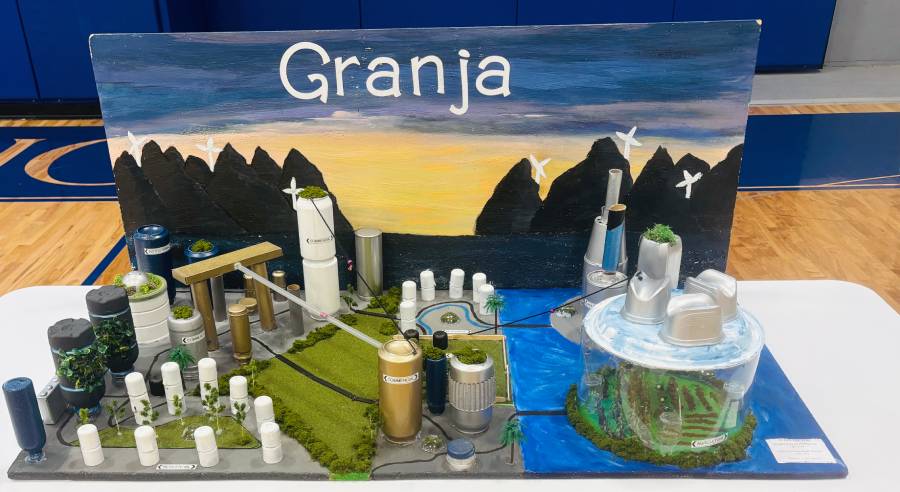
As the first-place team, Granja will compete against other top teams across the country. Seven students collaborated on the project but, for competition purposes, only three students are allowed to go and present the city pitch to judges in Washington.
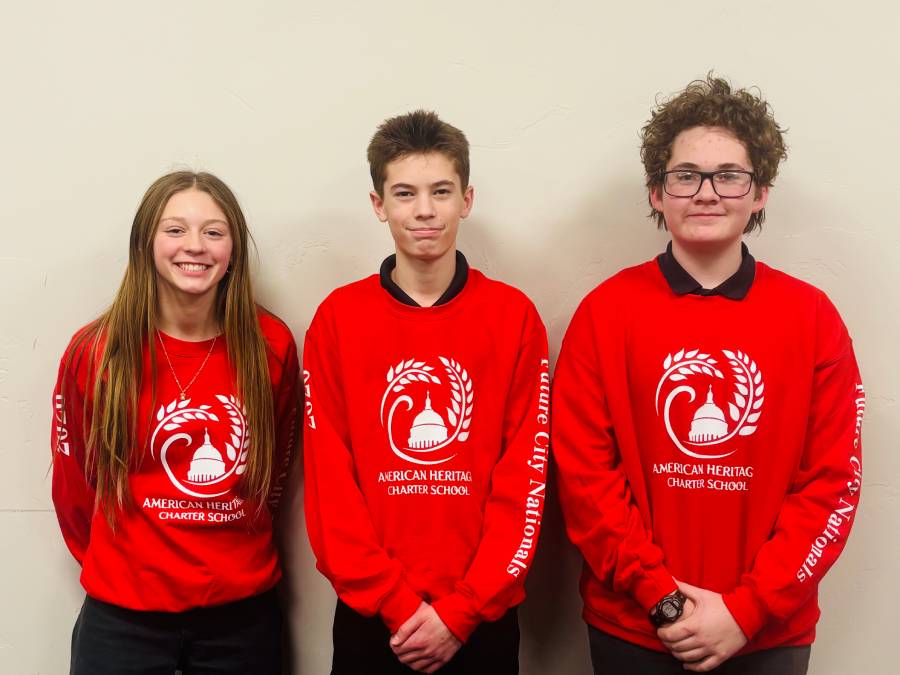
The three students who will be attending are Charlotte Congdon — who is Congdon’s daughter — Ryker Chinn and Luke Bloxham.
Charlotte told EastIdahoNews.com that building the model was challenging and required extensive research and teamwork, but in the end, the team came together to create a strong and impressive final design. They researched real-world problems, brainstormed as a team, and combined the best ideas to create the future city model.
“I’m most excited to represent our team at nationals, see other creative city designs, share our ideas on a larger stage, and explore D.C. with my mom and friends,” Charlotte said.
Ryker added that it will be his first time going to Washington, and he is looking forward to it. He said he learned a lot from the project, like pollination biology.
The project took months of hard work, from September through December.
“We learned about each part of a city, or anything that takes part in creating a city — so, government, budgeting, transportation, electricity, power and recreation. They came up with what they wanted specific to their city, and then once all the research was done for it, they started building their city,” Congdon said.
Congdon said she is proud of all of her students for putting in the work and learning something new. They memorized information and confidently shared it in presentations.
“They have done incredibly. It’s been so fun to watch the process from knowing absolutely nothing about it and then them applying everything that they want in it,” she said.
There are special prizes and awards at the national level. For middle schoolers, first place at the finals is $10,000 for the organization’s STEM program; second place is awarded a $5,000 prize for the organization’s STEM program; and third place is $2,000 for the organization’s STEM program, according to the website.