
Rigby man’s grandfather was ‘the best second baseman in the big leagues,’ and new book tells his story
Published at | Updated at
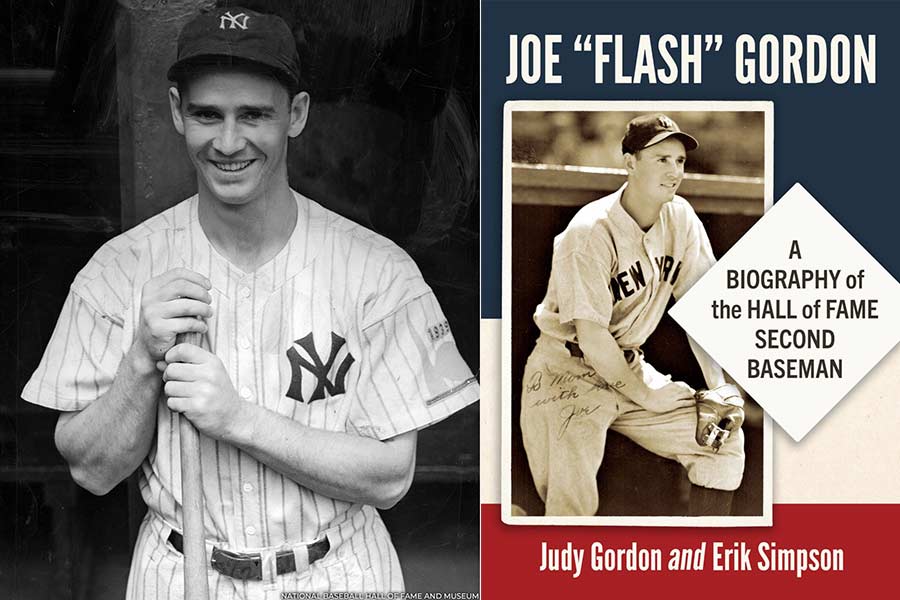
RIGBY — Erik Simpson was in college when he realized the significance of his grandfather’s baseball career.
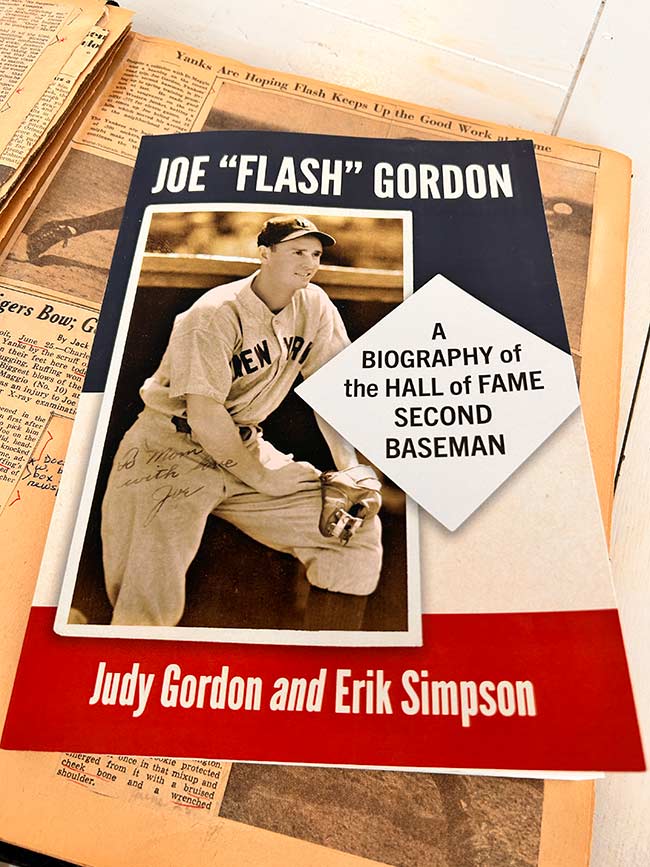
The 60-year-old Rigby man is the co-author of a new book about Joe “Flash” Gordon — a project he and his mom, Judy Gordon, started more than 15 years ago.
Joe was a second baseman for the New York Yankees for seven seasons. He scored 25 home runs during his rookie year in 1938 — the first American League second baseman to hit 20 or more home runs, according to Simpson — and helped the team win its third consecutive World Series championship.
He later played four seasons with the Cleveland Indians, where he was part of another World Series victory in 1948. He led the team with 32 home runs and 124 RBIs.
Simpson was 4 years old when his grandfather managed the Kansas City Royals during the franchise’s inaugural season. It was 1969, and Joe was a retired player who had been managing for 19 years. The team finished fourth that season in the newly established American League West, and Joe stepped away from baseball for the last time.
Aside from an early memory of a family member telling him grandpa was “at baseball,” Simpson says his only knowledge of Joe’s involvement in the sport were the photos on display in his home.
When Joe died in 1978, Simpson, then 13, had never had even one baseball conversation with his grandpa.
“He never talked about it,” Simpson tells EastIdahoNews.com.
Six years later, Simpson was attending college at the University of Idaho and came across a photo in a book showing his grandpa being named the MVP at the end of the 1942 season. Despite losing the World Series that year, Joe had a 30-home run record and a .322 batting average. He’d beat out Boston Red Sox left-fielder Ted Williams, who ended up winning the Triple Crown, for the MVP award.
In that moment, and in the years since, Simpson says he’s “blown away” by what he’s learned.
Joe’s induction into the National Baseball Hall of Fame in 2009 became the catalyst for the research that led to the book. It is based on news clippings from 13 scrapbooks Judy inherited after her dad’s death.
“If it hadn’t been for my mom poring through a thousand pages of these scrapbooks … this history would be lost forever,” says Simpson.
Joe’s early life
Joe was born on Feb. 18, 1915, to Louise Evans and Benjamin Lowell Gordon. Benjamin worked in a copper mine in Jerome, Arizona, and the family lived in a wall tent.
In 1921, Simpson says Louise had her fill of the lifestyle. They divorced, and Louise took Joe and his brother to live with her sister in Portland, Oregon. He never saw his dad again.
Baseball was popular at the time, and Joe grew up playing it in neighborhood sandlots on the poor side of town. He realized early on that he had a knack for it.
Throughout high school, Simpson says his grandfather participated in baseball, football, soccer, track and orchestra.
Joe acquired the nickname “Flash” at some point, though it’s not clear why. Natural assumptions point to the Flash Gordon comic book character, but Simpson says yearbook references predated the comic book by at least a year.
“For some reason, his classmates were calling him ‘Flash Gordon’ before there ever was an official Flash Gordon comic book character,” Simpson says.
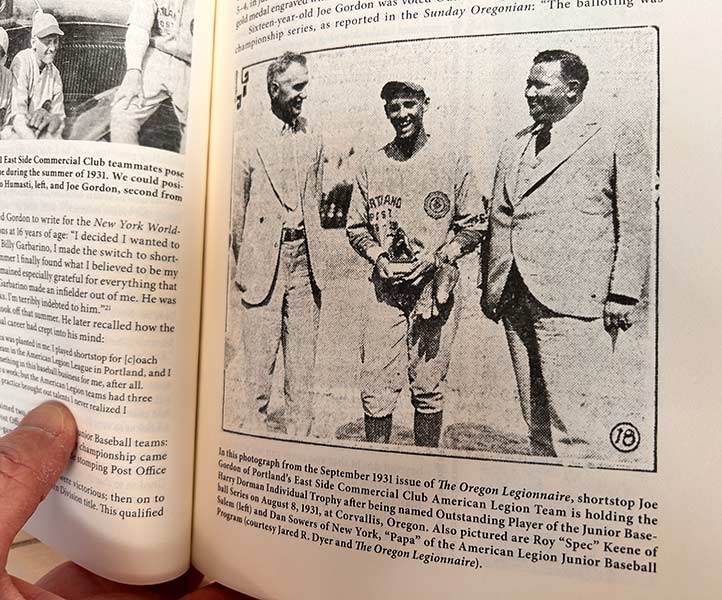
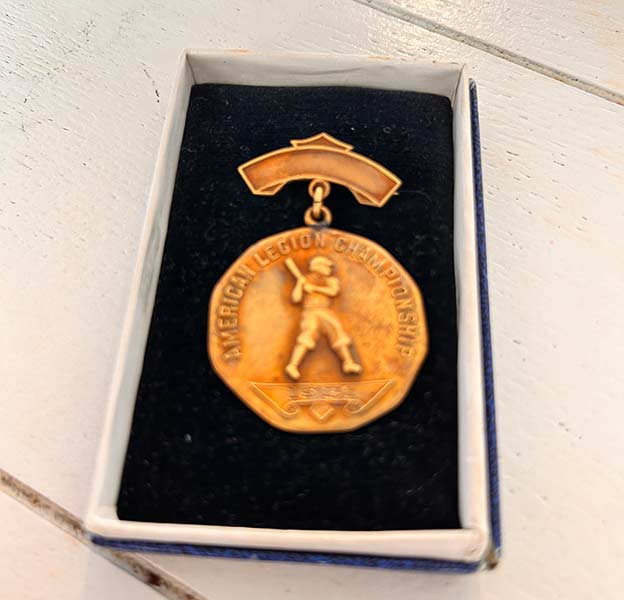
After winning a regional championship with an American Legion Baseball team in 1931, Joe thought seriously about pursuing baseball as a career.
‘The best second baseman’ in baseball
While attending college at the University of Oregon, Simpson says Joe was recruited by the New York Yankees.
“When other players and the manager, Joe McCarthy, saw him warming up, they just stopped what they were doing and watched him. They had never seen anyone cover second base like he had,” Simpson says.
Joe had an acrobatic approach to the position, according to Simpson. He jumped high and moved fast.
RELATED | Professional baseball players from Rigby being remembered with field in their name
Joe played his first season in 1937 with the Newark Bears, a minor league team affiliated with the Yankees. It was a farm team intended to give new players some experience.
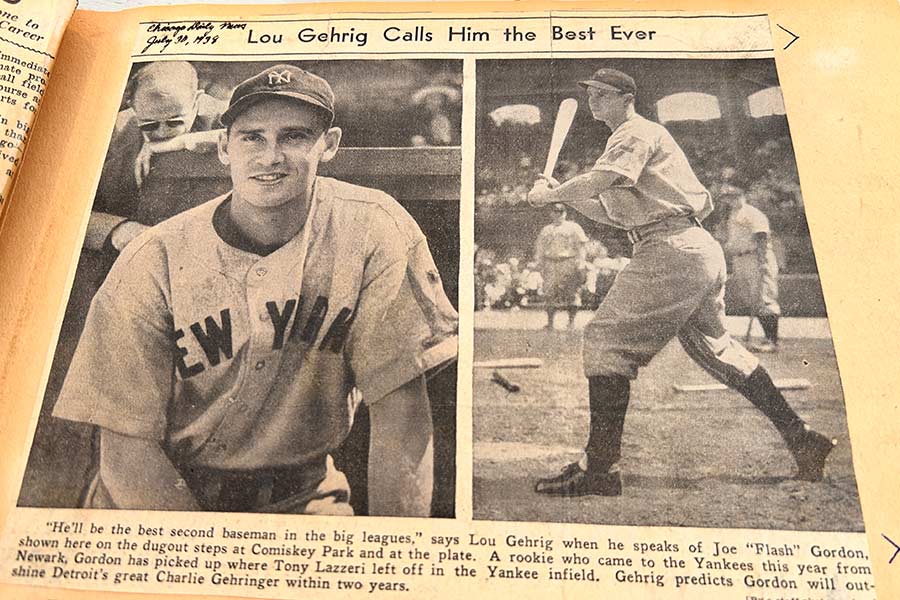
He helped the Yankees win a World Series the following year. His 25-home run performance elicited praise from his teammate, first baseman Lou Gehrig.
“He’ll be the best second baseman in the big leagues,” Gehrig said of Joe in news reports at the time.
In 1938, Gehrig also predicted that within two years, Joe would outshine Detroit Tigers second baseman Charlie Gehringer.
Joe also caught the attention of Babe Ruth, his childhood hero. In a 1940 news clipping, Ruth says Joe “came along at the right time” and provided “a spark” that the Yankees needed.
“Joe Gordon makes the (Yankee) ball club,” Ruth said. “That kid can think. He makes plays that no one else thought of trying, and most important, comes through in the clutch at the plate.”
Two years after winning the MVP award, Joe, who was a trained pilot, enlisted in the United States Army Air Forces (what is now the U.S. Air Force) during World War II. He ended up being recruited by the AAF to play baseball for the troops.
Joe returned to the Yankees at the end of the war for one more season. Simpson says he was injured multiple times that year and was traded to the Cleveland Indians in 1947.
Joe played with the Indians for four seasons, including the 1948 World Series victory season. He retired in 1950 at age 35.
Joe continued to work as a manager, shifting around to multiple teams, for the next 19 years. In 1966, he spent a few weeks in east Idaho managing the Idaho Falls Angels — predecessor to the Chukars.
Although Joe never lived in east Idaho, Simpson says he fly-fished along the Snake River on one occasion.
Joe was 63 when he died from a heart attack on April 14, 1978.
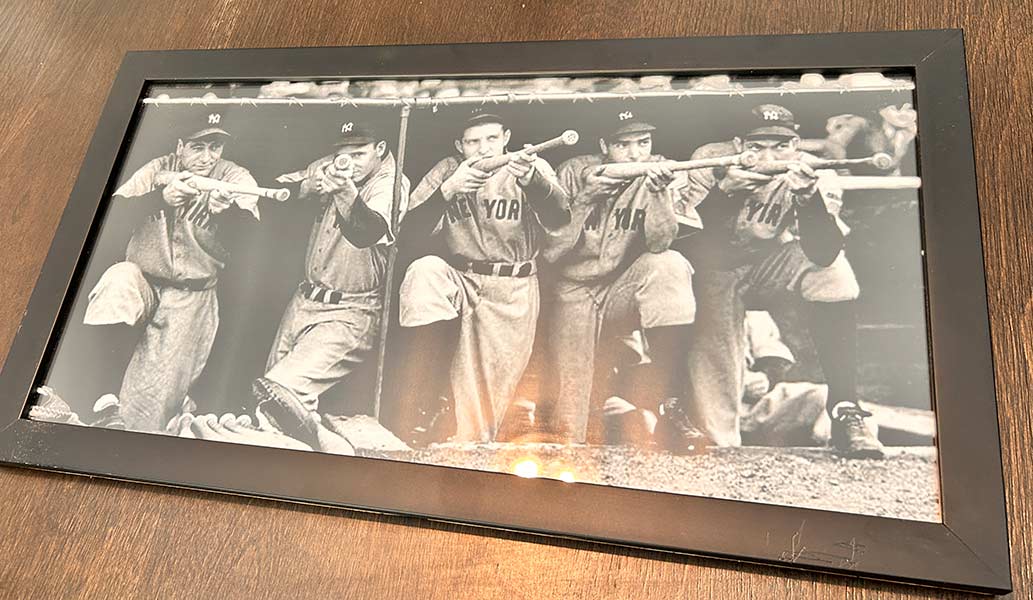
‘A tremendous gift to baseball’
During a visit to New York in 2009 for Joe’s Hall of Fame induction, Simpson says he met Yogi Berra, the 18-time all-star catcher whose rookie year with the Yankees overlapped with Joe’s final year on the team. Berra, who has since died, told him a story about the time Joe took control of the Yankees’ new plane in mid-flight while the team was aboard.
According to Simpson, Berra said the plane was about to take off from the runway, and Joe walked into the cockpit. Simpson says his grandfather’s qualification to fly that type of airplane likely prompted him to arrange the stunt with the pilot ahead of time.
“In this case, the pilot would’ve become the co-pilot,” Simpson explains. “Considering my grandfather’s love of flying, I could definitely see him doing it.”
After all the years of research, Simpson says this is his favorite story about his grandpa.
Although none of Joe’s descendants play baseball professionally, Simpson says his grandfather’s legacy came full circle in his family several years ago. His son played second base for a city league team in junior high school. His batting average that season was .500 — the same as Joe’s in the 1941 World Series.
Simpson says he’s grateful for everything he’s learned about his grandfather and for having played a role in bringing his story to light through this book project.
“I’ve learned a lot about my grandfather that I wouldn’t have known otherwise,” he says. “This book is a tremendous gift to baseball and to our family.”
The book is available through Amazon, Barnes & Noble and other places. Click here to learn more.

 Get more sports news here