
Idaho bill proposed limit on international college athletes. Here’s what happened
Published at
Shaun Goodwin, Idaho Statesman
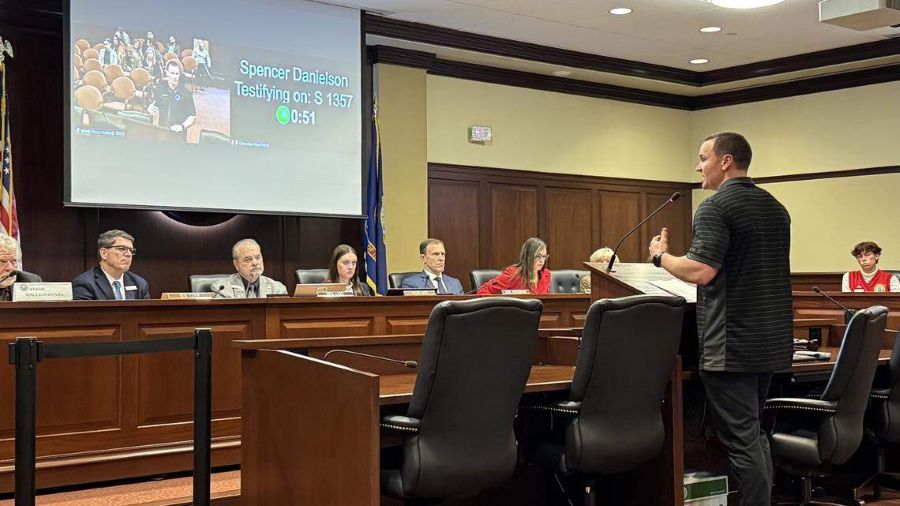
BOISE (Idaho Statesman) — A proposed Idaho bill to limit the number of scholarships that could be awarded to international athletes at public universities died in the Senate Education Committee on Tuesday afternoon.
Senate Bill 1357, introduced by Sen. Doug Okuniewicz, R-Hayden, aimed to limit such scholarships to 10% of a school’s total student-athlete count. The bill also would have limited the maximum percentage of a single team’s international athlete count to 50%.
When introducing the bill at the start of Tuesday’s hearing, Okuniewicz argued that his motivation was to provide more opportunities for Idaho athletes and to produce more graduates who might stay in the state.
“Most of these folks are incapable of staying here and going to work, unless they get married or something. I don’t think, for most of them, that’s on their life plan,” Okuniewicz said of international students, citing no data. “… I would feel better personally if we had more Idaho kids and American kids who graduate with valuable degrees that they can put to work in Idaho.”
Athletic directors from Boise State, Idaho State and the University of Idaho all testified against the bill, as did Big Sky Conference Commissioner Tom Wistrcill and multiple Idaho-based college coaches, including BSU football coach Spencer Danielson and Idaho State football coach Cody Hawkins.
Many of the objections to the bill focused on how instituting such a law would only handicap Idaho schools in recruiting and lead to a lesser product on fields of play.
“When we recruit, we recruit with the scenario that talent sets the floor, character sets the ceiling,” Danielson said during his testimony. “… This bill not only puts that at a detriment, but it also puts a perception of who we’re competing against that would recruit against Boise State and use this bill against us.”
Boise State has 44 international student-athletes among its 346 total, equaling 12.7%, according to the latest numbers provided to the Idaho Statesman. Eight of the football team’s 101 athletes are international students.
A previous provision of the bill, removed in February, proposed a 5% cap on international students on football teams.
The bill would have heavily affected tennis programs across the state — the men’s and women’s tennis teams at Boise State, Idaho State and U of I are composed of more than 50% international students.
Okuniewicz added a line to his revised bill that would not revoke or count athletes toward the measure’s caps if the scholarships were awarded before July 1, 2026, giving universities a “ton of runway” to become compliant, he said.
However, testimony against the bill indicated that grassroots youth tennis training in the United States isn’t where it needs to be, and shutting universities out of recruiting the best talent from abroad would put Idaho colleges at a severe disadvantage.
Boise State women’s tennis coach Beck Roghaar said that the “unique restrictions” would be “heavily used against us.”
Roghaar also said that BSU men’s tennis associate head coach Daniel Hangstefer, who won two Big Sky Conference regular season championships with the Vandals, would “no longer want to work in the state of Idaho” if the bill passed.
Idaho athletic director Terry Gawlik said that if the bill were to pass, U of I would “strongly consider” dropping both its men’s and women’s tennis programs, because “we would not be able to hold our own competitively against any level of collegiate NCAA opponents.”
Idaho State athletic director Pauline Thiros added that although the Pocatello school strives to recruit in-state first, limiting the talent available ultimately would push Gem State students away as well.
“If we want to keep more of our Idaho students at home, we have to be competitive,” Thiros said. “We have to offer comparable opportunities to our NCAA member peers, and this bill creates limitations that would be unique to our Idaho institutions, while our competitors operate without these restrictions.”
Several members of the Senate Education Committee, including committee vice chair Sen. Kevin Cook, R-Idaho Falls, and Sen. Van Burtenshaw, R-Terrorton, concluded that limiting international scholarships would do more harm than good.
“How is America supposed to get better if we don’t try and find the very best in the entire world, and then we don’t go against them?” Cook said at the conclusion of the hearing. The bill ultimately was held in committee, meaning it has effectively been shelved for the session.
 Get more sports news here