



Before he left for Germany, there was time for one more fishing trip with Grandpa
Published at
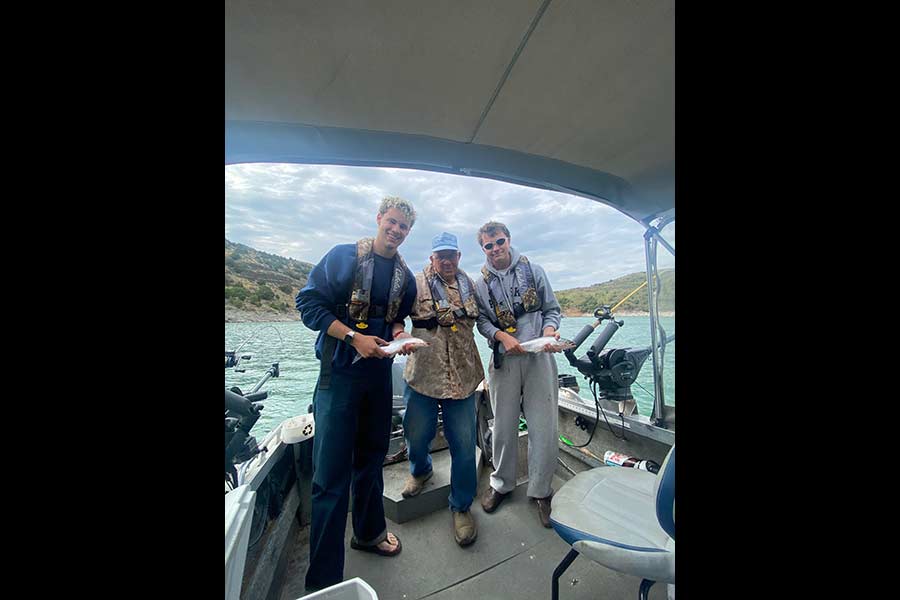
One of my daughters called my wife and said, “I think my boys need to go fishing with dad over the July 4 holiday. It will be a long time before they will get a chance again.”
My grandson is heading for Germany for two years and I’m no spring chicken, according to my daughter.
“Gabe needs some time with them,” she said.
My daughter needed a photo of me and my two grandsons on the water – hopefully with some fish. My wife relayed that message to me — and I complied.
The boys are fly fishermen but due to a worn-out shoulder from fly fishing for over 70 years and having sold my boat, we needed some help. My friend, Mike, gladly agreed to take the three of us to Ririe Reservoir early in the morning before he had to go to work on Monday after the holiday weekend. Mike and I had been fishing the reservoir the past few weeks so we knew where the kokanee had been active.
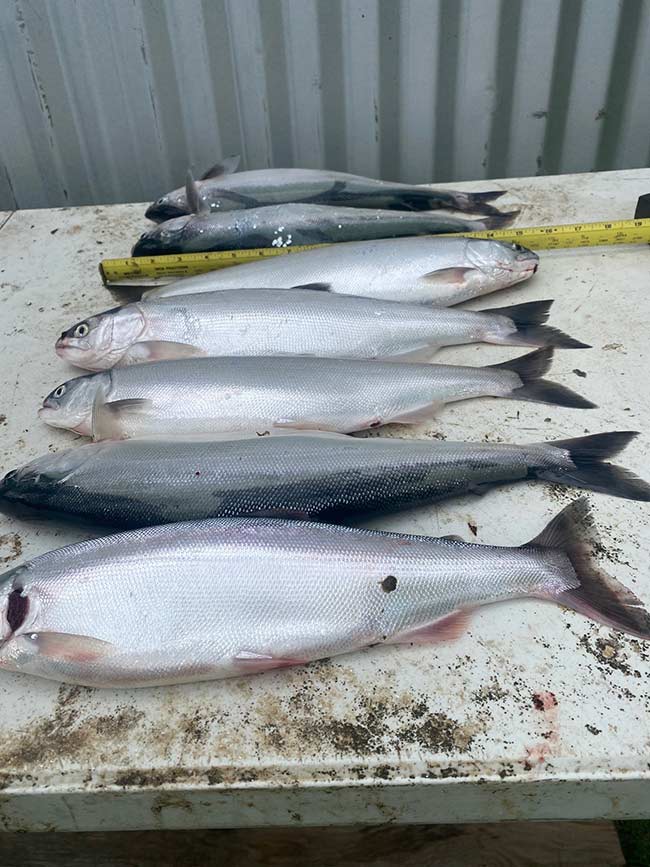
It did not take the boys long to learn that fishing for kokanee is much different than fishing for trout on the South Fork of the Snake River. The kokes were eager to bite, but were difficult to get to the boat. Lincoln jumped ahead with two large kokes over 16 inches, while Gabe caught several in the 10-to-11-inch range. I pointed out to Gabe that catching the smaller fish takes more talent than the larger fish because the target is smaller. But it wasn’t long before he landed a large one pushing 17 inches.
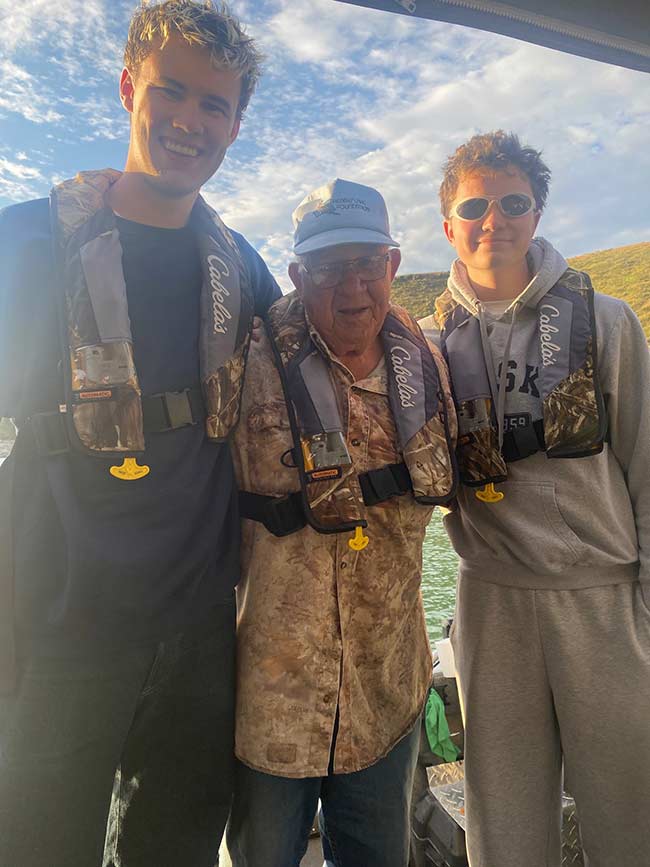
With most fishermen, the big one usually gets away.
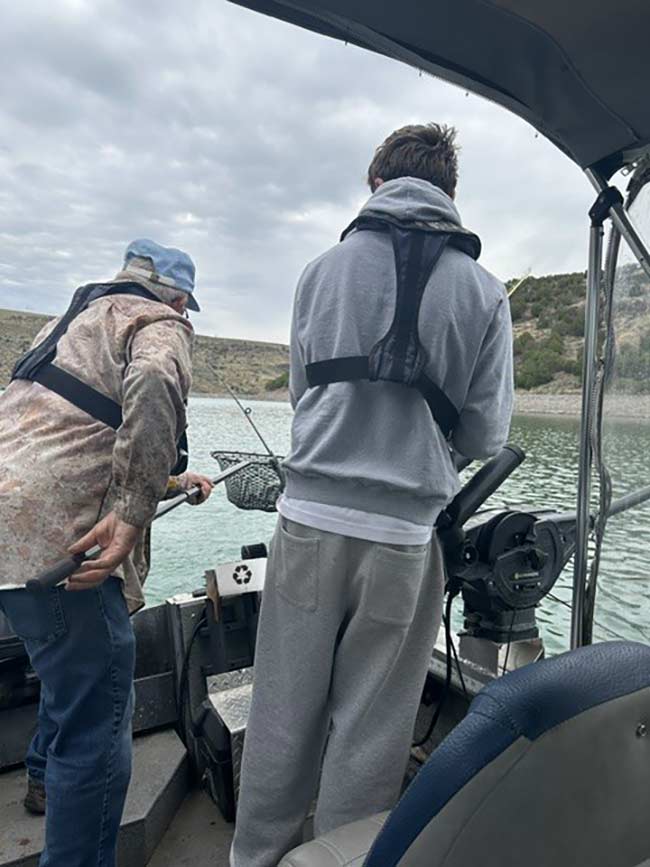
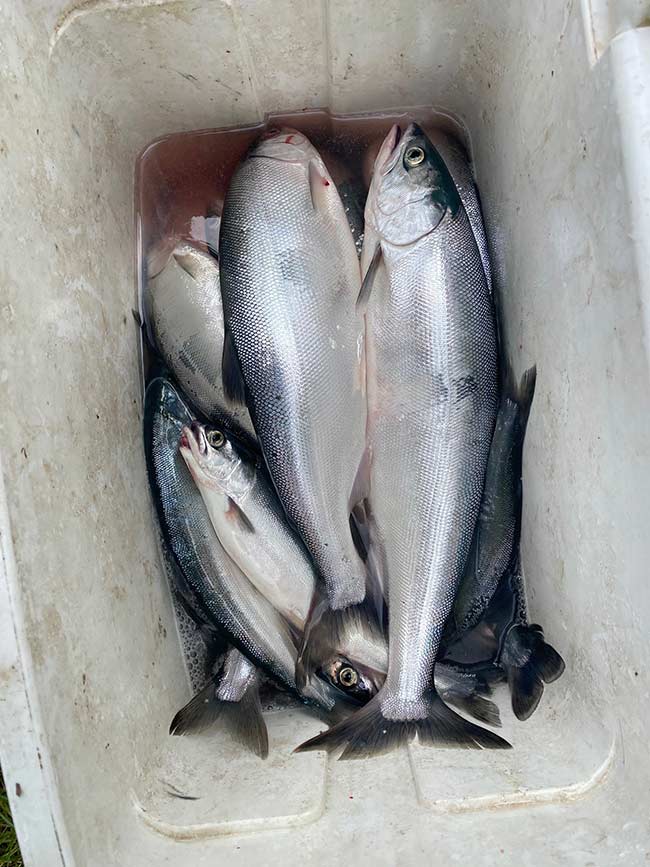
As we got near the time that we had to quit, Gabe hooked a dandy koke. It was one that quickly came to the surface and began tail-walking back and forth behind the boat. As it got near the boat, it dove and then came flying out of the water about three feet high. The kids had a great time teasing each other and boating 24 kokes before the trip ended.
For the last month, fishermen targeting kokanee have mostly been catching the fish stocked in 2025, which appear to be the late-spawning type. Their meat is a washed-out orange color, while the majority of the larger kokes planted in 2024 have bright red meat, indicating that they are the early-spawning variety. About a fourth of the larger fish, now pushing past 17 inches, will be a deeper-bodied fish with orange flesh. These fish are probably hold-overs from the 2023 stocking of the late-spawning type.
The larger fish are very aggressive in the early morning when they appear to be feeding from 10 to 25 feet below the surface. By about 8 a.m., the kokanee usually drop down to 35- to 45-depth, with the smaller fish becoming more aggressive than the larger ones. By the late morning when the pleasure boaters show up, the fish generally move deeper and become hard to catch. Those we do hook are tough to get to the boat.
My grandsons appeared to enjoy fishing with a very old man with a master teacher, Mike, at the helm. Hopefully next winter will be cold so I can enjoy taking Gabe out on the “hard” water for a day while Lincoln is in Germany.

Living the Wildlife is brought to you by Yellowstone Teton Territory. Experience 7,500 square miles of untamed wilderness in Eastern Idaho's Yellowstone Teton Territory. Where majestic peaks meet endless adventure, your perfect outdoor escape is waiting. Start planning at YellowstoneTeton.com.