



Growth and increased costs: Proposed Idaho Falls budget sees property tax and wage increase for 2027
Published at
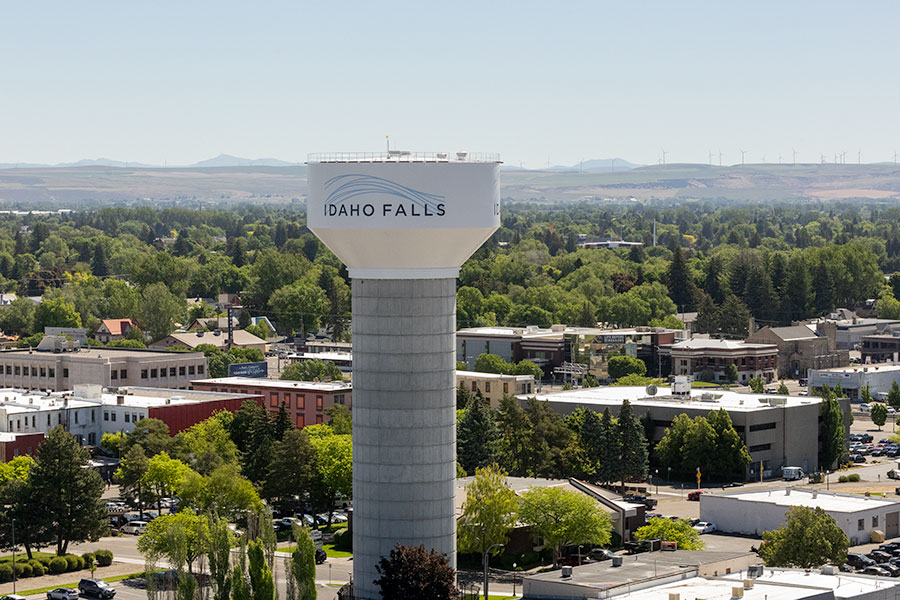
IDAHO FALLS — It’s budget season again, and the City of Idaho Falls is looking to pass its 2027 budget, which will see hikes in fees as well as property taxes.
Although many residents may only see those two items in the proposed budget for next fiscal year and stop there, EastIdahoNews.com sat down with Pam Alexander, municipal services director, to see where your dollars are going.
Increases in city services and property taxes
Before we get there, we need to discuss the increases residents will see next year and how they affect the budget.
In the proposed 2027 budget, one of the major increases is in day-to-day services.
These services include power, fiber, water, sanitation and wastewater.
Alexander said during a City Council meeting on Aug. 13 that these charges increased from about $143.2 million to $162.7 million, a 13.6% increase. This increase also includes changes in its enterprise funds.
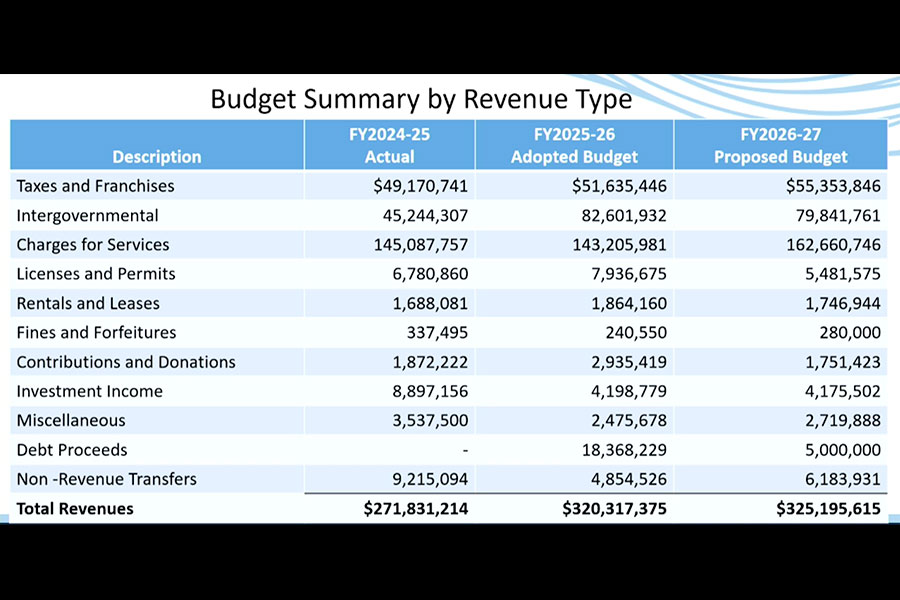
Alexander said that the enterprise funds stem from the rates paid by the customers of those specific services. What spurs this increase is the need to hire more specialized employees, who will be paid through those rates.
Some of these positions are two water service technicians, two power wiremen, an apprentice generation mechanic, and a fiber communications and splicing technician, according to the budget.
Looking over at the property tax side of the budget, the levy rate the city received from Bonneville County for this fiscal year was 0.0060487503. The total valuation of property in Idaho Falls was listed at $8,943,805,451.
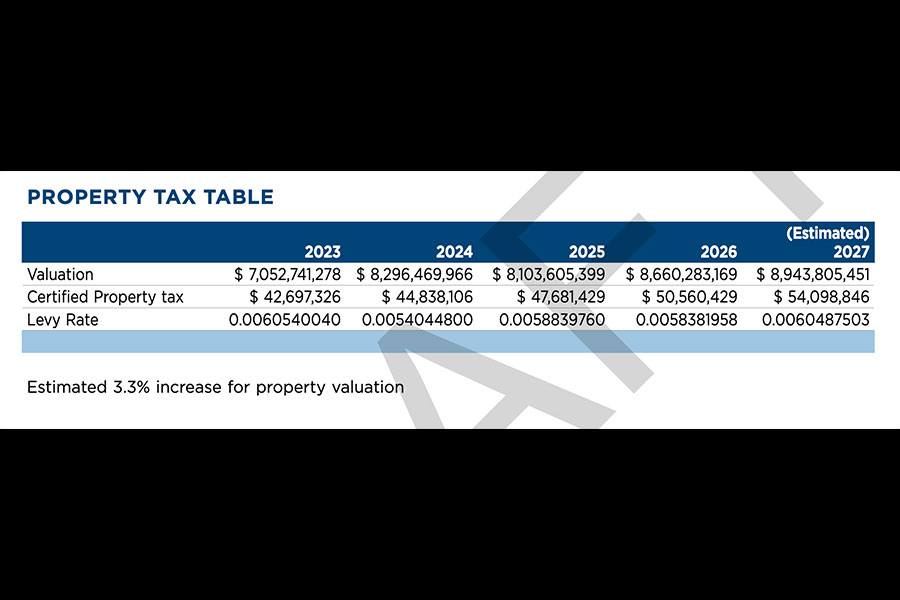
This brings the total estimate for property tax to $54,098,845. Last year’s total from the levy was $50,560,429, so this is an increase of $3,538,417 or 7%. The state limit on total increase is 8%, according to the budget book.
Currently in the proposed budget book, 2027 is listed as an estimate as city staff are still working on the final number.
Alexander said that the final number won’t increase the final number for the budget, as the city has established it would not pass $393,438,954, or its total expenditures. However, the city can go below that number as well.
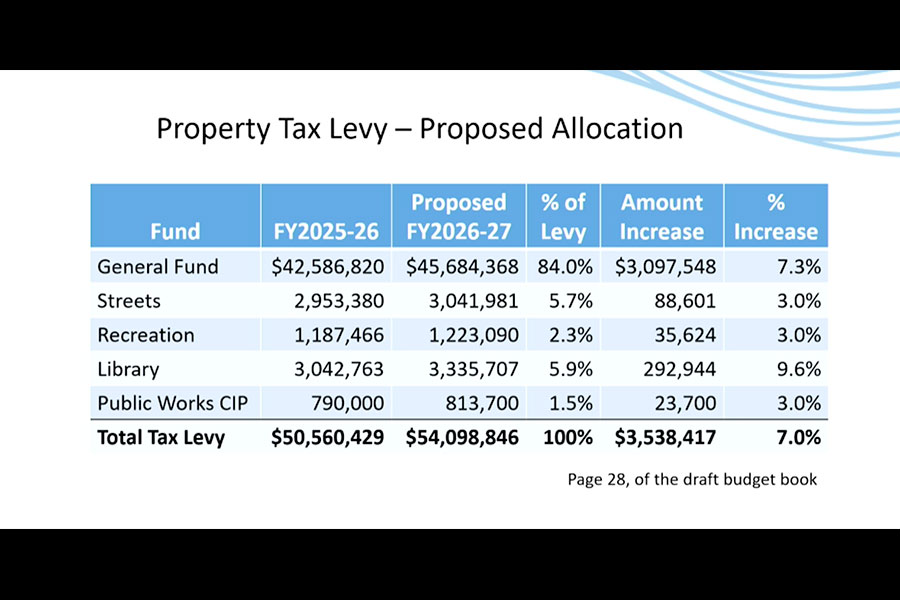
Of that $54 million, it will be split into different pools — the general fund and fund streets, recreation, library and public works capital improvement project—which also get filtered into other areas.
An example of this is the general fund, which takes the largest share at $45,684,368, a 7.3% increase from the year before, and funds police, fire and parks.
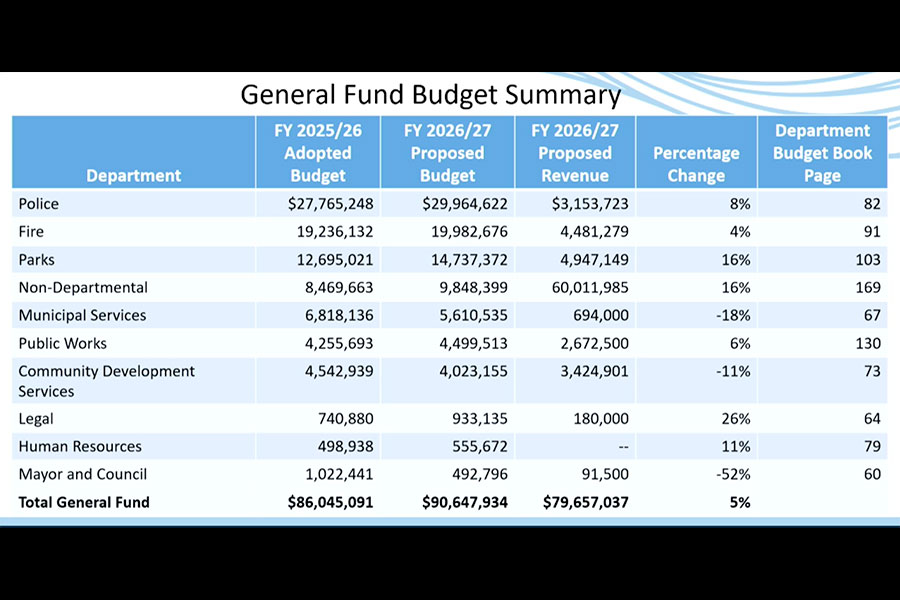
How will this look for residents in Idaho Falls?
Graphs presented during the Aug. 13 council hearing showed how current property tax assessments will change, including the increases residents will see.
With the changes, residents may see property tax increases ranging from $121 to $209.
For residents with an assessed property value of $375,000, the current tax assessment is $1,460.
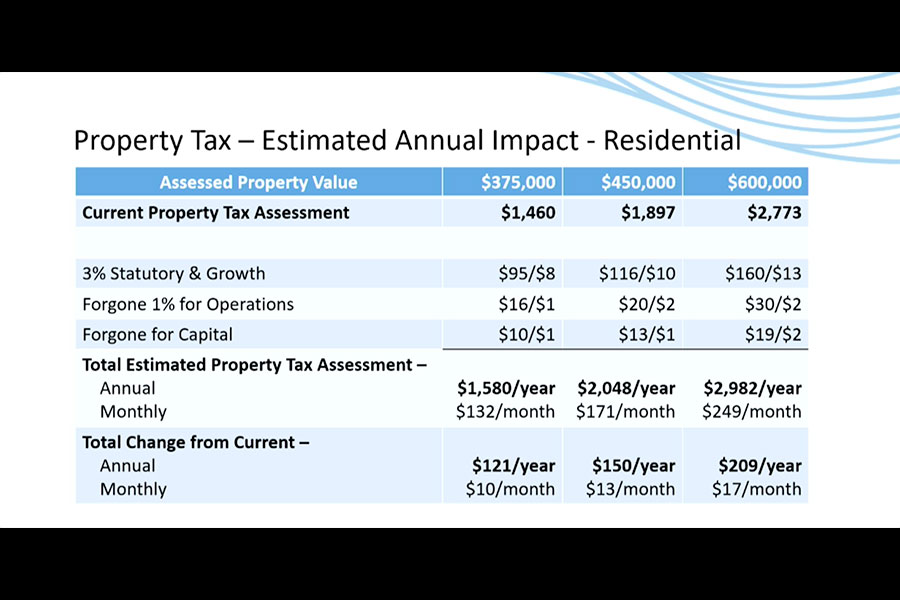
With a 3% increase and the inclusion of forgone amounts for operations and capital, the estimated property tax assessment will be $1,580, an increase of $121.
The foregoing amounts stem from departmental requests to hire new personnel or to fund capital improvement projects.
Alexander said these include hiring two fire/EMS training captains, hiring a police detective for opioid response, or building basic infrastructure for a fire training facility within the city.
“This year, similar to other years, we’ve had a public safety focus,” Alexander said. “It is perfect for those ongoing costs such as personnel, because it’s added to the base and there’s a funding source for it in future years.”
For commercial property owners, the increases are more notable.
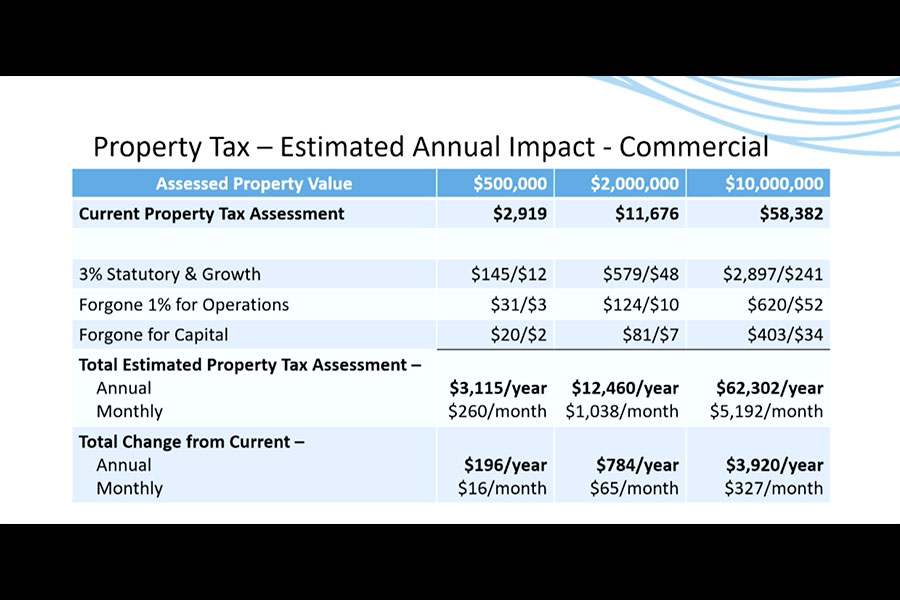
For a commercial property valued at $500,000, the current tax assessment is at $2,919; with the increases, that comes out to $3,115.
At the higher end, valued at $10 million, the current tax assessment is $58,382 and will increase to $62,302.
Alexander said property tax is only one of multiple revenue sources the city generates, but it helps accommodate growth.
Since 2000, the city has grown from 50,859 residents to 71,708, meaning service costs will have to increase incrementally.
“As a growing city, to take that 3% is what helps the sustainability of the community itself,” Alexander said. “Idaho Falls provides a wide range of services that are dedicated to the residents, and it’s a thriving, healthy community in Idaho Falls. It’s because of the way our council and mayor develop our budgets and make those tough decisions on being able to prioritize the community services that we provide.”
Community investment
Although money generated from property taxes funds parks, police, fire and other parts of daily life, it also helps fund other facilities around the city.
Community Investment in Community Infrastructure, which draws from the general fund and other revenue sources, has funded entities like the Idaho Falls Zoo, public works, police and Golf Idaho Falls.
The total raised has been $16,928,885.
“What this does is it demonstrates the city’s commitment to the community,” Alexander said. “What it really demonstrates is our investment in the community of a really great place to live and to support the services that we provide.”
Other notable items in the budget
In the revenue section of the budget book states that licenses and permits have decreased by 30.9%.
It states that this decrease reflects a shift from commercial to more residential development compared to previous years.
Capital improvement projects also decreased, as some major projects around Idaho Falls were completed or are winding down.
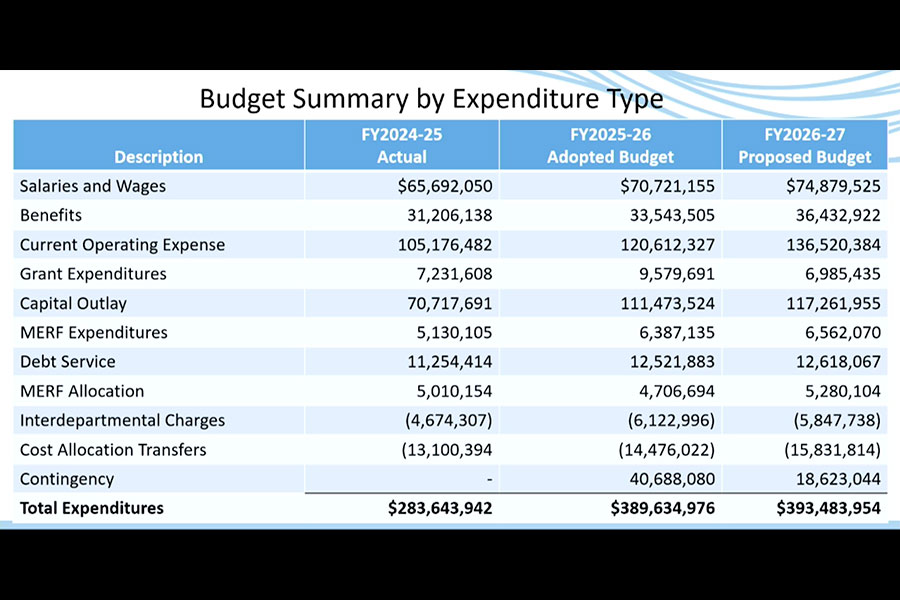
These include the completion of the Frontier Center for the Performing Arts and the Idaho Falls Fire Department’s Fire Station 6.
Salaries and wages have also increased in the city’s proposed 2027 budget. According to the budget book, general employees will see a 2% wage increase in addition to step and grade changes, and fire union employees will also see a 2% increase. Idaho Falls Power and Fiber Department will see a 6% adjustment.
Benefit costs are also rising, with medical and vision up 5% and dental up 10%.
Alexander said the city has been working on a stabilization plan, which means it aims to stay more proactive on healthcare than reactive.
Pending approval
The Idaho Falls City Council will vote on approving the budget Thursday during its council meeting. Public comment was held on Aug. 13, but residents are still encouraged to speak with their council members about the proposed budget.
The meeting to approve the budget will start at 6:30 p.m. and will be held at the City Hall Annex Building, 680 Park Avenue.
To view the 2027 proposed Annual Budget Book, visit www.idahofalls.gov.